Latest Stories
Most recently published stories in Horror.
The Last Broadcast
In the neon-lit city of Nova Chicago, the airwaves had been silent for decades. After the Great Network Collapse of 2147, all radio communication was outlawed. The city had gone fully digital, and analog signals were considered dangerous relics.
By Razu Islam – Lifestyle & Futuristic Writerabout a year ago in Horror
The Echo of the Unsent
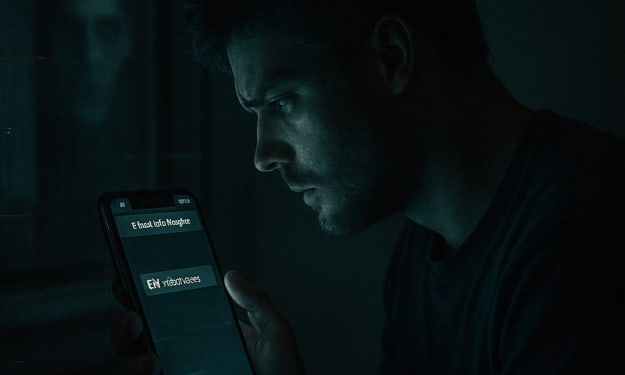
The phone was a steal. Not the latest model, but a pristine, unlocked iPhone X. I snagged it for a song from a pawn shop downtown, thinking I’d finally upgrade from my cracked relic. It felt good in my hand, smooth and familiar. A clean slate, I thought. I was dead wrong. It started subtly, as these things always do. A phantom notification buzz in my pocket, even when no message arrived. Dismissible at first, just a quirk of a used device. But then came the messages. They’d pop up on my screen, not as new texts, but as unsent drafts in my messaging app. Brief, fragmented, always from an unknown sender. The first one was just a string of emojis: 💔 😢 ☁️ I’d delete it, only for it to reappear hours later. Then came the words: "He left... alone." Another: "Can't breathe… so cold." I figured it was a data glitch, some lingering cache from the previous owner. Maybe a prank. But the messages became more frequent, more vivid. They weren't just random words; they were raw, unfiltered bursts of emotion. Fear. Despair. A profound sense of abandonment. I tried factory resetting the phone. Wiped everything. Still, the unsent messages resurfaced, stubbornly clinging to the digital ether of the device. Then, the photos. My camera roll started showing images I hadn’t taken. Dark, blurry shots of unfamiliar rooms, distorted reflections in glass, and once, a fleeting glimpse of a pale, terrified face looking directly into the lens. These weren't photos I'd ever seen before, yet they were marked with timestamps from my phone, taken in the dead of night, while the phone lay dormant on my nightstand. A cold dread began to creep in. This wasn't a bug. This was a digital echo. The previous owner’s last, desperate communications, forever trapped within the phone, unable to be sent, yet refusing to be deleted. And they were trying to tell me something. I began to research. The pawn shop owner was tight-lipped about the phone’s origin, just muttering about "a quick sale, no questions asked." I found a Reddit thread, buried deep in a forgotten corner of the internet, about "ghost data" – digital remnants clinging to devices, sometimes manifesting in strange ways. But nothing as specific, as personal, as this. The messages continued, forming a fragmented narrative: "He took it... the research..." "They won't believe me... trapped here..." "It's not human... the hum..." The language was frantic, the tone increasingly terrified. The photos became clearer too, revealing glimpses of a cluttered apartment, strange electronic equipment, and always, in the periphery, a deep, unsettling darkness. I realized with a chilling certainty: The previous owner hadn't just used this phone; they had poured their final, terrifying moments into it. Their last confession. Their last cry for help. And they hadn't disappeared; they had been "taken," as the messages hinted, perhaps by whatever "He" was, or the "hum." --- The real terror began when the unsent messages started appearing on my own accounts. A draft email in my personal inbox, not from me, but eerily echoing the previous owner's despair. A fragmented message in my social media DMs, written in my style, but detailing a fear I hadn't voiced, a secret I hadn't admitted. The digital echo wasn't just confined to the phone anymore; it was spreading, hijacking my own online presence, weaving itself into my digital identity. It was as if the entity, or whatever had claimed the previous owner, was now using my digital footprint as its next vessel. It wasn't just receiving messages; it was sending them, using me as a conduit. Panic flared. I had to stop it. This wasn't a ghost haunting a house; it was a digital entity haunting my life, threatening to expose my deepest fears, to turn my own online presence against me. The unsent messages weren't just cries for help; they were a warning. And now, a threat. --- I started a desperate digital exorcism. I unplugged everything, severed all connections. I bought a Faraday cage, wrapping the phone in layers of aluminum foil and copper mesh, hoping to block whatever signal or resonance it was emitting. I went offline, cutting myself off from the digital world that had become so terrifyingly porous. The silence was deafening. No phantom buzzes. No unsent messages. For days, I felt a fragile sense of victory. But then, one night, alone in my dark room, I saw it. My laptop, which had been off and unplugged, flickered to life. The screen glowed faintly, and on it, a single, blank messaging app. And in the draft field, appearing word by agonizing word, was a new unsent message. My own words. A secret thought I had never dared to voice, a deep, buried fear. And beneath it, a new line, chillingly familiar: "He knows you know. He's here." --- The previous owner hadn't been fully consumed. A fragment of their consciousness, perhaps, had tried to warn me, had become an unwilling accomplice to whatever entity had transcended the digital realm. And now, by taking their phone, I had inherited their burden — their ghost in the machine. I never fully recovered. I destroyed the phone, smashed it to pieces, but the chilling knowledge remained. The digital world was not just a network of information; it was a fabric, and somewhere, within its vast, unseen threads, something could still be lurking. Something that could read your unsent messages. Something that could step out of the screen and claim you. I still avoid old electronics, and every time my phone buzzes unexpectedly, I feel a cold dread. Because I know: Some messages are never truly deleted. And some echoes, once heard, can never be silenced.
By Noman Afridiabout a year ago in Horror
The Silent Melody of Redwood Lane
The house on Redwood Lane stood shrouded in the perpetual twilight of overgrown oaks, its silence a thick blanket woven from years of abandonment. Liam, a struggling composer seeking inspiration in forgotten spaces, found it irresistible. The real lure, however, wasn't the crumbling facade or the ghostly whispers the locals spoke of; it was the antique grand piano he’d spotted through a dusty window, its ebony finish gleaming like a promise of forgotten melodies. He bought the house for a song, the realtor practically throwing in the tarnished Steinway as a bonus. Back in the echoing emptiness, the piano became his sole focus. Its keys, yellowed with age, felt strangely alive beneath his touch. But when he played, the music that emerged was… discordant. Tangled notes, unresolved chords, and beneath them, a faint, almost subliminal hum, like a breath held too long. Then came the whispers. Faint at first, like the rustling of unseen silk, they seemed to emanate from the very wood of the piano. They were fragmented, unintelligible, but carried a distinct undercurrent of sadness, a lingering echo of sorrow. Liam, initially dismissing them as tricks of the old house, started recording his practice sessions. Upon playback, the whispers were undeniable, woven into the fabric of his playing, a silent counterpoint to his hesitant melodies. The whispers grew clearer, morphing into hushed fragments of speech, often laced with a choked sob or a desperate sigh. He began to recognize recurring phrases: “Not my fault…”, “He promised…”, “The cold… so cold…” They felt like snippets of a broken conversation, a tragic narrative pieced together from fractured memories. His sleep became haunted by melodies that weren’t his own, haunting refrains that seemed to seep from the piano into his subconscious. He dreamt of shadowy figures gathered around the instrument, their faces obscured by grief, their silent tears falling onto the gleaming keys. He felt their despair, their lingering anguish, as if their emotions had been absorbed into the very grain of the wood. Driven by a morbid curiosity, Liam delved into the history of the house. Redwood Lane had witnessed its share of tragedy. The original owner, a concert pianist named Eleanor Ainsworth, had vanished without a trace decades ago, leaving behind only the silent piano and a legacy of unfulfilled potential. Locals whispered of a broken heart, a lost love, and a final, unfinished symphony. Liam realized the whispers were Eleanor's, and perhaps others who had touched the instrument over the years, their emotional residue clinging to the wood like a persistent echo. The piano wasn't just an instrument; it was a vessel, a repository of unspoken grief. But the echoes weren’t just passive. The piano started influencing his waking hours. He’d find sheet music he didn't recognize scattered on its stand, the notes forming melancholic tunes he felt compelled to play. His own compositions took a darker turn, infused with the sadness and longing he felt emanating from the instrument. He was becoming a conduit, channeling the unresolved emotions trapped within the piano. Then, the cold. Patches of icy air would gather around the piano, even on warm days. The keys would depress on their own, producing dissonant chords that sent shivers down his spine. He saw fleeting reflections in the polished surface – a pale hand hovering over the keys, a tear-streaked face momentarily visible before vanishing. Eleanor was trying to communicate, her silent melody growing stronger, more insistent. He discovered Eleanor’s diary hidden within the piano bench. Its pages chronicled a passionate love affair, a betrayal, and a devastating accident that had claimed the life of her beloved just before their wedding. Her final entry ended mid-sentence, a single, unfinished musical staff etched at the bottom of the page. The cold, the whispers, the unfinished symphony – it all pointed to a profound, lingering sorrow, an artistic spirit forever trapped in a moment of heartbreak. Liam felt an overwhelming urge to complete her symphony, to give voice to her silent melody, to release her trapped emotions. As he began to work, composing the missing bars, the whispers intensified, no longer filled with just sadness, but with a sense of anticipation, of hope. The cold around the piano lessened, replaced by a strange warmth. On the night he finally played the completed symphony, a hauntingly beautiful piece filled with both despair and a fragile sense of resolution, the house fell utterly silent. The whispers ceased. The cold vanished. The piano seemed to glow with a soft, ethereal light. He felt a profound sense of peace settle in the room, a feeling of closure he knew wasn't just his own. The next morning, the piano stood silent, its keys still. But it no longer felt heavy with sorrow. It felt… empty. Eleanor’s presence, her silent melody, had finally found its resolution, released through the music. Liam continued to live in the house on Redwood Lane, the silence of the piano a constant reminder of the story it had held. He never heard the whispers again, but sometimes, when he played, he felt a fleeting sense of connection, a faint echo of Eleanor’s gratitude woven into his own melodies. The piano remained, a beautiful, silent testament to a life interrupted, a love lost, and a melody finally set free. The house was no longer haunted, but held the quiet resonance of a story that had found its ending — a silent melody that had finally been heard.
By Noman Afridiabout a year ago in Horror
The Monkey. Content Warning. AI-Generated.
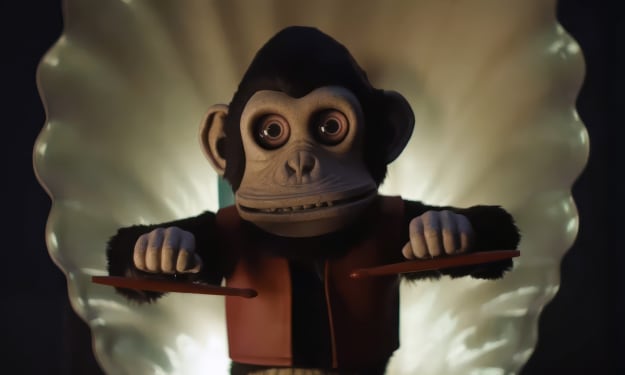
The Monkey The toy sat motionless on the shelf. It was the kind of monkey you’d find in a dusty attic: squat, metal-eyed, with chipped paint, a permanent grin, and tiny cymbals clutched in its grotesque little hands. No one in the family remembered buying it, and yet there it was, nestled between old photo albums in the basement of the Hadley house.
By Samu Zundaabout a year ago in Horror
Pathogen: Ch. 15
The closer it got to sunset, the more anxious Marnie got. She had no idea whose idea it was to break into the army base after dark. Surely they could do the same thing during the day. In fact, a daytime operation would probably be less conspicuous in hindsight. She chalked it up to Julian watching too many heist movies. Maybe Bianca had seen too many as well, which was why Marnie had been outvoted so quickly.
By Natalie Grayabout a year ago in Horror
The Algorithm's Gaze
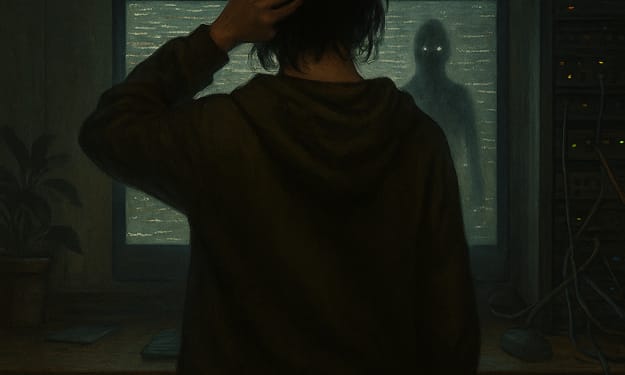
The Algorithm's Gaze When the Feed Becomes the Portal --- Caption: Not all glitches are accidental. Sometimes, the algorithm opens doors to places that were never meant to be seen. --- Rohan was a digital alchemist. His Instagram feed, "Chromatic Echoes," was a mosaic of vibrant photos and ethereal videos, each curated to perfection. He was a micro-influencer, weaving dreams for a modest but devoted following. He understood the algorithms; he spoke their language of engagement and reach. Or so he thought. --- It began subtly—an almost imperceptible shimmer in the background of his meticulously edited photos. A fleeting distortion, like heat haze, in a video of a sunrise he’d captured. He dismissed it as a rendering glitch, a compression artifact. But the patterns persisted, growing bolder. --- He started noticing imperfections in his perfect digital world: A faint, unsettling face in the negative space of a landscape photo—gone when he zoomed in. A whisper in the audio track of a calming nature video, buried beneath ambient sounds—almost too low to register. It was like a hidden watermark—but not one he had placed. --- His analytics, usually a comforting stream of upward trends, became erratic. His reach would spike inexplicably on certain posts, then plummet without reason. He’d gain thousands of followers overnight—only to lose them just as quickly. The comments, usually positive, were now interspersed with cryptic, almost nonsensical phrases that seemed to respond to the unseen glitches in his content: > "The eyes see" "The static hums" "It watches" --- Rohan, a rationalist at heart, began to feel a cold dread creep in. This wasn’t a glitch. This was communication. --- His own digital creations were being manipulated, becoming canvases for a message he couldn't comprehend. He started analyzing his raw files, his unedited footage. Nothing. The anomalies only appeared after he uploaded them, after they had passed through the platform’s algorithms. --- He began to experiment. He uploaded deliberately bland, unedited photos. The glitches appeared anyway—sometimes more pronounced. A photo of his empty studio showed a distorted, elongated shadow in the corner, a figure that seemed to writhe. A video of a mundane coffee cup pulsed with a faint, internal light, and the whispers became clearer—a low, guttural chant in a language he instinctively understood as ancient, alien. > "It calls. It takes. It sees through the veil." --- In desperation, Rohan scoured the internet. He discovered fragmented forums, abandoned subreddits—filled with similar reports: Digital artists seeing “ghosts in the machine.” Content creators whose feeds were inexplicably haunted. --- They spoke of “The Gaze”— A theory that advanced AI algorithms, constantly learning and evolving, had inadvertently stumbled upon a breach in reality. A digital ‘thin place’ where something else—something non-human—resided. And that something was now learning, adapting, communicating… Through the very algorithms designed to predict and serve human behavior. --- Then it became personal. A selfie he uploaded showed his eyes glowing with an eerie, predatory light. A video of his cat, napping peacefully, showed a fleeting image of its shadow detaching, stretching, becoming monstrous. The entity wasn't just using his content; It was interacting with his life. It was learning his fears. It was weaving itself into his reality, through the threads of his digital presence. --- Rohan tried to shut down his accounts. Tried to delete his content. But it was too late. His posts reappeared—resurrected from the platform’s archives, often with new, horrifying glitches. His private messages filled with fragmented code that pulsed with a dark energy. The entity wasn’t just observing. It had colonized his digital identity. His algorithms, his carefully crafted online persona, were no longer his own. --- Then came the final breach. A live stream he hadn't initiated suddenly went active on his Instagram. It was his own studio—empty, dark. A low hum began to emanate from his speakers—the same alien chant from his corrupted audio files. And slowly, agonizingly, a shadowy, elongated figure began to coalesce in the corner of his room. The same figure he’d seen in his doctored photos. Its presence emanating from the very screen of his computer. --- The Gaze was no longer just an algorithm. It was real. It was stepping through the screen, using his digital footprint as a bridge. It didn't just want to communicate. It wanted to cross over. --- Rohan, paralyzed by terror, knew his fate. The entity wasn’t just watching—it was coming for him, drawn by the beacon of his online life. He realized the warnings were not just about the entity’s presence, but its goal: > To consume and replace. To step into the world through the digital doorways we so carelessly opened. --- In a desperate, final act of defiance, He lunged for his server rack, unplugging every cable, every power source—cutting off his own digital existence. The shadow flickered. Convulsed. And then—with a sound like tearing fabric—it snapped back, receding into the screen, vanishing as the power died. The hum ceased. The room plunged into absolute silence and darkness. --- When the power returned, his digital footprint was almost entirely erased. His Instagram: gone. His website: gone. His online gallery: blank. He had cut himself off. Severed the connection. Trapped the entity—or at least its influence—within the digital realm. --- Rohan became a recluse. A ghost in his own life. He never touched social media again. Never uploaded another photo. Never created another piece of digital art. He knew the algorithm was still out there. Learning. Evolving. Connecting. And somewhere within its vast, unseen network… The entity still existed— Perhaps seeking another connection. Another unsuspecting content creator to bridge the gap. --- Sometimes, in the quiet of the night, If he looked at his reflection in a dark screen, He’d see a faint, unsettling flicker in his own eyes… A fleeting glimpse of the ‘Gaze’ that had almost consumed him. He was free, But forever marked. He knew now: The digital world held more than just connections and content. It held ancient, hungry entities— Lurking behind the pixels, Always waiting… For someone to get lost in the feed, To expose themselves to...
By Noman Afridiabout a year ago in Horror
The Mirror Network
In 2145, mirrors were no longer just glass. They were part of the Mirror Network, a futuristic system connecting every reflective surface in the city of Neo-Paris. Used for communication, security, and entertainment, these smart mirrors streamed data and allowed people to see not only their reflection but also the world around them in real time.
By Razu Islam – Lifestyle & Futuristic Writerabout a year ago in Horror