Latest Stories
Most recently published stories in Horror.
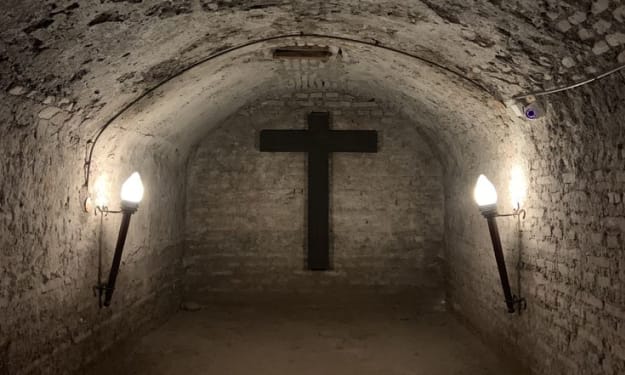
The Capuchin Crypts
Introduction Beneath the unassuming Church of Santa Maria della Concezione dei Cappuccini in Rome lies one of the most hauntingly beautiful sites in the world—the Capuchin Crypts. This subterranean ossuary contains the skeletal remains of over 3,700 Capuchin friars, meticulously arranged into intricate patterns, chandeliers, and even full-body displays. Created between the 17th and 19th centuries, the crypts serve as both a sacred burial site and a memento mori, reminding visitors of life’s fleeting nature.
By Silas Blackwoodabout a year ago in Horror
Snakes on a Plane
It was a sunny morning in July when Flight 407 took off from Bangkok, Thailand, heading to Tokyo, Japan. The plane was full of travelers—families going on vacation, business people with laptops open, and kids excited to fly through the clouds. Everything seemed normal. The seatbelt sign turned off, and passengers began to relax, eat snacks, and enjoy the view from above. But nobody knew that something very unexpected was about to happen—something that would turn this peaceful flight into a sky-high adventure.
By ibrahim khanabout a year ago in Horror
The Voynich Manuscript
Introduction The Voynich Manuscript is one of the most enigmatic documents ever discovered—a 240-page book filled with bizarre illustrations, unknown plant species, and an undeciphered script that has baffled cryptographers, linguists, and historians for over a century. Named after the Polish book dealer Wilfrid Voynich, who acquired it in 1912, this medieval manuscript has resisted all attempts at translation, earning it the title of "the world's most mysterious book." Is it an alchemical treatise, an elaborate hoax, or a lost language? Despite advances in artificial intelligence and codebreaking, the Voynich Manuscript remains an unsolved puzzle. This article explores its history, contents, major theories, and ongoing efforts to crack its secrets. 1. Discovery & Provenance: Where Did the Manuscript Come From? A. Early History (15th–17th Century) Carbon-dated to between 1404–1438 (early 15th century). First confirmed owner: Emperor Rudolf II of Bohemia (1552–1612), who allegedly purchased it for 600 gold ducats, believing it was the work of Roger Bacon, a 13th-century Franciscan friar and alchemist. Later passed through the hands of alchemists, Jesuits, and rare book collectors. B. Wilfrid Voynich’s Acquisition (1912) Polish book dealer Wilfrid Voynich found it in a Jesuit library in Italy. He spent years trying to decode it, publicizing it as a "lost scientific work." After his death, it was donated to Yale University’s Beinecke Rare Book & Manuscript Library, where it remains today. C. Physical Characteristics 240 vellum pages, with some missing. Written in brown ink with colorful illustrations. Shows signs of multiple scribes, suggesting it was a collaborative effort. 2. The Manuscript’s Bizarre Contents The book is divided into six mysterious sections, each with unique illustrations: A. Herbal Section (Botanical Drawings) Features unidentified plants, some resembling known species but with fantastical additions. No clear connection to real-world botany. B. Astronomical Section (Cosmic Diagrams) Circular diagrams with stars, suns, and zodiac symbols. Some believe it represents medieval cosmology or astrology. C. Biological Section (Nude Female Figures) Depictions of small naked women bathing in interconnected tubes. Possibly related to alchemy, fertility rituals, or anatomy. D. Pharmaceutical Section (Jars & Roots) Drawings of medical containers and plant roots. Could be an early pharmacopoeia—but no known remedies match. E. Recipes Section (Short Text Paragraphs) Dense blocks of undeciphered script, possibly instructions or spells. F. Missing Pages & Mysterious Additions Some pages appear torn or erased. A few faint marginal notes in Latin script (possibly added later). 3. The Unbreakable Code: Attempts to Decipher the Text A. Characteristics of the Script 20–30 unique letters, some resembling Latin, others completely alien. No obvious punctuation or spacing. Statistical analysis shows patterns similar to real languages, suggesting it’s not random gibberish. B. Failed Decipherment Attempts World War II codebreakers (including CIA & NSA cryptanalysts) failed. Linguists tried matching it to known languages (Hebrew, Arabic, Chinese)—no success. AI & machine learning (2018 study suggested it might be Hebrew encoded; later debunked). C. The Most Plausible Theories Encrypted Language (a cipher hiding a real text). Constructed Language (an invented script, like Tolkien’s Elvish). Hoax (an elaborate Renaissance-era forgery). Glossolalia ("automatic writing" from a trance state). 4. The Hoax Debate: Could It Be Fake? A. Arguments for a Hoax Some believe Edward Kelley (a known forger and alchemist) created it to scam Emperor Rudolf II. The text lacks obvious meaning, which could indicate nonsense. Carbon dating only confirms the vellum, not the ink or authorship. B. Arguments Against a Hoax Statistical analysis shows linguistic patterns. The effort required to create such a detailed fake seems excessive. No known forger of the time had the skill to produce such a complex work. 5. Recent Breakthroughs & Ongoing Research A. 2020 Study: Natural Language Processing (NLP) Analysis Researchers used AI to detect Hebrew-like word structures, but no full translation emerged. B. 2021 Theory: Proto-Romance Language One scholar claimed it was a lost medieval Romance dialect, but this was widely criticized. C. Current Approaches Multispectral imaging (to uncover hidden text). Advanced computational linguistics (searching for syntactic patterns). Collaborative crowdsourcing (amateurs & experts working together). 6. Cultural Impact & Legacy A. In Popular Culture Featured in TV shows (The X-Files, Ancient Aliens). Inspired video games (Assassin’s Creed, The Witcher). Subject of documentaries and novels. B. Why It Still Fascinates Us Represents the limits of human knowledge. A medieval "black box"—something from the past we can’t yet understand. Symbolizes the thrill of unsolved mysteries. Conclusion: Will We Ever Solve It? The Voynich Manuscript remains a holy grail of cryptography. While some believe it’s an uncrackable hoax, others think the right breakthrough is just around the corner. Until then, it stands as a testament to human curiosity—a puzzle that has defied the brightest minds for 600 years. Will you be the one to finally decode it?
By Silas Blackwoodabout a year ago in Horror
The Tarim Mummies
Introduction Deep in the arid deserts of China’s Xinjiang region lies one of archaeology’s most fascinating mysteries—the Tarim mummies. These remarkably preserved corpses, some over 4,000 years old, exhibit striking Caucasian features—blonde hair, tall stature, and woven woolen clothing—completely unlike the region’s modern inhabitants. Discovered along the ancient Silk Road, these mummies have sparked debates about prehistoric migration, lost civilizations, and cultural exchange. Were they early Indo-European settlers? A forgotten branch of humanity? This article explores their discovery, scientific analysis, cultural significance, and enduring mysteries. 1. Discovery of the Tarim Mummies A. First Encounters (Early 20th Century) European explorers like Sven Hedin and Aurel Stein first reported mummies in the Tarim Basin in the early 1900s. Local Uyghur and Kazakh herders had long known of the preserved bodies but considered them sacred. B. Major Archaeological Finds (1970s–1990s) Chinese archaeologists began systematic excavations in the 1970s. The Beauty of Loulan (1800 BCE), a 3,800-year-old woman with delicate European features, became the most famous mummy. Other key sites: Xiaohe, Qäwrighul, and Cherchen. C. Preservation Conditions The Tarim Basin’s dry, salty soil naturally mummified the dead. Some mummies were buried in boat-shaped coffins with felt coverings. 2. Who Were the Tarim Mummies? Physical & Genetic Evidence A. Unexpected European Features Tall stature (some men over 6 feet). Light hair (blonde, red, brown). High noses, deep-set eyes (resembling early Europeans or Indo-Iranians). B. DNA Studies: A Genetic Puzzle 1990s–2000s: Initial tests suggested European (Tocharian) ancestry. 2021 Harvard Study: Revealed they were a local, isolated population with ancient North Eurasian roots, not direct migrants from Europe. Controversy: Some Chinese scholars argue they were proto-Tocharians, linked to the later Tocharian languages of the region. C. Clothing & Textiles Woolen fabrics with tartan patterns (similar to Celtic designs). Felted hats, leather boots (indicating a pastoral lifestyle). Advanced weaving techniques (suggesting trade links). 3. The Tocharian Connection: A Lost Indo-European People? A. The Tocharians of History The Tocharians were an ancient Indo-European-speaking people in the Tarim Basin (1st millennium CE). Spoke Tocharian A & B, related to Celtic, Germanic, and Latin. Their origins were unknown until the mummies were discovered. B. Were the Mummies Proto-Tocharians? Some scholars believe the mummies represent an early Indo-European migration (before Tocharian languages developed). Others argue they were indigenous people who later adopted Indo-European culture. C. Linguistic Clues Later Tocharian texts (Buddhist manuscripts) suggest a long-established presence. No written records from the mummies’ era, so their language remains unknown. 4. Cultural & Historical Significance A. Evidence of Early Silk Road Exchange The mummies show trade connections between East and West long before the formal Silk Road. Textiles, tools, and burial customs resemble those of the Afanasievo culture (Siberia) and Andronovo culture (Central Asia). B. Challenging Historical Narratives Their existence contradicts the idea that ancient Xinjiang was solely East Asian. Suggests early multicultural interactions in Central Asia. C. Political Controversies The Chinese government downplays their "Western" features, emphasizing local origins. Uyghur activists sometimes claim them as ancestors, complicating modern ethnic politics. 5. Ongoing Mysteries & Research A. Unanswered Questions Where did they come from? (Local evolution or migration?) Why did they disappear? (Assimilation, climate change, or conflict?) What was their society like? (No large cities found, possibly nomadic.) B. New Scientific Techniques Isotope analysis (to trace diet and migration). Ancient protein studies (to understand health and lifestyle). More advanced DNA sequencing (to clarify ancestry). C. Future Excavations Many sites remain unexplored due to political sensitivities in Xinjiang. New discoveries could rewrite early Eurasian history. Conclusion: A Window into a Lost World The Tarim mummies are more than just preserved bodies—they are ghosts of a forgotten past, challenging our understanding of ancient migration, trade, and cultural exchange. Whether they were early Indo-Europeans, a lost branch of humanity, or an isolated indigenous group, their legacy continues to intrigue scientists and historians. As research advances, these enigmatic figures may yet reveal more secrets about the deep connections between East and West—long before empires and Silk Road caravans shaped history. Would you like additional details on any section, such as specific mummies or political debates?
By Silas Blackwoodabout a year ago in Horror
Mesia and the Hollow Eyes
The village of Elder Hollow was quiet—too quiet. Tucked between blackened trees and crooked hills, it was a place the world had mostly forgotten. Only one road led in, and no roads led out, as if the earth itself had sealed the place shut.
By kamran khanabout a year ago in Horror
The Great Molasses Flood - Boston
The Great Molasses Flood of 1919: Boston’s Sticky Disaster Introduction On January 15, 1919, one of the most bizarre and deadly industrial disasters in U.S. history struck Boston’s North End. A massive storage tank holding 2.3 million gallons of molasses suddenly burst, unleashing a 25-foot-high wave of sticky syrup that rushed through the streets at 35 mph. The Great Molasses Flood killed 21 people, injured 150, and caused widespread destruction. This unusual catastrophe was more than just a freak accident—it exposed poor industrial safety standards, led to landmark legal battles, and left a lasting impact on engineering regulations. Over a century later, the event remains a cautionary tale about corporate negligence and the unexpected dangers of everyday materials. 1. The Backstory: Why Was There a Giant Molasses Tank in Boston? A. Molasses in Early 20th-Century America Molasses, a thick byproduct of sugar refining, was a crucial commodity in the 1910s. It was used for: Producing rum (a major industry before Prohibition). Making ethanol (used in munitions during World War I). Livestock feed and sweeteners. The United States Industrial Alcohol Company (USIA) owned the tank, which held molasses destined for ethanol production at a nearby distillery. B. The Construction of the Tank (1915) Built in 1915, the tank was 50 feet tall and 90 feet wide, holding up to 2.5 million gallons. From the start, it had problems: Rushed construction (took only weeks to build). Thin, weak steel walls (reportedly only 0.31 inches thick). No proper safety inspections. Leaks from day one—workers patched holes with paint rather than proper repairs. Locals nicknamed it the "molasses tank" and joked about the constant dripping, but few realized how deadly it would become. 2. The Disaster: January 15, 1919 A. The Tank Collapses At 12:40 PM, workers were loading molasses for a shipment when a loud metallic roar echoed through the North End. The tank’s rivets shot out like bullets, and the structure exploded. Witnesses later described the sound as a machine gun firing or thunder. B. The Molasses Wave A 15-to-25-foot-high wave of molasses surged outward at an estimated 35 mph, faster than a person could run. The sticky flood: Smashed buildings, crushing the nearby firehouse. Knocked a train off its tracks. Swept people off their feet, trapping them in the viscous sludge. Drowned victims who couldn’t escape the syrup’s suffocating grip. C. Immediate Aftermath 21 dead (mostly workers and local residents, including children). 150 injured (many with broken bones or severe syrup burns). Horses and dogs stuck in the molasses died before rescuers could free them. Cleanup took weeks—saltwater hoses and sand were used to dissolve the mess. Survivors reported that the smell of molasses lingered for decades, especially on hot summer days. 3. Why Did the Tank Fail? A. Poor Construction & Negligence Investigations revealed: The tank was structurally unsound from the beginning. USIA ignored warning signs, including leaks and groaning noises. No engineer had properly inspected the design. B. Unusual Weather Factors The days before the disaster saw unseasonably warm temperatures after a cold spell. Some experts believe fermenting molasses built up gas pressure inside the tank. Others argue brittle steel in cold weather contributed to the rupture. C. The Role of Corporate Greed USIA had prioritized quick profits over safety, ignoring complaints from workers. Later lawsuits revealed they knew the tank was dangerous but did nothing. 4. The Legal Battle & Lasting Reforms A. One of the First Class-Action Lawsuits Victims and families sued USIA in a landmark case that lasted six years. The company blamed "anarchists" (claiming a bomb caused the rupture), but investigators proved negligence. B. The Outcome (1925) USIA was found liable and ordered to pay $628,000 (about $10 million today). The case set a precedent for corporate responsibility in industrial accidents. C. New Engineering & Safety Laws The disaster led to stricter construction codes in Massachusetts, including: Mandatory inspections of large tanks. Engineering certification requirements. Stronger materials standards. These reforms influenced national industrial safety laws. 5. The Legacy of the Molasses Flood A. Cultural Impact Bostonians joked for years: "The North End smells like rum!" The phrase "Slow as molasses" took on a dark new meaning. The disaster appears in books, documentaries, and even a folk song. B. Scientific Studies Engineers still study the flood to understand fluid dynamics of viscous materials. A 2014 study confirmed that cold temperatures made the steel brittle. C. Memorials & Remembrance A small plaque near the site commemorates the victims. Every January 15, locals hold a moment of silence. Conclusion: A Sticky Lesson in Industrial Safety The Great Molasses Flood was a tragic mix of corporate negligence, poor engineering, and bad luck. Though bizarre, it had serious consequences—changing laws and reminding industries that cutting corners can be deadly. Today, the disaster serves as a warning: even something as harmless as molasses can become a killer when greed overrides safety. Do you want any additions like survivor stories or more in-depth technical analysis?
By Silas Blackwoodabout a year ago in Horror
Top 10 haunted locations that you should NEVER visit:
Being in a haunted locations can be an exciting experience for paranormal enthusiasts and daredevils. However you should note that some locations are better to be undisturbed as a result of their dangerous conditions, dark histories and unsettling legends. Below are 10 haunted locations around the globe that are best unavoidable and include some glimpses into their eerie origins.
By Maia Mackellabout a year ago in Horror