Latest Stories
Most recently published stories in Horror.
The Bell Witch
Let me tell you a real ghost story. One of the most famous hauntings in American history. A story people still whisper about over 200 years later. It’s called The Bell Witch. And it all started with a regular family who lived on a farm in Tennessee. In 1817, there was a farmer named John Bell. He lived in a quiet town called Adams, Tennessee, with his wife, Lucy, and their kids, including one daughter named Betsy. Life was peaceful. They had land, animals, and friendly neighbors. But one night, everything changed. John Bell saw something strange in the field. A creature—half dog, half rabbit—staring at him with glowing eyes. When he tried to shoot it, it vanished. After that, the noises began. At first, it was just scratching on the walls. Then came knocking—slow and steady—like someone was tapping from the inside of the house. Then they heard chains dragging on the floor. Then... whispers. The Bell family couldn’t find the source. Every time they looked, the sounds moved. It was like the house had invisible footsteps running through it. And then… the ghost got personal. Especially with little Betsy. Poor Betsy was only around 12 when the ghost started pulling her hair, slapping her, and screaming in her ears when she tried to sleep. Her family saw the red handprints on her face. She cried and shook and begged the ghost to leave her alone. But the ghost only got louder. They started calling it “The Witch.” It wasn’t just noises anymore. The Bell Witch began to talk. At first it whispered nonsense. But soon it spoke in full sentences, changing voices and answering questions. It even sang hymns, recited Bible verses, and repeated things it couldn’t possibly know—like what people said in other houses miles away. Everyone was terrified. But also… fascinated. Word spread fast. People came from all over just to hear the ghost talk. Even a famous person—General Andrew Jackson, who would later become the 7th President of the United States—came to see for himself. He brought horses, wagons, and soldiers. But when they got close to the Bell farm, the wagons froze in place. The horses refused to move. Then they heard a ghostly voice say: “You may go on… but I’ll deal with you tonight.” That night, Jackson’s men said their blankets were yanked off, their hair pulled, and one soldier was kicked so hard he ran screaming into the night. Jackson left the next morning and said, “I’d rather fight the British again than face the Bell Witch!” The ghost got meaner over time. It hated John Bell the most. It called him names, cursed him, and said it would kill him. John got sick. He had trouble swallowing. He shook and couldn’t speak. And one day, in 1820, he died. His family found a mysterious black bottle next to his bed. When they asked the ghost what it was, it proudly said: “I gave Old Jack a dose of that last night… and he’ll never wake again.” They threw the bottle into the fire. It exploded. After John died, the ghost seemed quieter. It said it would leave but come back in seven years. And guess what? It did. In 1828, strange things started happening again. The noises, the whispers, the shadows. But this time, the ghost didn’t stay long. It said goodbye… for now. Some people believe the Bell Witch never left. Even today, in Adams, Tennessee, people talk about the Bell Witch. There’s even a cave near the old farm called The Bell Witch Cave. Tourists visit it every year. People say you can hear voices. See shadows. Feel someone watching you. Some have even fainted or gotten scratched. Is it real? No one knows for sure. But thousands of people over the years have said yes. So what was the Bell Witch? Some say it was a ghost. Others say it was a demon. Some think it was the spirit of a woman named Kate Batts, who had a grudge against John Bell and promised to haunt him. But the truth is… No one really knows. What we do know is this: A normal family, living in a peaceful house, became the center of one of the most terrifying ghost stories in history. And even 200 years later… People are still afraid to say her name out loud. So if you’re ever in Tennessee... And you hear scratching behind the wall… Or whispering when no one is near… Don’t answer. Don’t talk back. And don’t say “Bell Witch.” Because she might still be listening. And she never forgets a name. The End.
By Lucien Hollow about a year ago in Horror
Echoes of the Lighthouse"
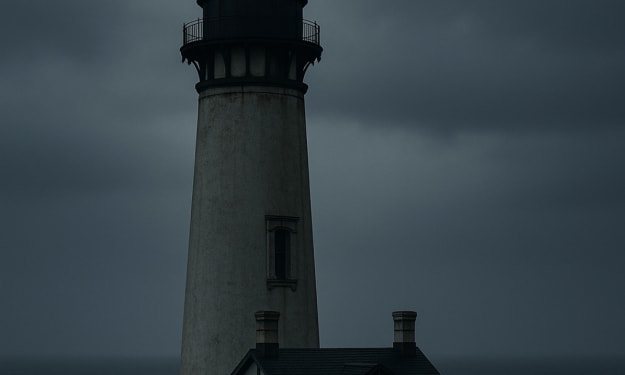
Echoes of the Lighthouse The lighthouse had been abandoned for years. Perched on a lonely cliff in the seaside town of Dorrington, it stood like a forgotten sentinel—windows shattered, its once-white stone now stained with salt and time. Locals said the light had gone out a decade ago, after the keeper passed away and no one bothered to replace him. But Thomas knew better. He had seen the light—flickering faintly—exactly one year after his wife, Eleanor, died in a car crash. Everyone told him it was his imagination. Grief playing tricks on him. But Thomas, once a journalist known for facts and logic, was no longer concerned with reason. That night, with his heart aching and sleep avoiding him as it often did, he stood on the rocky beach and watched the old lighthouse beam once… twice… and then go dark again. It became a ritual. Every month, on the 13th—the date she died—Thomas would walk to the shoreline. And every month, the light would blink just once, like a heartbeat. It gave him something to hold onto. Something mysterious, inexplicable. Something that said, “You’re not alone.” One particularly stormy night, on the anniversary of Eleanor’s death, the light didn’t just blink. It shone—steady and strong. Thomas stood frozen, soaked from rain, heart pounding. Without thinking, he climbed the crumbling path up the cliff and pushed open the rusty gate. The lighthouse loomed above him, silent but glowing. Inside, the spiral staircase groaned beneath his weight. The air smelled of rust and seaweed. And then he saw her. A girl—no older than 20—stood at the top beside the massive lens. She was barefoot, wearing a thick grey sweater and jeans torn at the knee. “You shouldn’t be here,” she said, startled. “Neither should you,” Thomas replied, out of breath. “But… the light…” She looked down. “I… I didn’t think anyone saw it. I just fix it up sometimes. Quietly. I like being here. It helps with... stuff.” They sat together in the glowing warmth of the lens. Her name was Lena, an art student from the nearby town. She came here to escape—just like him. Her brother had drowned two years ago. She had found the lighthouse one night while walking the cliffs, contemplating ending it all. But something about the old place stopped her. Gave her peace. Like someone had left a light on just for her. Thomas didn’t speak. His throat tightened. She turned to him. “You’ve lost someone too?” He nodded. “My wife. It still feels like yesterday.” They sat in silence. The storm outside raged, but inside, the air felt calm. Safe. When Thomas finally left that night, the lighthouse no longer seemed abandoned. It was no longer just a ruin—it was a refuge. A sacred space where grief met healing. He began returning every week. Sometimes with food. Sometimes just to talk. Other times to fix things with Lena—broken stairs, leaking roofs, rusted railings. The townspeople noticed. Rumors spread: the old lighthouse was glowing again. Some said it was haunted. Others said it was holy. No one knew the truth. That the light was being kept alive by two broken people—lighting not just a tower, but their own way forward. A year passed. On the next 13th, Thomas didn’t cry when the light blinked on. He smiled instead. He had learned something Eleanor once told him on a quiet Sunday morning:
By Afzal khan dotani (story uplode time 10:00 PM)about a year ago in Horror
I'd Like A Room Please. Top Story - July 2025.
I travel a lot for work and usually stay at one of the major hotel chains. Their rooms are normally clean, beds comfortable, and the interior walls soundproof enough that if the person next door sneezes, I don’t feel compelled to say, “Bless you.” Unfortunately, none was available for this trip.
By Mark Gagnonabout a year ago in Horror
The House That Dreamed me
Before I ever took my first breath, the house had already imagined me. I don’t say that lightly. People talk about childhood homes with nostalgia—peeling wallpaper, creaky floorboards, the smell of wood smoke in winter—but this was different. The house didn’t just shelter me. It shaped me. And as I grew, I came to believe that it had always been waiting for me. Maybe even creating me. It sat on the edge of a town nobody marked on tourist maps, its roof sloped like a shrug and its windows always half-open, as if it were listening. My parents bought it before I was born, after fleeing a cramped city apartment and the choking fear that their lives had already been written by someone else. “This one just feels right,” my mother had said. The real estate agent had looked surprised—no one had lived there in decades. The wallpaper had curled like old tongues, the basement carried a smell like forgotten dreams, and yet she smiled as if the place had whispered welcome. I was born on a Tuesday morning, in the master bedroom upstairs. My first cradle stood near the window, where sunlight painted golden patterns on the hardwood floor. The house was quiet then, like it was watching. --- By the time I turned six, I began to notice things. Like how the attic only creaked when I was sad. Or how, on sleepless nights, the wind outside seemed to hum lullabies through the heating vents. Once, I drew a picture of a hallway I had never seen—arched ceiling, checkered tiles, ivy climbing up brick—and my mother turned pale. It was the original layout of the basement, she told me. She had found the blueprint in the closet the week before. The house knew things. And sometimes, it dreamed. On summer nights, I’d sleepwalk down the stairs and wake up on the porch swing, watching fireflies blink across the lawn. One morning, I found my childhood diary open on the kitchen table, though I hadn’t touched it in months. My last entry had changed. It now read: > “I am still here. I remember you.” I asked my parents, but they said they hadn’t seen it. My father dismissed it as sleep deprivation. But my mother just looked out the window and whispered, “It’s only dreaming.” --- I left the house when I turned eighteen. I said goodbye to my parents on the porch, pretending not to notice how the floorboards sighed beneath my feet. College, then a job in the city. Noise. Glass. Light. Life unfolded in spreadsheets and subway tickets. But something about me stayed unfinished. I never quite felt like I belonged anywhere else. Every apartment was too square, too quiet. My dreams were always of the house. In them, I’d find myself walking its hallways—except they were different now. The walls had grown taller, the rooms rearranged. The house was changing in my absence, as if it was trying to imagine who I was becoming. And then, one rainy Thursday, I got the call. My parents had passed. A car accident on the way back from a grocery store. I went home. --- The house was still there, slouched a little lower, its paint flaking like tired skin. Inside, dust had settled on every surface, but the air still smelled like warm wood and old books. I walked room by room, touching the walls like I was checking for a pulse. In the hallway, I found a fresh footprint in the dust—my shoe size, but I hadn’t been in that room yet. In my old bedroom, everything was as I’d left it: the small desk by the window, my worn-out copy of A Wrinkle in Time, the blanket with stars. But above the bed, something new—a mural had been painted on the wall. It showed a forest lit by moonlight, and standing in the center was a house just like this one. Except its windows were glowing. I stepped closer. In the mural, in the second-floor window, a shadow was drawn—vague but unmistakable. It was me. Not as I was, but as I had become. The adult I had grown into. The house had kept dreaming me, even after I left. --- I stayed for weeks. The house didn't feel empty, not exactly. It felt like it had been waiting patiently. Every night, it dreamed again. Drawers opened by themselves to reveal old letters. Dust gathered in words on the table: Remember. One night, I heard humming upstairs and followed it to find my mother's old music box—long broken—playing by itself. The house was remembering, and dreaming, and grieving. And so was I. I began repainting the rooms, not to erase the past, but to honor it. Each color felt guided by some invisible hand. Light blue in the bedroom. Deep green in the hallway. I even reopened the attic and found boxes of my childhood toys—each one exactly where I had left it. --- On my last night before returning to the city, I stood on the porch, like I had at eighteen. The wind stirred the trees. I turned to lock the front door, but paused. Inside, the house felt different. Lighter. Almost as if it had exhaled. I realized then: the house didn’t just dream me into being. It became through me. Just as I became through it. It had held my fears, my joys, my first heartbreak. It had grown and grieved and wondered alongside me. And though my parents were gone, and the years had taken their toll, the house still stood—not just because of bricks and nails. But because it had loved me into being. --- And maybe… just maybe… I had dreamed it, too.
By Waleedkhanabout a year ago in Horror
The Last Call From Room 306
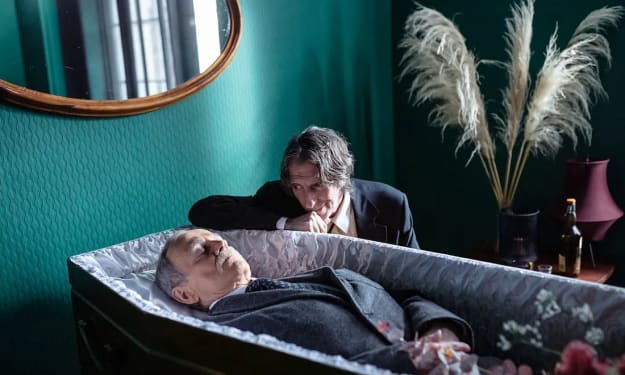
The walls of Room 306 were a pale green, the kind that looked dull even in the morning light. A rotary phone rested on the nightstand between two twin beds, its cord slightly tangled, receiver cradled tightly in place. Dr. Martin Luther King Jr. had been up since dawn. The Memphis sky was overcast, but the energy around the Lorraine Motel buzzed with purpose. It was April 4, 1968. Outside, supporters and friends moved between rooms, sharing coffee, newspapers, and quiet anticipation for the march scheduled for the next day. Inside 306, King sat near the phone, writing a few last notes for the speech he planned to give that evening at Mason Temple. The air was thick with reflection. Not fear—he had long made peace with that—but with a weight of inevitability. Andrew Young walked in without knocking, holding a newspaper and wearing a sly grin. “You were right,” he said. “The court approved the march.” King smiled but didn’t lift his eyes. “Good. Let’s hope it stays peaceful.” Young sat on the edge of the bed, folding the newspaper in his lap. “You know, that speech last night… you were preaching like you knew something.” King finally looked up. “Maybe I did.” The phone rang once—sharp, sudden. Young flinched. King reached for it with calm fingers. “Room 306,” he answered. The voice on the other end was familiar, tired, and slow. Reverend Ralph Abernathy. “Martin, just checking in. Dinner’s ready downstairs, and Jesse says you still haven’t changed clothes.” King chuckled. “Always watching me, huh?” Abernathy’s voice lowered. “You good, brother?” There was a pause. King turned toward the window, seeing his own reflection in the glass, faint and flickering. “I’ve been thinking,” he said. “If this is the end of my road, Ralph, I’m okay. But I’m worried about what’s next for all of you.” “You’ve carried enough. Let us carry the rest,” Abernathy replied softly. A beat passed. King smiled, full of love and sorrow. “See you in ten minutes.” He hung up and stood, stretching slowly, as though waking from a long nap. “They’re ready downstairs,” he said to Young, who nodded and stood to straighten his tie. King walked to the dresser, pulling out a fresh shirt and blazer. He paused before the mirror, fixing his collar. Outside the room, the distant sound of a car horn and the echo of footsteps filled the air. Life went on. Memphis breathed. On the balcony, James Orange and Jesse Jackson were laughing about something. Orange was telling a story—probably the one about the farmer and the mule again. King stepped out into the air, crisp and sweet with the scent of spring blossoms. He placed both hands on the railing and looked out over the parking lot, taking it all in: the quiet rustle of trees, the soft hum of a city on the edge of something it couldn’t name. “Doc!” Jesse called out, “Don’t you want to see what they cooked up downstairs?” King turned, smiling. “I’m coming. Just admiring the view.” A camera clicked below—journalists always waiting, always watching. He thought of Coretta, of his children, of the letter he’d written from Birmingham Jail, of Selma, of Montgomery. His life had been one long call—sometimes a shout, sometimes a whisper—but always a call. And now, it felt like the line was going quiet. A sharp crack split the evening air. For a moment, no one moved. Then chaos. Screams. Running feet. Jesse yelling, “Get an ambulance!” Andrew grabbing at King’s shirt, calling his name over and over. Blood pooled under the balcony. The phone inside Room 306 rang again, unanswered. --- The next morning, a maid entered the room, her hands trembling. She hadn’t slept. She looked at the bed, still made. The blazer lay over the back of the chair. The phone was off the hook, humming an empty dial tone. She stepped to the window, pulled back the curtain, and looked down at the now-empty parking lot. A small bouquet of flowers had been laid just below the balcony. Someone had scrawled a note on the motel notepad and slipped it under the door: “You spoke. We heard. Now it’s our turn to answer.” She placed the phone back on the receiver. The click echoed in the silent room. And Room 306 fell quiet again. But far beyond that motel, the last call still rang out—in marches, in songs, in cries for justice. A voice silenced, but never gone. A call made, waiting for the world to pick up.
By Farid Ullahabout a year ago in Horror
The Finale – The Bone-Light
The Finale – The Bone-Light They say the village of Norhill was swallowed by the forest, but the truth is far stranger. It didn’t vanish into nature — it opened up, like a mouth. And what it swallowed wasn’t just people, but memory itself.
By Wings of Time about a year ago in Horror
The Fielding Letters (part 4)
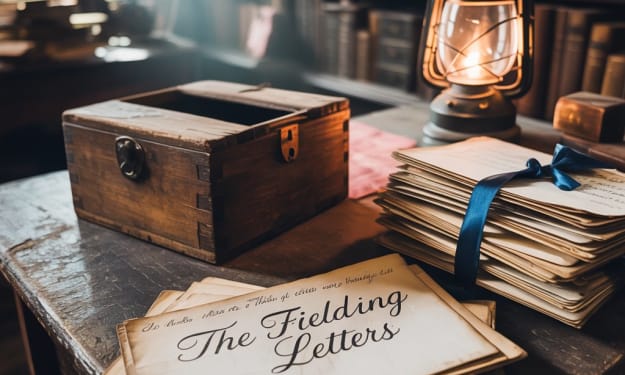
After uncovering the photograph addressed “For Henry,” and learning of Henry Fielding’s mysterious disappearance, I knew my next step was to find out more about him. The local history whispered of secrets, and Henry seemed to be the key.
By Hammad khanabout a year ago in Horror
The Forgotten Room: Her Name Was Margaret (part 2 )
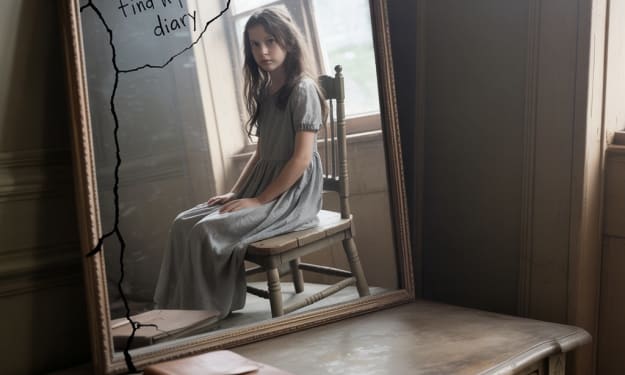
I thought the candles and prayer had settled the room. For a while, things were calm. I stayed in the house for several more days, sorting through boxes, cleaning, preparing it for sale. The mirror stayed quiet, the rocking chair unmoved. I even convinced myself I’d imagined it all.
By Hammad khanabout a year ago in Horror