Latest Stories
Most recently published stories in Horror.
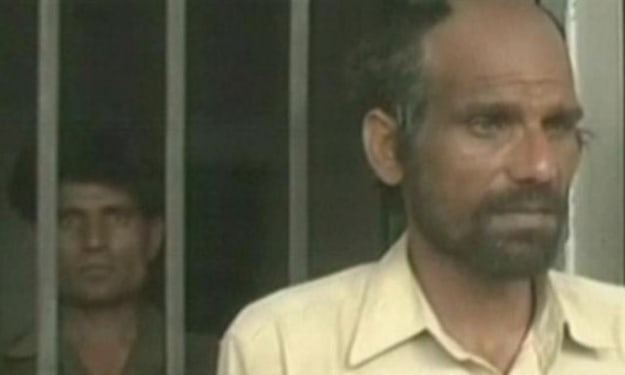
The Brothers Who Dined on Corpses. Content Warning.
Family and Tragedy Origins: Who Were These Brothers?: In a quiet village Darya Khan in northern Punjab, Pakistan, two brothers, Farman Ahmad (35) and Muhammad Arif (31) lived a troubled, volatile life. Their family endured hardship: their mentally ill sister, Nusrat, and two broken marriages left them isolated. According to villagers, Farman was addicted to drugs; Arif reportedly had mental health issues. Their unstable family environment laid the foundation for a horror few could imagine.
By Zia Ul Islamabout a year ago in Horror
Room 404: Do Not Enter
Part 1: The Check-In The Fairhaven Hotel was old but elegant—an aging five-story building nestled quietly in a forgotten corner of the city. Its marble floors, vintage wallpaper, and brass chandeliers whispered of a long-lost golden age. Ethan, a travel blogger known for reviewing haunted and abandoned places, had heard about Fairhaven from an obscure Reddit thread. One comment caught his eye: > “Don’t ask about Room 404. Trust me. Just… don’t.” Naturally, that made him curious. At check-in, Ethan wore his usual polite smile. "Hi. I’m here for three nights. Ethan Keller. Reservation under that name." The elderly receptionist scanned her logbook, her face pale and tired. “Room 405,” she said after a moment. “Fourth floor. Elevator’s to your right.” Ethan leaned in, lowering his voice. “What about Room 404?” Her hand froze on the key. “There is no Room 404.” He arched a brow. “But isn’t that standard in tech buildings? Hotels don’t usually skip that number.” The woman’s eyes turned cold. “There is no Room 404,” she repeated. “Do not ask again.” Part 2: The Missing Room That night, curiosity gnawed at Ethan. He paced the hallway of the fourth floor. Room 401, 402, 403... 405. No 404. Just a plain wall between 403 and 405. He knocked on it, lightly. Hollow. There was a door once—he could see faint seams in the paint. As if it had been sealed. He brought out his phone and used the flashlight. Something was scratched faintly into the wallpaper, almost invisible. Letters: "D O N O T E N T E R" His heart thumped. A challenge. By the next morning, Ethan had bribed a janitor with $100 to talk. “You didn’t hear this from me,” the janitor whispered. “Room 404 was closed in the ‘90s. A woman named Violet stayed there. She was... odd. Came in every night with fresh lilies, always talking to someone who wasn’t there.” “What happened to her?” Ethan asked. The janitor hesitated. “One night, the guests on either side reported screaming. When staff opened the door, they found Violet sitting on the bed... rocking... talking to a mirror. There was blood everywhere. Hers. Others'. But no bodies.” “They closed it?” “They sealed it. Management doesn’t even keep records anymore. But... sometimes guests on the fourth floor hear knocks. And whispers.” Part 3: The Door Opens That night, Ethan set up his camera in front of the blank wall. He started recording, whispering updates to his followers. At 3:04 a.m., something happened. A soft click. A seam in the wall slid open. There it was: Room 404. The door was old, wood cracked and stained. It swung open without a sound. Ethan, breathing heavily, stepped inside. The air was freezing. Inside, the room looked untouched since the 1990s—rose-colored wallpaper peeling at the corners, an old rotary phone, a broken lampshade, and a huge cracked mirror above the bed. Ethan whispered, “Hello?” The door slammed shut behind him. Part 4: The Reflection The mirror drew him in. Something was wrong with it. In the reflection, the room looked... cleaner. Brighter. But there was a woman on the bed—sitting, rocking. Violet. She turned, slowly. Her eyes were pure white. "Finally... someone to talk to," she said. Ethan spun around. No one was there. But in the mirror—she stood, inches behind him. He tried the door. Locked. The rotary phone began to ring. Riiinnng... Riiinnng... Trembling, he picked it up. A voice whispered: "You're next." Then a sharp pain hit his chest—he collapsed. Part 5: The Cover-Up Three days later, police arrived after Ethan’s followers reported him missing. The hotel staff claimed he left early. Paid in full. Nothing unusual. His camera was never found. His room was empty. But every so often, a guest in Room 405 complains. They hear... knocking. Soft crying. Sometimes a man’s voice begging, “Let me out...” And when they look into the hallway mirror outside Room 405… They see a second door. Right where Room 404 used to be. --- The End. Or is it?
By Ubaid Khanabout a year ago in Horror
There’s a Man Standing in My Backyard. He Hasn’t Moved in Three Days
It started Sunday morning. I was drinking coffee in the kitchen, half-awake, looking out over the yard through the glass door when I noticed him—just standing by the treeline. Still. Hands at his sides. Staring. At first, I thought he was a hunter, maybe a hiker who got turned around. I live on the edge of a national forest, and it’s not unusual for strangers to pass through the woods. But this one didn’t move. Not a step. Not a twitch. Just… stared. I watched him for several minutes, waiting for some sign of life—a shift of weight, a raised hand, anything. Nothing. Just dead still. Eventually, I slid the door open and called out, “Hey! You okay?” No response. I tried again. Still nothing. He just kept staring at the glass like he could see straight through me. I shut the door and locked it. Told myself he was just confused, probably high or mentally ill. If he didn’t leave in an hour, I’d call someone. --- An hour passed. Then two. He didn’t move. When the sun set, he was still there. Same spot. Same posture. Not even swaying in the wind. I locked every door and window in the house that night. Didn’t sleep much. --- Day Two. Monday. He was still there. Exactly the same. I recorded him on my phone for twenty minutes—nothing changed. I called the non-emergency line. Explained what was happening. They sent a deputy around noon. I watched from inside as the deputy walked up to him cautiously, spoke a few words. I couldn’t hear what was said. The deputy circled him, waved a hand in front of his face, then touched his shoulder. Still nothing. After about five minutes, the deputy came back to my door. > “He’s breathing,” he said. “But he’s not responding to anything. Doesn’t even blink.” > “What do I do?” I asked. > “Legally? Nothing unless he trespasses. If he crosses the fence line or approaches the house, then call us back.” > “So I’m just supposed to ignore him?” The deputy gave me a shrug and a look that said yes. --- That night was worse. Every time I passed the kitchen, I felt drawn to the glass door. I couldn’t stop myself from peeking. And every time, he was still there. Staring. I zoomed in on the video I took. His eyes weren’t just locked in my direction—they were focused on me. No matter where I moved in the house, I felt them tracking me. I set up a camera on the counter to record overnight. --- Tuesday morning. I checked the footage. He never moved. But at exactly 3:17 a.m., the footage glitched—just for a second. The screen warped, like heatwaves. When the image settled, he looked… different. His body was the same, but his face—something was wrong. It was blurry, like it didn’t match the rest of the frame. And then, frame by frame, his mouth twisted into a wide, unnatural grin. Only for a second. Then it was gone. Back to normal. I felt sick watching it. --- That afternoon, my neighbor came by to return a borrowed snow shovel. She’s 87, tough as nails, been here since the 60s. I asked her if she’d seen the man. She peered through the glass for a long moment and muttered: > “He’s back.” My heart stopped. > “What do you mean back?” She didn’t take her eyes off him. > “He came here once before. ’72. Same spot. Didn’t move for days. Then one morning, he was gone.” > “What is he?” She didn’t answer right away. Just stared harder. > “Not human,” she whispered. “They wear us. Like clothes.” Then she left. I didn’t sleep at all that night. --- Day Four. Wednesday. Something changed. The back door was unlocked this morning. I know I locked it. And there were muddy footprints on the wood floor. Leading from the door to the hallway—and stopping. No return prints. Like someone came in, then vanished. I checked every room. Closet. Attic. Nothing. The man was still in the yard. Still standing there. Still watching. --- Around 2:30 a.m., I was jolted awake by a loud knock. Three slow pounds on the glass. I grabbed my phone and crept to the kitchen. The lights were off, but the full moon lit the yard in silver. He was standing closer. Right up against the glass. His face was inches from the door. He hadn’t moved in days—but now he was right there. Still not blinking. Still smiling. And written in fog on the inside of the door was a message: > “LET ME IN.” I ran upstairs, locked myself in the bedroom, and called the police again. This time, the line was filled with static. Then a voice—not the operator’s. Not mine. A whisper: > “You already did.” --- I didn’t open the door for hours. When I finally checked the kitchen at sunrise… he was gone. The yard was empty. Grass undisturbed. No footprints. No fog on the glass. Just silence. But something’s wrong. The air in the house feels… off. Heavily still. Like the moment before a thunderclap. I checked the camera footage again. And I saw it. At exactly 3:17 a.m.—the same time as before—the camera shows me walking into the kitchen in my sleep. I open the door. I let him in. And then? Nothing. Just static. --- I don’t remember doing that. But now, I feel it. There’s something here. In the walls. In the mirrors. Sometimes I see him behind me, just for a second, when I pass a window. Not outside. Inside. Watching. Waiting. ---
By Habibullah. Shoukat Aliabout a year ago in Horror
I Bought a Haunted Mirror Off Facebook Marketplace — Now It Won’t Let Me Sleep
It started with a Facebook Marketplace listing. > “Antique Victorian mirror — $30 OBO. Must pick up. ASAP.” No details, just a grainy photo and a location only twenty minutes away. I’d just moved into my new apartment and needed something to fill the blank wall in my hallway. I messaged the seller. She responded in seconds. > “If you come today, it’s yours.” That should have been my first red flag. --- The house was old — weathered wood, flaking paint, and a porch that creaked under my feet. A woman in her late 60s opened the door. Her eyes were bloodshot, like she hadn’t slept in weeks. She didn’t smile. She led me straight to the mirror without saying much. It stood nearly six feet tall, framed in dark oak with ornate carvings of twisting vines and faces—yes, actual carved faces. The glass was flawless, despite its age. I reached for my wallet. > “No,” she said. “Just take it.” > “Are you sure?” She stared past me. “It doesn’t want to stay here.” I laughed awkwardly, thinking she was joking. But her hands were trembling as she helped me carry it out. --- I set the mirror in the hallway, directly across from my bedroom. It looked stunning. Heavy. Regal. I remember thinking how lucky I was to score something so vintage for free. That night, I couldn’t sleep. Not from fear—just unease. Every time I closed my eyes, I saw the hallway in my mind. The mirror, waiting. At 2:13 a.m., I got up for water. As I stepped into the hallway, I glanced at the mirror and froze. I was in it. But I wasn’t moving. My reflection just stood there, arms at its sides, watching me. Then—blink. The reflection blinked, but I hadn’t. I staggered backward, heart hammering in my chest. When I looked again, it was normal. Just me. Tired. Shaken. I told myself I was overtired. Stress. Shadows. Head games. I went back to bed and left the lights on. --- The next night, it got worse. Every time I passed the mirror, I could feel something watching me. Not just from the glass—from behind it. I covered it with a bedsheet, but it didn’t help. At 3:06 a.m., I woke to the sound of fabric sliding. I stepped into the hallway. The sheet was on the floor. I didn’t sleep after that. --- On night four, I dreamt of water. Drowning. Gasping. But not in an ocean—in a mirror. I could see my own face, pressed against the glass from the other side, screaming silently. When I woke, my pillow was soaked with sweat—and tears. That morning, I noticed something else. In the mirror’s reflection, the hallway was different. Subtly. The shadows stretched the wrong way. The picture frames on the opposite wall were crooked in the glass, but perfectly straight in real life. And in the very back of the reflection—at the end of the hallway—I saw a figure. Small. Female. Pale face, long hair. But when I turned around, the hallway was empty. --- I tried to move the mirror into the garage. It wouldn’t budge. No matter how hard I pushed or pulled, it stayed locked in place. Like it had rooted into the wall. I even tried to break the glass. The hammer bounced off. No crack. Not even a scratch. When I looked into the mirror afterward, I swear I saw it smile. --- That night, I left the apartment. Booked a hotel. I needed sleep, even just one night. It didn’t help. The mirror came with me in my dreams. It stood at the foot of the hotel bed. My reflection sat up on its own, turned to look at me, and whispered one word: > “Stay.” --- Back home the next day, I noticed the hallway light flickered constantly. Bulbs died faster than I could replace them. My dog, Penny, refused to go near the hallway. She’d sit outside the bedroom, whining, tail between her legs. On day ten, I found claw marks inside the mirror frame. Deep gouges along the bottom edge, as if someone—or something—had tried to crawl out. And that night, I saw her again. She was in the hallway. Not in the mirror—in real space. Pale skin, matted hair, no eyes. Just empty sockets leaking dark liquid down her cheeks. I ran. Locked myself in the bathroom. From the hallway, I heard knocking. Slow. Deliberate. Then a voice, hoarse and wet: > “Let me in.” --- The next morning, the hallway was empty. The mirror reflected only me. But I looked… wrong. Thinner. Paler. My eyes had a shadow to them, like something was pressing against the back of my skull. I posted the mirror back on Facebook Marketplace. > “Antique Victorian mirror — FREE. Must pick up today.” A girl messaged me within minutes. > “I’ve been looking for something just like this!” I responded immediately. > “Come quick.” She arrived that afternoon. As she pulled away with the mirror strapped in the back of her SUV, I felt like I could breathe again. The hallway seemed brighter. My dog wagged her tail for the first time in days. That night, I slept. For the first time in nearly two weeks. --- But I still hear it sometimes. The knocking. The whisper. > “Stay.” And last week, I woke up with my phone open to Facebook Marketplace. Scrolled down. Heart racing. There it was. > “Antique Victorian mirror — $30. Must pick up ASAP.” Same grainy photo. Different seller. Different town. But the mirror… is the same. --- [The End] ---
By Habibullah. Shoukat Aliabout a year ago in Horror
The Forgotten Silence: The Woman Who Watched TV for 42 Years
In a quiet attic apartment in Zagreb, Croatia, time stood still. Dust gathered like snow on the shelves, a teacup remained untouched beside a vintage black-and-white television, and behind a locked wooden door, a life faded away—unnoticed, unremembered, and undisturbed for over four decades. This is not a horror story. It's not fiction. It's the heartbreaking true story of Hedviga Golik, a woman who, in life, was barely known by those around her. But in death, she became a haunting symbol of forgotten souls in a rapidly moving world. --- The Woman No One Noticed Hedviga Golik was born in 1924, and lived a modest life in the Croatian capital of Zagreb—then part of the Socialist Federal Republic of Yugoslavia. She was described as a quiet woman, polite but distant, and neighbors later recalled that she had once worked as a nurse. She never married, had no children, and kept mostly to herself. In 1966, Hedviga made a simple evening routine: she brewed herself a cup of tea, set it down next to her favorite armchair, and turned on the television. The flickering screen of a black-and-white set filled the small room with soft, ghostly light. Perhaps it was a familiar news program or an old film she’d seen before. Then, something happened. She passed away. Alone. There was no loud cry for help. No crash. No sign of struggle. Her heart simply gave out. And from that moment on—no one ever checked in again. --- Four Decades of Silence In the days and weeks after her disappearance, no alarms were raised. No police reports were filed. Some neighbors assumed she had moved in with relatives. Others whispered that she had simply vanished or left the country, possibly to escape the political tensions of the time. The building’s staff and residents carried on with life, and over time, her name faded from memory. Remarkably, the apartment remained untouched. While in most cities, unpaid rent or utility bills would eventually prompt an inspection, something strange happened in Hedviga’s case: her electricity remained active for decades. It was later discovered that the apartment’s power had been paid for as part of a building-wide agreement set up by the architect. Because of this, the TV continued to draw power—even as the dust collected and the seasons changed outside her window. No one questioned the unopened door. No one dared to investigate. And so, behind that door, Hedviga sat—frozen in time. --- The Discovery: 42 Years Later It wasn't until May 2008, over 42 years later, that the truth was finally uncovered. A group of building officials and city workers were performing renovations and resolving apartment ownership records. When they reached the dusty attic flat, they decided to force open the door that had been sealed shut for decades. What they found inside shocked the entire country—and soon, the world. Inside the apartment, everything was exactly as it had been left in the 1960s. A long-cold cup of tea sat beside a worn armchair. An old black-and-white TV rested on a low stand. Cobwebs decorated the corners like lace curtains. Newspapers, furnishings, and household items from the 1960s surrounded them—untouched by modern life. And in the armchair, they found her mummified remains. Still seated. Still facing the television. Still in the position she was in the moment her life quietly ended. --- The World Reacts News of Hedviga Golik’s discovery spread quickly through Croatian media, then across Europe, and eventually the world. Headlines screamed: > “Woman Sat Dead for 42 Years in Front of TV” “Mummified Body Found in Armchair” “Dead and Forgotten: No One Noticed Her Absence for Four Decades” People were horrified—but also deeply moved. How could someone disappear from the world without anyone noticing? How could a community, a city, a society lose track of a person like this? Her story became a symbol of urban loneliness, a shocking reminder of how easy it is for people—especially the elderly, the isolated, the quiet—to fall through the cracks of a fast-paced, modern world. Psychologists, journalists, and sociologists weighed in. They connected her case to the rising phenomenon of “Kodokushi”, or “lonely deaths,” observed in Japan and increasingly elsewhere. These are cases where people die alone in their homes and are only discovered weeks, months, or even years later—sometimes only when the smell becomes unbearable or when bills go unpaid. But Hedviga’s case stood out. 42 years. A near half-century of silence.fe Lost—And Lessons Left Behind No one knows for sure why no one searched for Hedviga. Perhaps it was the fragmented records during Yugoslavia’s upheavals. Maybe people feared legal consequences or simply assumed she left voluntarily. In the end, there were no relatives to claim her body. She was quietly buried—without ceremony, without mourners, without music. But her story didn’t end there. Hedviga Golik, in death, became more well-known than she had been in life. She became a tragic symbol of neglect, solitude, and the forgotten. Her story sparked policy discussions in Croatia and beyond. Many called for improved welfare checks on elderly citizens living alone. Some buildings introduced monthly tenant confirmations or wellness calls. Others debated the role of community in preventing such tragediespartment That Time Forgot The state of her apartment added a surreal element to the case. It was like stepping into a preserved museum from the 1960s. The furniture was retro, untouched by dusters or redesigns. Old records and newspapers sat on the shelf. Even the wallpaper clung on, faded but intact. For the officers and reporters who entered the scene, it was like crossing into a forgotten time capsule—except this one contained death. They described it as eerie, heartbreaking, and deeply unsettling Thoughts: Who Will Remember Us? In our modern age—filled with social media, instant messages, and 24/7 notifications—it's almost impossible to imagine someone vanishing unnoticed for a week, let alone forty-two years. But Hedviga’s story asks a quiet, chilling question: Are we really as connected as we think we are? We often walk past our neighbors without knowing their names. We assume everyone has someone—family, friends, someone checking in. But what if they don’t? Her life may have ended quietly, and her story may have surfaced accidentally, but Hedviga Golik has left behind a legacy far greater than she ever intended. Her forgotten silence echoes louder than most lives remembered. May we never forget the ones the world forgets.
By Hasbanullahabout a year ago in Horror
The Closet Door. Content Warning.
When I was little, I used to cry myself to sleep. My mom said it was just a phase, that I was too sensitive, and that the other kids would grow out of their meanness. But their words stuck to me like gum under a school desk—chewed up and forgotten, but still there.
By nawab sagarabout a year ago in Horror