Latest Stories
Most recently published stories in Horror.
Pathogen: Ch. 16. Content Warning.
This was bad. This was very, very, very bad. Alarms screamed all around Marnie as she barreled down the hall, racing for the elevator as fast as her high heels could carry her. General Hackett or one of his scientists must have flipped a switch, because the lights went out around her within a second of her taking off. All she had to see by were the hazard lights, slowly flashing red to the tempo of the alarm.
By Natalie Grayabout a year ago in Horror
The Attic Whispers
Megan had always wanted a quiet place to write. So when she stumbled upon a hundred-year-old Victorian house for rent just outside of Raven Hollow, she jumped at the opportunity. The house was beautiful in a haunting kind of way—tall windows, ornate wooden trims, creaky floorboards. It was the kind of place that seemed to remember everything.
By Muhammad Bilalabout a year ago in Horror
When Travel Becomes a Crime: The Unjust Consequences of Unilateral Sanctions – A Citizen's Testimony
By Maddalena Celano Rome, July 2025 On July 16, 2025, I, an Italian citizen, was denied boarding at Toronto International Airport for a flight to Managua, Nicaragua, with the Colombian airline Avianca. The official reason? "Governmental reasons." However, further investigation and statements from airline staff revealed that the real cause of the denied boarding was the application of unilateral sanctions by the United States government against travelers who have previously visited the Republic of Cuba.
By Maddalena Celanoabout a year ago in Horror
Putt Putt Park
Alba wanted a cute night out with Amos after a long week. She wanted to play putt putt, but was tired of the same ones in the town. She searched on her phone and found one that was located within a small town next to their own. They drove the 50 minutes in order to enjoy the new found spot. When they arrived the place seemed rusted, abandoned, and overgrown. They walked into the front building to pay. A man who seemed to be around 80 was standing at a desk. He did not look up and continued to read the book in front of him. He only pointed to the sign next to him that showed, "18 holes: $5 per person."
By Seashell Harpspring about a year ago in Horror
That One Night
I should have taken the bus. That thought kept repeating in my head as I walked down Elmwood Avenue, the shortcut I always promised myself I'd never take again. But after pulling a double shift at the diner for the third night this week, my feet ached and my eyelids felt like sandpaper. All I wanted was to collapse onto my mattress and sleep for twelve hours straight. The rain had stopped hours ago, but the air still hung heavy with moisture, smelling like wet concrete and something else—something coppery that made the hairs on my neck stand up.
By Emma Walkerabout a year ago in Horror
Kael and the Sleeping Beast. AI-Generated.
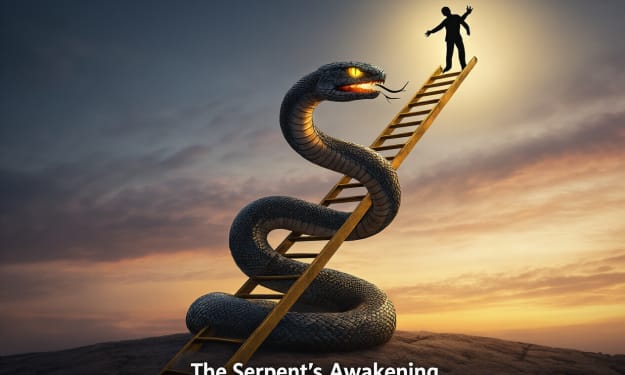
In a lonely place where dry land met cold mountains, lived a poor shepherd named Kael. He dreamed of escaping his hard life. One day, he heard stories of a huge, dangerous snake—a legendary python sleeping deep in the icy mountains. People said it was so large and rare that catching it could bring great fortune. Kael, driven by desperation, went into the mountains. After many freezing days, he found it: a giant python, coiled like a frozen tree. It had just eaten, and its huge body lay still. Believing it to be asleep forever, Kael thought, If I take this beast to the city, people will pay to see it. I will finally be rich. With great effort, Kael began dragging the heavy snake across icy paths and deep snow. His body hurt, but the hope of a better life gave him strength. After days of struggle, he reached the city. People were shocked and amazed. A large cage was built in the market. Crowds came to see the sleeping monster. Kael became famous. Coins filled his pockets. For the first time, he felt proud and successful. But the warmth of the city, the noise, and the excitement woke the beast. The snake began to move. Its huge eyes opened, full of anger and hunger. It hissed. The ground shook. Suddenly, the python broke through the cage and attacked. It crashed into buildings, swallowed a donkey whole, and spread fear through the streets. Kael stood frozen, shocked by the danger he had brought. The city guards tried to stop it, but their weapons were useless. The snake was wounded by the cold, yet its rage made it stronger. Light seemed to shine from its damaged body. It groaned and searched for peace, but none came. After hours of fear and destruction, the snake finally collapsed and died. The city was ruined, but safe at last. The Lesson: This story teaches us a lesson about the ego. Like the sleeping python, our ego seems silent when we are humble. But when we feed it with praise, money, or power, it awakens. The ego then grows wild, controls us, and can hurt us and others. If we ignore our inner self and chase only worldly things, our ego becomes stronger. It pushes us into desires, attachments, and suffering—just like the snake that caused destruction and pain. Only spiritual awareness—humility, kindness, and self-control—can calm the ego. We must tame the beast inside, not just the one outside. True strength is not in showing power, but in mastering the self.
By Fazli Aminabout a year ago in Horror
Rooms We Never Entered
It started as a local curiosity, the sort of whispered story that drifts through small towns late at night: an old boarding house, abandoned decades ago, standing stubbornly at the end of Ashford Lane. The house had once been grand, its wooden balustrades carved with roses and angels. Now, rot claimed the walls and ivy strangled the stone, but something darker, locals said, had always haunted it. When I moved to Ashford to cover a series of ghost stories for the local paper, the boarding house was on everyone’s lips. “Rooms we never entered,” an old man at the diner told me one morning, his coffee trembling in his hands. “Rooms we were told not to go into, no matter what.” He wouldn’t say more. The building itself was easy to find. Even at midday, a hush surrounded it, as though the air itself held its breath. Windows, like blind eyes, watched silently. The gate creaked open under my touch, revealing a garden swallowed by thorns and moss. Inside, dust lay like a heavy blanket. Faded wallpaper peeled in long strips, revealing scars of damp and age. A grand staircase curved up into darkness. I explored carefully, notebook in hand, capturing fragments of what had once been: an old piano missing keys, a dining hall with chairs askew as if guests had left mid-meal. Then I saw them: four doors at the end of the upper hallway. Unlike the others, these doors were painted black and bore small brass plaques with numbers: 9, 10, 11, and 12. Their handles were tarnished, but the paint was strangely unchipped, as if someone had kept them up over the years. Each door felt oddly cold when my fingers brushed against them. The locals’ warnings echoed in my head, but curiosity clawed at me. The first three rooms were empty, save for rotting furniture and drifting cobwebs. But Room 12 felt different. Its door resisted, scraping against the floor as if reluctant to open. Inside, moonlight streamed through a crack in the boarded-up window, falling on a child’s wooden rocking horse. It was still rocking, gently, as though someone had just pushed it. My breath caught. Dust motes danced in the beam of my flashlight. Across the floor, dark stains marred the boards—old stains, but unmistakably shaped like footprints, leading to the corner. I raised my camera. The viewfinder showed only darkness. Lowering it, I saw the faint outline of something in the corner: a shape, hunched and unmoving. My pulse hammered. I stepped closer, telling myself it was just debris. But as I neared, I realized the shape had form—a small chair, and on it, a broken porcelain doll. Its head tilted at an unnatural angle, eyes cracked but staring directly at the door. A chill swept over me, the air tightening around my chest. I backed away, careful not to look away from the doll, afraid it might move if I blinked. The rocking horse had stopped. I retreated to the hallway, shutting the door with shaking hands. It clicked shut, and in the silence that followed, I heard a faint rustling from inside. Something brushing against the floorboards. I left the boarding house quickly, but that night, curiosity gnawed at me. The next day, I visited the town archives. An old ledger revealed the names of boarders over the years—most of them left no record beyond a signature. But four names were crossed out, all dated the same winter in 1927. Next to them, in red ink, was a single word: “Missing.” A faded newspaper clipping from that year told a fragment of the story: the owner of the house had sealed those four rooms after the disappearances, insisting they were cursed. Rumors spoke of strange laughter, figures glimpsed at night, guests waking to scratches on their doors. Eventually, the place emptied out, and the house was left to rot. I returned one last time, drawn by something I still can’t explain. In the quiet of the hall, I placed my hand on Room 12’s door. The air around it felt alive, pulsing with something old and cold. I didn’t open it. Instead, I pressed my ear to the wood. At first, there was nothing but silence. Then, faintly, so faintly I almost doubted it: a child’s giggle, echoing from the darkness beyond. I stepped back, heart pounding, and left. Outside, the sun had already dipped below the hills, and shadows stretched long across the lawn. I’ve thought often about that house, about the rooms we never entered—and the ones we did. Some doors, I’ve learned, are better left unopened. And some stories, even the ones we tell ourselves late at night, are truer than we’d ever dare to believe. ---
By Mati Henry about a year ago in Horror
The House That waits
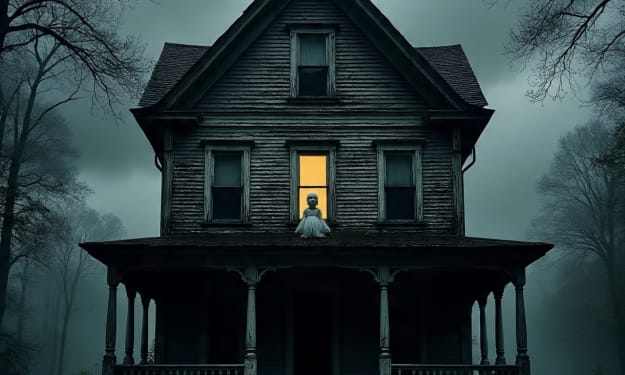
No one had lived in the old Whitlock house for nearly forty years. Perched like a vulture at the edge of town, its windows were clouded with time, its porch sagging under the weight of memory and decay. Children whispered about it in the schoolyard, dared each other to touch the door, and swore they saw shadows moving even when the wind was still.
By umais khanabout a year ago in Horror