Latest Stories
Most recently published stories in Horror.
My Childhood Doll Started Breathing
I never planned to open the box. It had been sitting in my parents’ attic for over twenty years, wedged between old Christmas decorations and stacks of yellowing magazines. Inside was my childhood doll—Lily. I’d forgotten most of the details until recently: porcelain face, glass eyes, strawberry-blonde curls, and a little blue dress. She’d been my favorite, but also the source of nightmares I could never explain.
By waseem khanabout a year ago in Horror
Welcome to the Hotel Canfield
"Dude, this is epic!" Cole's dazzling hazel eyes boggled out of his skull, his pale, freckly cheeks stretching in an absolutely giddy grin. The seventeen-year-old hadn't even gotten out of the car yet, and he was already about to wet himself from excitement. Just seeing that look on his face almost made this entire, crazy idea worth it.
By Natalie Grayabout a year ago in Horror
How Many Believers Played Counter-Strike 1.6 Ten Years Ago? A Look Back
How Many Believers Played Counter-Strike 1.6 Ten Years Ago? A Look Back In 2025, I’m Akihiro Nakamura, a 27-year-old gamer from Osaka, known as “SpiritBlade” in Counter-Strike 1.6 (CS 1.6). This iconic shooter, launched in 2000, has been a digital haven for players worldwide, including Japan. Reflecting on 2015—ten years ago—I wondered: how many players of Counter Strike 1.6 were believers, carrying their spiritual or religious faith into the game? This article explores the presence of believers in CS 1.6’s community a decade ago, blending my perspective with the era’s context to uncover faith in the frags.
By Arnold Spitzbergenabout a year ago in Horror
The Apartment Above Me
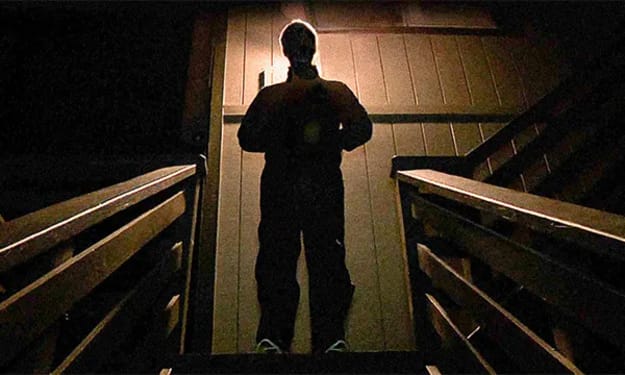
I moved into 4B at the end of October, when the air was cold enough to sting and the trees outside were little more than crooked black lines against the sky. The building was old—brick walls pocked with history, pipes that clanked like they had opinions. My friends warned me about the quirks of older apartments, but I wasn’t prepared for the first thing I noticed my very first night: the noise from the apartment above me. It wasn’t just footsteps—it was pacing, like someone walking in slow, deliberate circles.
By Musawir Shahabout a year ago in Horror
The Whisper House
The realtor’s brochure called it a "quaint fixer-upper brimming with potential." Eleanor Vance, still adrift in the numb silence following her husband Robert’s sudden passing six months prior, saw it as an escape. Nestled at the dead-end of Sycamore Lane, shrouded by ancient, weeping willows, the Victorian house wasn’t quaint. It was *watchful*. Its asymmetrical gables hunched like brooding shoulders, the once-vibrant clapboard weathered to a sickly grey. Most unsettling were the windows – tall, narrow panes reflecting the encroaching woods with a depth that felt less like glass and more like stagnant water. Eleanor signed the papers. The price was absurdly low.
By Danyal Hashmiabout a year ago in Horror
The House That Remembers
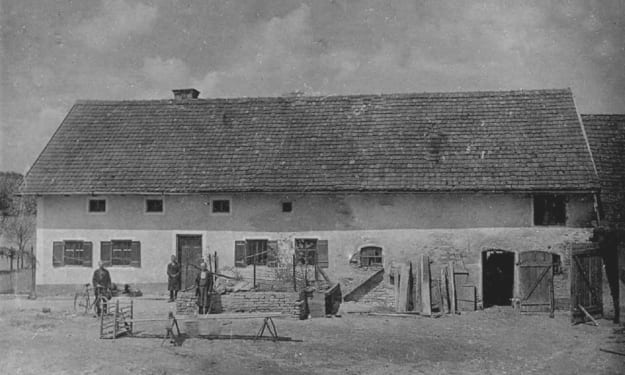
The old Whitmore house had been abandoned for decades, its windows boarded and gardens overrun with ivy. Cracked stone steps led to a warped wooden door, and the chimney stood like a sentinel against the gray Eldridge sky. Locals had long avoided the place, speaking of it only in hushed tones. They said the house had a memory. That it never forgave.
By Danyal Hashmiabout a year ago in Horror
World War I: The Great War That Redrew the World
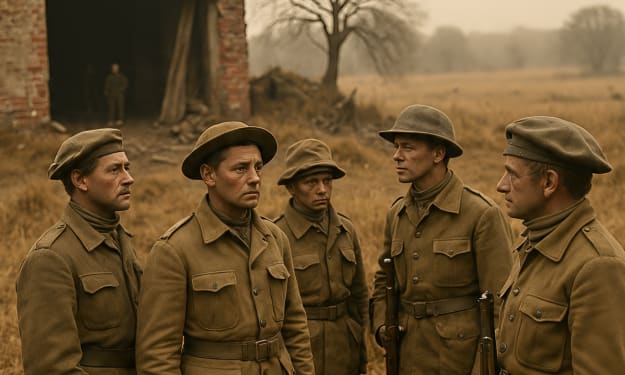
World War I, often called the Great War, was unlike any conflict the world had ever seen before. Beginning in 1914 and lasting until 1918, it involved the major powers of the world and forever altered the political, social, and cultural landscape of the 20th century. The war’s causes were complex, but the spark that ignited this devastating conflict was a single, tragic event — the assassination of Archduke Franz Ferdinand of Austria-Hungary. What followed was a brutal, global struggle that would lead to the collapse of empires, the birth of new nations, and lay the groundwork for the second great war just decades later. The Web of Alliances and Rising Tensions Europe at the start of the 20th century was a continent bristling with tension. Powerful empires — the Austro-Hungarian, German, Russian, and Ottoman Empires — vied for influence and territory. Nationalism, imperial ambitions, and military build-ups created an unstable environment. Countries formed complicated alliances designed to protect each other if war broke out. Two major groups had emerged by 1914: The Allied Powers, led by France, the United Kingdom, and Russia. The Central Powers, led by Germany, Austria-Hungary, and the Ottoman Empire. Italy, initially neutral, would later join the Allies, while the United States remained neutral until 1917. The Spark: Assassination of Archduke Franz Ferdinand On June 28, 1914, Archduke Franz Ferdinand, heir to the Austro-Hungarian throne, was assassinated in Sarajevo by Gavrilo Princip, a Bosnian Serb nationalist. This single act sent shockwaves across Europe. Austria-Hungary, blaming Serbia, issued an ultimatum with harsh demands. When Serbia’s response failed to satisfy Austria-Hungary, war was declared. Due to the tangled system of alliances, what might have been a localized conflict escalated rapidly. Within weeks, Germany declared war on Russia and France, and Britain declared war on Germany. The world was at war. The Horrors of Trench Warfare The Western Front — stretching across Belgium and northern France — soon turned into a deadly stalemate. Both sides dug in, creating a vast network of trenches that became home to millions of soldiers. The conditions were horrific: mud, rats, disease, constant shelling, and the ever-present threat of death. Battles such as the Somme and Verdun epitomized the brutality, with hundreds of thousands of casualties on both sides for gains of mere miles. Technology and the Changing Face of War World War I was the first “modern” war, using advanced technology that increased the scale of destruction: Machine guns made mass infantry charges deadly. Poison gas, introduced by the Germans, caused agonizing injuries. Tanks debuted to try breaking the trench stalemate. Airplanes were used for reconnaissance and combat. Submarines (U-boats) threatened naval dominance and supply lines. These innovations changed warfare forever but came at an enormous human cost. The Eastern Front and Other Theaters While the Western Front grabbed much attention, fierce fighting also occurred in Eastern Europe, where Russia faced off against Germany and Austria-Hungary. The Russian army suffered devastating losses, and by 1917, internal unrest led to the Russian Revolution and Russia’s withdrawal from the war. In the Middle East, the Ottoman Empire fought the Allies, with battles like Gallipoli becoming legendary for courage and sacrifice. The United States Enters the War Initially, the United States stayed neutral, eager to avoid European conflicts. However, unrestricted submarine warfare by Germany, which sank civilian ships including those with American passengers, and the revelation of the Zimmerman Telegram — in which Germany encouraged Mexico to attack the U.S. — pushed America to join the Allies in 1917. American involvement provided a critical boost in manpower and resources, helping to tip the balance. The War Ends and Its Aftermath By late 1918, the Central Powers were exhausted. Germany faced economic hardship, food shortages, and growing unrest at home. Allied offensives pushed the German forces back, and on November 11, 1918, an armistice was signed, bringing an end to the fighting. The Treaty of Versailles, signed in 1919, formally ended the war but imposed harsh penalties on Germany, including massive reparations, territorial losses, and military restrictions. These terms sowed seeds of resentment and economic hardship, setting the stage for World War II. The Legacy of World War I World War I was a turning point in history. It led to the collapse of several empires — Austro-Hungarian, Ottoman, Russian, and German — and redrew borders across Europe and the Middle East. New countries emerged, and nationalist movements gained momentum. The human cost was staggering — more than 16 million deaths and millions more wounded. Societies grappled with grief and the psychological scars of war, while veterans returned to a world forever changed. The war also spurred social and political changes, including shifts in gender roles as women took on new roles during the conflict. Conclusion: Remembering the Great War World War I’s profound impact is still felt today. It was a conflict that reshaped nations and defined the modern era. The lessons of the Great War — the devastating cost of nationalism, the dangers of entangled alliances, and the horrors of modern warfare — continue to remind us of the importance of peace and diplomacy.
By Ismail khan about a year ago in Horror