
'Inferno' (1980) - Dario Argento Descends Into the Mother of Darkness
A hallucinatory follow-up to Suspiria turned New York into an occult nightmare, proving that sometimes atmosphere matters more than making sense.

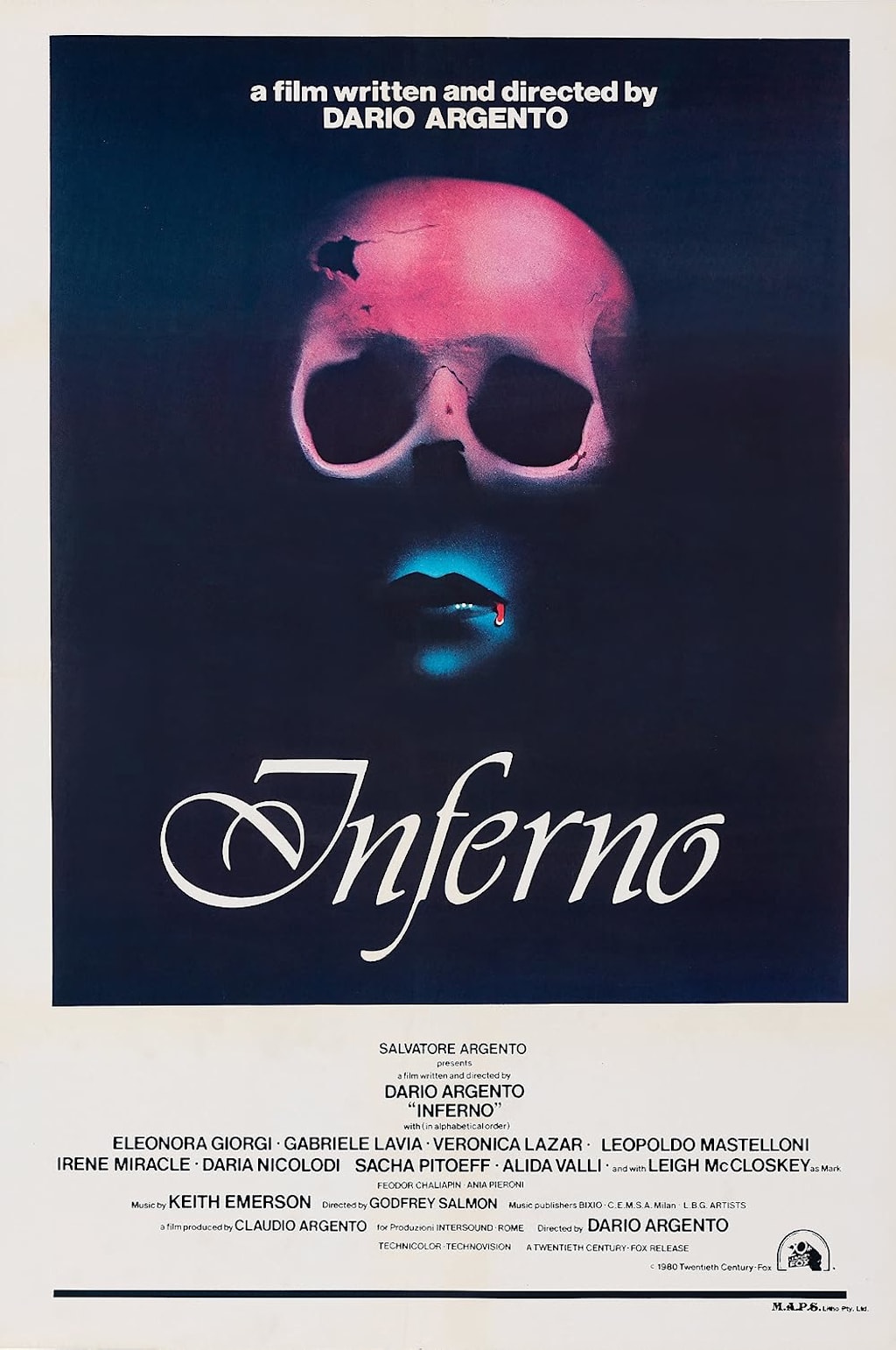
The Mother of Darkness
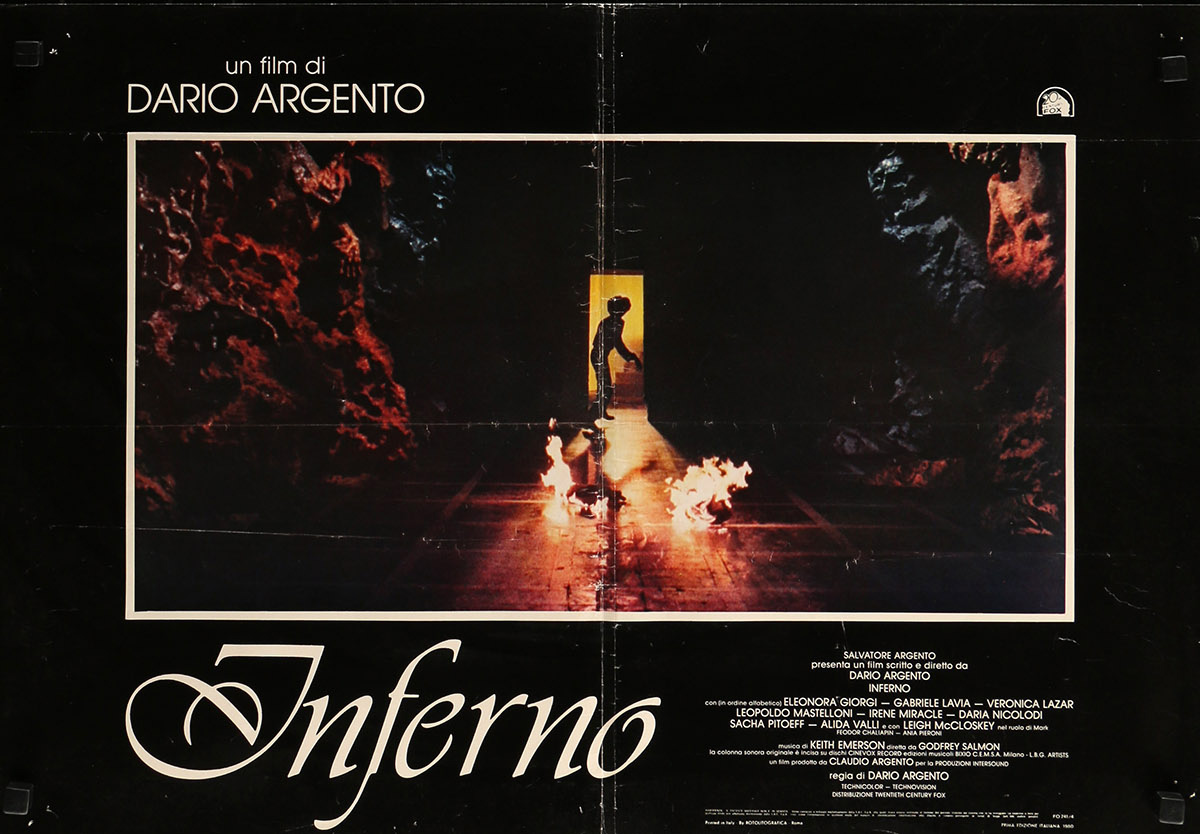
In 1980, Dario Argento followed Suspiria with Inferno, a film that seemed determined to prove that whatever nightmare he had created the first time around could still get stranger.
And considerably less comprehensible.
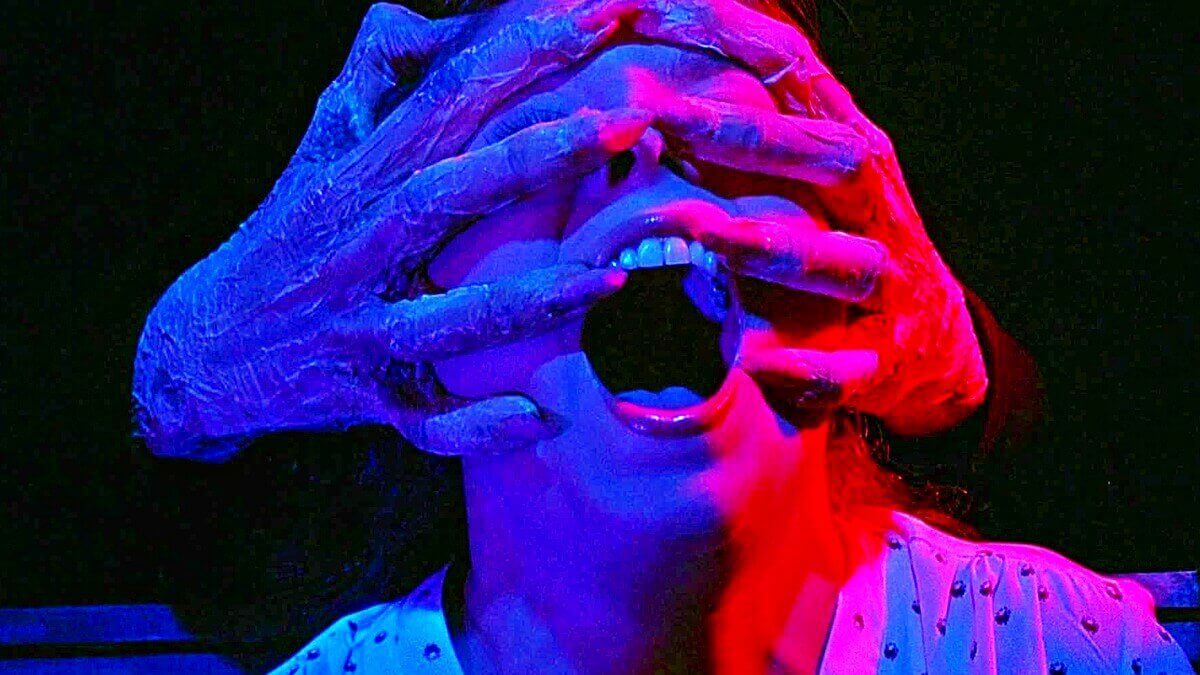
If Suspiria was a fairy tale painted in neon, Inferno was the nightmare you have after reading the fairy tale and discovering that the book itself is evil. It was the second chapter in Argento’s planned “Three Mothers” mythology, introducing audiences to Mater Tenebrarum—the Mother of Darkness—and plunging its characters into a world of occult architecture, ancient books, unexplained murders and rooms that seemed to obey the rules of a dream rather than reality.
The film starred Irene Miracle, Leigh McCloskey and Alida Valli, with a supporting cast that included some familiar faces from European horror. It was loosely inspired by Thomas De Quincey’s Suspiria de Profundis, the same literary work that had helped inspire the mythology behind Suspiria.
But where Suspiria gave us a relatively straightforward descent into an evil ballet academy, Inferno essentially threw away the map.
And that was both its greatest strength and its biggest problem.
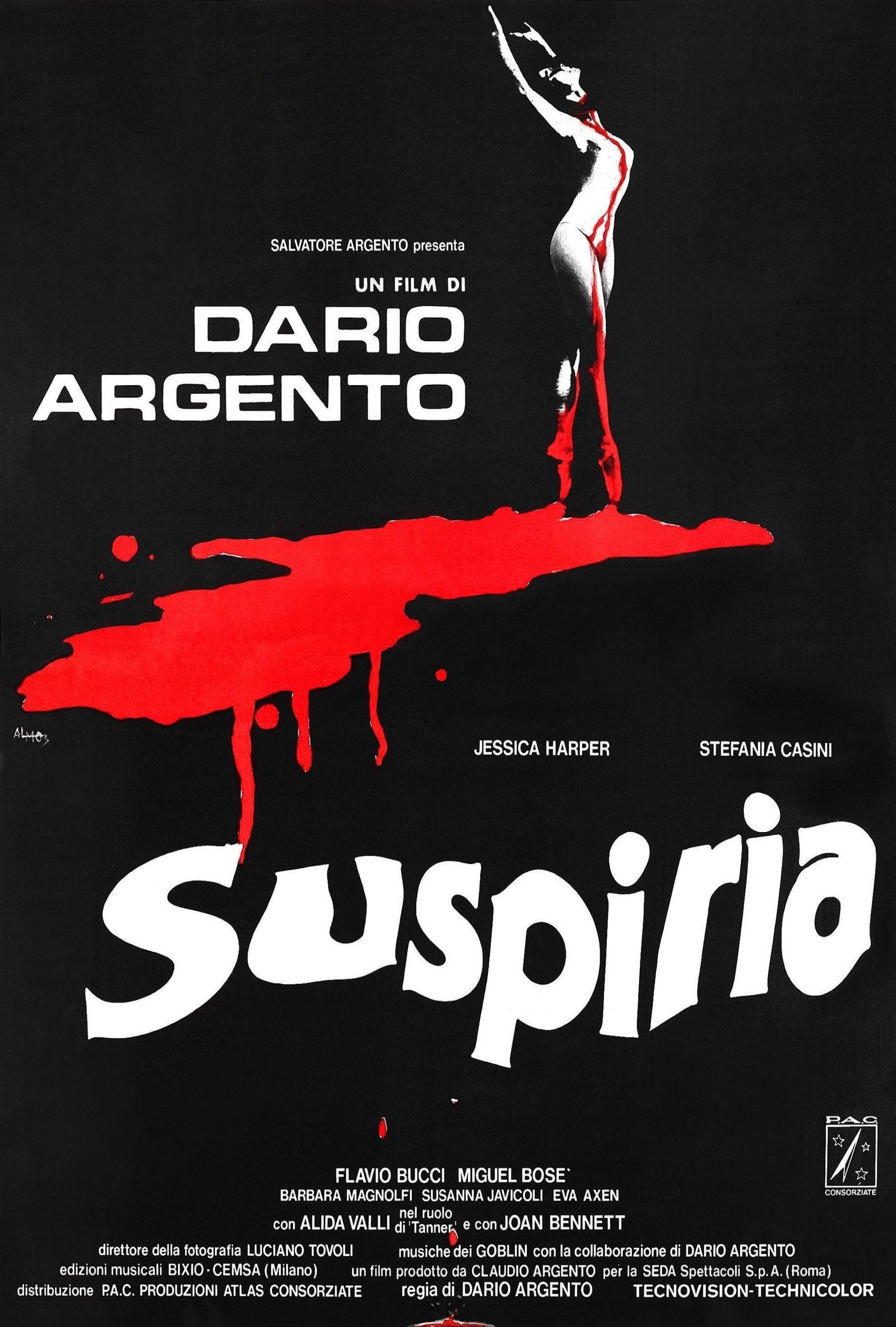
From Suspiria to Inferno
The success of Suspiria gave Argento the opportunity to expand his supernatural mythology. Working from ideas developed with Daria Nicolodi, Argento began constructing a story around the Three Mothers, ancient supernatural entities representing different forms of darkness.
Nicolodi provided an important creative spark, although she ultimately went uncredited for the screenplay. Argento, meanwhile, reportedly produced an enormous 267-page script as he developed the story.
The result was hardly a conventional horror screenplay.
At the center of Inferno is an ancient book that reveals the existence of the Three Mothers. When Rose Elliot, an American poet living in a New York apartment building, discovers the book, she begins to suspect that her home is connected to something much older and far more sinister.
She writes to her brother Mark in Rome.
Then people start dying.
Mark eventually travels to New York to investigate, but by that point the movie has already abandoned anything resembling conventional detective-story logic. Characters wander into mysterious rooms. Doors lead to places that shouldn’t exist. Bodies appear and disappear. Water becomes a recurring element. And the building itself seems to be alive.
The question isn’t really “Who is killing these people?”
The question is whether any of this is supposed to make sense.
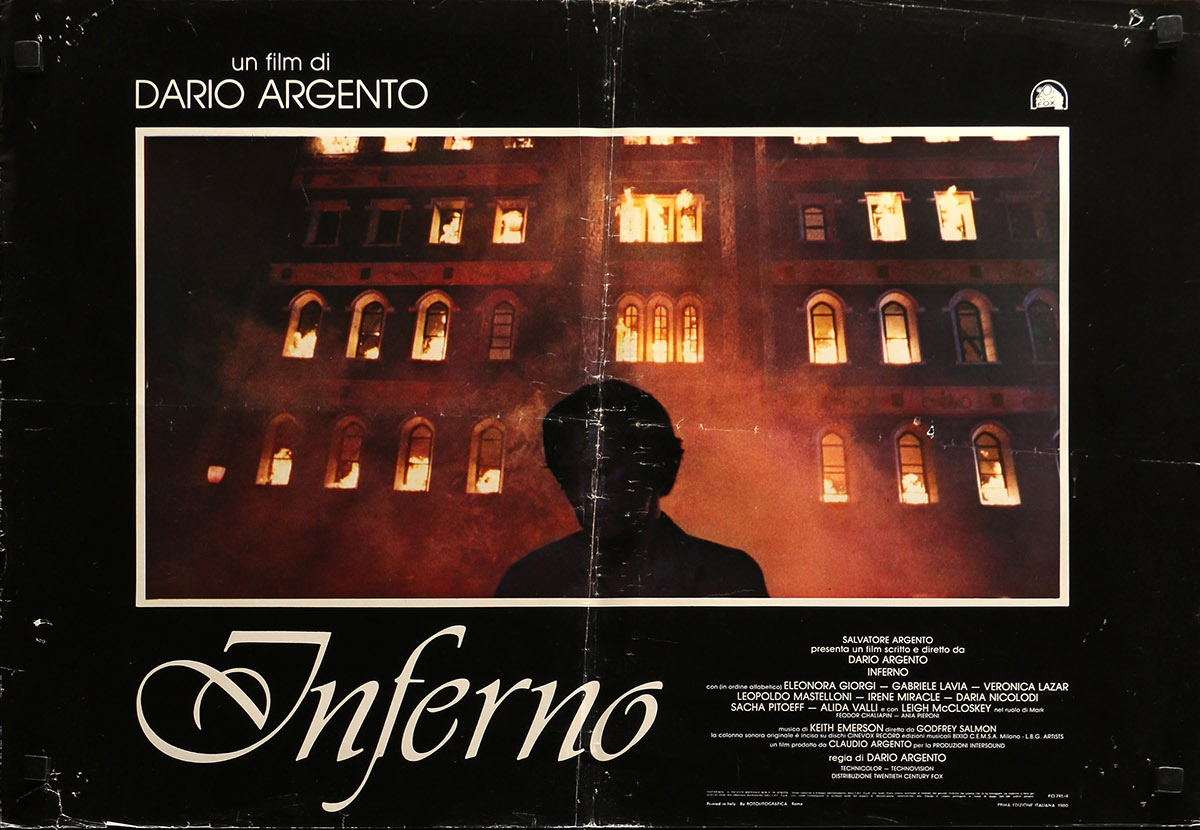
A Production From Hell
Argento had approximately $3 million to work with, thanks in part to financing from 20th Century Fox. But the production was anything but smooth.
Principal photography took place primarily at Rome’s De Paolis studios, with location work in New York helping give the movie its unusual mixture of American urban architecture and Italian gothic sensibility.
Then Argento became seriously ill with hepatitis.
Unable to work normally, the director reportedly spent portions of production directing from a bed. That might have been enough to derail a less obsessive filmmaker, but Inferno was already operating on a different wavelength.
There was also another legendary figure lurking behind the scenes.
Mario Bava.
The father of Italian gothic horror and one of Argento’s most important influences, Bava contributed uncredited technical work to the production, including effects, miniatures and matte work. His presence helped give Inferno some of its most elaborate visual flourishes.
It is one of those wonderful pieces of horror-movie history where two generations of Italian genre filmmaking briefly collided.
And you can see Bava’s fingerprints in the movie.
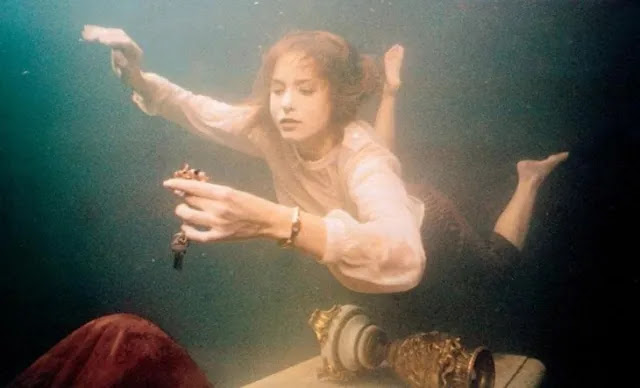
The Underwater Nightmare
If there is one sequence that demonstrates what Argento was trying to accomplish with Inferno, it is the underwater sequence.
Rose’s discovery of the occult book eventually leads her into a submerged basement, where she dives beneath the surface in one of the film’s most striking and bizarre passages.
Irene Miracle was selected in part because of her swimming ability, which was certainly put to good use.
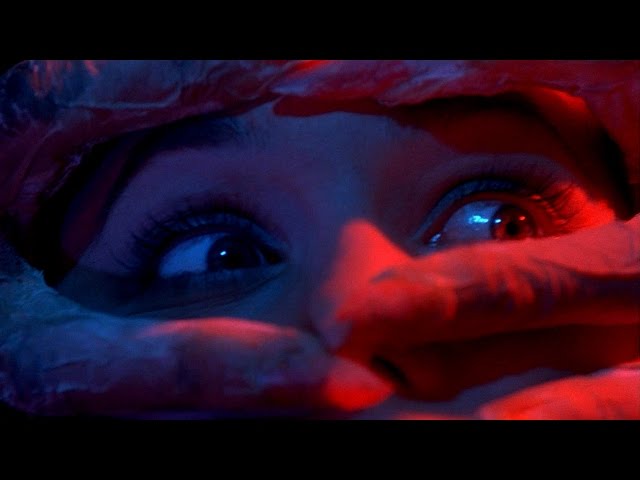
The sequence feels less like a conventional horror scene than a nightmare that somehow found its way onto film. Water, darkness and architecture merge together until the apartment building becomes something almost organic.
And then Argento does what Argento does best.
He makes it beautiful.
That is the strange contradiction at the center of Inferno. People are being murdered in increasingly grotesque ways, but the images surrounding them can be breathtaking.
Keith Emerson’s Infernal Score
The film also marked an important departure from the musical approach Argento had used in Suspiria.
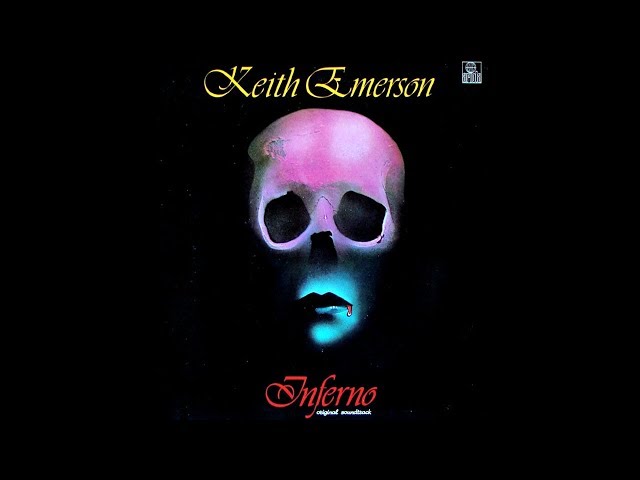
Instead of Goblin, Argento turned to Emerson, Lake & Palmer keyboardist Keith Emerson.
Emerson’s score brought progressive rock, classical music and electronic experimentation into the movie. Verdi’s music was also incorporated into the soundtrack, creating an unusual mixture of operatic grandeur and progressive-rock experimentation.
It is not a score that simply accompanies the horror.
It becomes part of the atmosphere.
There are moments when Inferno seems to be less interested in frightening the audience than hypnotizing them.
When the Story Stops Making Sense
This is where Inferno loses some people.
The movie is not interested in explaining itself.
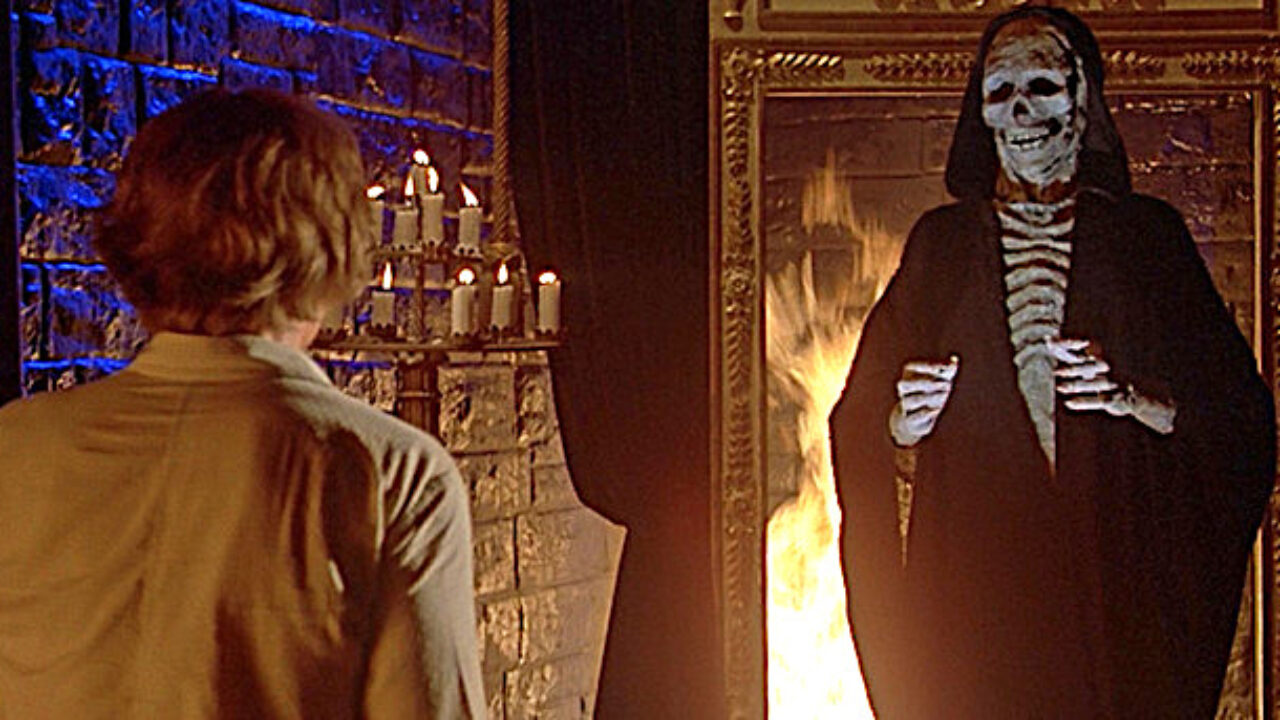
Characters behave strangely. Information arrives without much warning. Plot threads are introduced and abandoned. The mythology is only partially explained. And the final confrontation with the Mother of Darkness feels less like the conclusion of a carefully constructed narrative than the final image in a particularly unpleasant dream.
Contemporary critics were often unimpressed.
Compared with Suspiria, Inferno could feel ragged and disjointed. The dialogue was frequently stiff, the characters weren’t especially developed and the plot seemed to operate according to rules known only to Argento.
But criticizing Inferno for its logic is a little like criticizing a nightmare for not having a sensible plot.
The movie isn’t really about logic.
It is about sensation.
A Movie That Had to Be Seen
Inferno arrived in Italy in early 1980 but never received the kind of international push that Suspiria had enjoyed.
A management change at 20th Century Fox reportedly contributed to the film’s disappointing American distribution. Rather than becoming another major horror release, Inferno largely disappeared into the home-video era.
For years, discovering the movie could feel like stumbling across something forbidden.
It became one of those films passed around by horror fans, appearing on VHS shelves and eventually finding new audiences through specialty labels and repertory screenings.
And perhaps that was appropriate.
Inferno was never particularly interested in being accessible.
The Argento Movie That Became More Appreciated With Age
Time has been considerably kinder to Inferno.
What once looked like an incoherent follow-up to Suspiria has increasingly been recognized as something more unusual: a movie where visual design is the narrative.
The apartment building isn’t simply a setting. It is a labyrinth.
Water isn’t simply water. It becomes a passage between worlds.
Color isn’t decoration. It becomes emotion.
And violence isn’t necessarily the point. The anticipation of violence, the architecture surrounding it and the strange beauty of the images are what Argento seems most interested in.
Critics and filmmakers have subsequently reassessed the movie, with writers such as Kim Newman among those who have championed it as an underrated entry in Argento’s filmography.
That reassessment makes sense.
Inferno isn’t a better movie because it suddenly becomes logical.
It is a better movie because we’ve learned to appreciate what it was trying to be.
A Nightmare in Search of an Explanation
There is something almost romantic about Inferno today.
It represents an era when a director could spend millions of dollars making a supernatural horror film that looked like absolutely nothing else. It could be financed by a major American studio, filmed partly in Rome and New York, scored by a progressive-rock legend, technically assisted by Mario Bava and built around a mythology that would not receive its final cinematic chapter for another 27 years.
The result is uneven.
Sometimes frustrating.
Sometimes downright ridiculous.
But also hypnotic.
Argento would eventually return to the Three Mothers mythology with The Mother of Tears in 2007, completing the trilogy he had begun with Suspiria and Inferno.
Yet there is something particularly fascinating about the middle chapter.
Inferno exists in a world where the rules have already broken down.
It isn’t really asking us to understand the darkness.
It wants us to enter it.
And for all of its flaws, there are few movies from 1980 that look quite as much like a nightmare as Inferno.

About the Creator
Movies of the 80s
We love the 1980s. Everything on this page is all about movies of the 1980s. Starting in 1980 and working our way the decade, we are preserving the stories and movies of the greatest decade, the 80s. https://www.youtube.com/@Moviesofthe80s
Enjoyed the story? Support the Creator.
Subscribe for free to receive all their stories in your feed.
Comments
There are no comments for this story
Be the first to respond and start the conversation.