
In Mexico's Maya Forest, camera traps uncover a secret world of pumas, tapirs, and jaguars.
What was captured by cameras

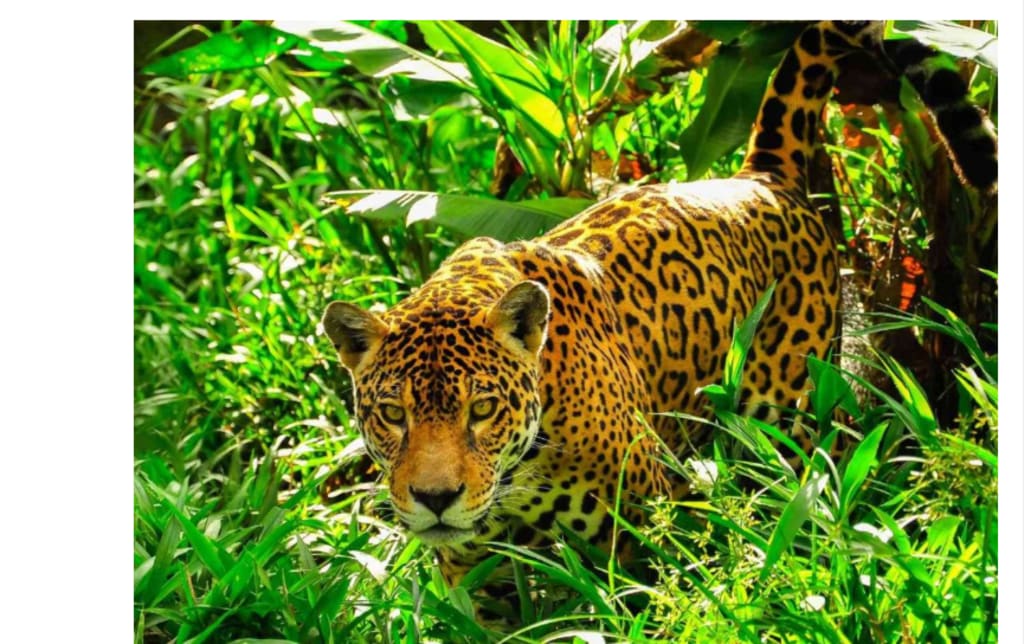
One of Mexico's largest protected rainforests is home to 28 different species of medium and large mammals, including pumas, tapirs, and jaguars, according to a recent research. According to the census, the Maya Forest is a refuge under stress, where local communities, water, and drought influence which animals congregate, disperse, or remain hidden.
A documented refuge
The secret record included six years of animal migration within the Calakmul Biosphere Reserve (CBR), a protected rainforest in southern Mexico. Fernando Contreras-Moreno, a wildlife researcher at Universidad Tecnológica de Calakmul (UTCalakmul), a public university close to the reserve, sorted that material and recorded that every species under observation was present in CBR.
Outside of CBR, where the forest was divided into smaller sections by roads, fields, and settlement borders, the same record revealed fewer species. Although the reserve appeared to be the primary refuge due to that split, a large portion of the same wildlife was still present in the surrounding areas.
What was captured by cameras
The scientists gathered 9,821 useful animal records over 8,300 camera-trap days, with one camera operating for one day. Animals passing routes, uneven roadways, natural water holes, and artificial water sources were captured on camera by hidden equipment that were positioned about 20 inches above the ground.
Compared to 1,644 detections outside the reserve boundary, the majority of data came from cameras inside CBR, where 8,177 detections were recorded. These data created a lengthy record of how big animals exploited protected forest and damaged adjacent land.
Water altered motion
Water frequently determines where animals can go throughout the Maya Forest, a rainforest that spans southern Mexico, Guatemala, and Belize. Aguadas, rain-fed forest ponds that store seasonal water, become vital dry-season water supplies because porous limestone ground drains swiftly.
Thirsty animals are drawn to sporadic drinking locations by nearby sartenejas, which are tiny natural rock basins that retain rain. Cameras can capture more animals close to water during a drought without demonstrating an increase in population.
Stories were told by numbers
Comparing species observed inside and outside of CBR was made easier with the use of a relative abundance index, which is a count that accounts for camera effort. A number of creatures, particularly Baird's tapirs, big fruit-eating mammals with movable snouts, and the common opossum, first appeared more numerous outside due to combined data.
The Yule-Simpson aggregation paradox, a statistical issue where pooled data can reverse trends apparent in smaller groupings, was discovered through year-by-year inspections. Even though the combined totals appeared to indicate otherwise, annual activity was often higher inside the reserve, thus that correction was important.
Outside land was important.
Despite having fewer species and more disturbance from roads, farms, and settlements, the forest outside of CBR was not deserted. Mexico's official management plan, which serves as a government guide for reserve regulations, has various regulations along its borders and more stringent limits in the core.
24 of the 28 species found were found outside, demonstrating that animals may still cross altered habitat on community-managed grounds. This discovery broadens the scope of conservation beyond reserve boundaries, making it a shared responsibility for working land, villages, and reserves.
Pressure increased due to the drought
Because thirsty animals migrated to less dependable locations during extreme drought spells, the concept of abundance was altered. Many species in CBR peaked in years of stress, probably as a result of focused movement in the vicinity of monitoring locations because of water and shade.
Natural water bodies were refilled by tropical storms in 2020, and subsequent detections increased in some areas beyond the reserve. Rather than just an increase or decrease in the number of animals, those detection bursts demonstrate animal activity in response to the weather.
Animals performed tasks.
By transporting seeds, managing prey, and recycling nutrients, mammals frequently offer ecosystem services—benefits that humans receive from healthy environments. In order to assist young plants grow far from parent trees, tapirs can transfer seeds and devour fruit throughout the forest.
By pursuing deer, peccaries, and other animals, jaguars (Panthera onca) and pumas (Puma concolor) affect the behaviour of their prey. The forest loses services that support plants, prey, and predators when these interactions are weakened by drought or habitat loss.
Certain signals remained undetectable.
Ground cameras missed a lot of life above the forest floor because they favoured creatures that strolled at path level. Northern tamanduas, anteaters that frequently wander among tree branches, were likewise difficult to capture, and spider monkeys were uncommon.
Direct comparisons were more difficult than the raw numbers indicate because equipment loss outside of CBR also decreased sampling there. Arboreal cameras, cameras installed in trees to observe treetop animals, and more consistent coverage beyond the reserve will be necessary for future monitoring.
Neighbours are necessary for conservation.
The fact that CBR collaborated with neighbouring territories was the most significant outcome for Mesoamerica, the region that connects southern Mexico and Central America. The reserve's worth was enhanced by the presence of jaguars, tapirs, white-lipped peccaries, and Tayassu pecari, while ten recorded species have Mexican risk listings.
Contreras-Moreno and colleagues concluded, "Our study confirms that the CBR remains a cornerstone of Mesoamerican biodiversity and one of the most critical protected areas for terrestrial mammal conservation." However, since animals have crossed official bounds, long-term video records, local agreements, and water planning are all necessary for protection.
What follows
The animal record of Calakmul demonstrates a living system responding simultaneously to heat, water, forest cover, and human pressure. Managers can maintain corridors, strategically deploy artificial water, and identify problems before unique animals go extinct with the use of long-term monitoring.
About the Creator
Enjoyed the story? Support the Creator.
Subscribe for free to receive all their stories in your feed.
Comments
There are no comments for this story
Be the first to respond and start the conversation.