
Fear No Evil (1981): Rochester, New York's Home Grown Horror Flick
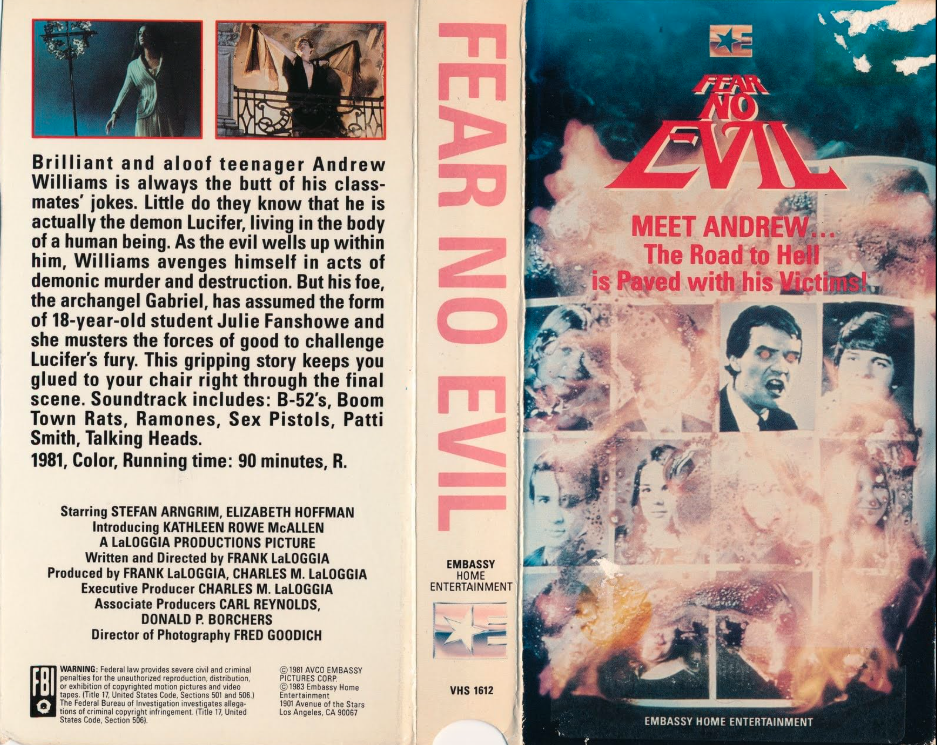
Meet Andrew… The Road to Hell Is Paved with His Victims

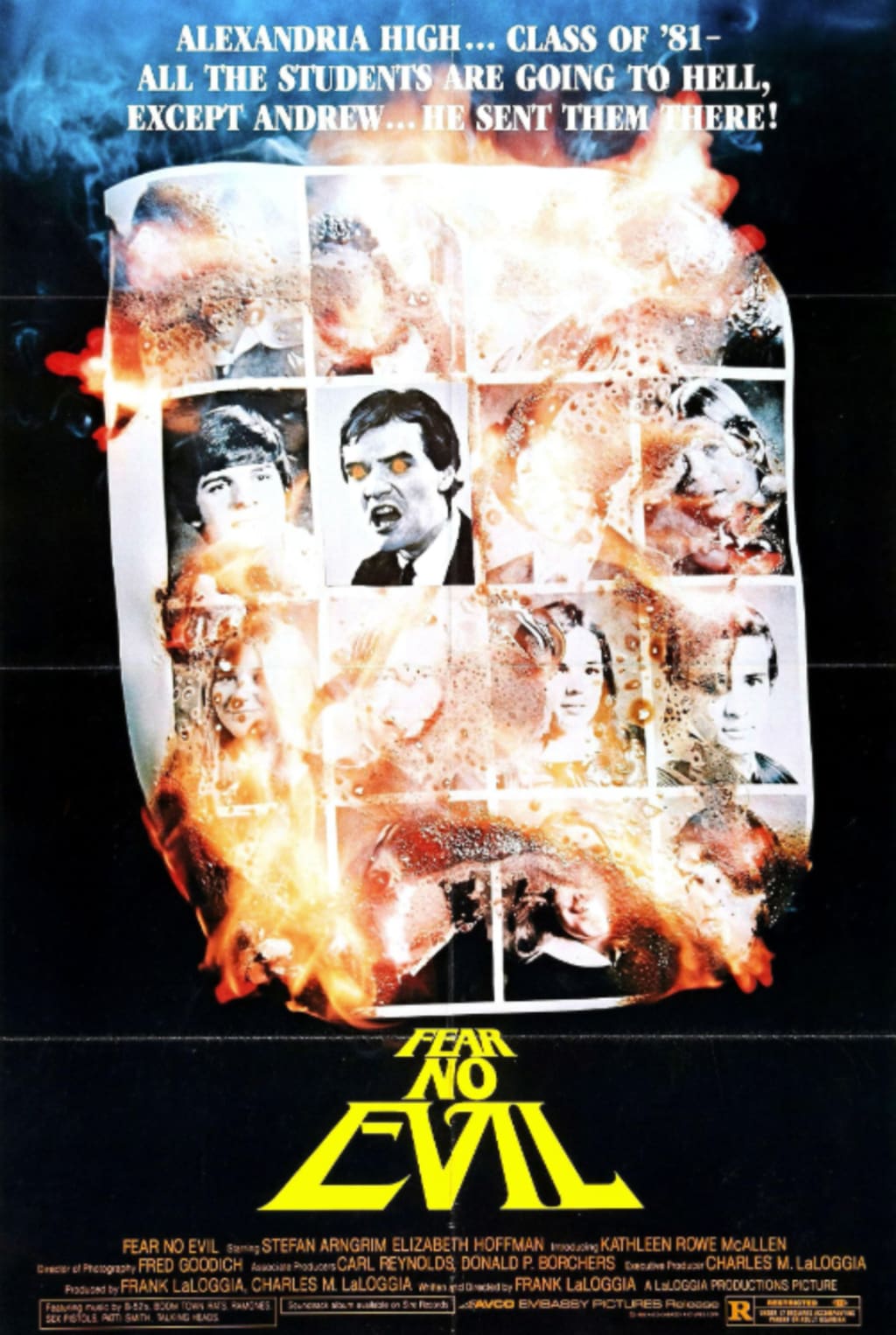
There are movie advertisements that sell a film.
And then there are movie advertisements that basically dare you to stay home.
“MEET ANDREW… THE ROAD TO HELL IS PAVED WITH HIS VICTIMS.”
Underneath that cheerful little invitation is a glowing-eyed demonic skull.
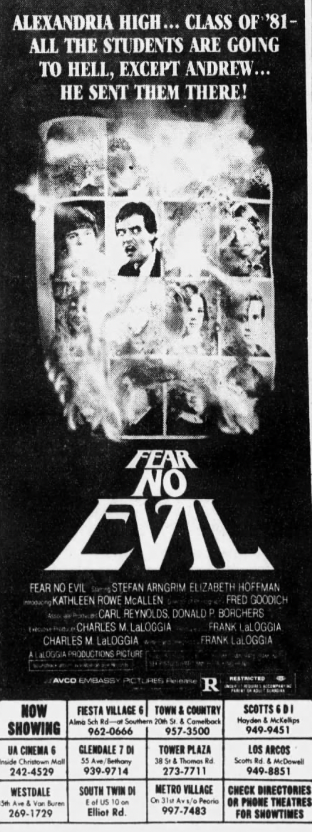
Another ad goes even further.
“ALEXANDRIA HIGH… CLASS OF ’81 — ALL THE STUDENTS ARE GOING TO HELL, EXCEPT ANDREW… HE SENT THEM THERE!”
Welcome to 1981.
Welcome to Fear No Evil.
And welcome to the strangest high school in America.
At first glance, Frank LaLoggia’s Fear No Evil looks like one more opportunistic horror movie trying to ride the wave created by The Omen, Carrie, The Exorcist, Halloween, and every other movie that had discovered there was apparently a tremendous amount of money to be made by making teenagers miserable.
But that isn’t really the whole story.
Because Fear No Evil came from Rochester, New York.
It was financed by Rochester people.
It was shot around Rochester and the Thousand Islands.
It used local locations, local extras, local personalities and even a school LaLoggia himself had attended.
And at the center of it was a young filmmaker who apparently looked at the Book of Revelation, The Omen, punk rock, high school, Catholic theology and a few million dollars’ worth of movie ambition and thought:
Sure.
Why not?
The result is messy.
Sometimes ridiculous.
Occasionally creepy.
Occasionally hilarious when it absolutely isn’t supposed to be.
And undeniably fascinating.
Fear No Evil is one of those early-1980s movies where you can practically see the filmmaker reaching for something bigger than the budget will allow.
That makes it worth remembering.
Rochester Builds an Antichrist
Frank LaLoggia was still in his twenties when he began putting Fear No Evil together.
He had a background in film and drama, including time at the University of Miami, short films and some minor television work. His cousin, Charles M. LaLoggia, was a Rochester investment adviser.
The two decided they wanted to make a movie.
Originally, the plan wasn’t necessarily to make a horror movie.
Then the money people got involved.
Horror sounded commercial.
So LaLoggia went back to the drawing board.
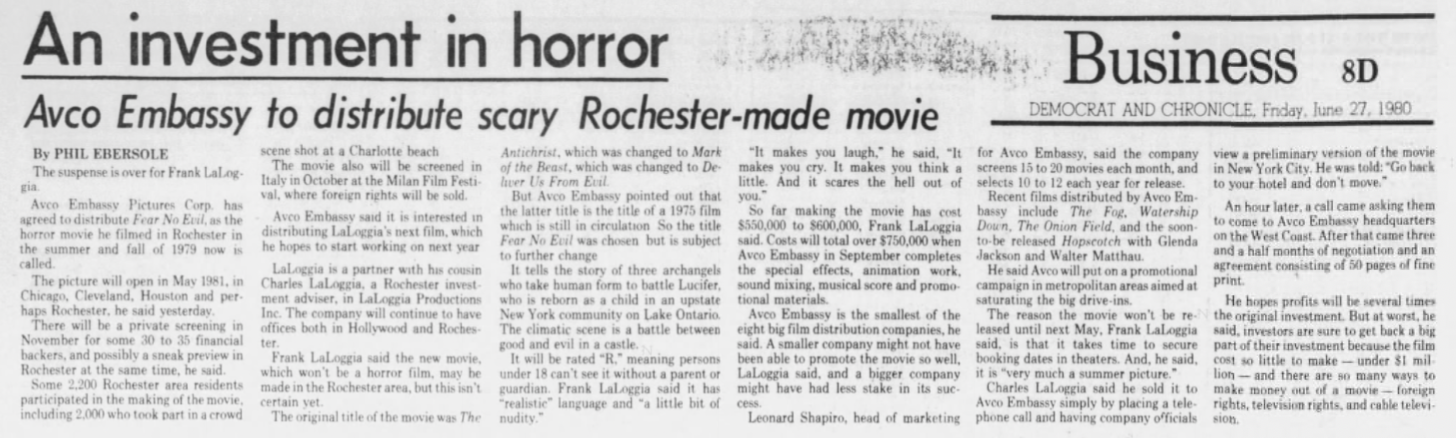
The movie that eventually emerged began life under titles including The Antichrist and Mark of the Beast before becoming Fear No Evil. The production company was formed in 1978, and the first $25,000 came from Rochester investors.
Eventually, the production raised roughly $550,000 before principal photography.
That is still not exactly Hollywood money.
But it was enough to make somebody in Rochester say, “Okay, we’re making a movie.”
And not a small movie.
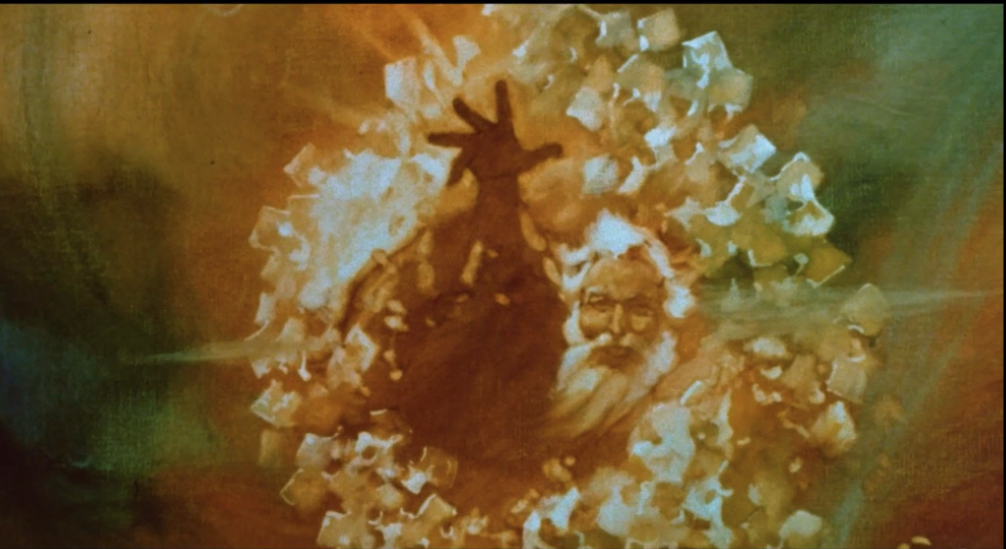
LaLoggia’s story involves Lucifer being reincarnated as Andrew Williams, a sensitive-looking teenage boy attending high school.
Andrew isn’t just a troubled kid.
He’s Lucifer.
And three archangels have returned to Earth in human form to stop him.
One is an elderly woman.
One is a teenage girl.
One is a priest.
Because apparently one supernatural battle wasn’t complicated enough.
The religious material was important to LaLoggia. The film wasn’t conceived simply as a collection of teenagers getting slaughtered by a demon.
There was an allegory underneath all the blood, lasers, zombies and glowing supernatural objects.
The problem was that the movie also had to be sold.
And distributors had other ideas.
That would become important.
Nine Weeks in Rochester
Principal photography began in the summer of 1979.
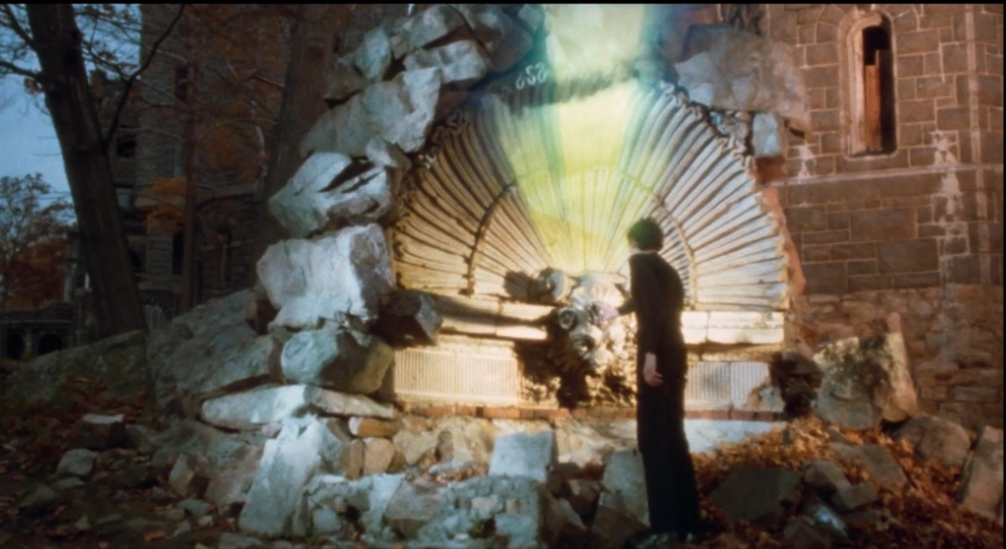
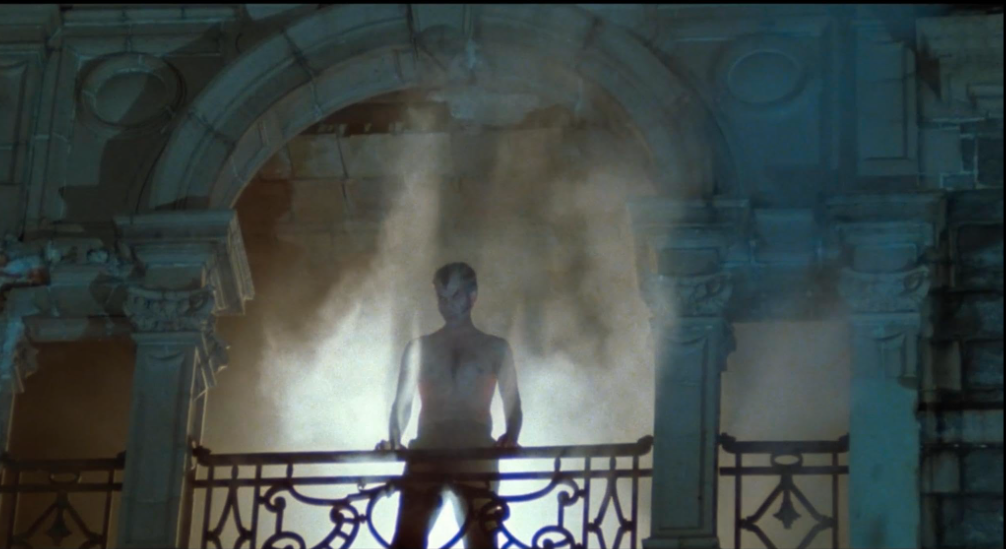
LaLoggia shot around Rochester, Webster, Charlotte Beach and other upstate New York locations, with additional material at Boldt Castle in the Thousand Islands and along the St. Lawrence River.
The choice of Boldt Castle is particularly appropriate.
It looks like a location designed by somebody who had been waiting their entire life to make a supernatural horror movie.
And Charles LaLoggia had apparently recognized that immediately.
The production itself was very much a hometown operation.
The school sequences were shot at Spry High School/E.W. Spry Junior High, a location with personal significance for LaLoggia. Local residents turned up as extras. Rochester television and radio personalities made appearances.
Dick Burt.
Toby Gold.
People who normally belonged on Rochester television and radio suddenly found themselves wandering around inside an Antichrist movie.
Roughly 2,000 extras were reportedly involved.
All told, more than 2,000 Rochester-area residents became part of the production in one way or another.
That’s one of the things that makes Fear No Evil more interesting than its reputation might suggest.
This wasn’t some anonymous exploitation picture assembled in Los Angeles.
It was Rochester trying to make a horror movie.
And Rochester apparently had a lot of enthusiasm.
Weather, unfortunately, did not.
The production ran into the usual low-budget problem: Mother Nature does not care about your shooting schedule.
Snow even became part of the climactic material.
Which, in fairness, is probably better than pretending Rochester looks like Southern California.
The technical crew also had some serious talent.
Cinematographer Fred Goodich.
Editor Edna Ruth Paul.
Art director Carl Zollo.
And visual-effects artist Peter Kuran, who had already worked on productions including Star Wars and Battlestar Galactica.
The movie may have been cheap.
The people trying to make it weren’t necessarily amateurs.
That distinction would become important when critics started reviewing it.
Then Came the Music
If the movie itself sometimes feels like several different films fighting for control of the steering wheel, the soundtrack isn’t helping.
But I mean that as a compliment.
LaLoggia and David Spear provided original music, while the film also incorporated a remarkably good collection of punk and new-wave songs.
Talking Heads.
The Ramones.
The Sex Pistols.
Patti Smith.
The B-52’s.
The Boomtown Rats.
Richard Hell.
This is one of those cases where the soundtrack may tell us almost as much about the period as the movie does.
Fear No Evil is trying to be a serious religious horror story.
But it is also unmistakably a movie made around 1979 and released in 1981.
The punk/new-wave material gives the film an unexpected pulse.
It isn’t quite Rock ‘n’ Roll High School.
It isn’t quite The Omen.
It isn’t quite Carrie.
It isn’t quite a Christian morality play.
It is somehow all of these things having an argument in the same room.
And nobody has bothered to tell the zombies.
Avco Embassy Comes Calling
Here is where the story gets really interesting.
The filmmakers had finished principal photography, but they still needed money to complete the picture.
They put together a rough cut.
Avco Embassy saw it.
And Avco Embassy wanted it.
According to the American Film Institute’s production history, the rough cut was approximately two and a half hours long and was missing some of the special effects needed for the climax. Avco-Embassy ultimately stepped in with financing for completion.
The movie had escaped the regional filmmaking stage.
Now it had a distributor.
Which sounds like wonderful news.
It was.
It was also a problem.
Because LaLoggia had made the movie he wanted to make.
Avco Embassy had to figure out how to sell the thing.
And the obvious answer was:
HIGH SCHOOL.
The distributor leaned heavily into the teen angle.
The yearbook poster.
The flaming school.
Andrew.
Teenagers.
Lucifer.
Everybody is going to Hell.
Except Andrew.
He already works there.
LaLoggia later expressed frustration with the way the movie was being marketed, feeling that the campaign emphasized its exploitative qualities and the youth angle rather than the larger religious ideas he had intended.
That conflict is almost more interesting than the movie itself.
Because you can see both sides.
LaLoggia saw a religious allegory.
Avco Embassy saw a horror movie about a teenage Antichrist.
The marketing department probably did not spend a lot of time discussing theological nuance.
Meet Andrew
And then there is Andrew.
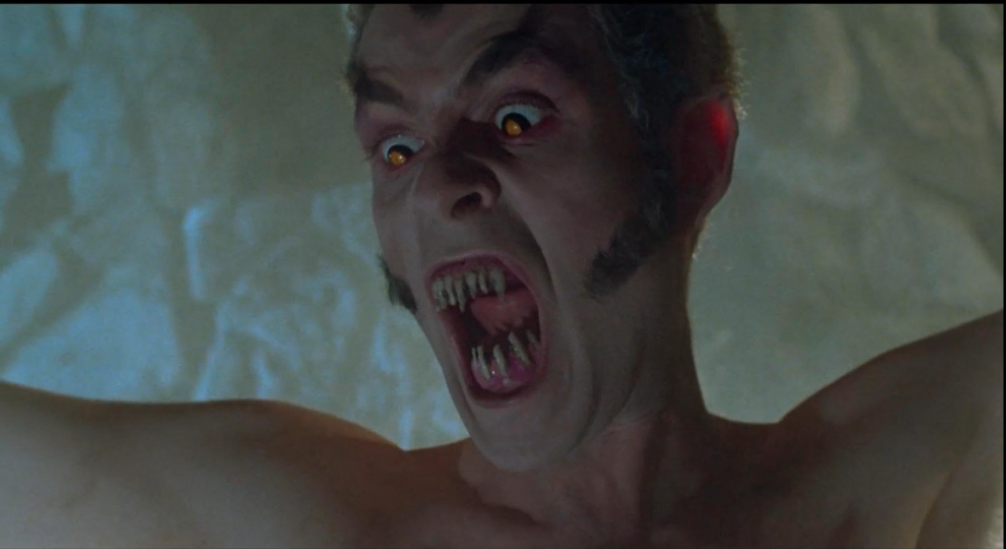
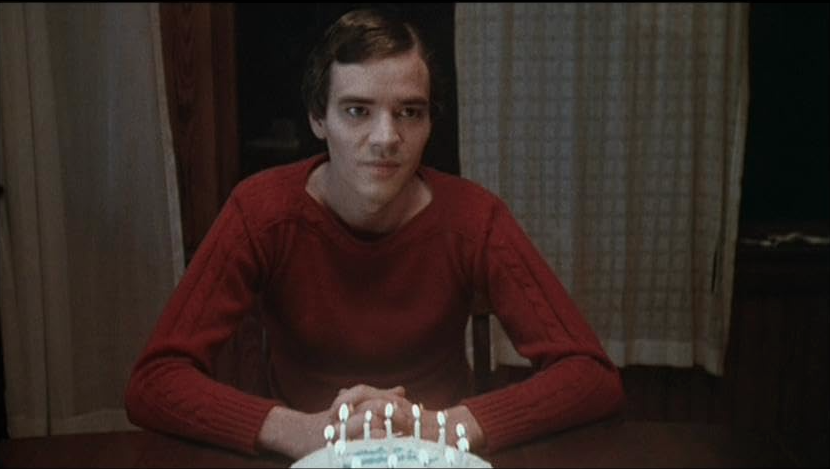
Stefan Arngrim plays him as something considerably stranger than the usual snarling movie Satan.
Andrew is quiet.
Sensitive.
Almost fragile.
And then people start dying.
That’s part of what makes Fear No Evil so odd.
It isn’t really interested in making Andrew a conventional monster.
He’s more like an unsettling presence who gradually becomes impossible to ignore.
The movie keeps circling the question of whether Andrew is evil because of what he does or because of what he is.
And that is where LaLoggia’s religious interests become visible.
The movie isn’t simply asking:
How do we kill the Antichrist?
It’s asking what happens when something supernatural arrives in an ordinary human world.
High school becomes the battlefield.
The classroom becomes part of the apocalypse.
The teenage body becomes a vessel for something ancient.
It’s actually a pretty good idea.
The movie doesn’t always know what to do with it.
But the idea is there.
Critics Were Not Exactly in Agreement
When Fear No Evil arrived in theaters, critics seemed to fall into two basic camps.
Some saw a disaster.
Others saw something much more interesting:
A filmmaker with genuine talent who had not quite figured out how to control it yet.
Variety was relatively generous, describing the film as “spooky and surreal” and praising its religious foundation and atmosphere.
David Hinds of the Palm Beach Evening Times went considerably further, calling LaLoggia’s debut potentially the most impressive since Steven Spielberg’s The Sugarland Express.
That is not exactly a casual compliment.
Other critics praised the photography, editing, production design and special effects, particularly considering the movie’s limited resources.
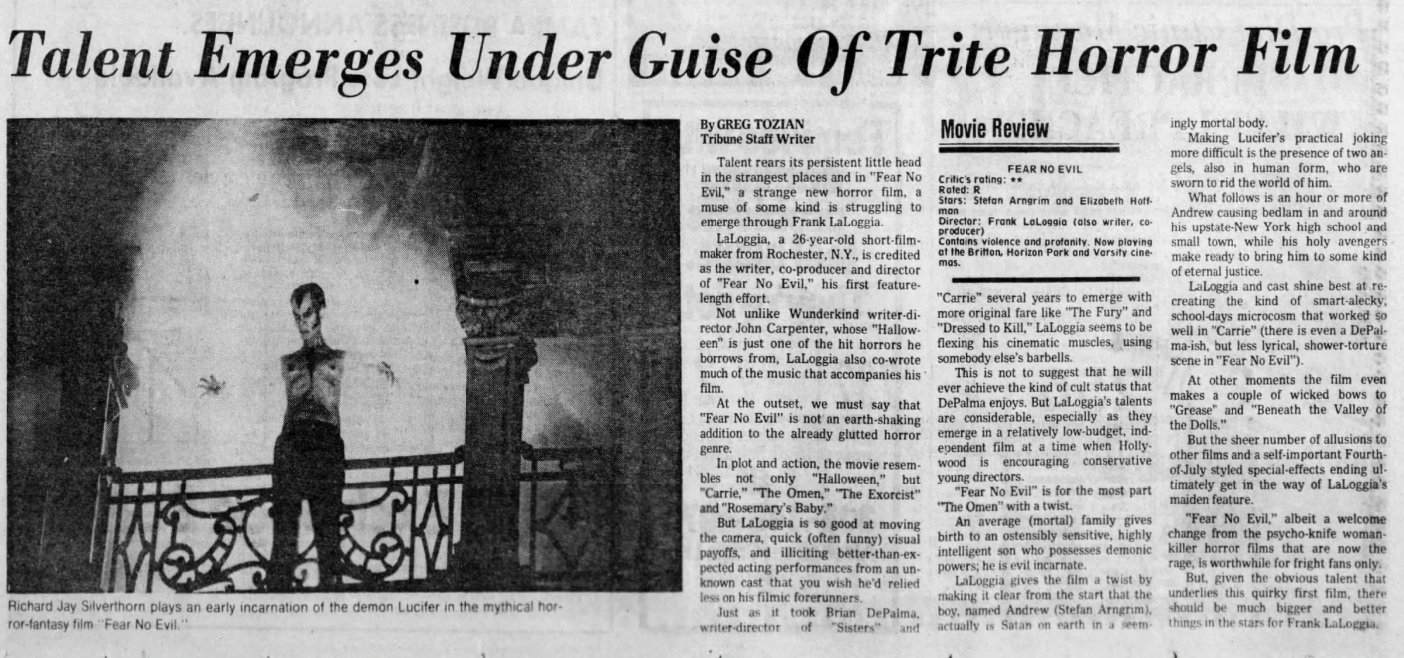
Greg Tozian of the Tampa Tribune noticed that some of the unknown actors performed better than expected and that the movie occasionally delivered quick visual payoffs.
In other words:
There was something here.
Then came New York.
Tom Buckley of The New York Times was considerably less impressed.
He famously compared the acting and direction to what might be expected from a small-city drama club.
Ouch.
And he wasn’t finished.
The special effects, he essentially argued, weren’t terrible.
They were just effects audiences had seen before.
Glowing crosses.
Laser-like eyes.
Walking dead.
Nothing new under the demonic sun.
Other reviewers complained about the plot.
And honestly, they had a point.
Fear No Evil can be confusing.
Sometimes gloriously confusing.
Sometimes just confusing.
It borrows from The Omen, Carrie, The Exorcist, Halloween and the broader supernatural horror explosion of the 1970s while throwing in enough of its own ideas to make the whole thing feel like a movie assembled from pieces found in several different horror aisles.
There are zombies.
There are religious visions.
There are teenagers.
There are supernatural battles.
There is a Passion Play.
There is a golden cross that becomes considerably more exciting than most golden crosses have any right to be.
And there are moments when you can almost hear the screenplay saying:
Wait.
We haven’t done zombies yet.
But Look at What They Actually Made
This is where I think the detractors sometimes miss the more interesting story.
Was Fear No Evil a polished horror classic?
No.
Was it always coherent?
Absolutely not.
Was it scary?
That depends on the viewer, and several contemporary critics thought it wasn’t particularly frightening.
But look at what LaLoggia was attempting.
He was in his twenties.
He was making his first feature.
He had raised money in his hometown.
He was shooting around Rochester and the Thousand Islands.
He was working with a non-union crew.
He had local people filling the background.
He had weather fighting him.
He had a limited budget.
And somehow he got the movie into theaters across the country.
By March 1981, contemporary trade reports were describing the film as playing in roughly 35 percent of the U.S. market, with LaLoggia claiming approximately $3.5 million in box-office returns.
The movie had begun with Rochester investors putting together $25,000.
Now it was a national theatrical release.
That’s the part of the story that deserves attention.
The movie itself may be uneven.
The ambition isn’t.
Fear No Evil Comes Home
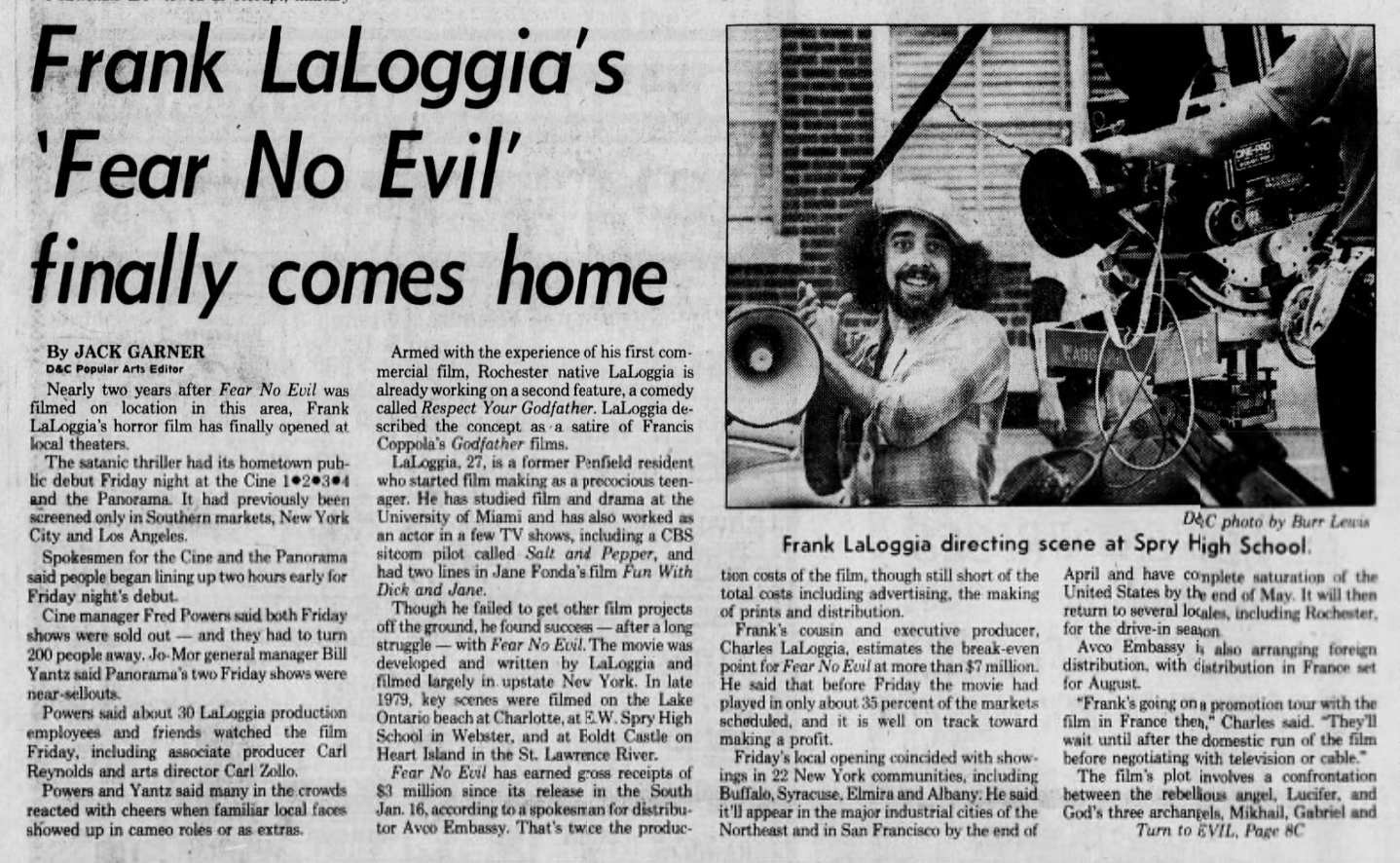
Eventually, Fear No Evil returned to Rochester.
The film had already screened in Long Beach in late 1980 and received a special Rochester screening for cast, crew and investors in December.
The theatrical rollout began in January 1981, first in Florida and Texas.
Then New York.
Then Los Angeles.
And in April, the hometown premiere.
Rochester newspapers treated the event almost like a civic achievement.
Because it was.
People they knew were on the screen.
Places they knew were in the movie.
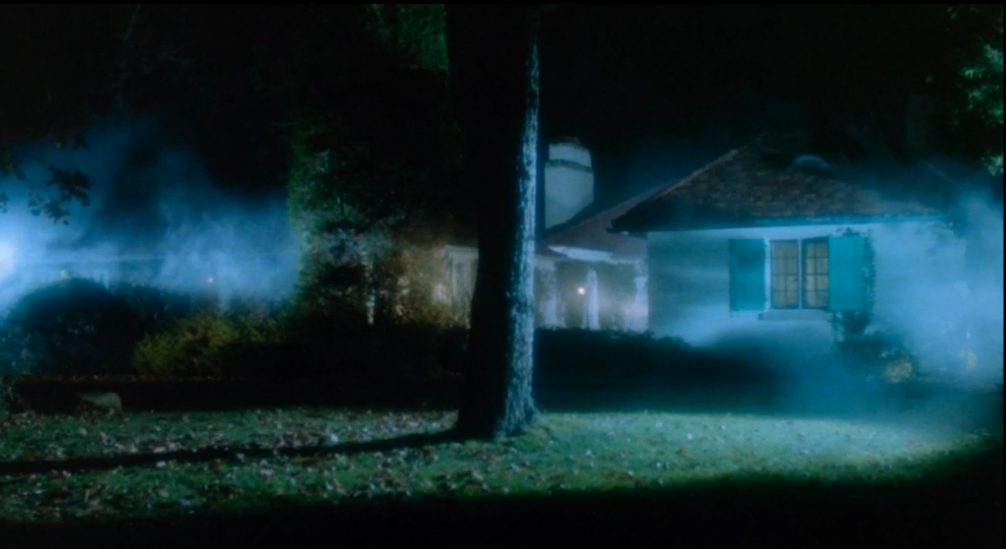
Their city had been transformed into the setting for a supernatural apocalypse.
You could watch a movie and point at the screen and say:
Hey. That’s Rochester.
There is something wonderfully 1981 about that.
The movie business had come to Rochester.
Except it hadn’t.
Rochester had gone out and made its own movie.
The Cult Movie Nobody Ordered
Today, Fear No Evil has developed the sort of afterlife that makes movies like this worth writing about.
The flaws are still there.
Actually, they’re part of the attraction.
The movie’s strange tonal shifts.
Its religious seriousness.
Its punk soundtrack.
Its high-school setting.
Its occasionally bizarre imagery.
Its weird sexual and queer-coded moments.
Its sudden zombie detours.
Its glowing supernatural effects.
Its sense that the filmmaker has another twelve ideas before he’s finished with the first one.
It all adds up to something that is unmistakably its own thing.
You can see why some 1981 critics wanted to dismiss it.
You can also see why others noticed the talent underneath the chaos.
Both reactions can be correct.
That’s the trick.
Fear No Evil doesn’t need to be secretly great for its story to be great.
Sometimes the movie behind the movie is the better movie.
What Happened to Frank LaLoggia?
LaLoggia didn’t disappear.
He eventually made Lady in White in 1988, another supernatural story rooted in upstate New York, this time starring Lukas Haas.
And the difference is fascinating.
Lady in White is still unmistakably a Frank LaLoggia movie. It is atmospheric, sentimental, eerie and deeply interested in memory, childhood and the supernatural.
But it is more controlled.
More personal.
More confident.
Critics noticed.
Roger Ebert praised its atmosphere and its ability to make a ghost story feel grounded in everyday life. The Washington Post similarly noted LaLoggia’s originality while still finding some of his tendencies heavy-handed.
In retrospect, Lady in White makes Fear No Evil easier to understand.
The young filmmaker was already in there.
He just hadn’t figured out how to keep all the voices quiet.
And perhaps that is what makes Fear No Evil such a fascinating first feature.
It is not the finished Frank LaLoggia.
It is Frank LaLoggia becoming Frank LaLoggia.
The Road to Hell Is Paved With Good Intentions
There are a lot of ways to approach Fear No Evil.
You can laugh at it.
You can criticize the plotting.
You can admire the special effects.
You can make fun of the zombies.
You can get distracted by the soundtrack.
You can wonder why the movie suddenly seems to become a completely different movie every fifteen minutes.
Or you can look at the whole strange package and recognize what it actually represents.
A bunch of people in Rochester decided they were going to make a movie.
They raised the money.
They found locations.
They filled the streets with locals.
They shot in freezing weather.
They built sets.
They brought in talented technicians.
They got a distributor.
And then their little regional horror movie escaped.
It made millions.
It played across the country.
It came home to Rochester.
And eventually it became the kind of cult movie people discover years later and say:
Wait. What the hell is this?
That may be the highest compliment a movie like Fear No Evil can receive.
Because it isn’t anonymous.
It isn’t interchangeable.
It doesn’t feel like a committee made it.
It feels like somebody had an idea and refused to let the budget talk him out of it.
The result is sometimes clumsy.
Sometimes excessive.
Sometimes unintentionally funny.
Sometimes genuinely atmospheric.
But it is never boring.
And underneath all those glowing crosses and punk songs and teenagers apparently headed straight for eternal damnation is a much simpler story.
A young filmmaker from Rochester wanted to make a movie.
So he did.
And for a little while in 1981, Rochester became Hell.
Honestly?
I’ve seen worse vacation destinations.

Sources
American Film Institute Catalog, Fear No Evil.
Variety, “Fear No Evil,” December 31, 1980.
Tom Buckley, “Fear No Evil,” The New York Times, February 6, 1981.
Jack Garner, “Frank LaLoggia’s ‘Fear No Evil’ Finally Comes Home,” Democrat and Chronicle, April 12, 1981.
The Miami News, contemporary review of Fear No Evil, January 1981.
Palm Beach Evening Times, David Hinds, contemporary review of Fear No Evil, 1981.
Tampa Tribune, Greg Tozian, contemporary review of Fear No Evil, 1981.
Philadelphia Daily News, Joe Baltake, contemporary review of Fear No Evil, 1981.
Frank LaLoggia, archival materials and later interviews concerning Fear No Evil and Lady in White.
Roger Ebert, review of Lady in White, April 22, 1988.
Washington Post, review of Lady in White, June 23, 1988.
AFI Catalog, Lady in White.
About the Creator
Movies of the 80s
We love the 1980s. Everything on this page is all about movies of the 1980s. Starting in 1980 and working our way the decade, we are preserving the stories and movies of the greatest decade, the 80s. https://www.youtube.com/@Moviesofthe80s
Enjoyed the story? Support the Creator.
Subscribe for free to receive all their stories in your feed.
Comments
There are no comments for this story
Be the first to respond and start the conversation.