
Deep Sea Diving Gone Horribly Wrong, Divers Stuck at the Bottom of the Ocean Floor for 19 Hours
The Wildrake Diving Accident

STORY SUMMARY (What to expect)
2 Saturation divers were doing their job 485 feet below the surface, and after working for a while one of them happened to look up towards the diving bell… The diving bell was hanging at an angle and something looked seriously wrong. This was because the bell had become completely disconnected from the lift wire, it was hanging at an angle because it was now being supported only by the umbilical cord and nothing else… The umbilical cord that supplied the heat to their suits, the power supply and communication to everyone above, and most importantly, the breathing gas that was keeping them alive.
THIS IS THE STORY OF THE WILDRAKE DIVING ACCIDENT
Our setting takes place in the North Sea of Scotland, between July and August of 1979.
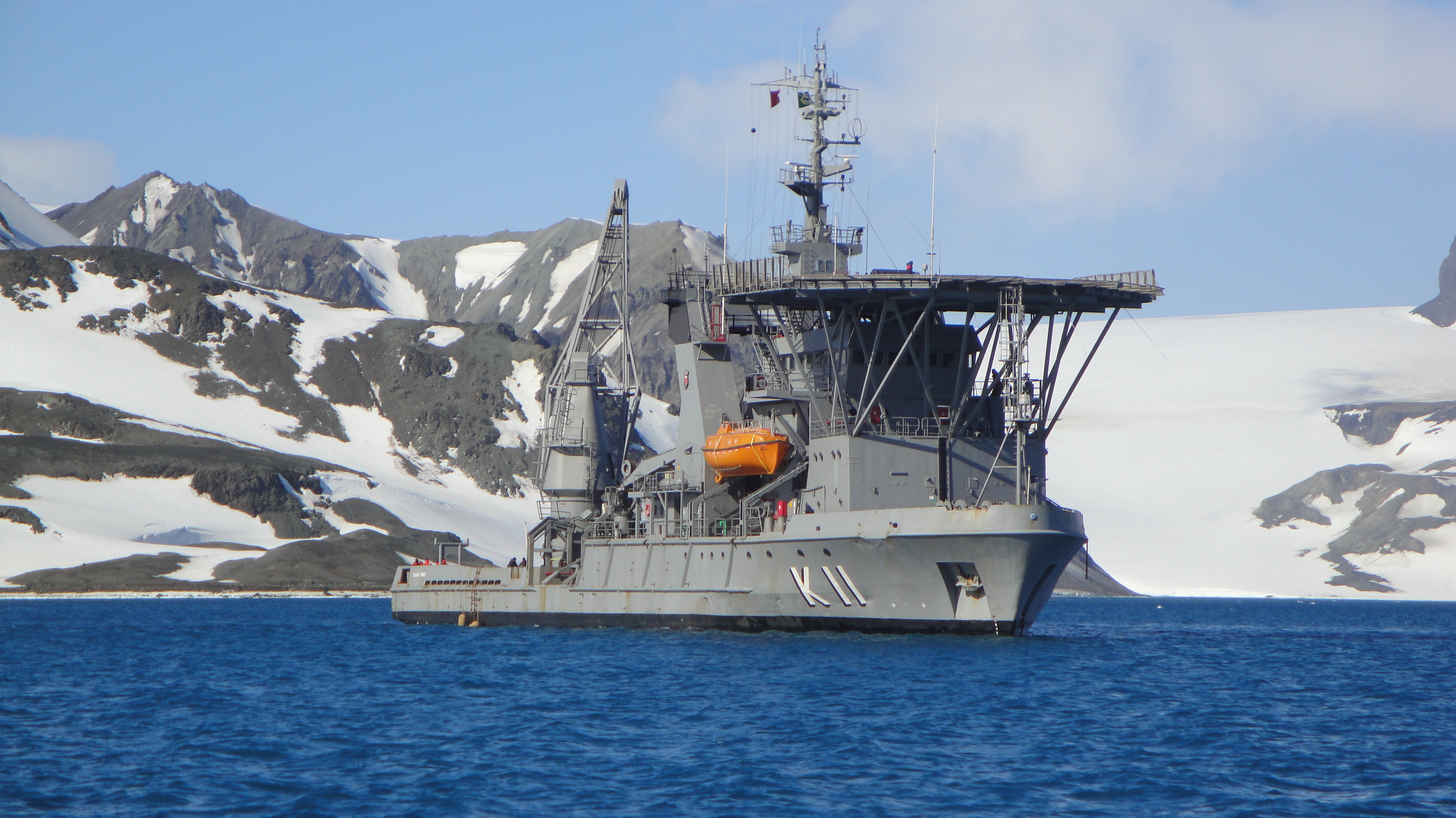
This is the Wildrake, it’s a diving support ship with a built-in saturation diving system.
It’s equipped with a detachable diving bell, and it has a decompression chamber on board.
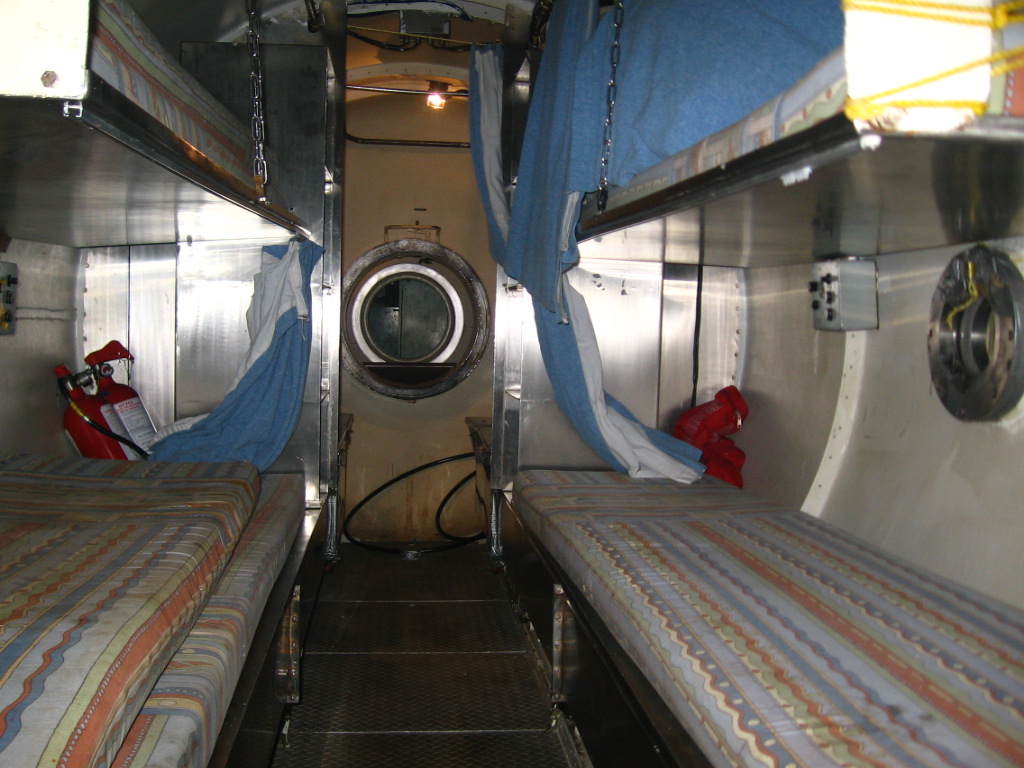
For those that aren’t familiar with saturation diving, divers will be put into a chamber for several days which slowly increases in pressure:
This also saturates their tissues with the breathing gases they’ll be inhaling, and it prepares their bodies pressure for the depth that they’ll essentially be living in for the next 28 days, 28 days being the standard length for saturation dives.
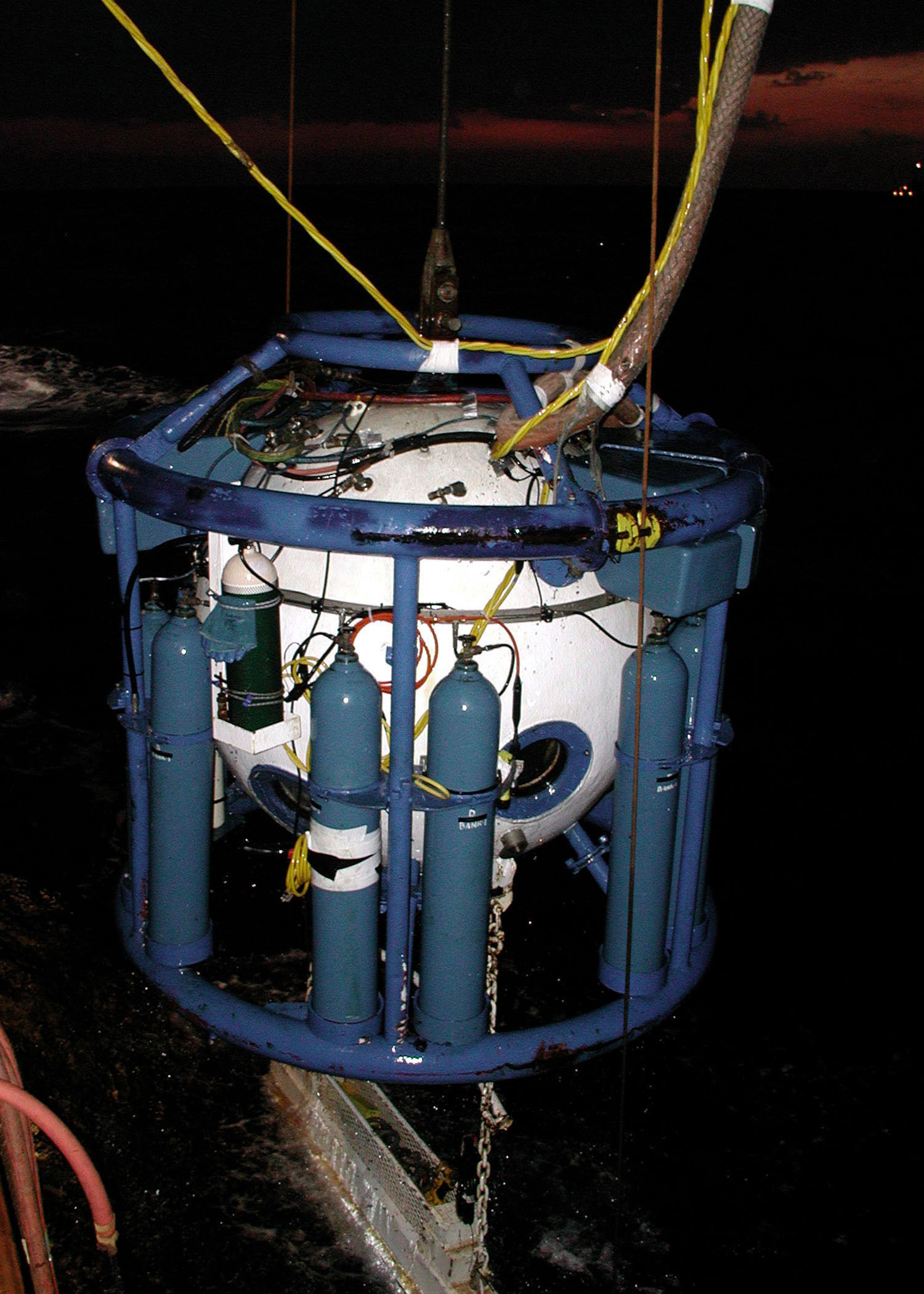
Once their tissues are fully “saturated”, and they reach the same pressure as the depth that they’ll be working at, their bodies will now be properly acclimated to the environment they’ll be traveling to, and they’ll be safe to step into the diving bell to begin their journey. The bell will be disconnected from the chamber, and they’ll be lowered down to the work-site.
This is all for safety and efficiency, so as to allow them to only have to decompress one time at the very end, and also to avoid decompression sickness, which is essentially excruciatingly painful bubbles that would form from the gas expanding in your body if you were to decompress too quickly.
Saturation divers from the Wildrake were preparing something called a SALM for transportation.
The “Thistle SALM”, or “Single Anchor Leg Mooring” is a $6.4 million dollar tanker loading facility. It’s pretty much just a massive 545 foot long oil container, which allowed them to transport oil back to land where an export pipeline didn’t exist.

From July through August they had successfully reattached the Buoy to the riser, and on August 7th they were working to reattach the rest of the SALM to it’s base for transport.
They were lowered down to a depth of 485 feet and began to work.
It’s to be noted that while they were being lowered into the ocean, the diving bell’s transponder came loose… and it was then removed because the deck foreman had been ordered to cut it off.
There were 2 divers down there, and after working for a while one of them happened to look up towards the diving bell… The diving bell was hanging at an angle and something looked seriously wrong. This was because the bell had become completely disconnected from the lift wire, it was hanging at an angle because it was now being supported only by the umbilical cord and nothing else… The umbilical cord that supplied the heat to their suits, the power supply and communication to everyone above, and most importantly, the breathing gas that was keeping them alive.
They’re 485 feet down floating in the dark and vast expanses of the ocean, they don’t have a transponder, and this umbilical now served as the only thing that was keeping them connected to the ship, the only thing keeping them from being lost in the ocean.
The diver that witnessed the issue reported the emergency, and climbed back into the diving bell, sealing it shut.
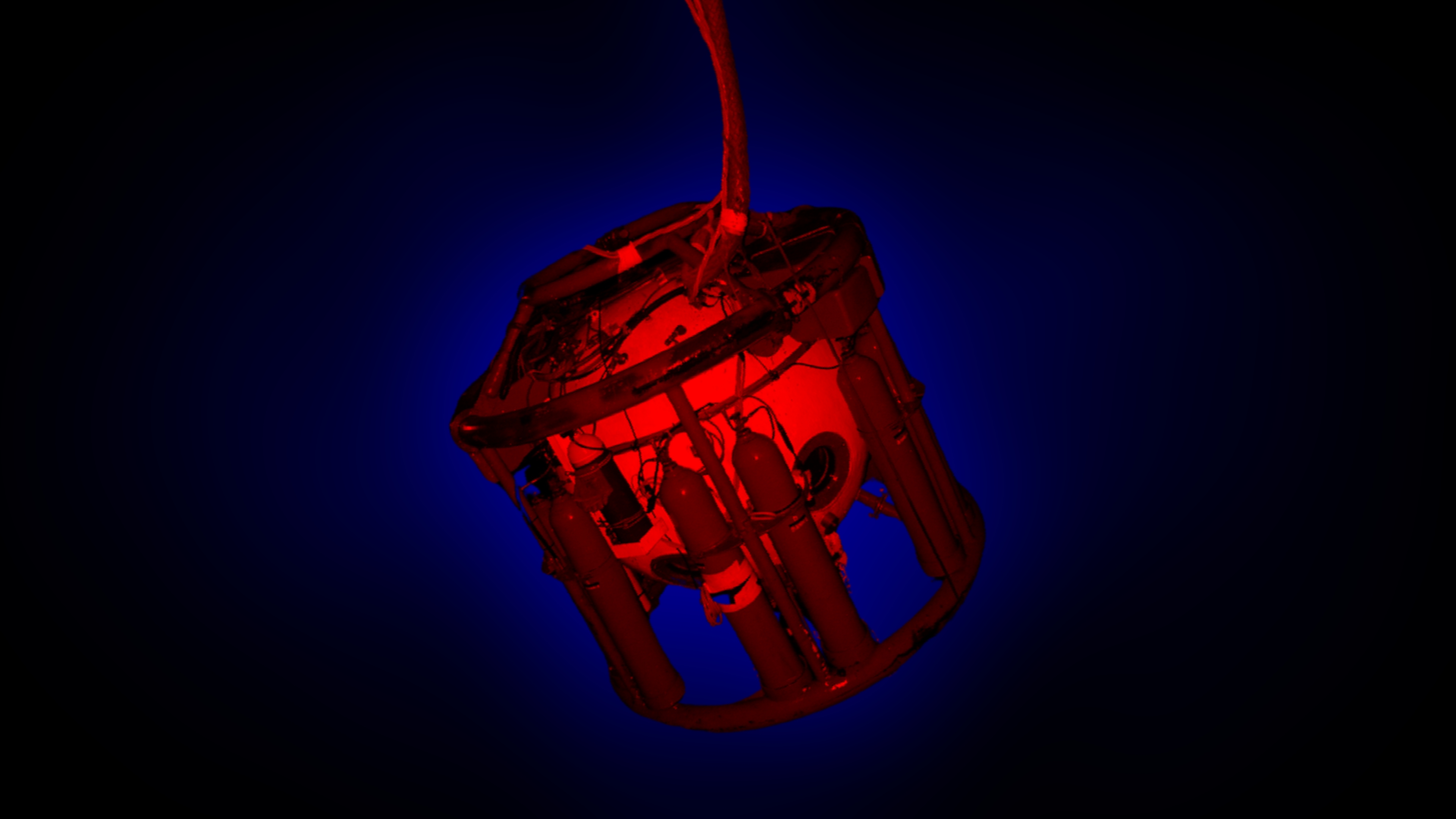
Once the ones above were aware they began to try to solve the issue as quickly as possible.
Back up on the Wildrake the dive superintendent and dive supervisor were under the impression that the umbilical winch was the backup measure for bell recover, they were unfortunately incorrect.
The same company that had certified the ship and it’s diving system did not certify the umbilical winch for bell recovery.
Through this misunderstanding they attempted to raise the bell by it’s already damaged umbilical… Their only lifeline got jammed in the winch while on it’s way up.
Then they tried to raise the bell with the ship’s crane… that sadly didn’t work either, this secondary plan damaged the umbilical substantially, damaged to the point that power and hot water were now cut off from the divers entirely.
Radio transmissions to and from the bell were very faint, and it was decided that the bell would be lowered to the ocean floor while they figured out how to retrieve them.
The divers sat at a depth of 522 feet in the bell, and they did the only thing that they could do, they waited helplessly for people to come rescue them.
Another diving vessel named “Stena Welder” came along to assist.
The plan that they had come up with was to have Stena Wilder’s divers go down and attach a guide wire to the diving bell, then they would use the wire to guide the Wildrake’s crane hook down to the bell, then all the rescue diver’s would have to do is connect it to the bell and they’d be pulled back up.
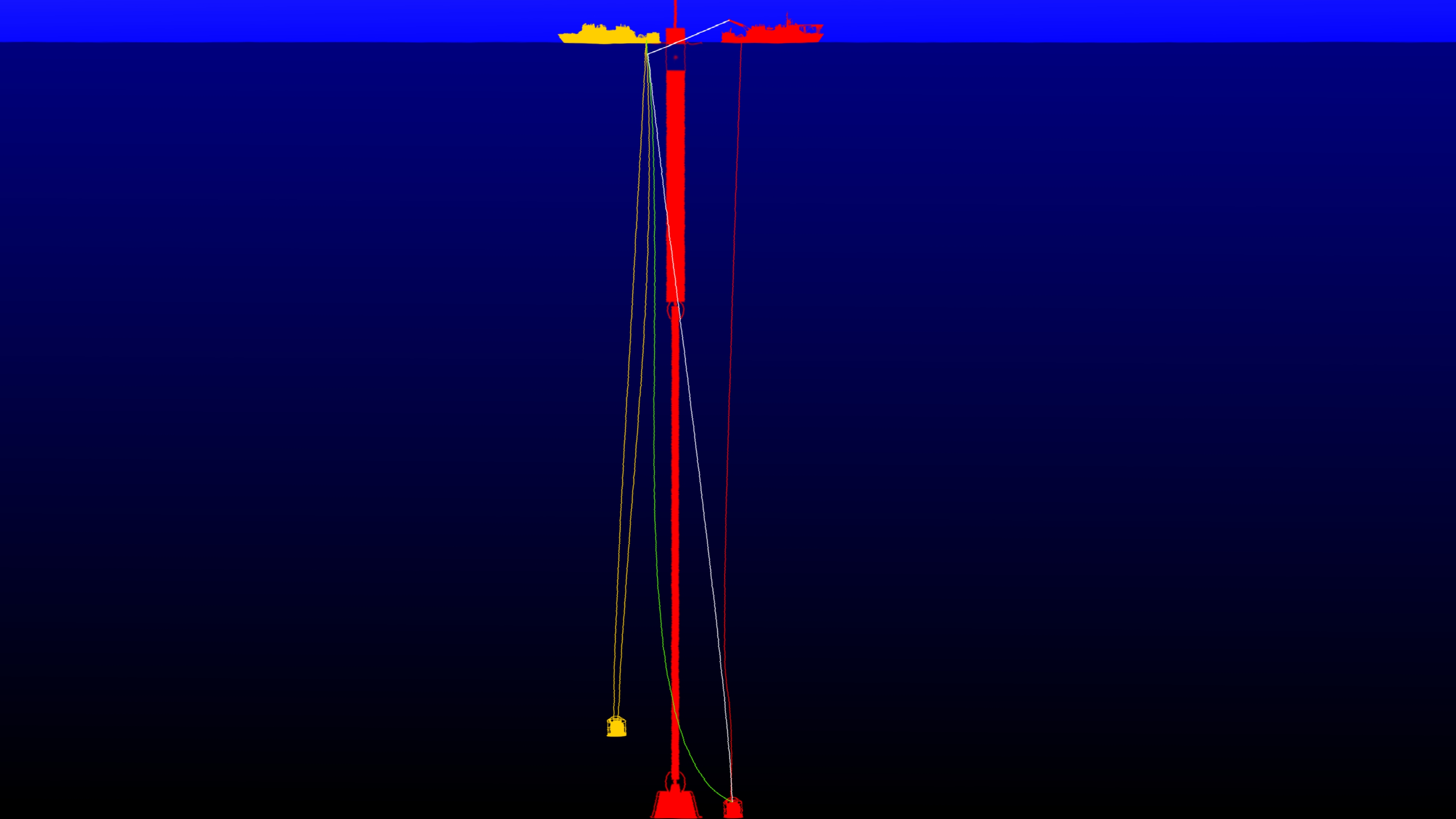
Their Plan [Yellow: Stena Wilder | Red: Wildrake | Green: Guide Wire | White: Crane Line]
It’s now been roughly 4 hours since the problem was noticed, Stena Wilder’s diving bell and it’s 2 divers begin their decent.
Stena Wilder’s diving system was undergoing repairs prior to all of this, it was actually readied for this mission as quickly as possible, so not everything about the bell’s condition was ideal.
This is where all of the problems begin to come together, everything begins compounding on top of each other, and things begin to get even worse.
-The Wildrake bell doesn’t have a transponder
-The Wildrake had moved the bell away from the SALM base hours earlier… they had forgotten that they did that, so it wasn’t in the location the rescue diver’s were expecting.
-Because of communication issues and the condition of the Stena Welder’s bell, the lights weren’t working either.
Because of all of that, by the time that they got down there it took another hour to even find the Wildrake bell before they could even begin to attempt their plan.
It’s about two hours later from when they began their descent, they find the bell and they see the two stranded divers giving them a thumbs up through the porthole. At the moment everything seemed to be fine, at least as fine as it could be given the circumstances.
Also the Stena Welder wasn’t a dynamic positioning vessel, essentially it didn’t have a computer that would keep it in the same place, so the one above controlling it had to constantly manually adjust over and over to desperately attempt to stay in the same spot.
Because of that it took another hour for one of the rescue diver’s to even attach the guide wire, the diving bell was attached to the unsteady ship, so while they attempted the rescue plan the bell was dragging the diver all over the ocean floor by their own umbilical.
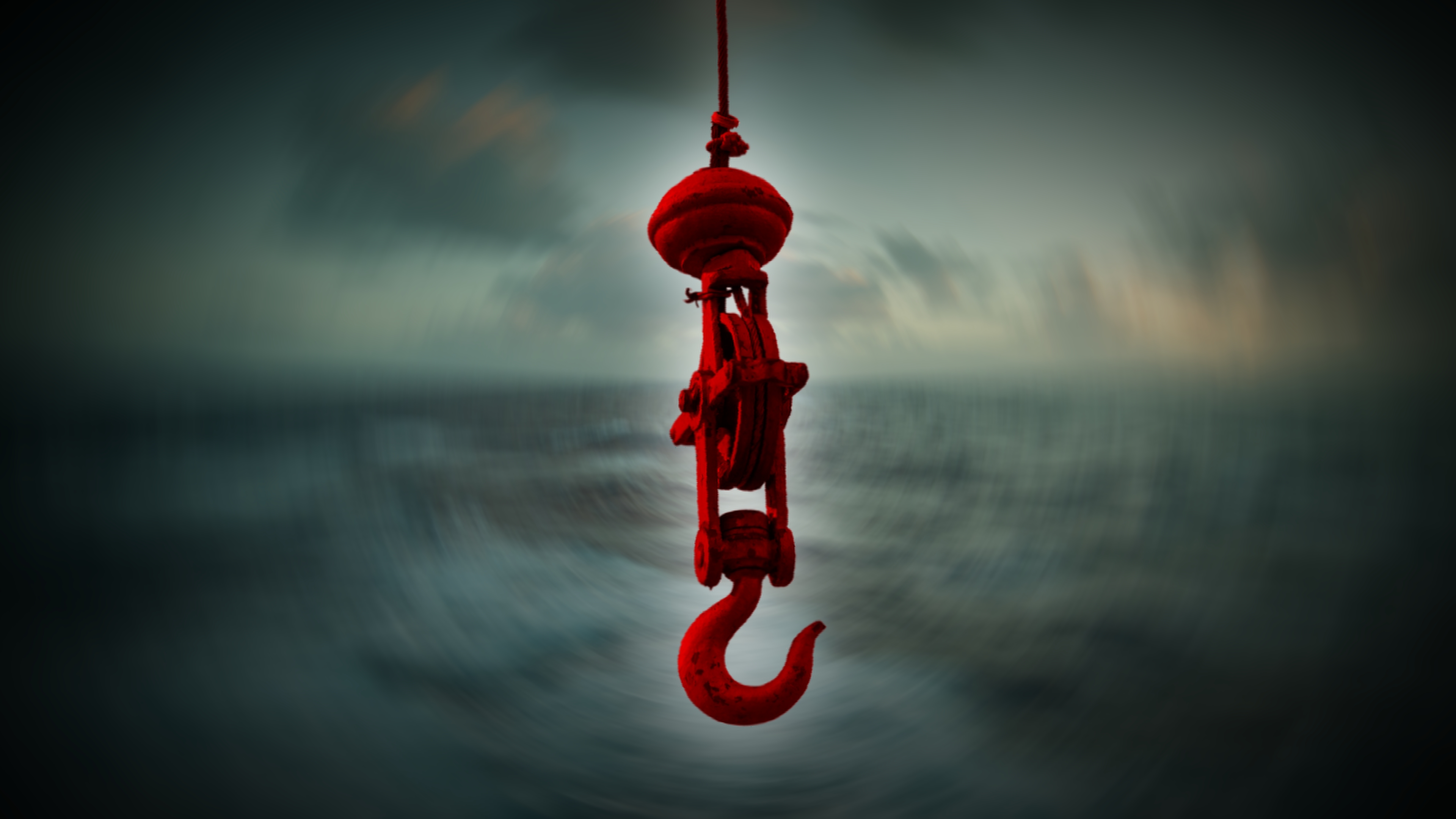
Once they succeeded The Wildrake’s crane hook began lowering, it’s been about 7 hours since they first noticed the issue, and by now one of the rescue diver’s had noticed that the trapped ones had become “very very frantic”.
When the Wildrake’s crane hook got down to the diver it didn’t go deep enough, they couldn’t even reach the hook with the wire slings. The hook was raised back up to have more wire slings attached before it would be lowered back down again.
An hour after the guide wire was attached the bell was finally connected and raised.
The Wildrake didn’t raise it vertically though, it was being raised at a 45 degree angle, and because they couldn’t see 522 feet down, they also couldn’t see how the bell was getting stuck against the SALM as it was being raised.
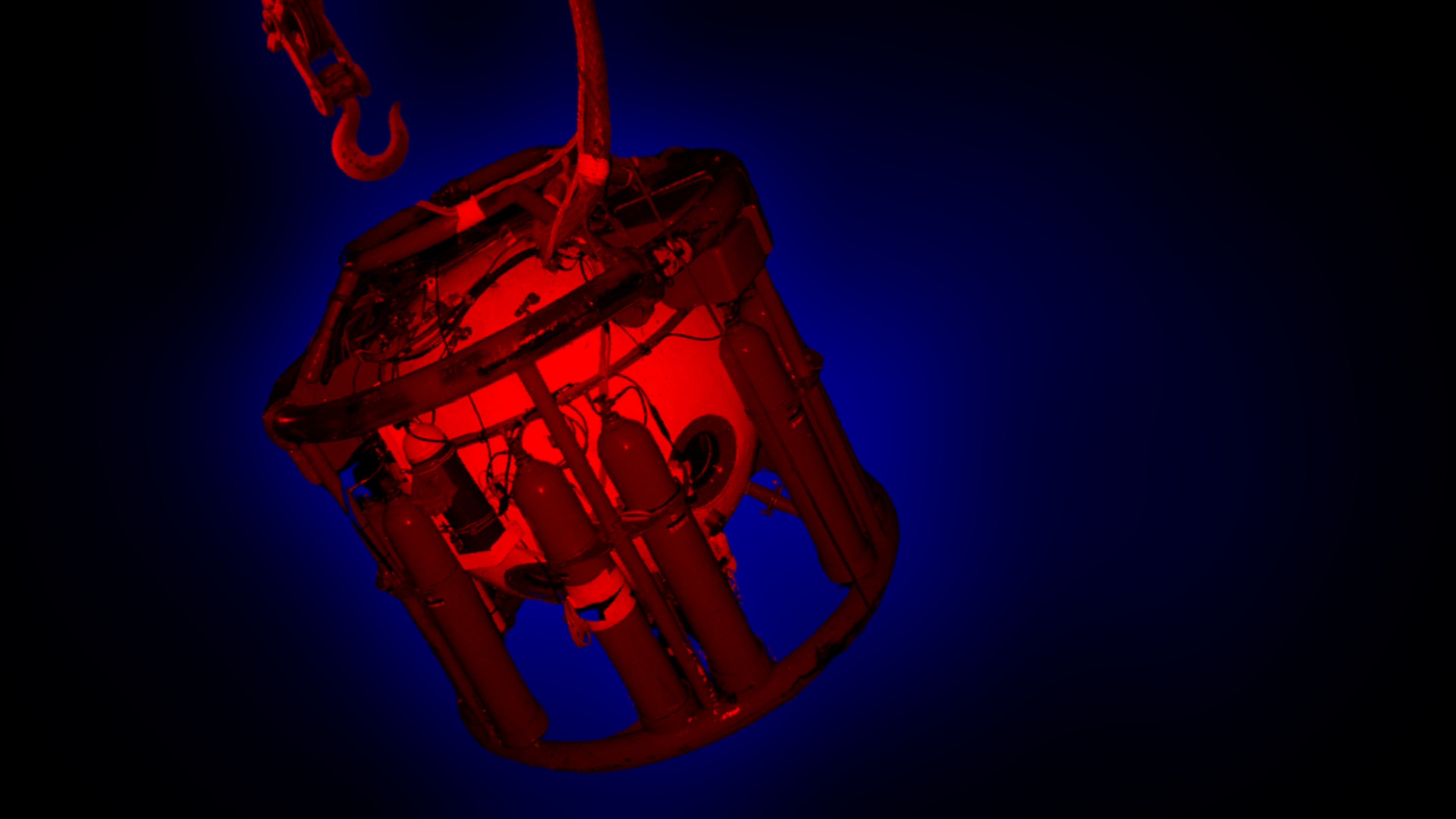
The wire sling snapped, the bell sank all the way back to the bottom, and before they knew it the bell was lost again.
They only realized this when the cable emerged with nothing connected to it, and by now it’s been 10 hours since the initial problem occurred. When the divers found them again, they could see that they had tried to cut the ropes to the drop weights so that the bell would rise to the surface, they had failed though because only one of the 2 weights had been removed. They could also see that the other diver’s were nearly dead at this point.
After roughly 14 tiring hours trying to save them, the original 2 divers were at the point of exhaustion, they were brought back up and were replaced by 2 other divers.
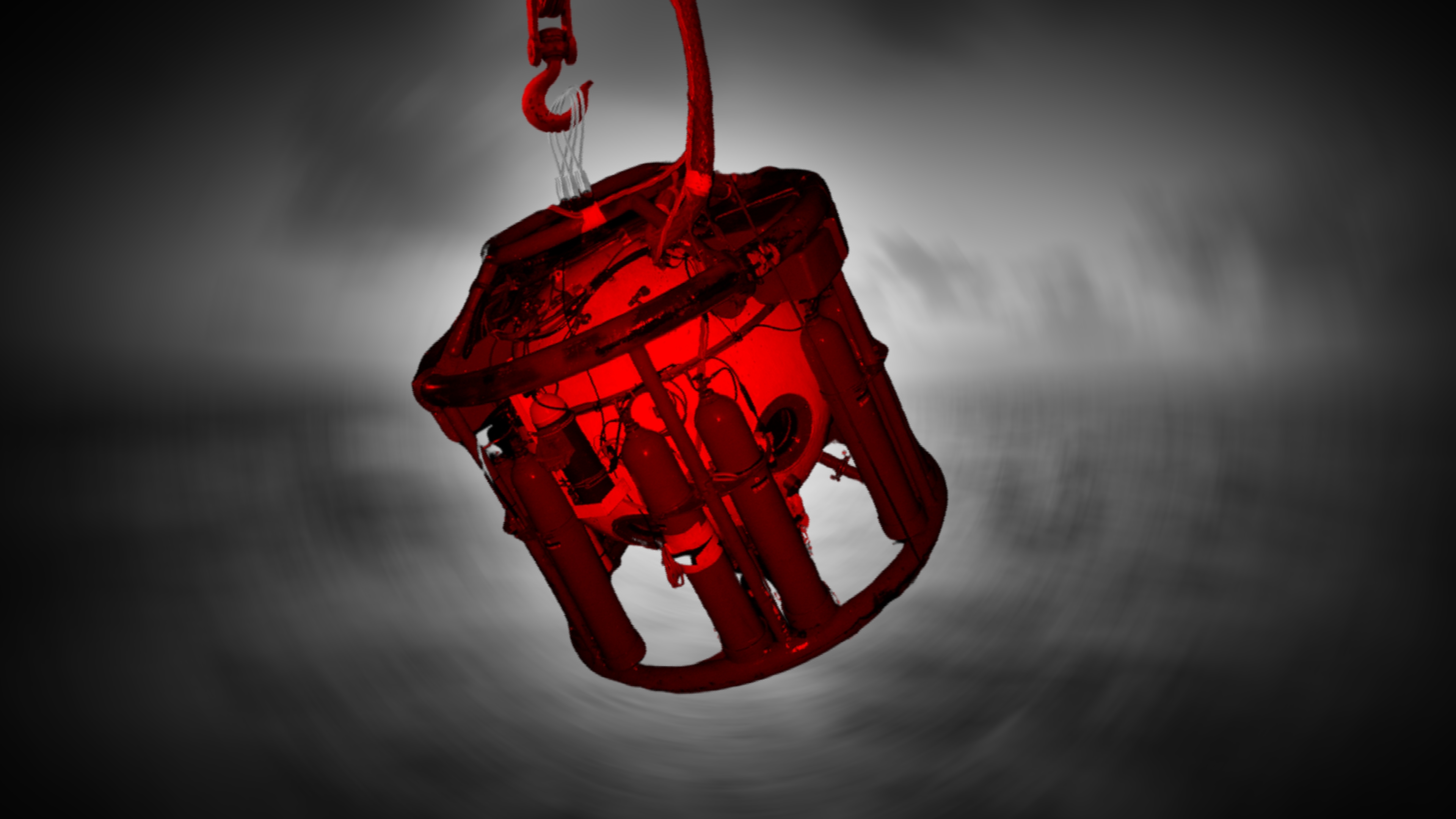
Just after 19 hours from the first signs of the issue, they were taken out of the ocean and finally connected back to the Wildrake’s saturation system. They had somebody placed into saturation to check on the 2 divers, but it was already too late. Without having power or hot water circulation for that long, both of them had unfortunately died from hypothermia.
It’s to be noted that at a time before they were sent down, several changes were made to the diving bell.
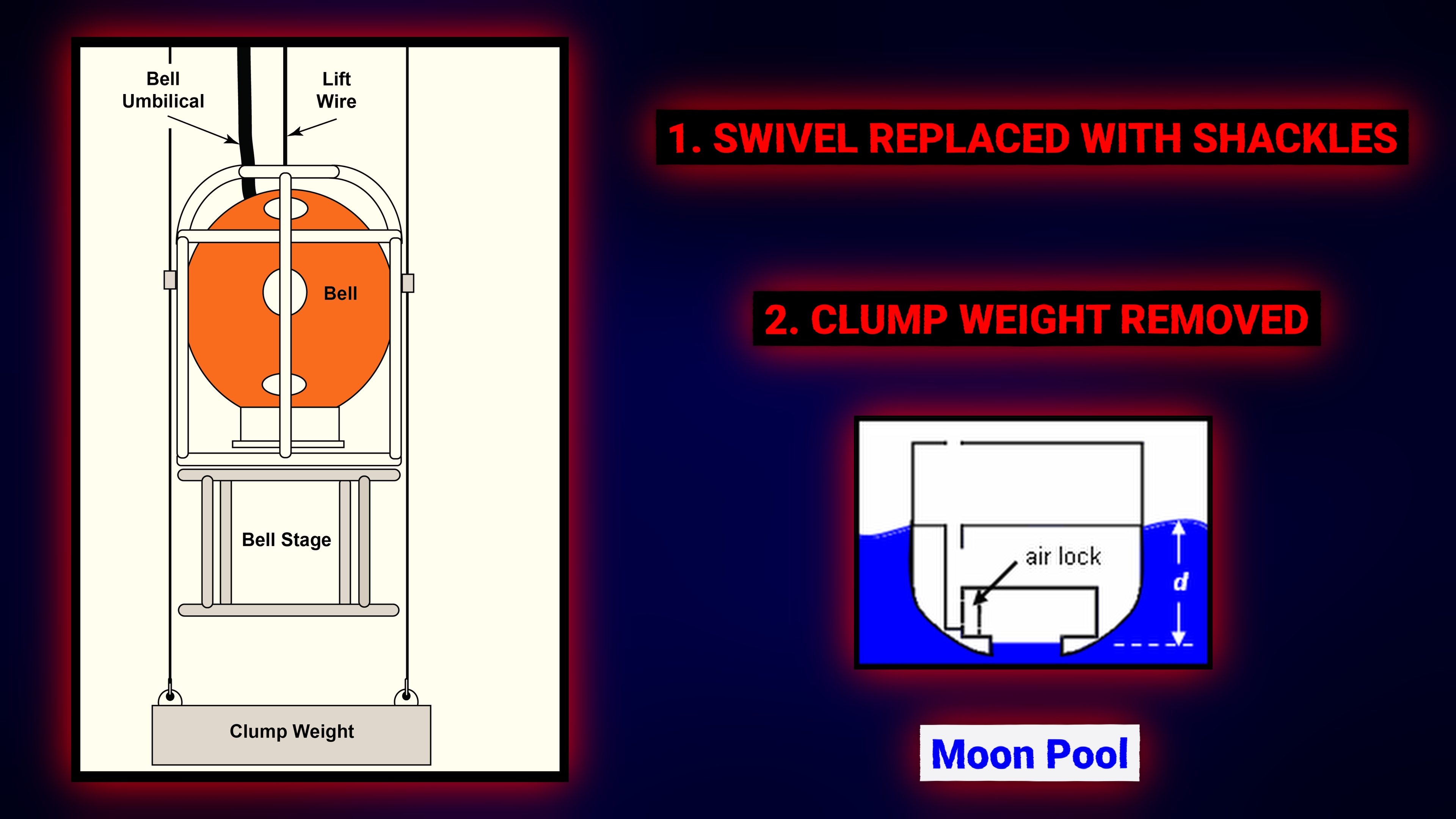
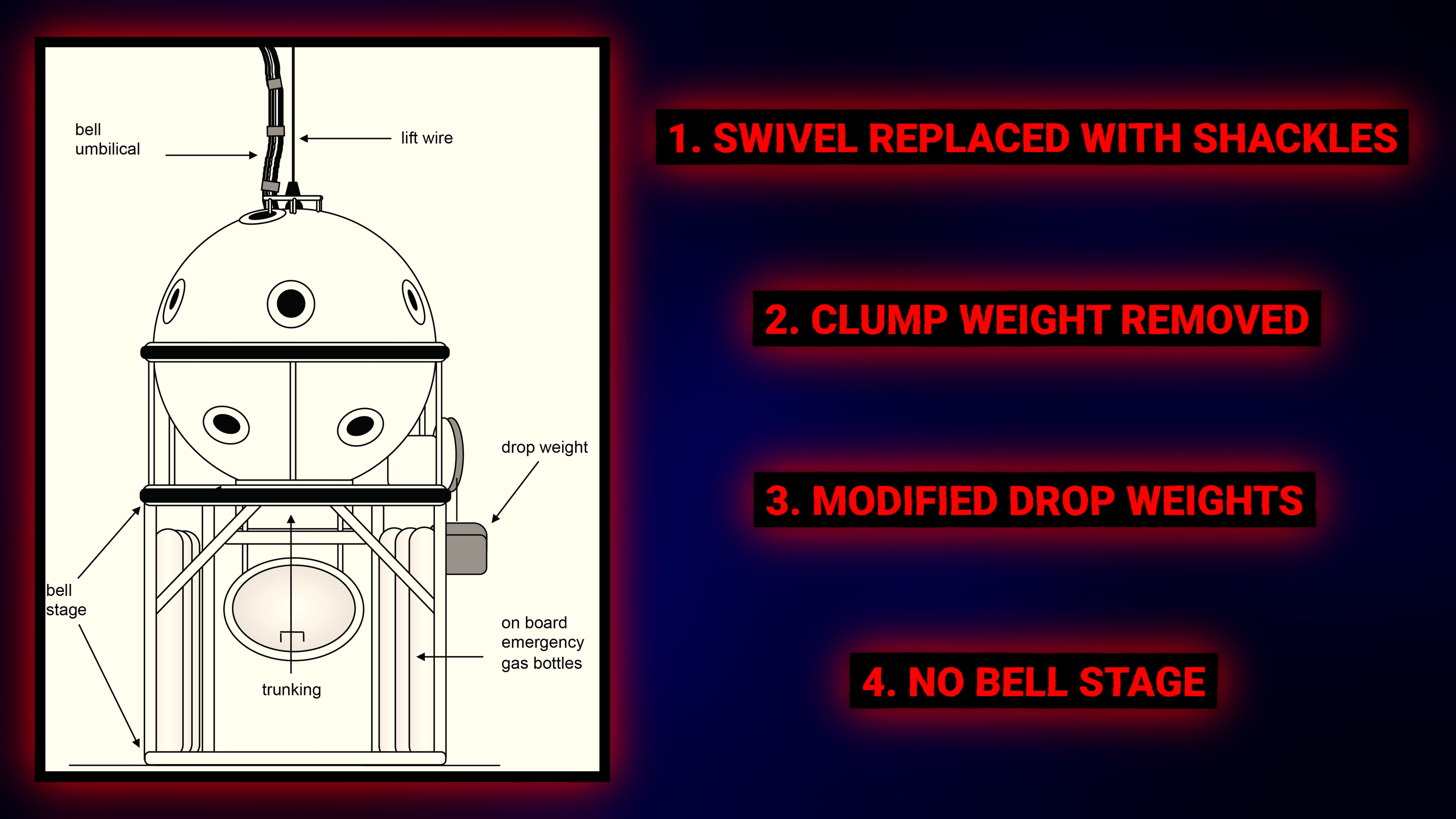
-For starters, The swivel that connected the lift wire was replaced with shackles, which to my understanding means it probably wouldn’t be able to pivot as well, and I could be wrong, but that sounds like that contributed to why the wire broke in the first place.
-The clump weight was removed so the bell would be able to be sent over the side of the Wildrake rather than through the moon pool like usual, the clump weight can also be used to recover the bell incase something goes wrong.
-The bell’s drop weights were tied to the side of the frame to prevent accidental releases, accidental releases that had caused fatal diving accidents in the past… if installed correctly, these drop weights can ALSO be used to recover the bell in case of an emergency.
-Lastly, it didn’t even have a bell stage.
So let’s say it was, oh I don’t know, somehow stranded on the bottom ocean floor one day, the bell stage would have prevented the hatch from becoming buried in the mud and trapping them.
Not to mention that after the incident, during an investigation inspectors found several safety violations aboard the Wildrake, evidence that heavily leaned in the direction of negligence.
How do I feel about this story?
Well, words from the sheriff involved in this case will sum up my emotions pretty accurately.
He says that the removal of the clump weight played a part in why they aren’t still alive today, and that the non-existing bell stage suggested “that the diving contractors were more concerned with speed than with safety”.
He also states that the two divers “could probably have been saved” had the ones in charge investigated what was obstructing the bell before continuing.
It was all, so preventable.
[References/Images/Licenses/Credits] https://docs.google.com/document/d/1rWRj3dlE7_fHW6kIm64GmsmA4leXRLhzMtcnf0_IjXk/edit?usp=sharing
Video, Script, Image 1, and Images 6–12 created/modified by Mr. Sleepless
About the Creator
Enjoyed the story? Support the Creator.
Subscribe for free to receive all their stories in your feed.
Comments
There are no comments for this story
Be the first to respond and start the conversation.