
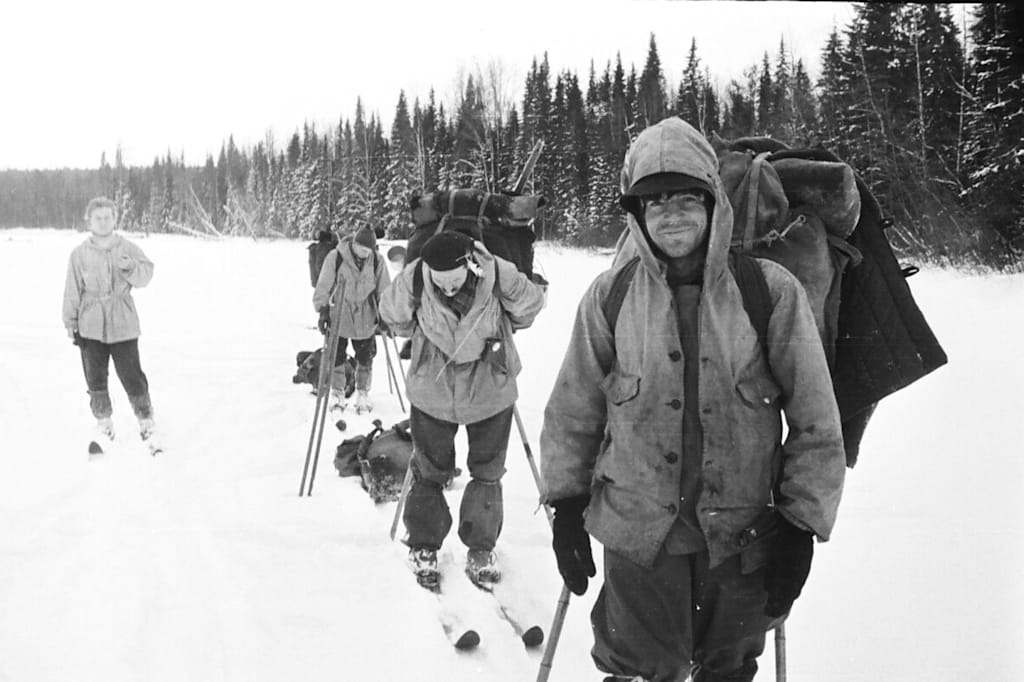
Northern Ural Mountains, Soviet Union
Night of February 1st, 1959
The mountain had another name before the maps claimed it.
Kholat Syakhl.
Dead Mountain.
The Mansi hunters spoke the words quietly, almost unwillingly, as if the mountain itself listened when its name was spoken aloud. Some claimed ancient hunters disappeared there. Others whispered about lights moving through the snow long before aircraft ever crossed the Urals.
But to Igor Dyatlov and his group, it was only another challenge.
Another route.
Another frozen horizon to conquer.
The expedition had been organized by the Ural Polytechnical Institute in honor of the Twenty-First Congress of the Communist Party. The route covered more than 350 kilometers through some of the harshest terrain in the Soviet Union and had received the highest difficulty classification possible.
Only experienced hikers qualified.
And these students were among the best.
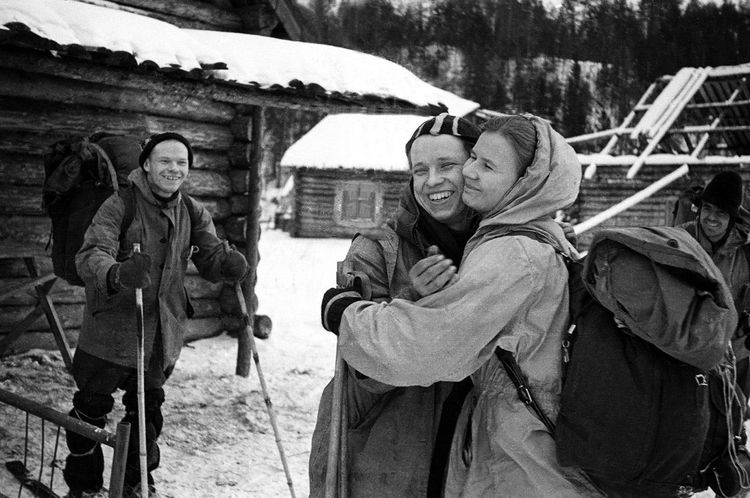
Igor Dyatlov, twenty-three years old, engineering student and respected expedition leader, checked the straps on his skis while the others unloaded supplies from the sleds. Serious and methodical, he carried himself with quiet confidence. His friends trusted him completely.
Zinaida Kolmogorova laughed while brushing snow from her jacket. She had survived a viper bite during an earlier expedition and treated danger almost like an old acquaintance.
Yuri Doroshenko, tall and athletic, carried firewood over one shoulder. Nearby, Rustem Slobodin tuned the mandolin he insisted on bringing despite everyone mocking him for the extra weight.
Lyudmila Dubinina photographed the camp while Georgi Krivonischenko joked beside the fire. Krivonischenko had worked at the Mayak nuclear facility after the Kyshtym disaster, where radioactive contamination had poisoned entire regions. He never spoke much about what he saw there.
Then there was Semjon Solotarev.
Older than the others by nearly twenty years.
A war veteran.
A survivor.
He rarely smiled.
And sometimes, late at night, Igor noticed him staring into the darkness beyond camp as though remembering something terrible.
The tenth member, Yuri Yudin, never made it this far.
Illness forced him to return home days earlier.
That decision saved his life.
He would become the only survivor.
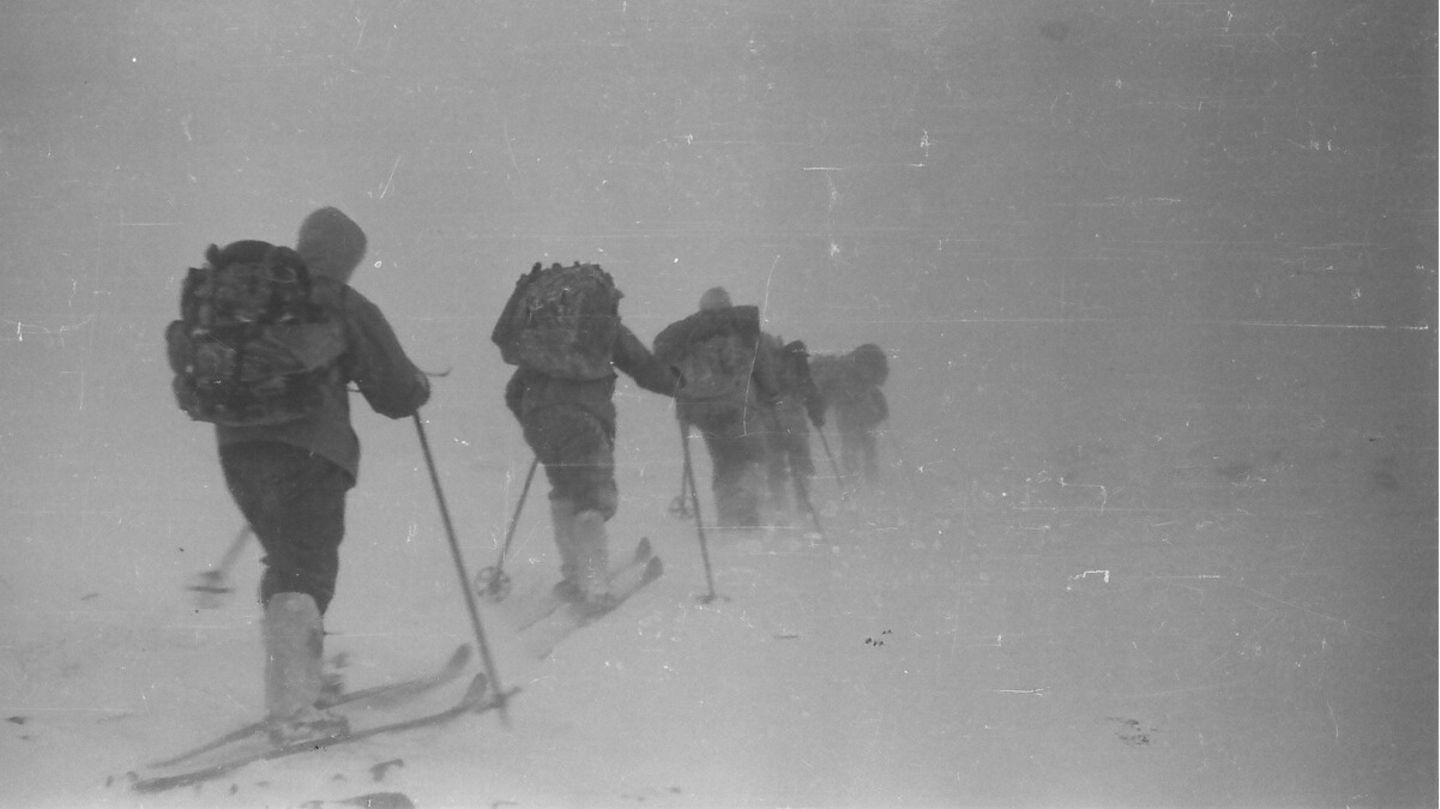
By February 1st, the group reached the northeastern slope of Kholat Syakhl.
The weather worsened quickly.
Wind blasted across the exposed ridge, carrying ice crystals sharp enough to cut skin.
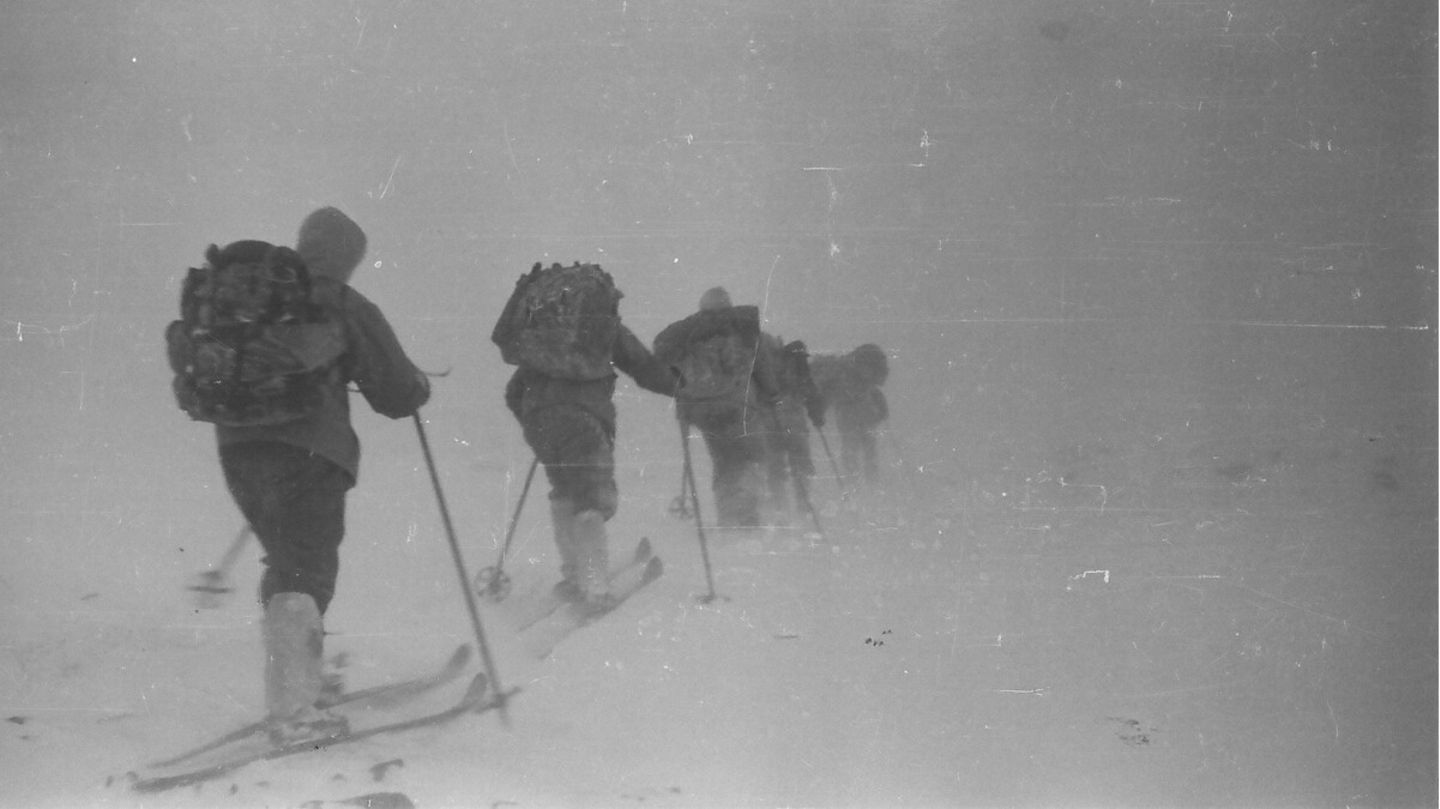
Originally, Igor planned to descend into the forested valley below for shelter. But visibility collapsed, and by late afternoon they decided to pitch the tent directly on the mountain slope.
It was a mistake no one would survive.
The last photographs later recovered from their camera showed smiling faces.
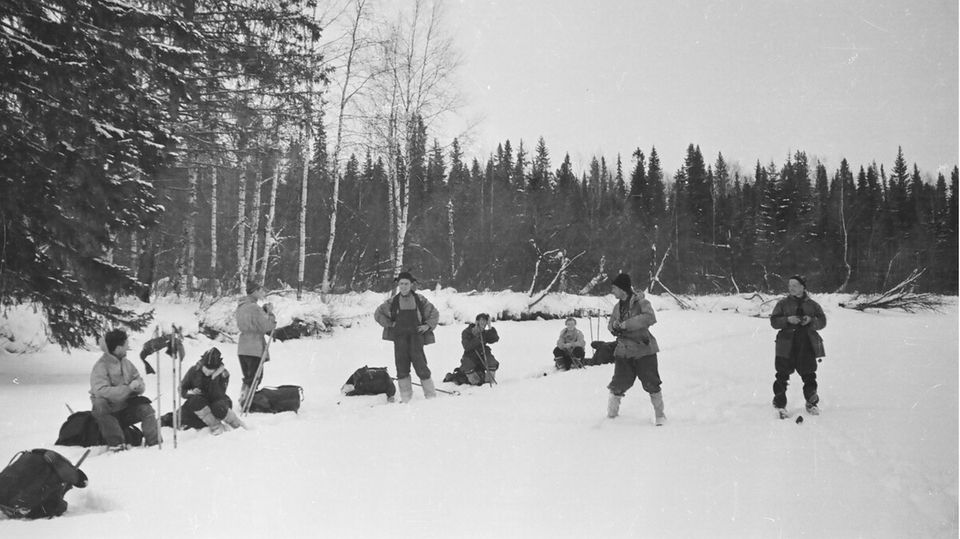
Snow-covered skis.
Friends laughing while building camp.
Ordinary moments frozen forever.
Inside the tent that evening, the group ate dinner and joked while wind battered the canvas.
The atmosphere slowly changed after sunset.
It began with sounds.
Not outside.
Underneath.
A low vibration trembled through the snowpack beneath the tent floor.
Rustem looked up first.
“Did you feel that?”
Nobody answered.
The lantern flickered.
Then came the noise.
A deep, distant hum rolling across the mountain.
Not thunder.
Not wind.
Something metallic.
Something enormous.
Georgi frowned immediately.
“I know that sound.”
“What is it?” Zina asked.
He hesitated too long.
Then whispered:
“Military.”
The humming intensified.
Outside, orange light suddenly flashed through the tent walls.
Everyone froze.
Igor opened the entrance slightly and stared into the storm.
Far above the ridge floated several glowing spheres.
Orange.
Silent.
Motionless.
Lyudmila grabbed her camera.
“What are those?”
No one knew.
But Semjon’s face had turned pale.
“I saw lights like that during the war,” he muttered.
Then the sound came again.
Except now it was closer.
A high-frequency shriek sliced through the mountain air.
Everyone covered their ears.
The noise felt wrong — almost physical — vibrating through their teeth and skulls.
Yuri Krivonischenko suddenly stood up.
“We need to leave.”
“Leave for what?” Igor snapped. “Into this?”
But then the tent floor moved.
Something struck the snow beneath them hard enough to shake the poles.
THUD.
Several screamed.
Another impact followed.
THUD.
The lantern fell.
Darkness swallowed the tent.
Then came the footsteps.
Crunch.
Crunch.
Crunch.
Circling outside.
Slow.
Measured.
Too heavy to belong to a person.
Igor reached for the flashlight.
The beam swept across white emptiness.
No footprints.
Nothing.
Yet the crunching continued.
Closer now.
Circling them like a predator.
Panic spread instantly.
The shrieking noise outside intensified until some of them dropped to their knees screaming.
Blood trickled from Rustem’s nose.
Lyudmila covered her ears desperately.
“It’s inside my head!”
Another violent impact slammed beneath the tent floor.
Then something scraped slowly along the canvas wall.
Long.
Deliberate.
Like fingernails.
Semjon shouted first.
“Cut the tent!”
Igor hesitated only seconds before grabbing a knife.
The blade tore through the fabric from the inside.
Cold air exploded inward.
The group stumbled into the blizzard half-dressed, some barefoot, others wearing only socks and thin underclothes despite temperatures nearing minus thirty degrees Celsius.
They ran downhill blindly into darkness.
And behind them, the tent bulged outward from within.
As if something tall had just stood up inside it.
—
The storm erased direction immediately.
Snow hammered their faces while the orange lights drifted silently overhead.
Igor tried organizing the group.
“To the trees! Stay together!”
But terror had already broken them apart.
The shrieking sound returned intermittently, each burst causing dizziness and confusion.
Infrasound.
Years later, investigators would theorize strange wind patterns might have triggered panic and irrational behavior.
But no theory explained the footsteps.
Or the voices.
Because several members heard whispers in the storm.
Human voices speaking from nowhere.
Calling their names.
Zina heard her mother.
Lyudmila heard children crying.
Semjon heard soldiers screaming in German from somewhere beneath the snow.They reached the forest nearly frozen.
Under a giant cedar tree, Yuri Doroshenko and Krivonischenko desperately tried building a fire. They snapped branches from nearby saplings so violently that skin tore from their fingers, leaving flesh and blood smeared high upon the bark.
The fire barely survived the wind.
Some argued about returning to the tent.
Others refused.
Because something had followed them down the mountain.
They could hear it moving between the trees.
Crunch.
Crunch.
Crunch.
Always circling.
Never rushing.
Watching.
Then the orange lights descended lower through the forest.
For one horrible moment, the trees glowed bright amber.
And everyone saw the figure standing beyond the firelight.
Tall.
Broad-shouldered.
Human-shaped.
But wrong.
Its arms hung too long.
Its head tilted unnaturally sideways.
And where its face should have been—
only darkness.
Rustem grabbed a burning branch.
“Who are you?!”
The figure stepped forward.
Then vanished.
Not ran.
Not hid.
Vanished.
The screams started seconds later.
Nikolai Tibo-Brinjol collapsed first, his skull fracturing with a sound like splitting ice although nothing visibly touched him.
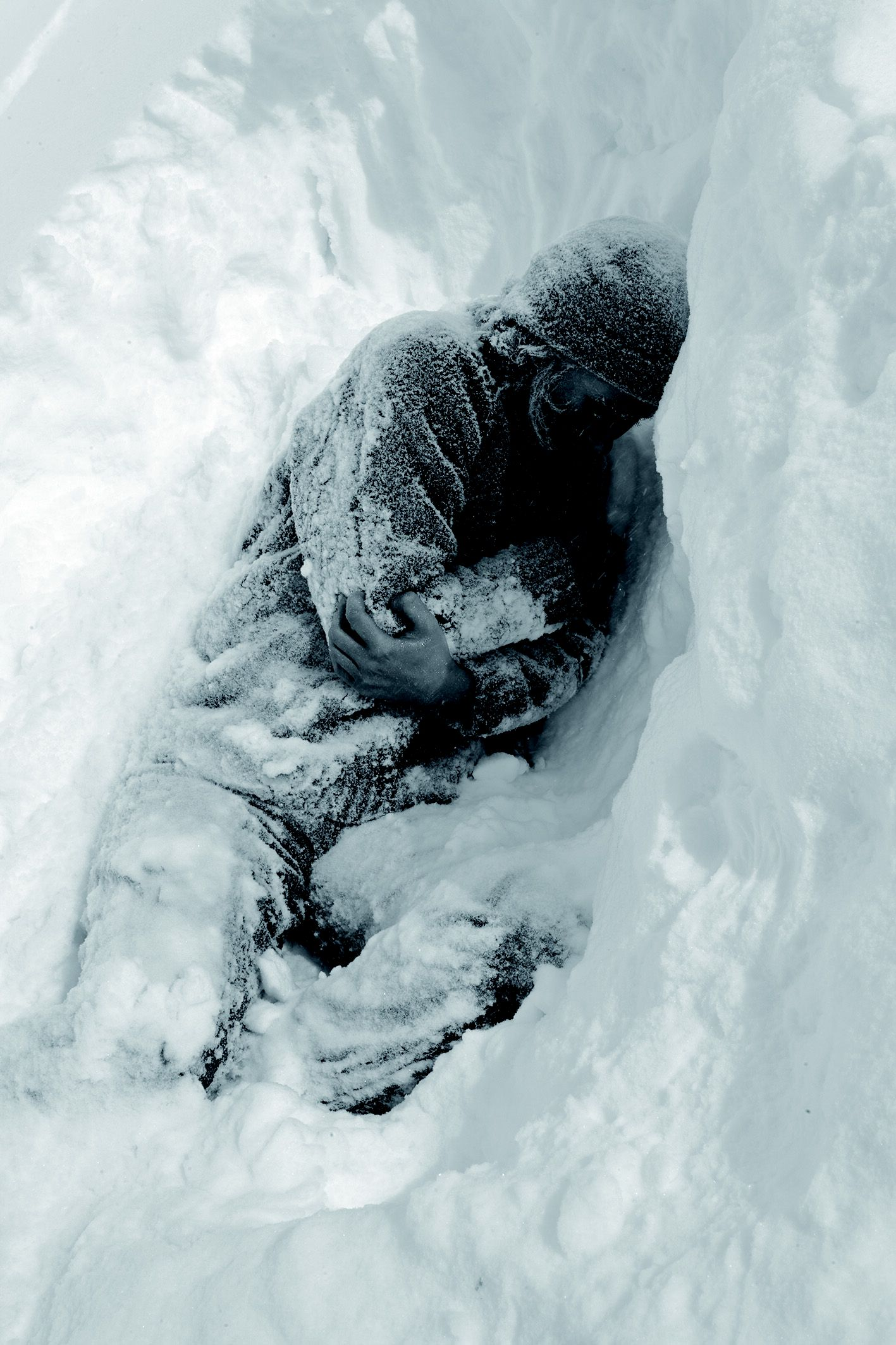
Semjon staggered backward clutching his chest.
Bones cracked violently beneath his coat.
Lyudmila screamed as invisible force crushed her ribs inward.
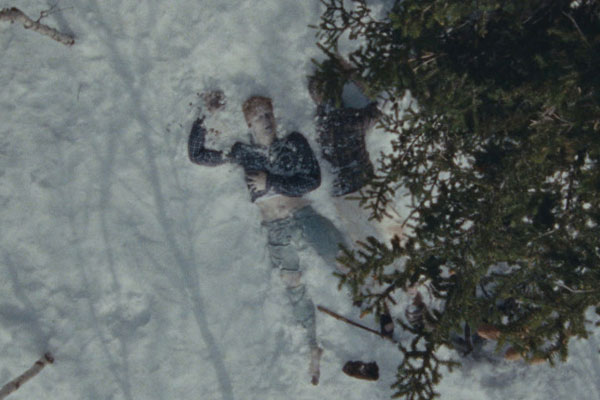
Blood spilled from her mouth onto the snow.
Panic exploded.
People scattered into darkness.
Some tried crawling back toward the tent.
Others fled deeper into the forest.
None escaped.
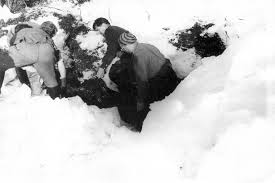
Search teams would not arrive until weeks later.
When the students failed to return on February 14th, relatives demanded action. On February 20th, rescue teams, soldiers, Mansi trackers, dogs, and volunteer students entered the mountains.
What they discovered became one of the Soviet Union’s darkest mysteries.
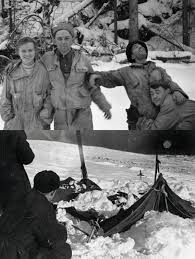
The tent was found first on February 26th.
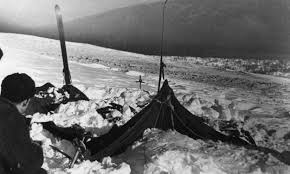
Partially buried in snow.
Still standing.
Its entrance faced south.
The cuts in the canvas had been made from inside.
Inside remained boots, warm clothing, cameras, money, passports, food.
Everything needed to survive.
As if the group had fled in absolute terror.
Footprints led downhill toward the forest.
Bare footprints.
Socked footprints.
No signs of strangers.
No animal tracks.
Nothing else.
Then they found the bodies.
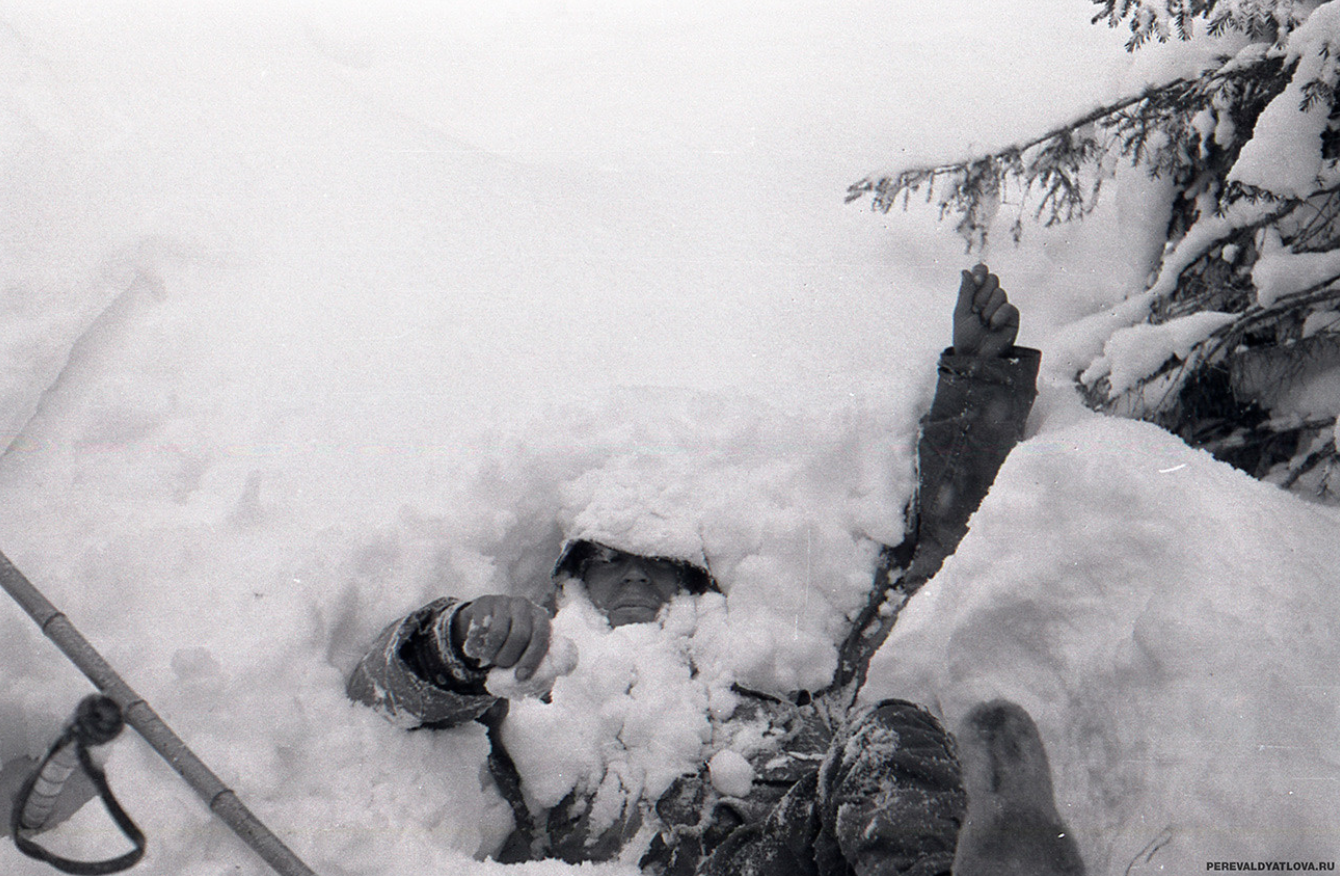
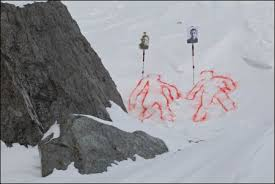
Under the cedar tree lay Doroshenko and Krivonischenko, nearly naked beside the remains of a fire. Their hands were burned. Skin and muscle tissue covered the bark above them where they had climbed desperately into the tree.
Further uphill lay Dyatlov.
Then Zina.
Then Rustem.
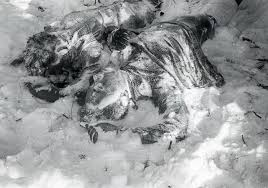
All positioned as though trying to return to the tent before collapsing in the snow.
The final four bodies remained missing for months.
When spring thaw exposed the ravine in May, rescuers discovered them buried beneath four meters of snow.
The injuries horrified investigators.
Dubinina’s ribs were shattered.
Solotarev’s chest crushed inward.
Tibo-Brinjol suffered catastrophic skull fractures.
Yet there were almost no external wounds.
No evidence of a fight.
No weapon.
Dubinina’s eyes were missing.
So was her tongue.
Some bodies carried traces of radiation.
Witnesses later claimed the corpses had orange skin and gray hair.
Military investigators sealed portions of the files.
The area was closed for three years.
And the official conclusion stated only this:
“The hikers died due to an unknown compelling force.”
But one investigator privately admitted something never included in the final report.
During the original search operation, several rescuers reported seeing orange spheres floating silently above the mountains at night.
One searcher described them as “fireballs watching from the sky.”
Another claimed his radiation meter spiked violently near the campsite before suddenly failing.
Years later, military officials insisted the lights were missile tests.
Others blamed avalanches.
Infrasound.
Hypothermia-induced madness.
Secret weapons experiments.
Yet none of those explanations answered the final question.
Why did nine experienced hikers abandon safety and run half-naked into certain death?
Some believe the answer still waits on Dead Mountain.
Because even now, travelers crossing the Dyatlov Pass report strange lights moving through snowstorms.
And sometimes, during the long Arctic night, campers hear footsteps circling their tents.
Crunch.
Crunch.
Crunch.
Slowly drawing closer.
Waiting for someone inside to panic first.
About the Creator
Enjoyed the story? Support the Creator.
Subscribe for free to receive all their stories in your feed. You could also become a paid subscriber, letting them know you appreciate their work.
Comments
There are no comments for this story
Be the first to respond and start the conversation.