
Channel 19
Somewhere past midnight on an empty highway, a dispatcher started calling my truck number. Nobody should have known where I was.

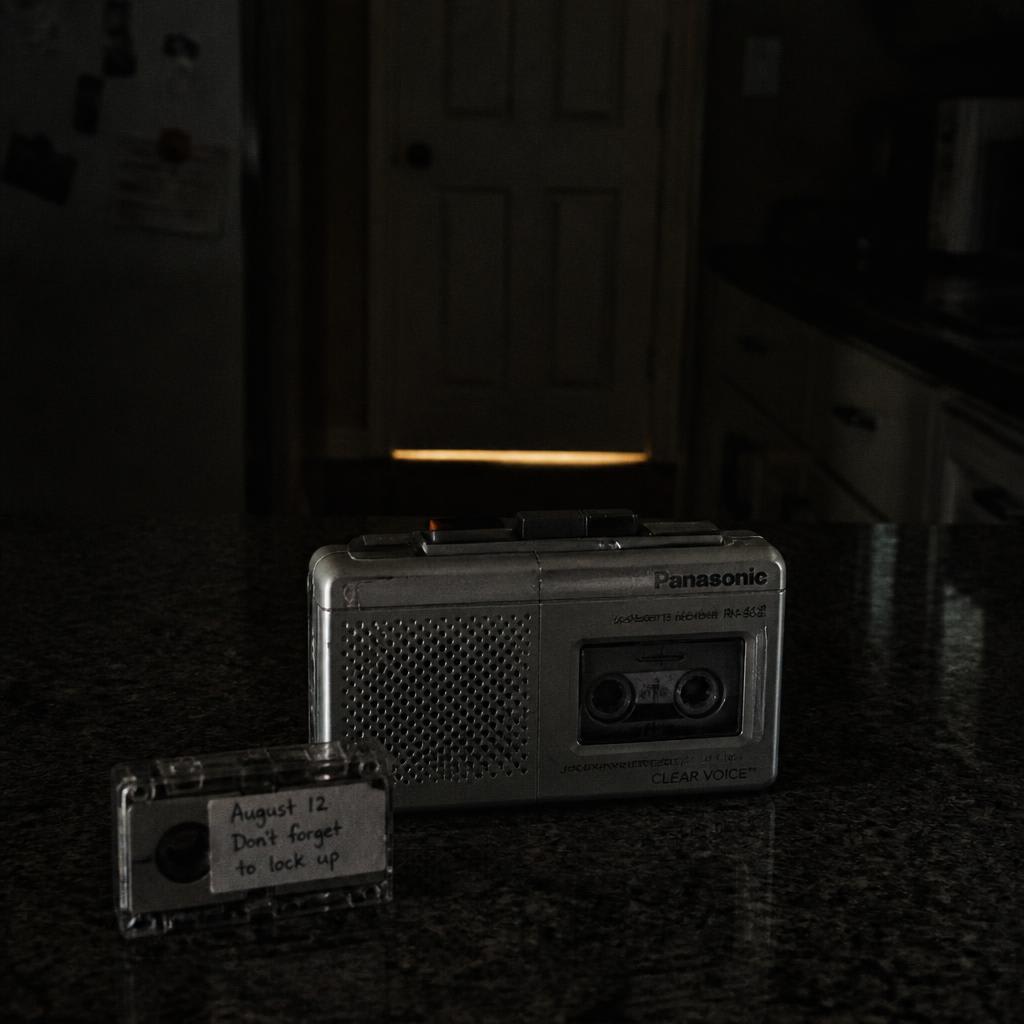
I’ve driven nights for nineteen years. You learn what the road sounds like when nothing is wrong. Tires hum, the engine keeps its low note, and the CB hisses on channel 19, with now and then another driver complaining about the weather or a weigh station.
That night the hiss was dead silent.
I noticed because I’d been listening to it for six hours. Somewhere past the state line, between one mile marker and the next, the static simply stopped, as if someone had put a hand over the speaker.
Then a woman’s voice, flat and professional, said:
“Unit Nine, Unit Nine, this is County Dispatch. Do you copy?”
I don’t drive Unit Nine. My truck number is 4417. But there was something in the way she said it, patient and a little worn, that made me reach for the mic anyway.
“Dispatch, this is 4417. I think you’ve got the wrong truck.”
Nothing. Not even a click.
“Unit Nine, we have your last known position at mile marker 212, northbound. We are sending units to that location. If you can hear this, please respond.”
I looked at the green sign sliding past my window. Mile 211.
I told myself it was a skip. Radio waves bounce around at night, and a dispatcher a thousand miles away can sound like she’s in the next lane. It happens.
But the next mile marker came up, and the voice said, “Unit Nine, mile marker 211. We have no response. Search teams are en route.”
Then mile 210. Then 209.
She was counting down the road in front of me, one mile at a time, a few seconds behind where I actually was.
I clicked the mic. “Dispatch, say again your last known position for Unit Nine.”
“Northbound, mile marker 212, shoulder, vehicle on its side. Unit Nine, if you can hear this, please respond.”
I stopped breathing. Mile 212 was a few miles behind me now. I remembered it, because I’d passed a long curve and a drainage ditch and a broken guardrail where the road bent toward the river.
I had not seen a vehicle there. I would have remembered a vehicle there.
I’m not proud of what I did next. I kept driving.
I turned up the radio instead, as if the volume could make the voice go away. It didn’t. It simply went on, mile after mile, calm and steady and tired.
“Unit Nine, this is the third call. Sheriff’s department is requesting a K9 unit.”
“Unit Nine, a family has been notified.”
“Unit Nine, the vehicle is a white Peterbilt, sleeper cab, plate registered in Nevada.”
I looked at the dashboard. At the registration card tucked into the visor. At the sleeper cab behind my seat, where my jacket hung on its hook.
White Peterbilt. Nevada plates.
“Dispatch,” I said, and my voice came out thin, “what’s the driver’s name?”
The static crackled once, as if someone had leaned toward a microphone.
“Unit Nine is registered to Dale Kowalczyk. Driver is not responding.”
My name is Dale Kowalczyk.
I pulled onto the shoulder with my hands shaking so hard the wheel rattled. I set the brake. I sat in the dark cab with the engine ticking and the radio hissing softly between calls, and I said it out loud, to nobody.
“I’m here. I’m right here. I’m Dale.”
The voice paused. It’s the first time she’d paused.
“Unit Nine, we are receiving something on this channel. It’s very faint. We believe it may be the driver.”
My heart kicked. “Yes. Yes, that’s me. I’m in the truck. I’m fine. I’m on the shoulder north of mile 209, I can see the road, I’m fine.”
“Unit Nine, if that’s you, we cannot make out your words. Please say again.”
“I’m fine!” I shouted into the mic. “I’m sitting in the truck! I’m not hurt! I’m right here!”
“We’re getting static,” the dispatcher said gently. “We think we hear someone. We can’t tell what they’re saying.”
I hit the hazard lights. I got out of the cab and stood on the gravel in the cold, and I looked back down the highway toward mile 212.
There was nothing there. Just the long bend, the dark river, the line of broken guardrail glinting under the moon.
I started walking.
It’s strange what you notice when you know something’s wrong. I noticed that I could not hear my boots on the gravel. I noticed that the stars were very sharp and the air had no smell. I noticed that when I passed the mile 211 marker, it flickered, like a bad screen, and for a second it read 213.
I walked back through the miles the dispatcher had counted.
At mile 212, the guardrail was bent outward, and below it, down the slope toward the water, a white truck lay on its side with its headlights still burning.
I stood at the edge and looked down. Searchlights were moving across the field below. Men in orange vests were calling a name. I could see them, small and far away, sweeping the grass with their flashlights, working in lines.
“Dale!” they were shouting. “Dale Kowalczyk!”
“I’m here,” I said. Nobody turned. “I’m up here!”
A woman in a sheriff’s jacket was standing at the open door of the cab, speaking into a handheld radio. I could hear her, faintly, over the wind, in the same flat patient voice I had been hearing for six hours.
“Dispatch, we’re at the vehicle. Cab is empty. No driver on scene.”
A pause.
“We keep hearing something on channel 19,” she said. “Like someone answering. But the radio in the cab isn’t powered. The battery’s been dead for two days.”
Two days.
I looked at my hands, and I could see the gravel through them.
They found me eventually. That’s the part I keep returning to, in the long hours between the calls.
They found me about a hundred yards from the wreck, in the long grass by the river, where I’d crawled before I stopped. The sheriff took off her hat. A younger deputy turned away and was sick in the weeds.
And I understood, at last, what the channel had been doing. It wasn’t a haunting. It was a kindness, or the closest thing the world had left to one. All night, somebody had been calling my name into the dark, because that is what you do. You keep calling until someone answers.
I had answered, finally. I had just answered too late.
The radio in my cab turned itself on, and the green light glowed, and the speaker crackled softly in the silence, and a woman’s tired voice said:
“Unit Nine, this is County Dispatch. We have located the driver. We’re sorry it took so long.”
“It’s all right,” I said, to nobody, to the static. “It’s all right. Thank you for looking.”
A long pause.
“Unit Nine,” she said, very quietly, “is there anything else you’d like us to tell your family?”
And there on the shoulder of a road no one drove anymore, under a sky full of sharp, silent stars, I leaned toward the microphone and began to speak, and the channel stayed open, and somewhere far away, someone was finally listening.
About the Creator
zenGaze
A person with a new idea is a crank until the idea succe!eds
Enjoyed the story? Support the Creator.
Subscribe for free to receive all their stories in your feed. You could also become a paid subscriber, letting them know you appreciate their work.
Comments
There are no comments for this story
Be the first to respond and start the conversation.