
Beyond Jujutsu Kaisen: The Terrifying Internet Legend of “Ryomen Sukuna”
Exploring the Irrational Heart of Modern Japan #1

If you ask anime fans today who “the strongest character” is, you will definitely hear a name Sukuna. Thanks to the global phenomenon Jujutsu Kaisen, Ryomen Sukuna has become an icon of power and cool villainy even in the world, not only in Japan.
However, for Japanese millennials like me, the name Sukuna already signals the link to the strong evil power, even before we learned that from the manga or anime. It does not come from the flashy battle scenes of these artworks, but crawled out of an anonymous story from a dark corner of the Japanese internet in the 2000s.
Today, I will introduce you that the Japanese internet occult trend in 00s, which may somewhat explain “paranormal sensibility” that lies deep within the hearts of quite a few modern Japanese people living in one of the most developed countries.
The “Syare-Kowa” Era — Internet Occult Trend in 00s
Before Sukuna appeared as The King of Curses in Jujutsu Kaisen, he was already recognized as an icon of terrifying curse in one of the internet scary stories from Syare-Kowa, which is an abbreviation for the threads about occult in 2channel, popular in the mid-2000s. In Japanese, it is written as 死ぬほど洒落にならない怖い話を集めてみない?, meaning, “Let’s collect deadly scary stories.” In those forums, people shared the original scary stories in a way of “their (or someone they know) true experience”. The story of Sukuna was one of such stories.
両面宿儺 — The Curse in a Forbidden Box
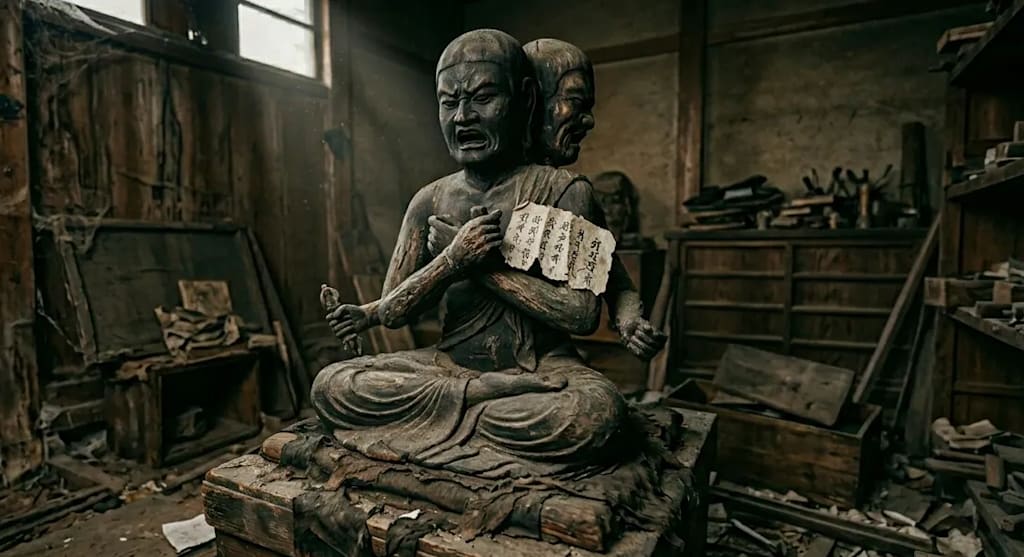
The story of Sukuna was told by a construction worker who had been recently tasked with demolishing an old, abandoned temple in Iwate Prefecture. During the demolition, his colleague discovered a long, blackened wooden box in a sealed backroom. It was two meters long, ancient, seemed rotten, and sealed with a weathered paper carrying an unreadable writings similar to ancient Sanskrit-based characters known as Bonji (梵字). He barely could recognize a few words on it, “Taisho era… July… by incantation… Ryomen Sukuna… sealed.”
Ignoring the strong warning not to open the box by former head priest of the temple, two coworkers opened it. The sight they beheld was nightmarish: a mummified figure with two heads, four arms, terrifying expression in agony and rage on their face. The storyteller thought that it was a deformed baby like a conjoined twin, or maybe just a fake. However, the workers opend it were found in a complete daze, traumatized into silence.
When the head priest arrived, he went into a rage and screamed, “It’s all over!” and got mad at his son coming with him for not having sent the “Lord Sukuna” to a temple in Kyoto as planned. While he told them the openers wouldn’t make it, he performed a long exorcism for the rest of workers. After that, he left with the box, but not before delivering a chilling final words to the workers: “I feel sorry for you, but you won’t live long.”
After that, one of the openers died from a heart attack, the other was transferred to a mental hospital, three other coworkers were laid up with mysterious high fevers, and storyteller stepped on a nail and needed five stitches. Later, the son of priest told the storyteller that the secret behind the Sukuna mummy, since “You are supporsed not to live long”.
The son of priest explained that, Sukuna has been created through a grotesque ritual of Kodoku (蠱毒: Gu-poisoning), which is originated in China. The word composed of the character “insect” and “poison” so that the name suggests, it involves placing insects in a container and letting them kill each other until only one remains and then using that one to cast a curse on the target. It is said that Mononobe Tengoku, the leader of a evil cult in Japan, performed this ritual on deformed humans bought from a freakshow. After the ritual, Tengoku starved the survived conjoined twins to death and turned into Buddhist mummy (sokushin-butsu: 即身仏).
In order to curse whole Japan itself, Tengoku further enhanced Sukuna’s cursed power by embedding the bones of people who had been defeated by the Yamato Imperial Court (the ancient central government of Japan). It is said that he traveled around Japan in the Taisho era with Sukuna, causing great disasters in various places. At the end, he slit his throat with a Japanese sword and committed suicide in front of Sukuna, leaving behind a will written in blood, saying “Japan must be destroyed,” and causing the Great Kanto Earthquake.
The Two Faces of Sukuna: Monster vs. Guardian
To understand the weight of this story, we must look at the real history of Sukuna.
The earliest record of Sukuna appears in the Nihon Shoki (The Chronicles of Japan), which is one of the oldest Japanese historical books, completed in 720 AD. In this official history, Sukuna was described literally as a monster — a being with two faces, four arms, and superhuman strength who terrorized the people and defied the Japanese Imperial Court. He was a rebel who had to be “subjugated” by the central government.
Considering this historical background, it is more understandable that in the Sukuna mummy’s story; with the appearance, a conjoined twins could be a perfect character to play the two-faced rebellious villan against the Empire, enhanced with the bones of ancient rebels, to weaponize the centuries-old grudges of those crushed by the Japanese state.
However, if you visit the Hida region (Gifu Prefecture) today, you will find a completely different story. To the local people, Ryomen Sukuna was not a monster, but a hero and a guardian deity. Local temple records describe him as an outlander who defeated a poison dragon and introduced Buddhism to the region.
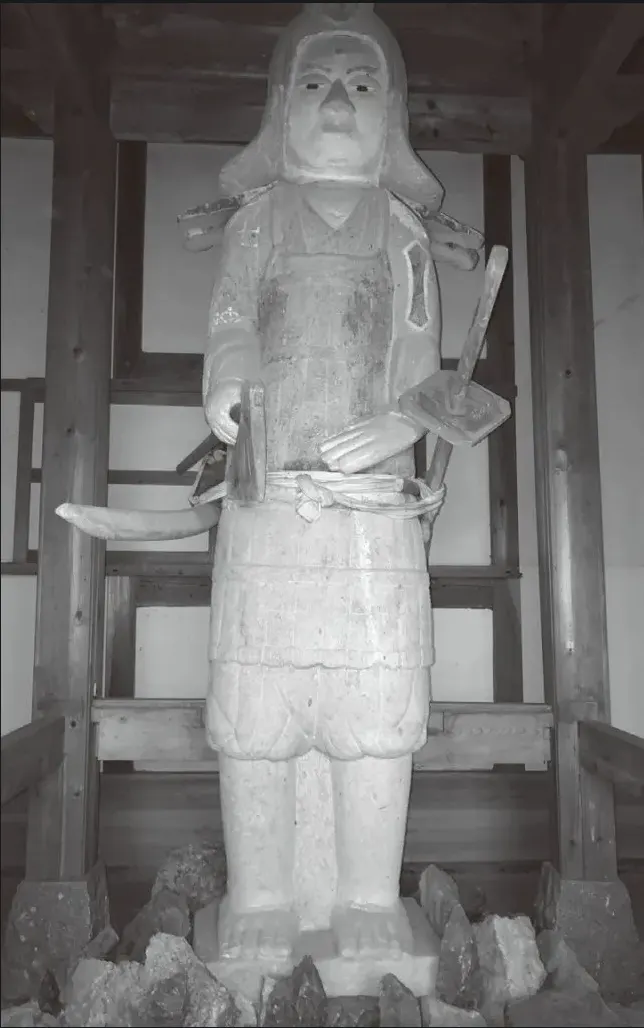
Like Sukuna’s two faces, his duality might be a key to the hidden fascination for the story.
Modernizing the Darkness of Abyss
In my opinion, the appeal of the Ryomen Sukuna story isn’t just the gruesome imagery of a two-headed mummy with its deadly curse. It’s the two-sided backstory that weaves together with real history, and mysteriou religious traditions like Sokushin-butsu and dark folklore like Kodoku.
Today in Japan, I see a Kaidan (ghost story) renaissance. Quite a few professional horror storytellers (kaidan-shi: 怪談師) organize events and talk on YouTube channels, not just to scare people, but also to “analyze” the stories. They often look for the historical and social reasons behind the stories and try to figure out the couses of the the phenomena.
Why does this matter? Because in a hyper-rationalized society, perhaps we no longer accept “scary things” as they are. Instead, we try to modernize the occult through analysis. Like the Sukuna’s story, we transform a raw nightmare into a “cultural archive” by connecting a creepy internet story to real history and tradition. From a internet horror story in 2000s to a 2020s anime icon, it still proves that the occult is never dead — it is simply waiting to be re-interpreted for the next generation.
We live in a country where ancient traditions and cutting-edge technology exist side-by-side. For us, occult stories act as an entry point into a “Hidden Japan” — a version of our culture that isn’t found in textbooks. We don’t just consume these stories for a quick jump-scare; we analyze them, connecting the dots between internet lore, religious history, and the dark underbelly of society.
Introduction to the Seriese
This series introduces legendary internet stories of Japan to show the “rational irrationality” of modern Japanese. We explore the psychology of people who accept the science and receive treatment at hospitals, deal with the daily work in front of the computer, but at the same time, visit shrines and temples out of fear of curses and spirits of the dead or to wish to get blessings by the gods.
In Japan, the supernatural doesn’t live in haunted castles or distant forests. It lurks inside the abandoned local temples and the undergrounds of Shinjuku skyscrapers.
In the next article, we will move away from ancient mummies and dive into the darkness of the metropolis; we will explore the legendary story of 地下の井戸, The Underground Well — a tale that blurs the line between Yakuza crime story and supernatural horror, revealing a side of Tokyo that you were never supposed to see.
About the Creator
JPEE+
こんにちは, we are JPEE+!
We're working to connect Europe and Japan through the virtual and real world. We empower language & cultural exchange through otaku culture, tech and creativity.
Check our other activities: https://linktr.ee/jpee.plus
Enjoyed the story? Support the Creator.
Subscribe for free to receive all their stories in your feed.
Comments
There are no comments for this story
Be the first to respond and start the conversation.