
Backrooms (2026) Review: A Nightmare Built From Dread and Liminal Spaces
Backrooms (2026) review: Kane Parsons transforms the viral liminal-space phenomenon into a haunting nightmare of uncanny visuals, psychological dread, and elevated horror.


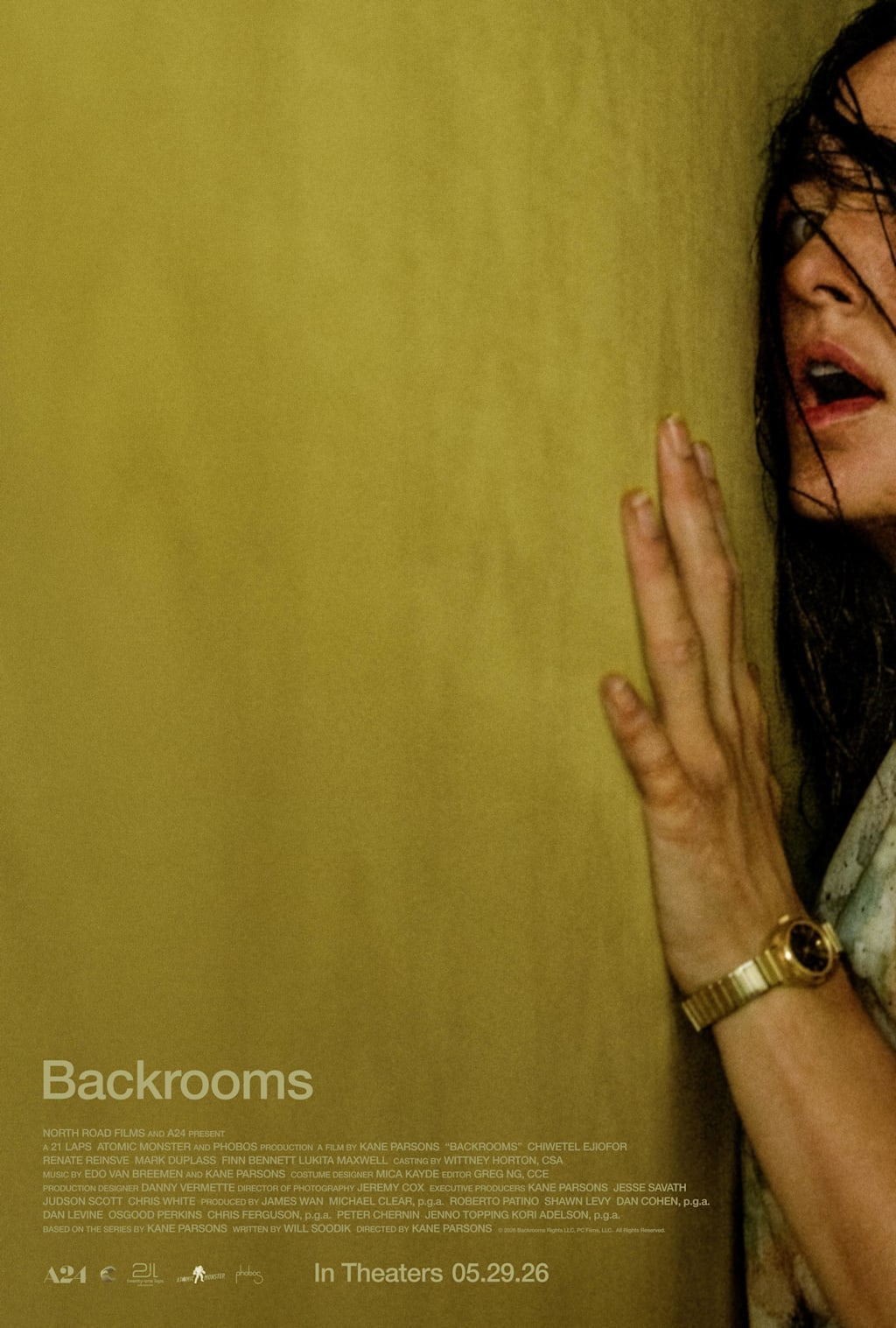
★★★★☆ (4/5)
Backrooms (2026)
Directed by Kane Parsons
Written by Kane Parsons
Starring Chiwetel Ejiofor, Renate Reinsve
Released May 7, 2026
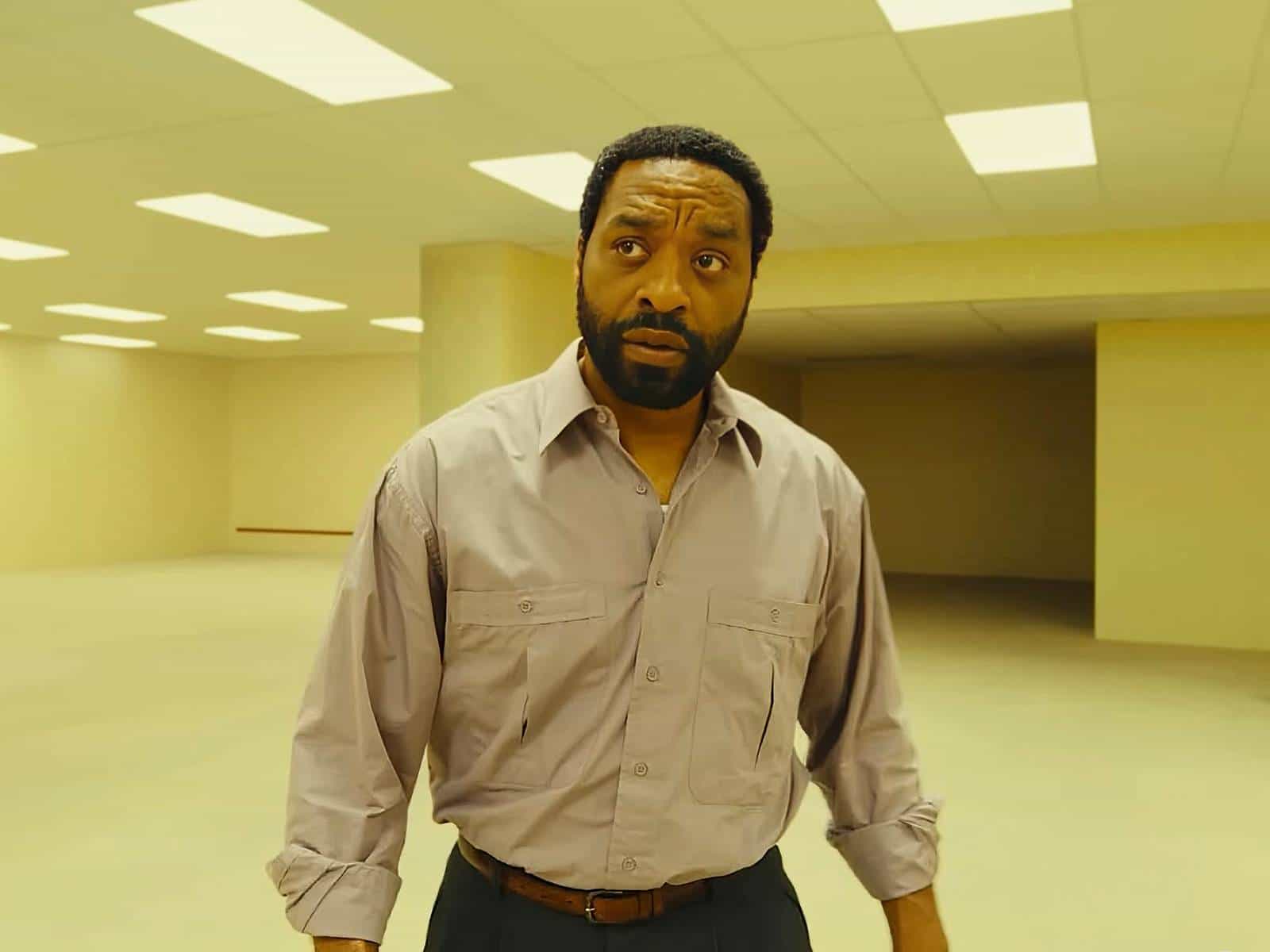
Backrooms is what might be called “vibes horror.” The debut feature from writer-director Kane Parsons is more about feeling than plot. There is a plot, but it is intentionally abstract and oblique. You can find it and assign deeper meanings to it, but you can also simply allow Backrooms to engulf your senses and evoke fear and dread through its stirring, uncanny visuals.
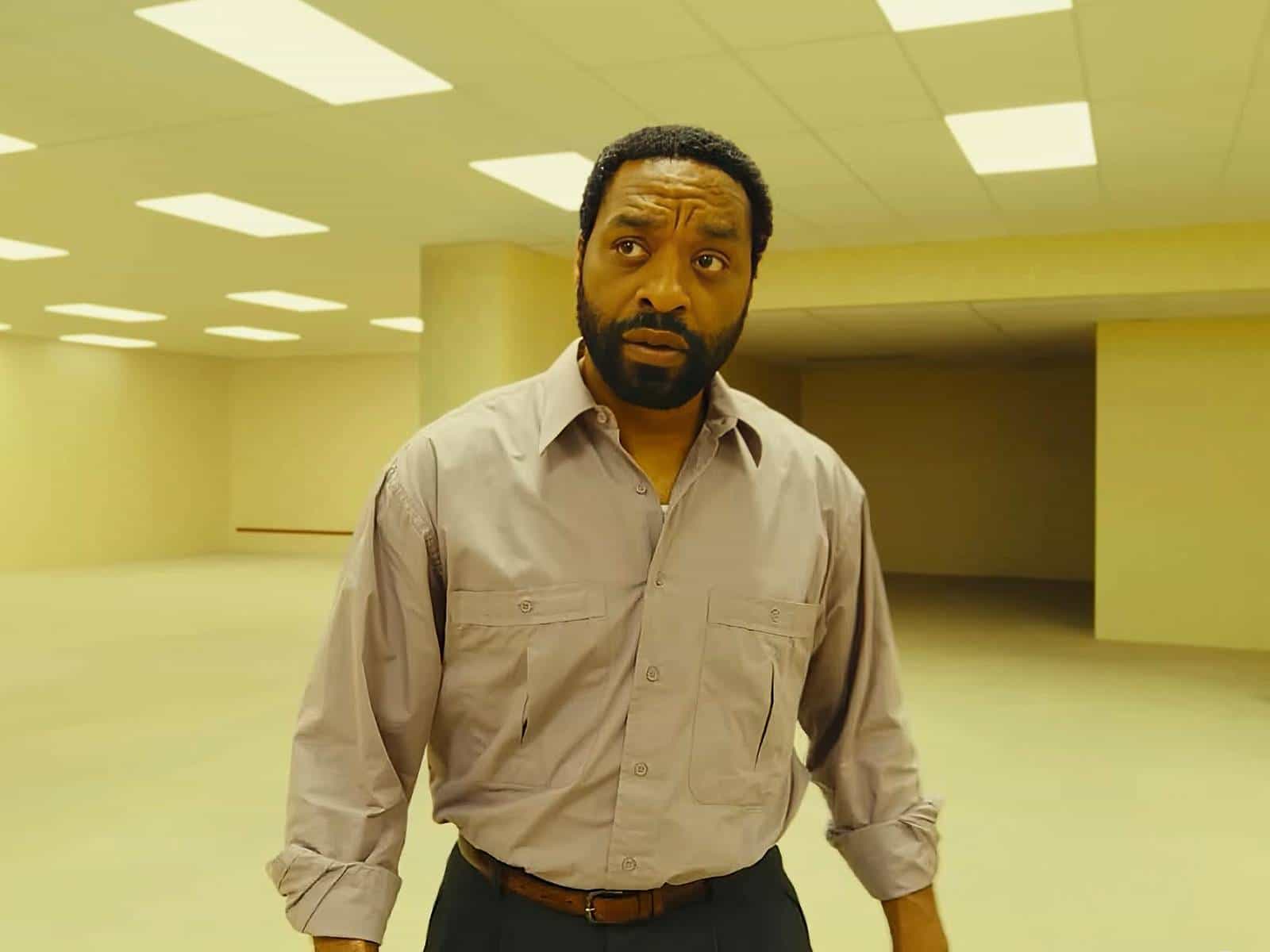
Chiwetel Ejiofor is our ostensible leading man as Clark, an alcoholic, bitter, failed architect turned cheesy furniture-store magnate. Clark’s empty store is called The Ottoman Empire, though it has a distinctly pirate aesthetic, adding to the overall sense of unease that permeates Backrooms.
The store is massive and never seems to have any customers. Clark has fallen so far that he has begun living there, which leads to a unique discovery. While trying to find the source of flickering lights that have also caused a surge in his power bill, Clark stumbles into an alternate universe.
Entering the Backrooms
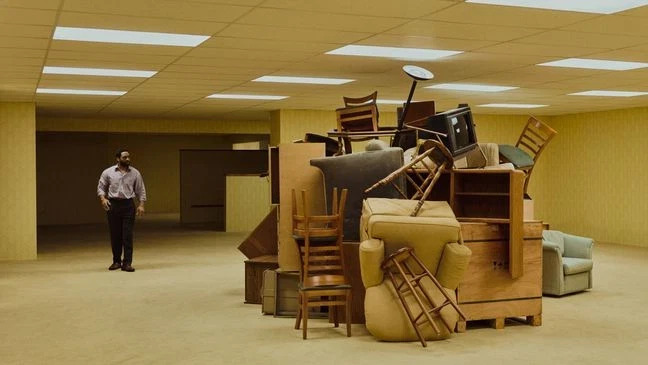
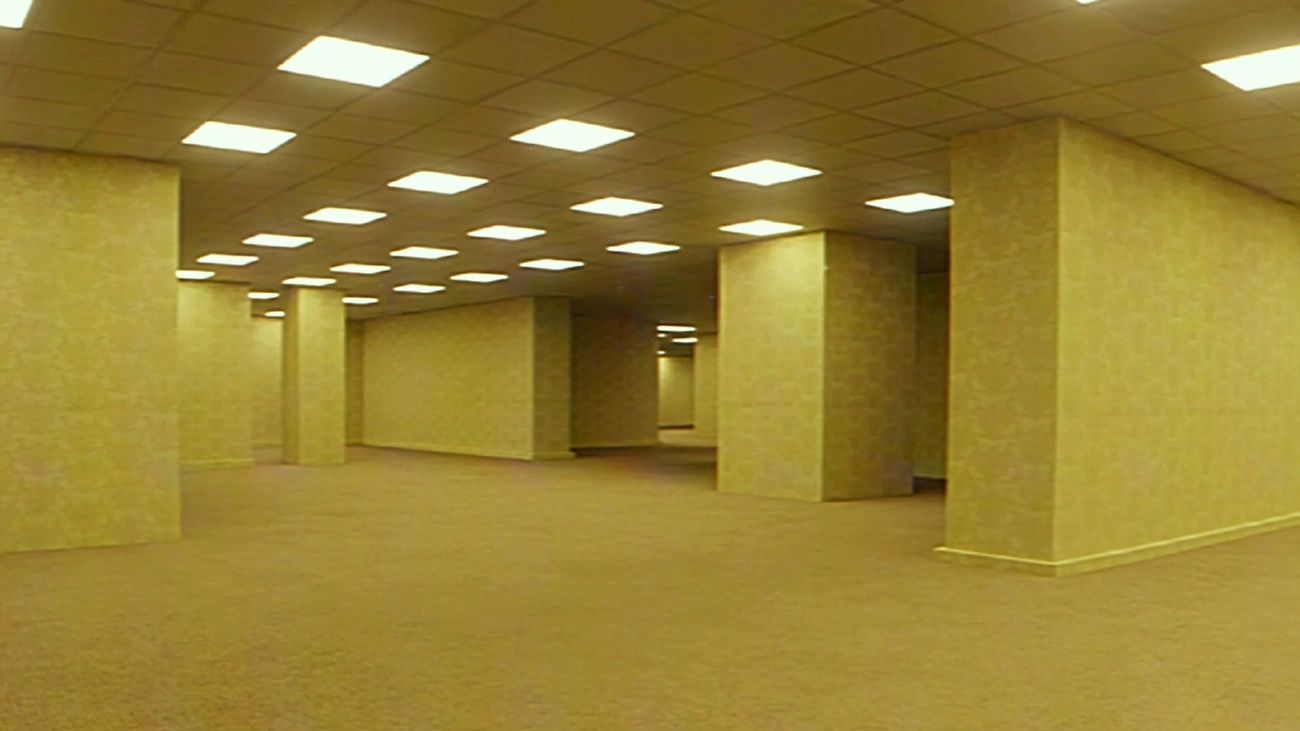
Clipping through what should be a solid wall, Clark arrives in what we know as the Backrooms, a liminal space outside of time. The Backrooms feel both real and otherworldly, expansive, infinite, and unsettlingly empty.
Well, not entirely empty. At least not Clark’s version of the Backrooms.
There are pieces of furniture stacked strangely and oddly connected to one another. Further inspection reveals that the rooms fold in on themselves in ways that make no sense on a map.
Managing to escape back to his store, Clark becomes consumed by what he has found. First, he tries to explain the Backrooms to his therapist, Dr. Mary Kline (Renate Reinsve), but when she suspects he has begun drinking again and may be suffering from a nervous breakdown, he turns to his employees.
Kat (Lukita Maxwell) and Bobby (Finn Bennett) also believe Clark is losing his grip on reality. But when he walks through the wall in the basement of the store, they cannot help but follow him.
Soon Dr. Kline arrives. Apparently days or weeks have passed without any word from Clark. She goes to the store and soon finds herself walking through the wall and into the unrelenting strangeness of the Backrooms.
From Internet Meme to Feature Film
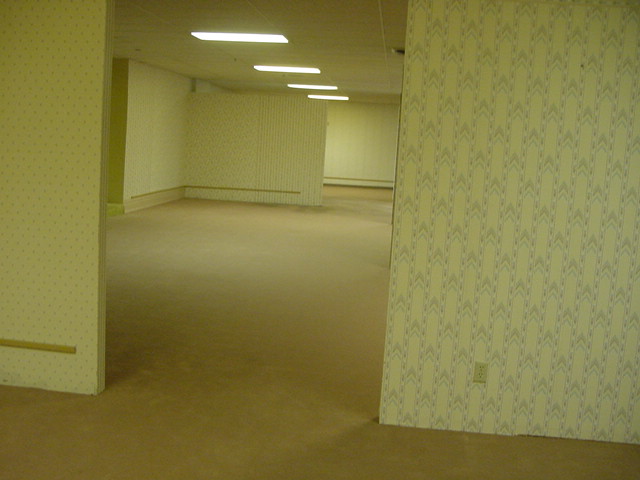
Backrooms was not a concept invented by Kane Parsons. It began as an internet meme centered on liminal spaces—geographic locations that seem to transcend physical reality and enter a psychological realm.
In the case of the Backrooms, an image of a vast, empty commercial space became one of the internet’s most famous uncanny locations, filled with endless turns, corners, and oddly placed architectural features.
In reality, it was simply a long-abandoned basement area beneath a store in Milwaukee, Wisconsin.
The search to identify where the original Backrooms photograph had been taken eventually took on a life of its own online. That fascination inspired artists like Parsons to imagine worlds filled with uncanny furniture, unexplained noises, monsters, and impossible architecture.
Kane Parsons’ Gift for Visual Horror
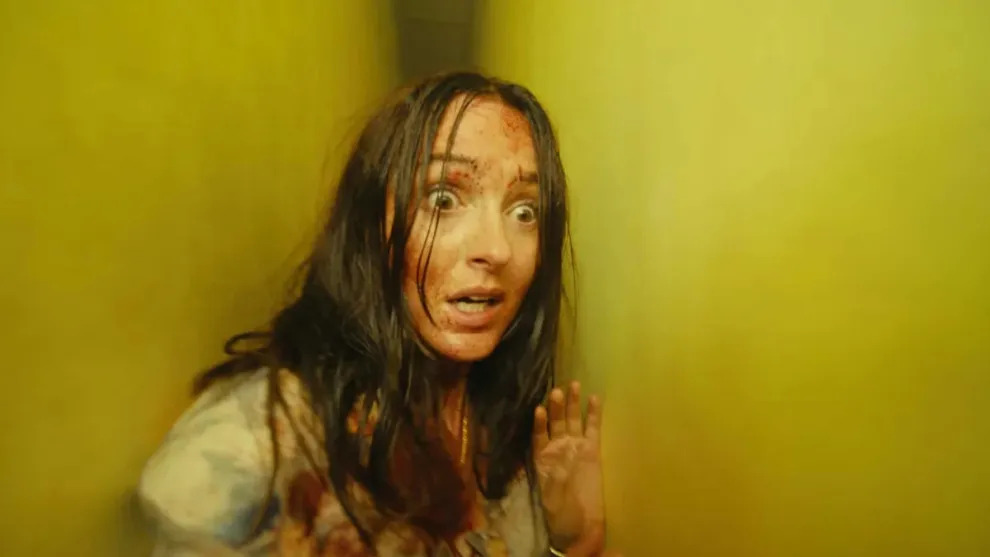
Bringing his unique vision of the meme to the big screen, Parsons demonstrates a deft directorial hand, a strong understanding of cinematic space, and a terrifying imagination for using the audience’s own perceptions against them.
You know how, in a dream, even your own home can become an uncanny place where familiar objects are arranged in unfamiliar ways? That’s the Backrooms.
That’s the feeling.
A dream that feels real but looks fundamentally wrong.
Parsons’ visual style pushes Backrooms beyond the territory of a simple monster movie and into the realm of elevated horror, horror built on an almost indescribable sense of dread. It is the kind of horror that engulfs the senses and leaves viewers unmoored from the safe, familiar rhythms of a traditional narrative.
A Bold Horror Experiment
Backrooms is a bold experiment, a film that takes enormous creative risks and usually succeeds. The result is a collection of haunting nightmare images and a terrifying confusion that you can never quite put your finger on.
The film is relentless in its uncanny depiction of familiar objects transformed into something horrifying through context and perspective.
A couch tilts unnaturally as if melting into the floor.
A stop sign appears in the middle of a hallway.
Stacked chairs cease to be chairs at all and instead become an abstraction of the idea of a chair.
Each image feels wrong in a way that bypasses logic and heads straight for the subconscious.
Final Thoughts
The ending is the most striking and haunting visual of all.
I will not spoil it.
I am not even sure I could spoil it.
All I can say is that it is an image I will not soon forget—for better or worse, considering the nightmares it may inspire. It is the kind of final shot that lingers in the psyche long after the credits roll.
Backrooms may frustrate viewers looking for concrete answers, but for those willing to surrender to its dreamlike logic and overwhelming sense of dread, Kane Parsons has created one of the most unsettling horror films of the year.
About the Creator
Sean Patrick
Hello, my name is Sean Patrick He/Him, and I am a film critic and podcast host for the I Hate Critics Movie Review Podcast I am a voting member of the Critics Choice Association, the group behind the annual Critics Choice Awards.
Enjoyed the story? Support the Creator.
Subscribe for free to receive all their stories in your feed. You could also become a paid subscriber, letting them know you appreciate their work.
Comments
There are no comments for this story
Be the first to respond and start the conversation.