
Aunt Gladys: The Villain of "WEAPONS" - An Exp-LORE-ation.
Why Zach Cregger's now iconic witch monster is such a matriarch of malice.
***SPOILER WARNING*** If you haven't seen "Weapons", I urge you to see it before you read this piece - but, unless you want a good read, then, go for it.
Rare in the annals of movie reveals, not since the shocking reveal of Jaye Davidson's gender reveal in Neil Jordan's political psychological thriller, "The Crying Game" (although there's a different genre think piece to be carved out of that), has a movie been so secretive about its villain reveal. A seemingly harmless Ruth Gordon-like entity named Gladys Lilly.
Writer/director Zach Cregger, who gave us the equally enigmatic horror movie debut, "Barbarian", rolled out a now horror classic that gave us a reveal the was equal parts disturbing and unrecognizable. Casting esteemed actress Amy Madigan, who'd win a long-delayed Oscar for her brilliant performance as Aunt Gladys, he tapped into a primal, social fear: the realization that the person who comes with the widest of smiles and the homeliest of demeanors, is actually the architect of your demise.
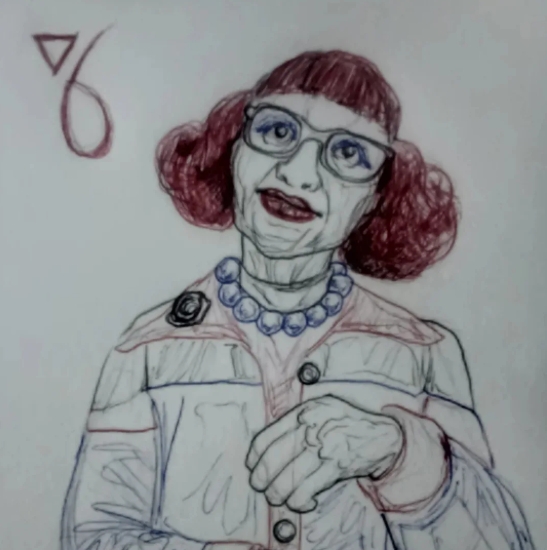
Madigan gave us a masterclass in the "banality of evil". She doesn't arrive with fanfare or the subtlety of a chainsaw; she arrives with a smile and a seat at the table. It's a cinematic introduction that forces the viewer to re-evaluate every authority figure we've ever been told to respect.
The Ageless Face of the Institutional Grift.
It's clear (as least to me) that Aunt Gladys is evil personified, but her power lies in her durability. She is ageless - not in a supernatural or vampire-like way, but in the way she represents a cycle of harm that has existed in generations. She is the face of the institutional grift. When she reveals her true nature to her nephew, Alex Lilly, the audience experiences a profound moment of recognition.
Here's what makes Aunt Gladys work so well for us as moviegoers. She offers the familiar comfort of the "grandmotherly" figure who supposedly holds the neighborhood together. Yet, we're also repelled because we sense the transactional nature of her soul. She represents the stagnation of the status quo - the kind of evil that wins not by force, but by outlasting the moral outrage of everyone else. Aunt Gladys is a predator who has mastered the art of looking like a member of the family or the straight pillar of a community.
The Universal Aunt: Biology Weaponized.
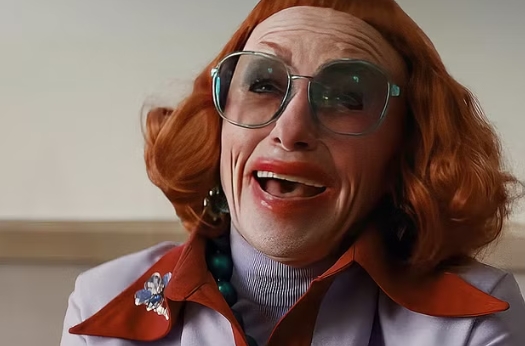
What's brilliant about the "Aunt Gladys" archetype is that she doesn't require a biological tether to exert her influence. We all know a Gladys in our lives. Lord knows I have. She is the self-appointed gatekeeper of the office, the neighbor, the clergy, the teacher, the politician, the off-putting or all-too-friendly aunt or uncle or organizational leader. She uses the weapons (pun intended) of charm, disarmament and the illusion of "family and "traditional" to bypass our natural defenses.
The Other Gladyses We Currently Fear.
Looking beyond the screen, we can also say "Aunt Gladys" currently roams the halls of power and the pulpits of the faithful. She's the ultimate analogue for the abusive authority figure - the bullying teacher, the concealing minister/priest and or politician who also gaslights an entire constituency. In a key scene where Aunt Gladys reveals why she has selected Alex Lilly's family for her insidious plan - she is clear in her agenda. Dominance and power through fear. She keeps her composure and cool while she outlines her plan and why she needs her privacy in order to exert her power. Evil must act in secret. Whether it's abuse, gaslighting, physical violence and even able to act immorally with a big smile on their face - she represents the inner evil with a disengaging outer veneer. As I've stated, we all know one in our lives and yet, just as eerie - they exist in our everyday lives, and we run into them often not knowing who they are... until they show their true behind the "kindness mask".
A Gushing Moment If You Don't Mind, Please.
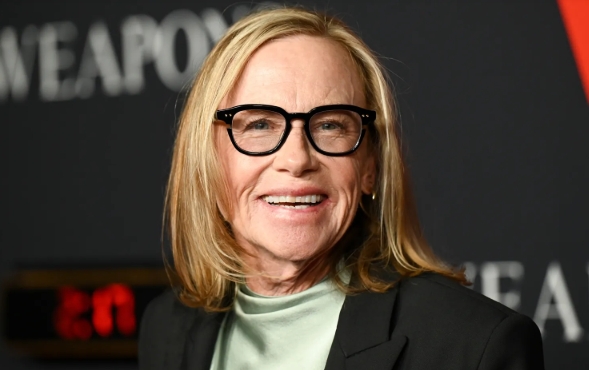
Anyone who has ever watched a 1980s movie would have seen Amy Madigan in movies like "Streets of Fire", her star turn in "Places in the Heart" where she would meet her husband, Ed Harris and the two have been married ever since. Her first Oscar nomination was for a film called "Twice in a Lifetime" over 40 years ago - and would still appear in films as diverse as "Field of Dreams", John Hughes' "Uncle Buck" and would even made a horror comedy in 2020 called 'The Hunt". Her versatility has always been her trademark and even I had to do a massive double take and wait for the credits to know who she was. I'm glad I waited and my jaw dropped from my mouth! She was the last person I would've expected in such a role. Her Oscar win was much deserved, although she was in very strong competition with other great actresses in top-notch performances and films in 2025. But, as horror movies had finally been taken seriously by the U.S. Film Academy after years of biased scorn - it's refreshing that Madigan gave such a universal character (an evil witch to be sure), a human face and perhaps connected its viewers to someone who may have represented that person and someone he/she/they/we may have won a battle against.
A Prequel in the Works?
As to whether writer/director Zach Cregger had this intent for his now iconic movie villain, it pleases me to learn her backstory and lore will be explored in an upcoming now-being-developed prequel. I believe there could've been another specific narrative that Gladys may have had, but the power of the character is how she resonates with the audience and is now so iconic, she's now in the hands of the audience. Art and cinema are still very subjective, and Gladys is indeed a mirror for our collective anxiety about people who are closest to us and also, are in power.
I am grateful to Madigan, Cregger and his exceptional cast and crew for this contribution to the horror pantheon. In an era of CGI monsters, they still created something just as terrifying. A human being that forgot to be human. Someone we've known close up face to face. Someone that we may have caused us trauma, but like Alex, helped us find our strength.
About the Creator
Enjoyed the story? Support the Creator.
Subscribe for free to receive all their stories in your feed.
Comments
There are no comments for this story
Be the first to respond and start the conversation.