
10 Supernatural Mystical Creatures and Their Origins
Legendary Folklore Creatures

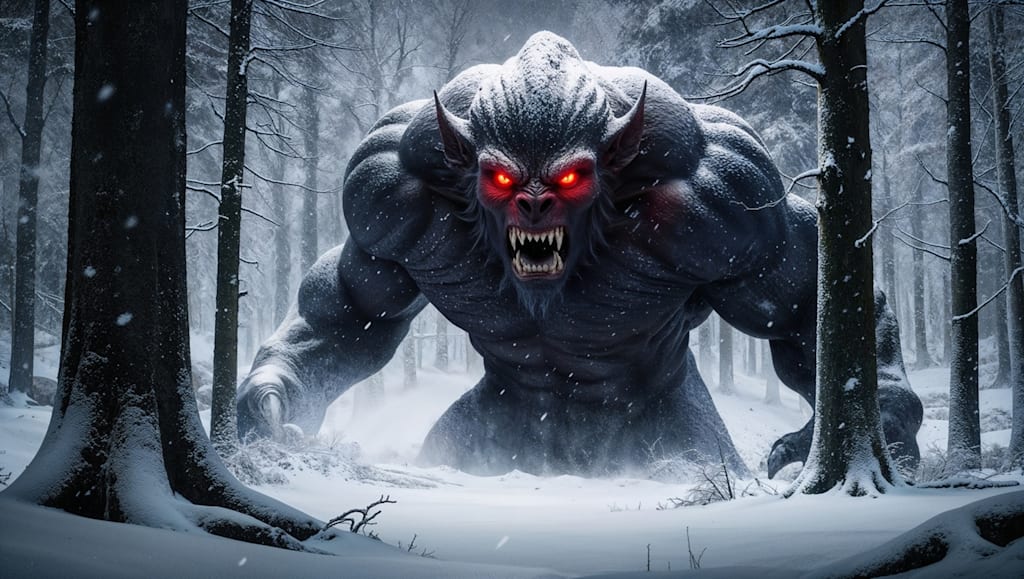
Most people are familiar with legendary creatures like vampires, ghosts, fairies, and zombies, but many don't know where or when tales of these paranormal entities began.
Were zombies always flesh-eating monsters? Were unicorns always beautiful? Have vampires always sucked blood?
Here's a look at some of the most popular and well-known supernatural beings in our culture today and how they originally got their start.

1. Vampires
Fanged teeth, a black cape, and a thirst for blood are what many people envision when they think of a vampire. However, this isn't how the vampire originated.
The first known vampires were said to exist in Bulgaria in the 10th century and were ghostly-type beings that were thought to create havoc and spread disease.
From Bulgaria, the legend began to spread, starting in Germany, then making its way to France and England before eventually traveling to the United States. Over its travels, this once non-corporeal entity took on new features and became a blood-sucking resurrected corpse with fangs.
One thing that didn't change was how vampires allegedly spread disease. An example of this is when vampires were blamed for the spread of "consumption" in New England in the 1700s.
This disease caused many a slow and painful death, and panic was so great over these alleged creatures being the blame for it that graves were actually dug up and organs removed and burned with the thought that the disease would be kept from spreading. (It is now known that the "consumption" was actually tuberculosis.)
Rumor has it that news of this epidemic traveled to Europe and was actually the inspiration for Bram Stoker's "Dracula."

2. Werewolves
The first written account of werewolves took place in :"The Epic of Gilgamesh", where a man rejects a woman's sexual advances, as she had previously turned an ex-lover into a wolf. (Note: This is the oldest known written story, and it dates back to 2000 BC in Mesopotamia.)
As legend has it, werewolves are people who turn into wolf-like creatures during a full moon and kill and eat humans and animals. They become werewolves after being bitten by another werewolf.
During the 16th century, werewolves were attributed to being serial killers. Michel Verdun and Pierre Burgot of France both claimed they turned into werewolves when they murdered several children.
Another Frenchman, Giles Garnier, also claimed to turn into a werewolf and not only murder children but eat them, too. In Germany, Peter Stubbe confessed to killing and eating several men, women, and children while transformed into a wolf.
Could all of these men have been crazy? Although the legend of the werewolf persists today, there is a mental disorder known as lycanthropy, where people believe they can shape-shift into wolves.
The legend of the werewolf hasn't changed much over time, and these creatures are still viewed as murderous creatures that only come out during a full moon.

3. Dragons
Dragon stories have been with mankind since the beginning. They were a part of the mythology of Mesopotamia and appeared as snake-like creatures.
They were also known in Babylonian culture and were described as serpent-like creatures that were covered in scales. In ancient Peru, they were seen as winged lizards, which were considered to be evil.
In sharp contrast, dragons have been viewed as a symbol of power and luck in China. In fact, they are the only mythical creature that is a part of the Chinese Zodiac, and it's interesting to note that more babies are born in the year of the dragon than in any other year of the zodiac.
It wasn't until "Beowulf" was written sometime between the 8th and 11th centuries that dragons became fire-breathing monsters.

4. Fairies
While today's fairies are often seen as beautiful and magical beings who often delight children by leaving money under their pillows when they lose their teeth, the fairies of yesteryear were seen quite differently.
The first mention of fairies comes from Homer, who writes of "water fairies" in "The Iliad." Another early recognition of fairies comes from the 12th-century scholar Gervase of Tilbury, who describes them as being the size of a finger.
The fairies of the past weren't looked upon in awe as they are today, but with fear. Early fairies were ugly and wingless and were said to be malicious and evil. This belief was so strong that people would bring offerings when they traveled in hopes of a safe journey and not being cursed by these creatures.
So what happened to these frightful beings? It's said that due to the onset of Christianity and the continuous takeover of their land, the fairies of the past decided to enter their own realm.

5. Sea Monsters
The phenomenon of sea monsters has appeared in myths from all over the world. Dating back to Mesopotamia and its Goddess Tiamat, who is said to have been a sea monster, many countries have their own ancient sea monsters, including the Greek's Hydra and the Hindu's Makara.
Some of the better-known sea monsters include the Kraken, from Scandinavian folklore, and the Loch Ness Monster in Scotland. Many sea monsters have been blamed for attacking ships, overturning them, and killing all on board. But are they really monsters?
Upon studying these folklore monsters, it has been found that some of them are actually marine animals, such as giant squids, octopuses, oarfish, and large whales. The rest? That remains unknown at this time, although some are believed to be nothing more than vivid imaginations or species that have yet to be identified.

6. Mermaids
Although depicted in cave drawings as far back as 30,000 years ago, these half-human, half-fish with long tails were first heard of in 1000 BC, with a story about a Syrian goddess who dove into a lake in hopes of becoming a fish, but only the bottom part of her body changed, thus making her a mermaid.
In Greek lore, mermaids were originally half human and half bird, although as time went on, the half bird turned into a half fish.
When we think of mermaids today, we think of beautiful sea creatures (think of The Little Mermaid.) However, in the past, they were seen as menacing creatures who would use their charming looks and lilting voices to lure sailors into the water, where the mermaids would drown them.

7. Ghosts
While entities like vampires and zombies have origin stories that begin in one location, stories of ghosts appear all over the world and date back to the beginning of mankind.
As far back as Mesopotamia in 5000 BCE, ghosts were thought to be another aspect of life after the body died, and were mostly relatives. The earliest written account of ghosts comes from an ancient Babylonian tablet, which is a guide on how to exorcise ghosts.
Native Americans have long believed in ghosts, although the roles of ghosts differ within the culture. Some believe they are here to cause harm, while others believe they are completely harmless.
In China, although initially an oral tradition, the first written account of ghosts comes from 1600–1046 BCE and is part of the Shang Dynasty. They believed that if a person wasn't buried properly, their ghost would return to haunt the living.
In the fourth century BCE, the Greek philosopher Plato wrote about both ghosts and hauntings, stating that ghosts, or the souls of individuals, are held inside a container known as a body. Once the body dies, the soul is released and either moves on or remains to haunt.

8. Unicorns
The original unicorns were not the exquisite creatures we see today that look like beautiful white horses with a single horn protruding from their heads. In early versions of this mystical creature, they were often depicted as goats with singular horns, and even oxen.
The earliest known artwork of unicorns was found in Mesopotamia, and there were also early accounts of them in India and China.
It wasn't until 400 BCE that Greek physician Ctesias described them as being the size of a horse with a white body, red head, blue eyes, and a horn on its forehead.
Unicorns were said to have healing powers, and anyone who drank from one of their horns would be safe from many things, including poison.

9. Bigfoot, Yeti, and the Abominable Snowman
A large, hairy, bipedal ape-like cryptid, Bigfoot, was first sighted in the United States in the 1800s. His Canadian counterpart, known as Sasquatch, was first identified by British Explorer David Thompson in 1811 when he discovered a set of footprints.
The Yeti (aka the Abominable Snowman) dates way back to Alexander the Great, who commanded the locals to capture one and bring it to him. However, the Yeti is best known for originating in the Himalayan Mountains, with the first account of one taking place in 1832.
While the Sasquatch and Bigfoot are known for their super strength, even allegedly being able to pull trees out of the ground with their bare hands, the Yeti is said to have supernatural powers.
These aren't the only ape-like creatures said to exist. Australia has the Yowie, who was first encountered in a cave in Sydney Cove in 1788. There's also the Almas that roam in Mongolia, and the Mapingauri of South America, to name but a couple more.

10. Zombies
The existence of zombies dates back to the 17th and 18th centuries in Haiti, and they were said to be corpses brought back to life to be used as slave labor. This image changed in the 1960s when zombies became part of American pop culture.
These once harmless beings evolved into flesh-eating creatures with rotting faces and arms extended in order to catch their next victim.
It is alleged that the original zombies were merely people who had been drugged with tetrodotoxin, a poison derived from the puffer fish. This poison would cause victims to become very ill, with their blood pressure dropping and paralysis setting in, which made the victims appear to be dead.
After being buried, they would be dug up and drugged to put them in a psychotic state in which they would become very complacent and would follow orders given by their masters. As you can see, this is way different than the modern-day zombies you see in The Walking Dead.
Supernatural Beings
Whether you believe that any of the above-mentioned creatures ever existed or not, it is interesting to learn their origins and how far back in time some of the beliefs go.
It's also interesting to note the changes in some of these creatures over time and how they are depicted in pop culture today.
Sources:
https://news.harvard.edu/gazette/story/2024/10/diving-into-the-myths-and-legends-behind-sea-monsters/
https://www.britannica.com/topic/unicorn
https://www.stilwelldemocrat.com/community/in-the-shadows-almas-the-russian-bigfoot/article_bff4e828-5635-11ee-997c-cfaf3336d302.html
https://www.ancient-origins.net/unexplained-phenomena/australian-yowie-mysterious-legends-tribe-hairy-people-003605
https://westportlibrary.libguides.com/bigfoot
https://depts.washington.edu/triolive/quest/2007/TTQ07030/dragon.html#:~:text=In%20the%20Chinese%20culture%2C%20the,more%20than%20any%20other%20animal.
https://www.smithsonianmag.com/smart-news/3500-year-old-babylonian-tablet-may-hold-earliest-known-ghost-image-180978923/
https://u.osu.edu/abel118eng4563/the-history-of-the-zombie-in-popular-culture/#:~:text=The%20zombie%20myth%20can%20be,returning%20to%20their%20African%20homeland.
https://ashland.kctcs.edu/blog/posts/untitled.aspx#:~:text=The%20vampire%20postdates%20witch%2Dhunts,isolated%20among%20the%20Slavic%20people.
https://historycollection.com/the-dark-origins-of-mermaids-and-other-mysterious-folk-lore/
https://spiritedwriter.wordpress.com/2014/03/10/plato-on-ghosts/
https://nativeamericannetroots.net/diary/Indians-101-American-Indians-Beliefs-about-Ghosts
https://www.latimes.com/archives/la-xpm-1985-03-31-mn-18837-story.html
https://fiveminutehistory.com/posts/the-history-of-fairies/
About the Creator
Janis Masyk-Jackson
I published my first article when I was 10 years old and I've been writing ever since. I'm a mom to 4 grown kids and I love traveling, animals, the paranormal and I'm a huge Disney fan.
Enjoyed the story? Support the Creator.
Subscribe for free to receive all their stories in your feed. You could also become a paid subscriber, letting them know you appreciate their work.
Comments
There are no comments for this story
Be the first to respond and start the conversation.