
You Can See Everything (2026)
Five Stars of Squirming Discomfort

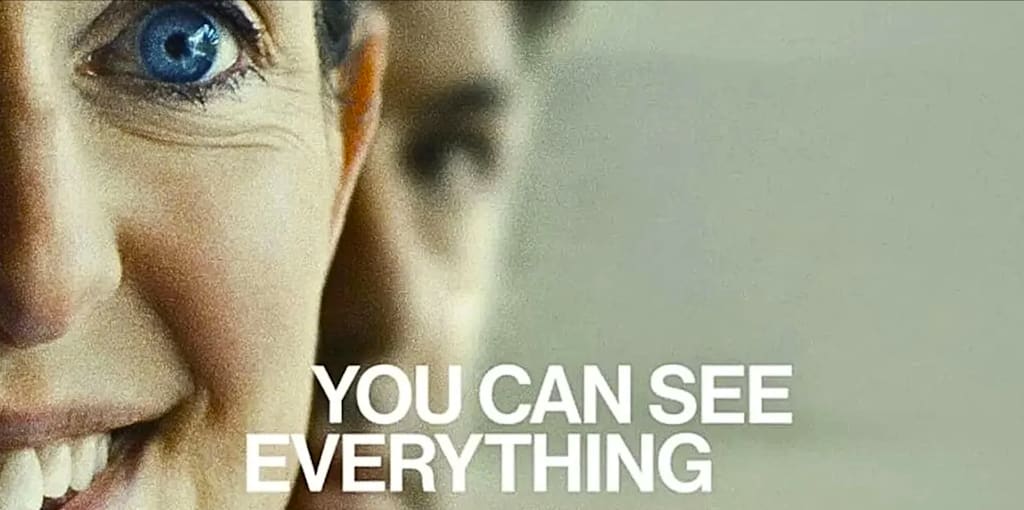
I’ve been waiting to see Nathan Fielder’s You Can See Everything from the first time I heard about it. I have been tantalised by the buzz of excitement from its earlier US release. It has been touted as a film of the year, including the suggestion that it could be nominated for Best Film at the Oscars, a first for a documentary. All this meant I didn’t want to miss it. More than that, I wanted to enjoy it.
I got to see it this Saturday.
You Can See Everything is an experimental documentary film directed by Nathan Fielder and Lance Oppenheim, about the month before the fraudster Elizabeth Holmes of the infamous Theranos scandal begins her prison term. The film crew are granted access to the family life of Holmes and her partner, Billy Evans.
The good news is that the buzz was right. A great film. I enjoyed it. Even though, it was extremely uncomfortable at points. The sort of discomfort that social awkwardness, long silences, inappropriate comments can provide. It made me hold my breath and squirm in my seat. I wanted to look away, but I couldn’t.
Go and see this film. But don’t go expecting to determine whether Elizabeth Holmes is guilty of fraud or not. She is. There has already been a thorough journalistic investigation and exposé, a lengthy criminal investigation and most importantly she has been tried and convicted in a criminal court. A documentary is not a court of appeal.
But, what is the film’s appeal?
You Can See Everything is a true crime documentary.
Vicary and Fraley (2010)[1] define the modern era of True Crime non-fiction as starting with Truman Capote’s account of the murders of a family of four in 1959 Kansas. In Cold Blood became a best seller and since then the ‘true crime’ genre has continued to amass an extensive audience, taking up coveted spots on Best Sellers Lists and topping podcast charts.
The True Crime genre is particularly popular among female consumers.
Fernadez et al (2026)[2] findings show that consumption of true crime serves psychological functions, such as preventive learning, fear management, pursuit of symbolic justice, empathy with victims, and trauma processing.
True Crime, however, is not a genre for me. My years as a Domestic Abuse researcher led me to the conclusion that most violent criminals are not interesting. Violent crimes are committed by bland, boring people with a sticky sense of entitlement.
I hear that when, I say True Crime is not for me, I sound like I'm on some sort of moral high ground. But there is one kind of criminal that interests me – the con artist.
We live in a world of scams. Nearly every call to my landline is an automated voice about my banking details. Anyone with an email address has a spam folder dedicated to catching the missives about sex, cheap drugs and money-making deals. We receive texts purporting to be from the Tax Agency. There are the heartfelt direct messages about frozen bank accounts in Nigeria. Fake profiles on dating apps. And just recently the phishing attempt on Vocal media.
However, sometimes, someone breaks through our heavy duty filters and defrauds the rich, famous and supposedly savvy. There are treacherous seducers out there and I want to know about them. I like to think my motives are so I can learn to avoid them. But also, there is a deep-seated, slightly shameful admiration of their audacity.
Could I be harbouring a similar narcissistic, deceptive, self-deluded character underneath this polished professional veneer of caring and principles?
Elizabeth Holmes’ scam is particularly famous.
In May 2018, author John Carreyrou released the book Bad Blood: Secrets and Lies in a Silicon Valley Startup, describing the life of Holmes and the inner workings of Theranos. In January 2019, ABC News, Nightline, and Rebecca Jarvis released a podcast and documentary about the Holmes story called The Dropout. In March 2022, Hulu released The Dropout, a miniseries based on the podcast of the same name. The series starred Amanda Seyfried as Holmes, a role for which she received a Primetime Emmy Award and a Golden Globe Award. I gobbled up Seyfried’s portrayal.
I watched this film, not to take a side on Holmes’ guilt but to get a sense of her appeal, her motives, her modus operandi. I watched it in the belief that con artists are intelligent people on the wrong path – a more interesting criminal than the thugs of domestic abuse research. I hoped to see a genius of human communication at work. Boy, it was not that…
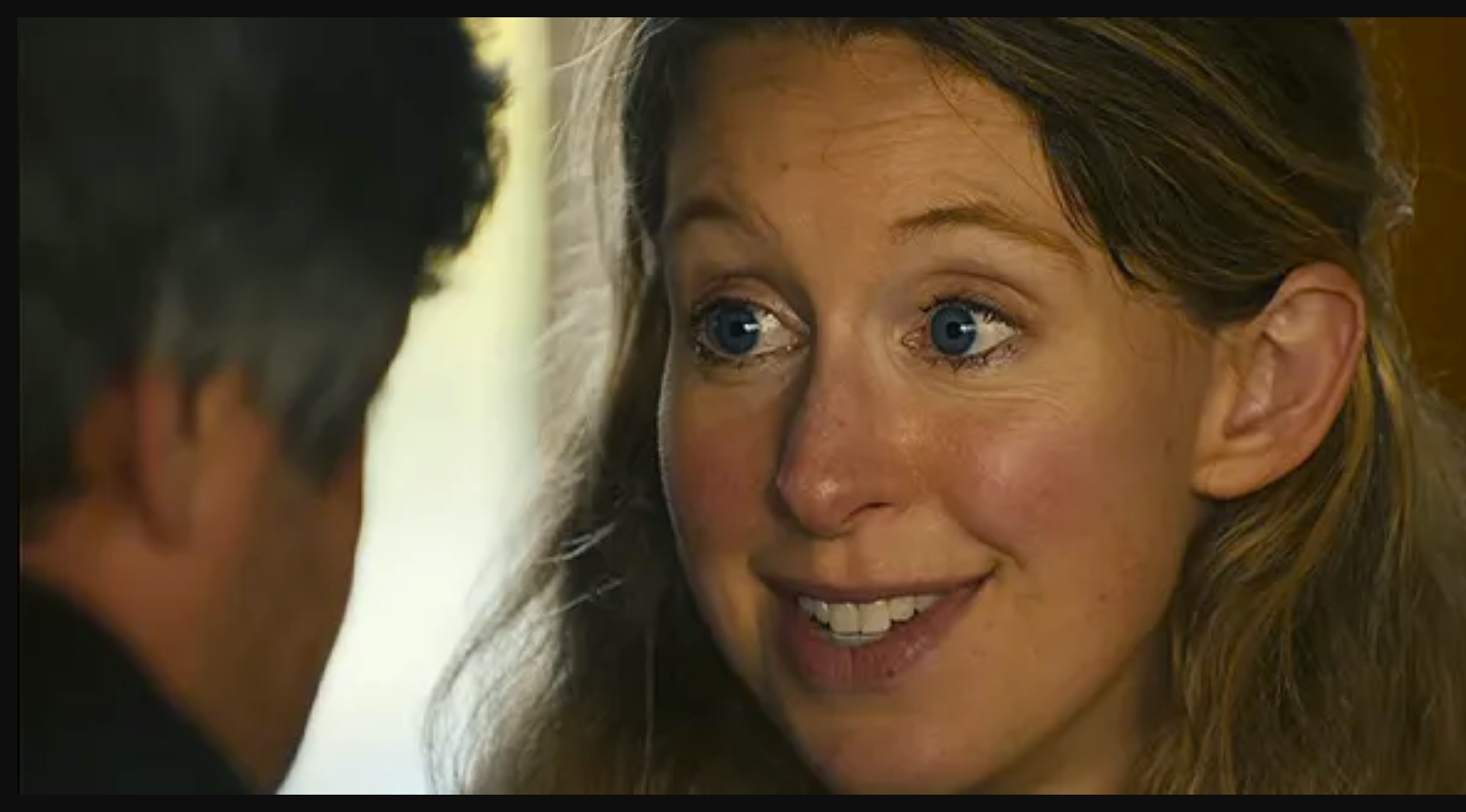
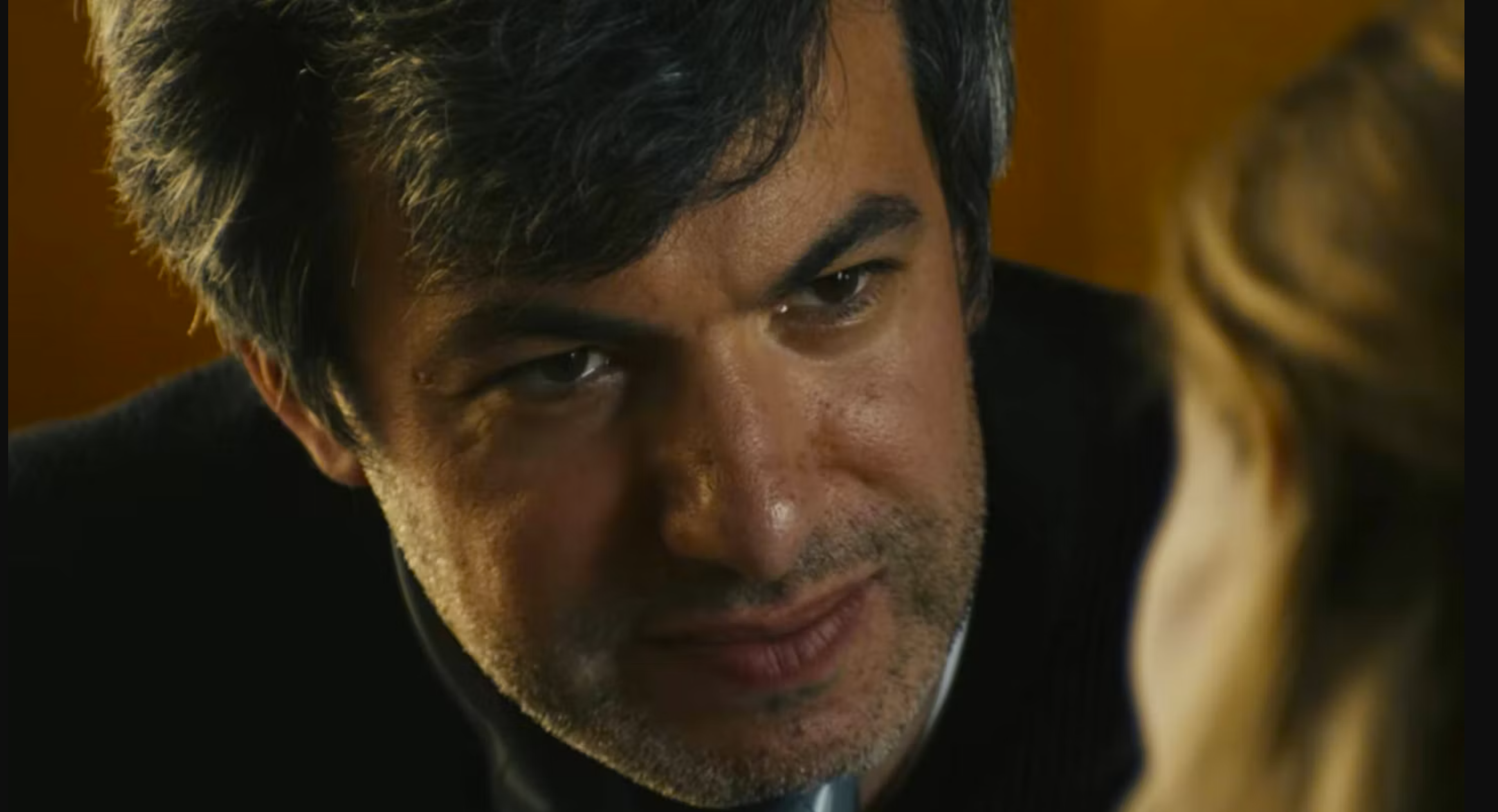
While I didn’t get to grips with how I could get Jeff Bezos to spare me a few billion, the film was still great value. For writers, this is a film about how narratives are constructed and spun. It is an inspection of relationships under a microscope that produced large, looming close-ups. The film comprises of shot after shot of Liz and Billy’s wide, unblinking eyes. Lizzie’s nodding head, an invitation to say more, but not providing answers.
The narration settles on details, and how the incidentals can make up the fabric of a story. Did Elizabeth say “a character I created” or “they created”? Did Elizabeth know about Billy’s negotiation for appearance fees? Did Nathan fall for Elizabeth, and if so, what was he seduced by? Can Elizabeth understand a joke?
Elizabeth’s intelligence appears patchy. She got into Stanford. She invents. She can’t pick up on puns and nuance. But is any of this real, or just an act hidden with clever words? There are shots of her talking to potential investors about products and inventions. The language sounds intelligent, but also is being used to bamboozle, to obfuscate, to divert. It denies the asking of questions, belittling those who require further information. Are we just not clever enough to understand?
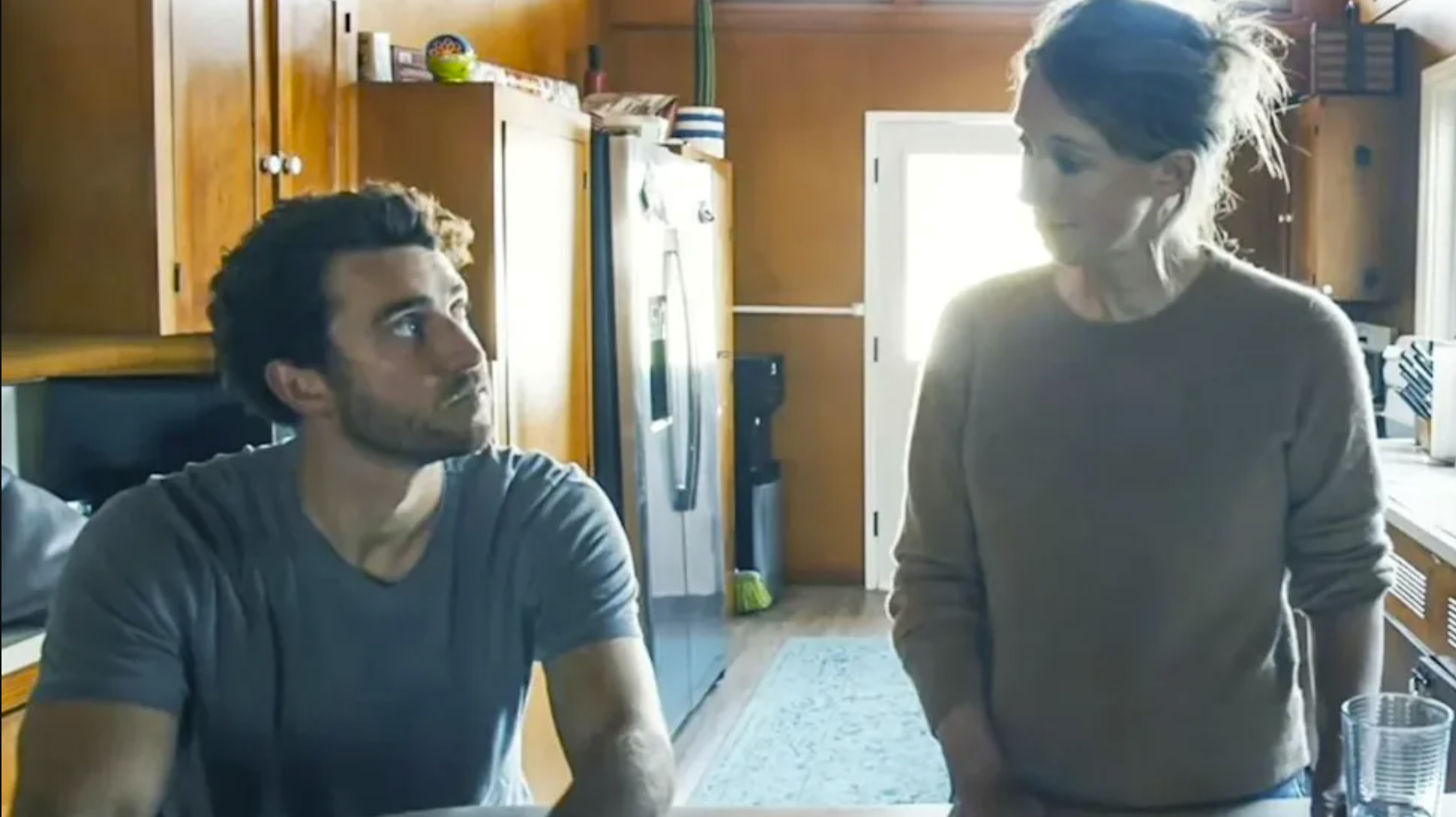
Billy does not come across well. If his plan was to show a loving close-knit family, his own ego got in the way. He is a man who thinks so much of himself that he invites people to watch his gym routine, take a shower and can say without irony that he is “excellent at sex,” knowing it is being filmed.
In the background, there are the parents. A Dad who can’t find space to talk about his daughter, ushered out of speech by his son-in-law. But heartbroken, visibly disintegrating when he mentions the rape of his daughter at Stanford. Some mitigation we don’t get to explore. A mother who is just briefly glimpsed as wringing hands and a pursed, silent mouth.
All of this sounds serious. It is. She defrauded people of millions and sold a dream to ill people that she couldn’t provide.
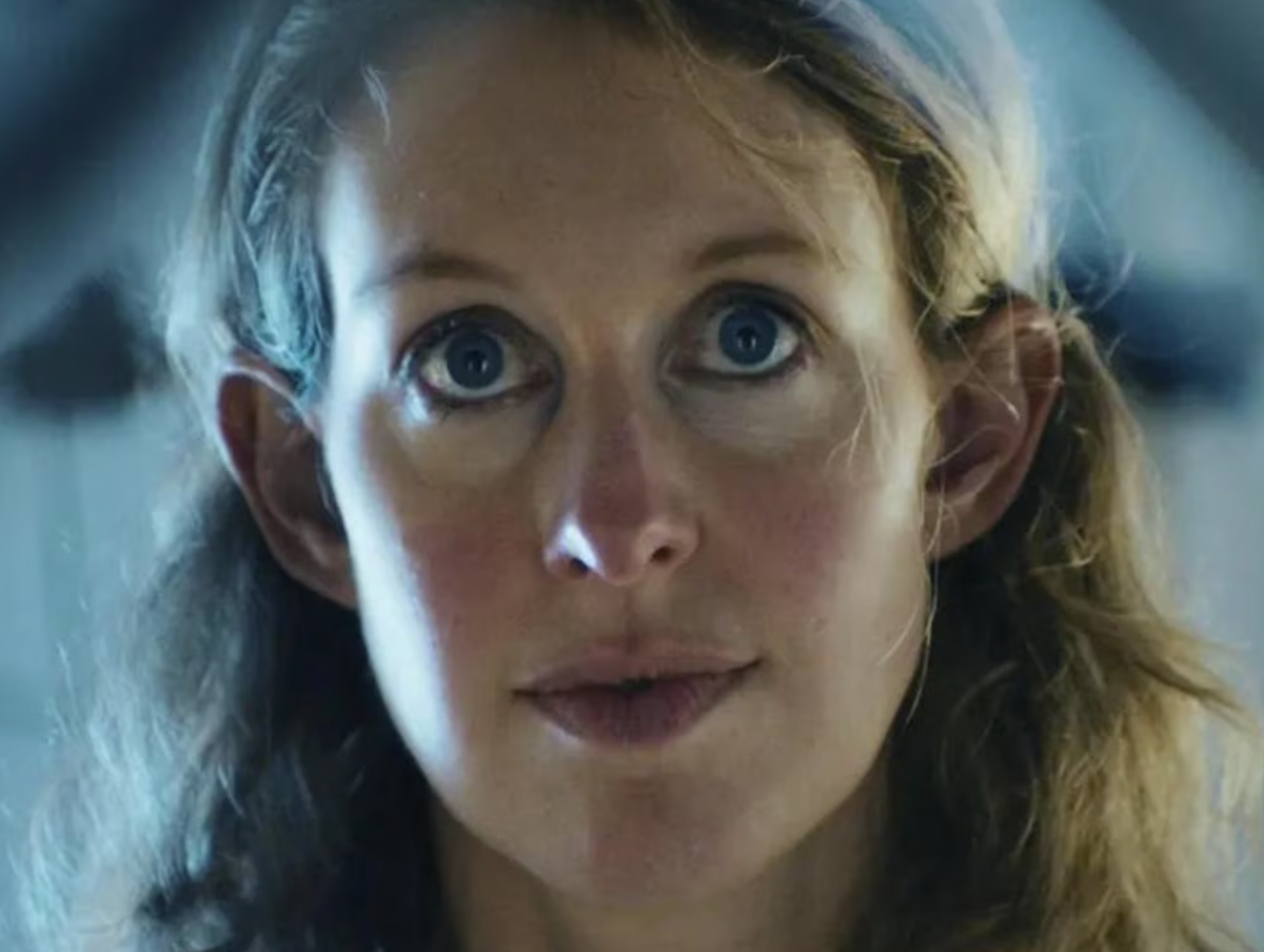
But the film is also very funny. I’m glad I saw it on a large screen with a full audience. My local arthouse was so busy that car parking was difficult to locate and there was a real possibility of missing the beginning. But with an audience laughing it was easier to cope with the twisted tales, Fielder holding the moments for too long and the awkward exchanges.
I particularly enjoyed Fielder’s face twisting as Elizabeth fails to make sense.
Billy: I know what you’re feeling
Nathan: No, you don’t.
The three of them making a thorny triangle.
A triangle that gets disrupted by the inevitable countdown to the prison term.
“What do you mean by intimate search?” asks Elizabeth to her lawyer on the phone. A rare glimpse of fear.

Despite the disruption the story continues as another creative brings their interpretation to the story. Amanda Seyfried provides an additional layer of intelligent curiosity, asking more questions about the creation of character.
I have no answers to why Elizabeth Holmes almost succeeded in her con. I still don’t know how much she believes in her own deception, her ideas and the terrible people surrounding her.
Watching the film, I didn’t learn how to dazzle the wealthy to hand over large sums of money.
I did learn, the scamming definitely wasn’t worth it.
[1] Vicary, A. M and Fraley, R. C. “Captured by True Crime: Why Are Women Drawn to Tales of Rape, Murder, and Serial Killers?” Social Psychological and Personality Science 1(1) 81-86
[2] Fernández, D., Montoya-Bermúdez, D., Jimeno, M. V., & García-Pérez, G. (2026). Understanding why people consume true crime: A systematic scoping review of psychological motivations. Psychology of Popular Media
About the Creator
Rachel Robbins
Writer-Performer based in the North of England. A joyous, flawed mess.
Please read my stories and enjoy. And if you can, please leave a tip. Money raised will be used towards funding a one-woman story-telling, comedy show.
Enjoyed the story? Support the Creator.
Subscribe for free to receive all their stories in your feed. You could also become a paid subscriber, letting them know you appreciate their work.
Comments (3)
I enjoyed your analysis Rachel! Thx 4 sharing!
Canada, like much of the rest of the world, is all abuzz over this doc. After all we Canucks own Nathan - not really :) but he is from TO & performed for years with other local comics, was in the same writers room my son was in for This Hour has 22 Minutes, most often paired with Chris Locke (super funny guy in his own right) in youtube vids that we were all laughing over back in the day (Google them). Everyone I know who's seen the doc confirms its place in the firmament; can't wait to see it. Thanks for this excellently written review, Rachel.
I love Nathan Fielder. Thank you for writing this—I was unaware of the film.💖