
Wim Wenders' Dream of America Came True with 'Paris, Texas'
Paris, Texas was released on October

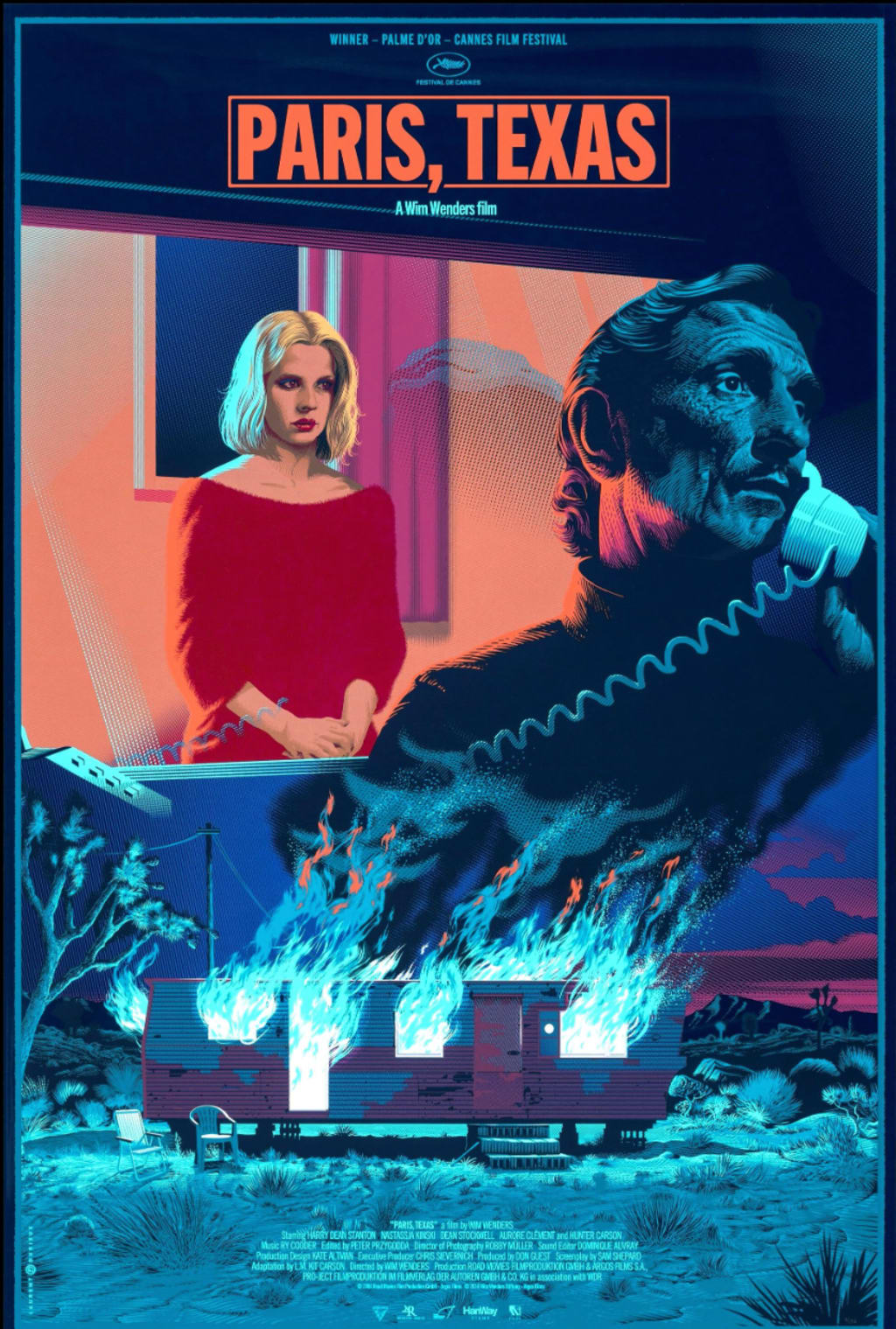
In 1982, German director Wim Wenders accepted an invitation to come to America and work with Francis Ford Coppola’s dream factory, Zoetrope Studios. The project was Hammett, a story about famed writer Dashiell Hammett. Things went bad quickly.
Wenders struggled under the micro-managing of Francis Ford Coppola and his first cut of the film was rejected by investors. Wenders had to reshoot most of the film, though members of the media speculated that Coppola took over the film and directed it himself.
Wenders biggest loss however was playwright Sam Shepard passing on the project. Shepard and Wenders had wanted to work together but Shepard saw what Wenders didn't know about Hammett and walked away.

Thankfully, the flop of Hammett didn’t sour Wenders desire to work in America and two years later, he was finally able to work with Shepard. The project was Paris, Texas, Wenders impression of what America looks like to an outside.
With Shepard, Wenders developed a story about two brothers, Travis and Walt Henderson, played by Harry Dean Stanton and Dean Stockwell. Travis has been missing for 4 years when he finally emerges dirty and disheveled from a Texas desert.
The ragged, craggy face of Harry Dean Stanton provided a visual road map of American experience, heartbreak, struggle, longing, confusion and desire are etched into Stanton’s remarkable face. His eyes, slowly gaining recognition of the world around him, chart his journey from a man lost in the past to a man readying for an uncertain future.

A Living, Breathing American Story
While the story began with the brothers, Wenders and Shepard watched the story grow organically, moving from Travis and Walt to a story about Travis and the son he abandoned four years earlier, into the care of Walt and his loving wife, Anne (Aurore Clement).
Hanging over the touching story of Travis learning to relate to his 8 year old son is the mystery of the child’s mother, Jane, played by Nastassja Kinski. The final act of Paris, Texas will include the search for Jane and the heartbreak of Aurore as Travis takes his son without saying goodbye.
Paris, Texas is like a dream of America. It combines the dusty desert landscape of Texas with a brief sojourn to a deeply unimpressed take on Los Angeles, before returning to Texas for a final act filled with heartache, yearning, and sacrifice.

The Human Element
Harry Dean Stanton (Travis): After a lifetime of inhabiting the margins as a character actor, Stanton recognized this as the definitive role he had long pursued. Despite his excitement, Wenders observed a flickering of doubt in the actor, particularly regarding the significant age difference between himself and Kinski.
Nastassja Kinski (Jane): To inhabit Jane, Kinski penned a fictional journal, crafting a history for a woman who traveled from Europe only to find a fleeting, rare sense of belonging in the arms of Travis.
Dean Stockwell (Walt): Wenders managed to pull Stockwell back from the brink of a career change into real estate. In the film’s infancy, the narrative weight leaned more heavily toward Walt and his wife Anne (Aurore Clément), featuring more extensive sequences on the open road.
Hunter Carson (Hunter): The production stayed close to home by casting the son of co-writer L.M. Kit Carson; the boy’s mother, Karen Black, assisted him in mastering his dialogue.

A Spontaneous Production
The filming process was a whirlwind of improvisation, lasting just over thirty days. Wenders followed the chronological heartbeat of the story across the Trans-Pecos landscape, abandoning storyboards for the first time to find the film’s rhythm through on-site rehearsals.

Behind the Scenes
Cameras began rolling without a completed screenplay. Shepard had intended to mold the conclusion based on the actors’ chemistry, but he was pulled away by another commitment. He eventually dictated the crucial final monologue between Travis and Jane to Wenders over a telephone line. The innovative peep-show concept was a collaborative invention by Wenders and Carson.
These peep-show sequences utilized a one-way mirror to create a sense of profound emotional isolation. Kinski found the setup essential, as the inability to see her scene partner fostered a genuine feeling of solitude.

Financial resources were tight, with a budget of roughly $1.5 million frequently wearing thin. However, capturing Kinski’s performance provided Wenders with the necessary assurance that the film’s emotional core was intact.
The Creative Collective: The aesthetic was forged by cinematographer Robby Müller and editor Peter Przygodda, while Ry Cooder provided a haunting slide-guitar score inspired by the desolate sounds of the desert. The set also served as a training ground for future filmmakers Allison Anders and Claire Denis.

The Enduring Echo
Upon its debut at the 1984 Cannes Film Festival, the film was honored with the Palme d'Or. Despite some early friction with German distributors, the movie was hailed for its visual poetry and the quiet intensity of its performances.
Wenders viewed the image of Travis driving into the distance as a personal liberation, a moment where his cinematic voice found a new direction. The film remains a singular intersection of the classic Western and the modern road movie, exploring the fractures of the American family.
In the end, Paris, Texas stands as a European’s soulful meditation on the American spirit—a project born of chaos and collaboration, anchored by the unforgettable, weary face of Harry Dean Stanton.

About the Creator
Movies of the 80s
We love the 1980s. Everything on this page is all about movies of the 1980s. Starting in 1980 and working our way the decade, we are preserving the stories and movies of the greatest decade, the 80s. https://www.youtube.com/@Moviesofthe80s
Enjoyed the story? Support the Creator.
Subscribe for free to receive all their stories in your feed.
Comments
There are no comments for this story
Be the first to respond and start the conversation.