
Why the US-Iran Talks Failed
A Breakdown of Negotiation Obstacles

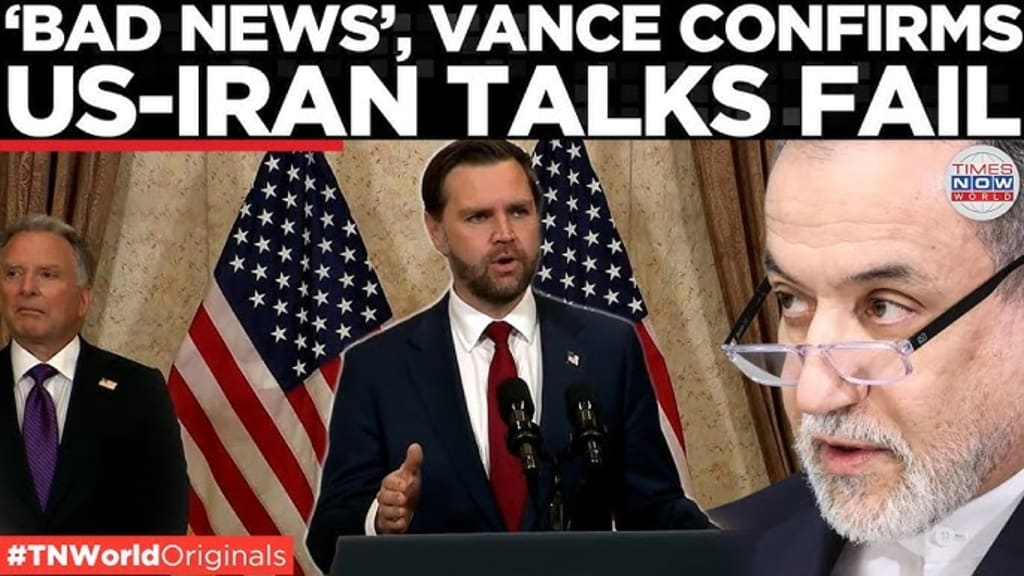
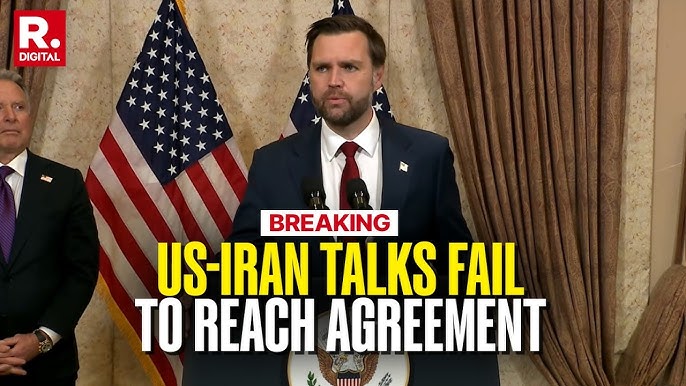
The latest round of high-stakes negotiations between the United States and Iran, held in Islamabad, ended without an agreement despite more than 21 hours of intense discussions. What was seen as a crucial opportunity to stabilize the region instead exposed deep-rooted divisions that continue to hinder diplomacy. The failure of these talks was not due to a single issue, but rather a complex mix of strategic disagreements, mistrust, and geopolitical calculations.
1. Irreconcilable Differences on the Nuclear Program
At the heart of the negotiations was Iran’s nuclear program. The United States demanded firm guarantees that Iran would not pursue nuclear weapons, while Iran insisted on its right to continue nuclear activities for peaceful purposes. This fundamental disagreement proved impossible to bridge. Washington viewed Iran’s enrichment capabilities as a security threat, whereas Tehran saw U.S. demands as an infringement on its sovereignty. �
2. Disputes Over Sanctions Relief
Another major sticking point was economic sanctions. Iran pushed for the immediate lifting of U.S. sanctions, which have severely impacted its economy. However, the United States favored a gradual approach tied to Iranian compliance. This mismatch in expectations created a deadlock, as neither side was willing to compromise on sequencing or conditions. �
3. Strategic Control of the Strait of Hormuz
The Strait of Hormuz—one of the world’s most critical oil routes—emerged as a key point of contention. The U.S. sought guarantees for free and secure navigation, while Iran aimed to assert greater control over the waterway. These competing interests added a strategic dimension to the talks, making compromise even more difficult. �
4. “Excessive Demands” and Clashing Narratives
Both sides accused each other of making unrealistic demands. Iranian officials described U.S. proposals as “excessive,” while American negotiators argued that Iran refused to accept reasonable terms. This blame game reflected not just tactical disagreements but also differing perceptions of fairness and legitimacy in the negotiation process. �
5. Deep-Rooted Mistrust
Decades of hostility between the two countries continue to shape their diplomatic interactions. From past conflicts to broken agreements, both sides remain skeptical of each other’s intentions. This lack of trust limited flexibility at the negotiating table and made it difficult to build momentum toward a deal. �
6. Broader Regional and Military Tensions
The talks did not occur in isolation. Ongoing military tensions, including naval movements and threats in the region, created an atmosphere of pressure and uncertainty. These external factors reinforced hardline positions on both sides, reducing the space for compromise. �
7. Domestic Political Pressures
Internal politics also played a role. U.S. leadership faced pressure to appear tough on Iran, while Iranian authorities needed to demonstrate resistance against foreign demands. These domestic considerations limited negotiators’ ability to make concessions, as any perceived weakness could carry political costs at home.
The recent talks between the United States and Iran failed mainly due to deep disagreements over key issues. The U.S. demanded a firm commitment that Iran would stop pursuing nuclear weapons, but Iran refused to accept these terms. �
Business Standard +1
At the same time, Iran criticized the U.S. for making “excessive demands,” including conditions related to sanctions, regional influence, and control of the Strait of Hormuz. �
Anadolu Ajansı
Both sides also showed a lack of trust and were unwilling to compromise. After 21 hours of negotiations, they could not bridge these differences, leading to a complete deadlock and no agreement. �
Conclusion
The collapse of the U.S.-Iran talks highlights the complexity of modern diplomacy, where technical issues are intertwined with political, strategic, and historical factors. While the failure raises concerns about the future of the ceasefire and regional stability, it does not necessarily mark the end of diplomatic efforts. Both sides have left the door open for future negotiations, suggesting that while progress may be slow, dialogue remains the only viable path forward.
Ultimately, the breakdown serves as a reminder that resolving such deeply entrenched conflicts requires not only negotiation but also trust-building, compromise, and sustained international engagement.
About the Creator
Sk
"I am a passionate writer, crafting books and articles on Vocal Media, exploring human experiences, stories, and creative reflections."
Enjoyed the story? Support the Creator.
Subscribe for free to receive all their stories in your feed.
Comments
There are no comments for this story
Be the first to respond and start the conversation.