
Why Sleepers Remains a Disturbing Exploration of Trauma and Revenge
Revisiting Barry Levinson’s story on its 30th anniversary

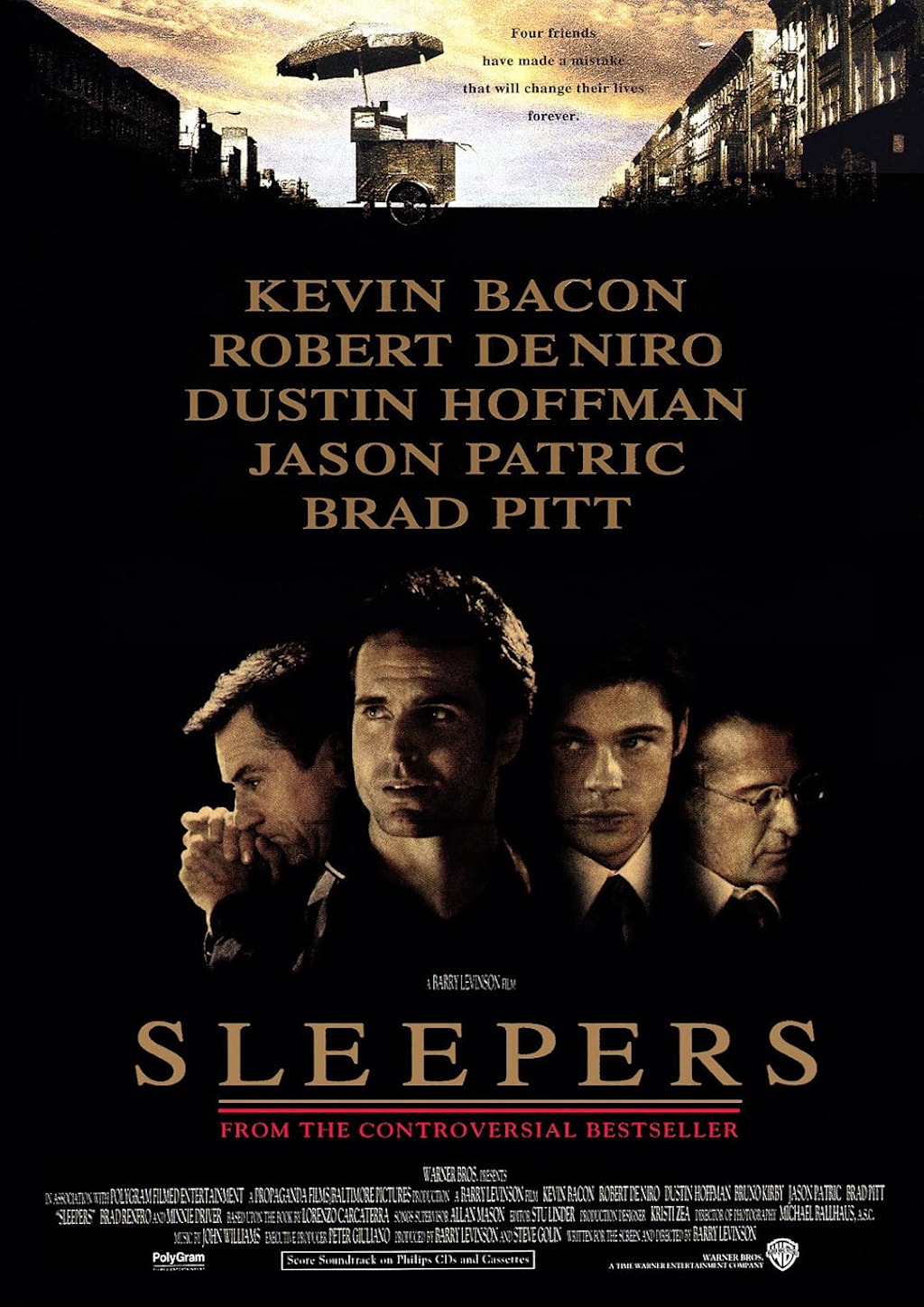
A Childhood Lost, A Reckoning
Set in 1960s New York City, Sleepers centers on four childhood friends — Lorenzo “Shakes” Carcaterra, Michael Sullivan, John Reilly, and Tommy Marcano — whose lives are profoundly affected by their experiences at the Wilkinson Home for Boys. In adulthood, the friends find themselves confronting the consequences of their shared past when John and Tommy become involved in a murder case. As Michael and Shakes work to help their friends, their loyalty is tested by a plan that at times crosses the line between justice, revenge, and deception.
Performances Bound by Trauma
The cast is nothing short of phenomenal. Among the younger performers, Joe Perrino portrays young Shakes, Brad Renfro plays young Michael Sullivan, Geoffrey Wigdor portrays young John Reilly, and Jonathan Tucker plays Tommy Marcano. Together, they capture the boys’ carefree moments and close bond before their lives take a devastating turn.
The adult cast delivers equally compelling performances. Kevin Bacon portrays the sadistic guard Sean Nokes, whose unsettling facial expressions and menacing behavior establish him as a deeply threatening presence. Brad Pitt plays adult Michael Sullivan with determination and conviction, particularly as he navigates the courtroom proceedings and confronts the consequences of his traumatic past.
Ron Eldard portrays John Reilly as a hardened man whose past continues to influence his behavior. Meanwhile, Billy Crudup brings intensity to Tommy Marcano, conveying the character’s troubled nature and volatile temperament.
Robert De Niro portrays Father Bobby as an empathetic figure whose moral convictions are tested by the courtroom proceedings. Dustin Hoffman brings a stern, determined presence to Danny Snyder, especially when he questions Ralph Ferguson about the horrific abuse committed at Wilkinson. His performance conveys the lawyer’s determination to expose the truth despite the challenges facing the defense.
Jason Patric portrays the adult Shakes with a quiet intensity, balancing his duty as a reporter with his loyalty to his childhood friends. Meanwhile, Minnie Driver delivers a compelling performance as Carol Martinez, portraying her as a courageous woman who stands by John during the trial.
Together, these performances bring emotional weight to Barry Levinson’s crime drama. The actors make the characters’ enduring trauma, complicated loyalties, and pursuit of justice feel deeply personal, reinforcing the disturbing themes at the heart of Sleepers.
From Childhood Innocence to Unimaginable Horror
The film opens by showing Lorenzo, Michael, John, and Tommy growing up in Hell’s Kitchen, New York City, during the summer of 1966. Their mischievous behavior, however, leads to a serious accident that changes their lives forever. As a consequence, they’re sent to the Wilkinson Home for Boys, a juvenile detention facility intended to discipline and rehabilitate troubled youths.
However, Sean Nokes and the other guards subject the boys to physical and sexual abuse, turning what should’ve been a place of guidance into a place of terror. Without describing these acts in graphic detail, the film conveys the horrifying reality of the boys’ experiences and marks a turning point in the narrative.
The story later moves to 1981, when adult John Reilly and Tommy Marcano unexpectedly encounter Nokes at a restaurant. This encounter sets the stage for the events that follow.
Finally, the courtroom scenes raise the stakes as the characters face the consequences of the events surrounding Nokes. With their futures hanging in the balance, the proceedings add another layer of tension to an already unsettling narrative, leaving audiences wondering how the case will unfold.
The Controversy Behind Sleepers’ True-Story Claims
When Sleepers came out, it generated controversy over the truthfulness of the events described in Lorenzo Carcaterra’s book of the same name. According to a 1996 article published by The Spokesman-Review, representatives of Sacred Heart of Jesus Church, which Carcaterra attended, strongly disputed his claims. The Manhattan District Attorney’s Office also reportedly stated that it could find no records of a case matching the account. These findings raised serious questions about the book’s presentation as a true story, particularly given its disturbing depiction of abuse suffered by children in a juvenile detention facility.
However, the article also discusses how director Barry Levinson defended Carcaterra’s account. Levinson argued that Carcaterra would have little reason to write about such traumatic experiences if they never happened. He also questioned why the story was receiving such intense scrutiny, pointing out that it didn’t involve historical figures.
His comments illustrate the tension between the filmmaker’s willingness to accept the author’s account and the doubts raised by those who questioned its credibility.
Ultimately, the controversy surrounding the book raises important concerns about the responsibility involved in presenting traumatic events as factual. Audiences may approach such stories differently when they believe the events actually happened, making accuracy highly important.
The Scars That Never Fade
At its core, Sleepers explores the devastating effects of childhood trauma and the abuse of authority. The boys endure physical and sexual abuse at the hands of adult guards who take advantage of their vulnerability. As children, they could not meaningfully consent to sexual acts imposed on them by the very adults responsible for their care.
The film also examines the moral consequences of taking justice into one’s own hands. This theme invites comparison with A Time to Kill, released in July 1996, nearly three months before Sleepers. In that film, Carl Lee Hailey kills the two men who sexually assaulted his daughter before facing trial for their deaths. Although the circumstances differ, both movies explore the tension between personal convictions and the demands of the justice system, leaving audiences to consider whether the law can deliver a satisfying sense of justice.
The moral dilemma deepens when Shakes questions Michael’s plan to manipulate the trial to secure John and Tommy’s acquittal. He asks, “Are you sure you want to go this way? I mean, we buried it a long time ago.” Michael’s reference to The Count of Monte Cristo — “Revenge. Sweet, lasting revenge” — reinforces his desire for retribution. Their exchange suggests that unresolved trauma continues to influence the characters’ decisions, pushing them toward questionable actions in pursuit of justice.
Finally, Father Robert “Bobby” Carillo commits perjury by providing John and Tommy with a false alibi under oath. His decision underscores the film’s moral ambiguity: he breaks the law to help the people he cares about, but in doing so, does he betray his principles?
Thirty Years Later: The Trauma Remains
Sleepers is one of those movies that can haunt viewers long after the credits roll. With its powerful performances, disturbing subject matter, and exploration of childhood trauma, revenge, and justice, Barry Levinson’s crime drama remains a deeply unsettling cinematic journey. Although the book’s account has been disputed, the movie remains provocative because its narrative challenges audiences to consider the lasting effects of childhood suffering and the importance of standing up to systemic abuse.
About the Creator
TheScreenAnalyst
I am a passionate movie and TV enthusiast, devoted to analyzing storytelling, characters, visuals, and performances. I provide thoughtful critiques and insights, exploring both mainstream and independent works to engage audiences.
Enjoyed the story? Support the Creator.
Subscribe for free to receive all their stories in your feed.
Comments
There are no comments for this story
Be the first to respond and start the conversation.