
Why Little House on the Prairie's Nellie Oleson Wasn't A True Villian
Alison Angrim played Nellie Oleson for seven seasons.

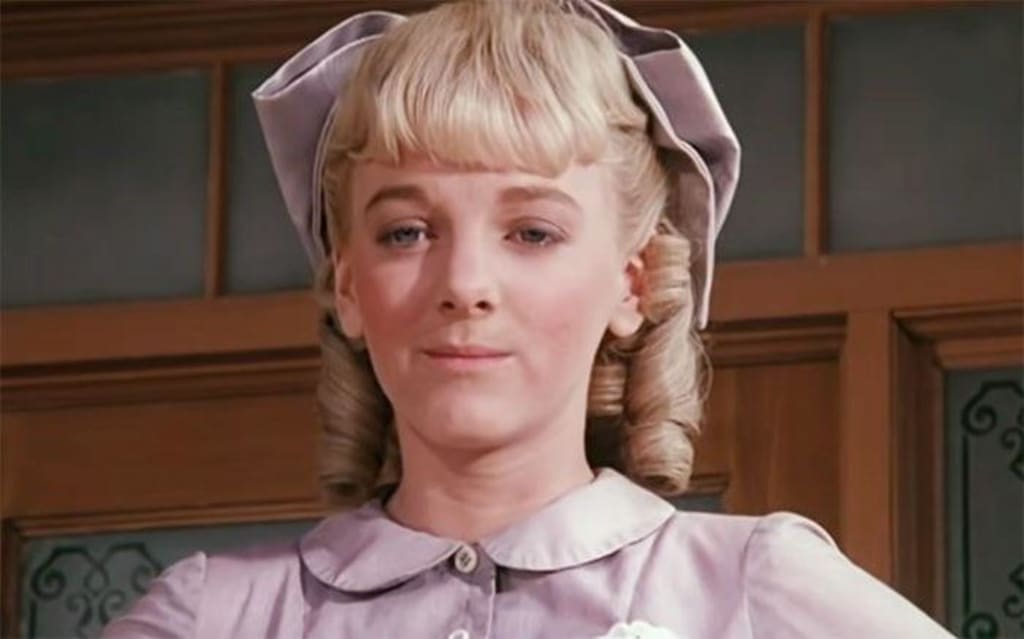
When Little House on the Prairie debuted in 1974, it didn't take long for viewers to choose sides between the Ingalls' sisters and Nellie Oleson. Unwelcome from the start, Laura and Mary (Melissa Gilbert and Melissa Sue Anderson) were mocked and belittled by Nellie, who had a knack for making people feel worse about themselves.
No one was immune to the cruelty Nellie dished out on a daily basis, and she wasn't above lying to get what she wanted. Of course, her mother, Harriet Oleson (Katherine MacGregor) played a large part in creating the monstrous little girl who thought she was better than anyone else. But it didn't bother Nellie that every child in Walnut Grove didn't like her. She was taught she was superior, and that was enough for her. But was it?
When watching Little House on the Prairie one episode at a time as it aired in the seventies, it was difficult to see Nellie as anything but a bully and someone who deserved a comeuppance, which she received thanks to Laura, in the third season's second episode, Bunny. But thanks to streaming, the family favorite show can be binged, allowing viewers to see the trajectory of Nellie's life and what it took to change her into a decent human being. And that is exactly why Nellie wasn't truly a villain.
Did she do horrible things? Absolutely, but how much of that was out of insecurity? She had everything she wanted materialistically, but she didn't have the family like Laura had. She didn't have the type of family Laura had, and while Nellie's mother certainly doted on her, there was no evidence of genuine maternal love. I oftentimes thought Harriet considered her children more like possessions than human beings.
Nellie wanted to be accepted. That was proven by the arrival of Percival Dalton (Steve Tracy). She began her customary nastiness with him, and he gave it right back to her. And that led to an eye-opening realization for Nellie. She needed someone who would stand up to her, someone who prevented her from puppeting her mother. She found that in Percival.
True villains don't undergo dramatic changes when confronted with their own misdeeds. Love doesn't change them. Think of Zebediah Kilgrave (David Tennant) from Jessica Jones and Martin Whitly (Michael Sheen) from Prodigal Son. Both were evil to the core with no hope of redemption. There is a laundry list of similar characters in television's history, characters who had no remorse.
As it turns out, all Nellie wanted was true love. Someone who saw beneath the big bows and curls. Someone who could help her grow into the person she never knew she could be. And once she met Percival, Nellie did grow, becoming an actually pleasant person who even had nice conversations with people she previously snubbed.
Nellie's character arc was exceptionally well-executed. It actually made viewers see a different side of this person who'd been a terror to everyone around her. And it showed that people, who aren't true villains, can change.
Nellie never became the most beloved character on the series. In fact, she and Tracy would depart after the end of Little House on the Prairie's seventh season, but, for a short time, she was a member of Walnut Grove's community. The one-dimensional character that had been created in season one of the series disappeared, giving Arngrim the opportunity to play a richer character. For some, the scenes with Nellie and Percival have become favorites. And, after six seasons of being a mean girl, Arngrim got to leave the show on a high note, with Nellie having been fully redeemed in viewers' eyes.
About the Creator
The Television Time Capsule
Welcome to The Television Time Capsule, where I celebrate the shows that never stopped telling their stories, why series that were canceled or ended still matter, years or even decades after they first aired.
Enjoyed the story? Support the Creator.
Subscribe for free to receive all their stories in your feed.
Comments
There are no comments for this story
Be the first to respond and start the conversation.