
What Is the Standard Height for a Computer Desk?
Learn what the standard height for a computer desk is, why it matters for posture, and how standing desks change modern workspace height and comfort for better ergonomics.

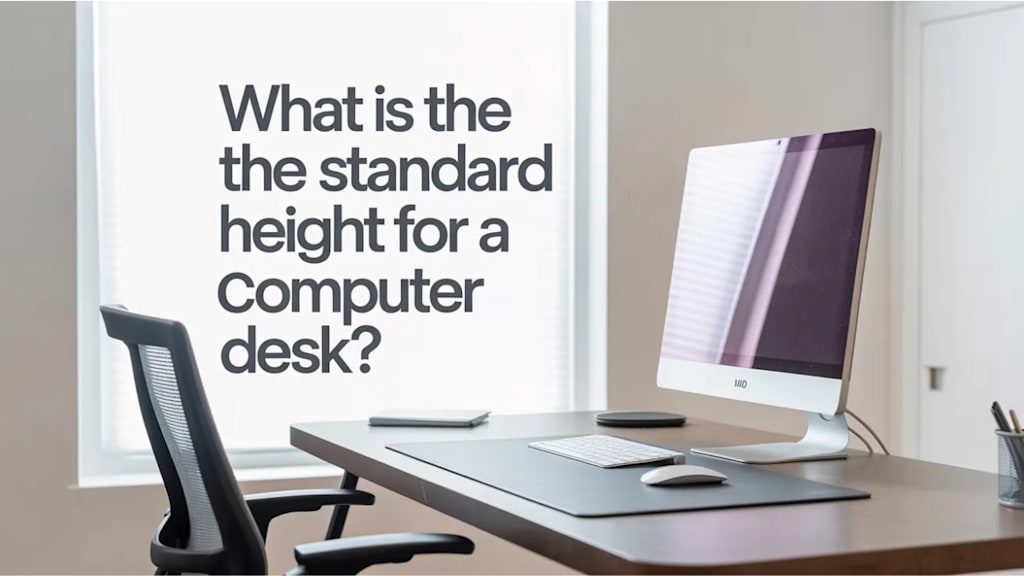
Most people sit down at a desk every day without ever thinking about its height. It feels normal, so it rarely gets questioned. But the moment discomfort starts showing up in your neck, shoulders, or lower back, the desk suddenly becomes more noticeable than the work itself.
One of the most common questions people ask when setting up a workspace is simple but important: what is the standard height for a computer desk?
The answer is not just a number. It is also about how your body interacts with that height, how your chair fits into the equation, and increasingly, how standing desks are changing the idea of a “standard” workspace altogether.
In this article, we will break it down in a simple, practical way and also connect it with modern desk setups like standing desks so you can understand what actually works in real life.
The Standard Height of a Computer Desk
The typical standard height for a computer desk is around 28 to 30 inches (71 to 76 cm) from the floor to the desktop surface.
This range became common because it generally works for average adult body proportions when paired with a standard office chair.
However, this number is not a strict rule. It is more of a starting point than a perfect fit for everyone.
The reason is simple. People are not the same height, and neither are their chairs, arm lengths, or sitting habits. What feels comfortable for one person can feel slightly too high or too low for another.
That is why desk height should always be viewed together with chair height and posture, not in isolation.
Why Desk Height Matters More Than People Realize
Desk height affects your body in ways that are easy to ignore at first but difficult to fix later.
If a desk is too high, your shoulders tend to lift while typing. This creates tension in your neck and upper back.
If a desk is too low, you end up leaning forward, which puts pressure on your lower back and encourages slouching.
Over time, these small adjustments become habits. Your body starts adapting to the wrong position, and that is often when discomfort becomes persistent.
A properly matched desk height allows your arms to rest comfortably, your shoulders to stay relaxed, and your spine to remain in a natural position.
The Role of Chair Height in Desk Setup
Desk height alone does not determine comfort. Your chair plays an equally important role.
Ideally, when you sit at a desk:
- Your feet should be flat on the floor
- Your knees should be roughly at a 90-degree angle
- Your elbows should also sit around 90 degrees when typing
This is why a “standard desk height” only works when paired with a properly adjusted chair.
If your chair is too high or too low, even a perfectly standard desk will feel uncomfortable.
This is also where ergonomic chairs become important because they allow height and posture adjustments that match your desk setup.
Is There a Perfect Desk Height for Everyone?
Not really.
The 28 to 30 inch standard works for many people, but not all.
For example:
- Taller individuals may need a slightly higher desk
- Shorter individuals may need a lower desk or an adjustable chair
- People with specific posture issues may need customized setups
This is why modern office design has shifted away from fixed assumptions and toward adjustable systems.
This is Where Standing Desks Change Everything
Standing desks introduce a completely different idea of workspace height.
Instead of one fixed position, they allow you to adjust your desk height depending on whether you are sitting or standing.
A typical standing desk range looks like this:
- Sitting height: similar to standard desks (around 28–30 inches or adjustable equivalent)
- Standing height: around 38 to 50 inches depending on user height
This flexibility removes the idea of a single “standard height” altogether.
Instead, your desk adapts to your body throughout the day.
Upgraded Form of a Computer Desk
A standing desk is essentially an upgraded form of a computer desk.
In a traditional setup, you adjust your body to match the desk.
In a standing desk setup, you adjust the desk to match your body.
This small shift changes everything.
When sitting, your standing desk behaves like a normal computer desk at standard height. When standing, it rises to support an upright posture.
This means you are no longer locked into one fixed height. You are working with a dynamic system instead of a static one.
Why Alternating Between Sitting and Standing Matters
One of the biggest reasons standing desks have become popular is not just posture, but movement.
Staying in one position for too long, even a correct one, can still cause stiffness.
Sitting for hours can lead to:
- lower back tightness
- reduced circulation
- shoulder stiffness
Standing for hours can also lead to:
- leg fatigue
- foot pressure
- lower back strain if posture is poor
The real benefit comes from switching between the two.
Even small changes in position throughout the day help reduce strain on the body.
Proper Desk Height When Using a Standing Desk
When using a standing desk, the same principles still apply, just in a different position.
While standing:
- Your elbows should remain at about 90 degrees while typing
- Your screen should be at eye level
- Your shoulders should stay relaxed, not raised
If your desk is too high while standing, you will still experience shoulder tension. If it is too low, you may lean forward and strain your back.
So even with a standing desk, “correct height” still matters. It just becomes adjustable instead of fixed.
The Importance of Monitor and Keyboard Placement
Desk height is only part of the equation. What sits on the desk matters just as much.
Your monitor should ideally be at eye level. This prevents neck strain and keeps your head in a neutral position.
Your keyboard and mouse should be placed so your arms stay relaxed and close to your body.
Even a perfectly set desk height can feel wrong if your screen is too low or your keyboard is too far forward.
This is why full workstation setup is more important than just furniture height.
Common Mistakes People Make with Desk Height
One common mistake is assuming that standard height will automatically feel comfortable.
Another mistake is ignoring chair adjustments and only focusing on the desk.
Some people also forget to adjust their setup when switching to a standing desk, which leads to awkward posture even in an “ergonomic” environment.
A final mistake is staying in one position for too long. Even the perfect height setup cannot compensate for lack of movement.
How to Find Your Ideal Desk Height
Instead of relying only on standard measurements, it helps to think in terms of body position.
When seated or standing, ask yourself:
- Are my shoulders relaxed?
- Are my elbows naturally bent while typing?
- Is my screen at a comfortable viewing level?
- Do I feel any strain in my neck or lower back after some time?
If the answer to any of these is no, small adjustments in height or chair position can make a big difference.
This is why adjustable desks and ergonomic chairs are often recommended together.
Final thoughts
The standard height for a computer desk is usually around 28 to 30 inches, but that number is only a general reference point.
Real comfort depends on how well your desk, chair, and body work together.
With the rise of standing desks, the idea of a fixed “standard height” is slowly becoming less important. Instead, flexibility is becoming the new standard.
A good workspace is no longer about one perfect measurement. It is about the ability to adjust, move, and support your body throughout the day.
In the end, the best desk height is not a number. It is the one that allows you to work comfortably without thinking about it.
About the Creator
Saif
Exploring different parts of life.
Enjoyed the story? Support the Creator.
Subscribe for free to receive all their stories in your feed.
Comments
There are no comments for this story
Be the first to respond and start the conversation.