
What If We Actually Live in a Simulation—and Nobody Told Us?
Not science fiction, not conspiracy—just uncomfortable questions physics still can’t fully answer

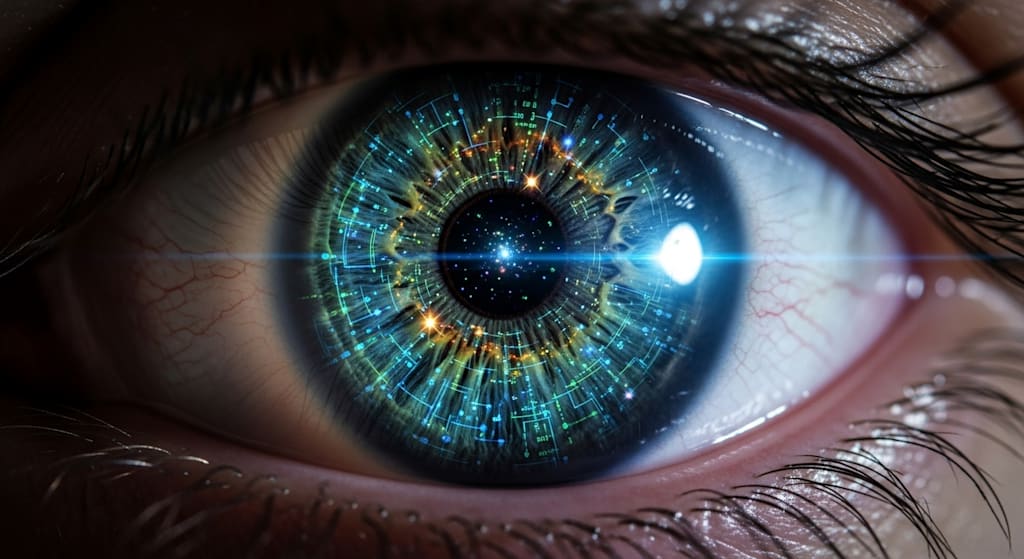
Most people hear the idea of a “simulation” and immediately place it in the category of sci-fi movies, late-night internet theories, or something people say when they’ve had too much coffee and too little sleep.
But the unsettling part is this: serious thinkers haven’t fully dismissed it.
Not because they believe we’re definitely living in one—but because they can’t confidently prove we’re not.
And that difference matters more than it sounds.
The simulation hypothesis, at its core, is simple. It suggests that what we experience as reality—space, time, matter, even consciousness—could be an advanced digital construct, created by a civilization far beyond our own technological level.
Not magic. Not illusion. Computation.
A system so advanced that everything feels real because, for all practical purposes, it is real to us.
The question isn’t “Is this true?”
The question is “Could this be true without us noticing?”
And that’s where things get uncomfortable.
Because when you start following that question seriously, you run into something strange: reality already behaves in ways that feel… computational.
Take physics. At the smallest scales, energy and matter don’t behave like smooth, continuous substances. They behave in discrete packets—like pixels instead of paint. Quantum mechanics describes probabilities, not certainties. Observation seems to matter in ways that still don’t fully make intuitive sense.
None of this proves a simulation.
But it does raise questions about how “fundamental” reality actually is.
Then there’s the argument that made the simulation idea famous in modern philosophy: if a civilization ever becomes advanced enough to simulate entire conscious worlds, and if it runs many such simulations, then statistically, simulated minds could far outnumber biological ones.
In that scenario, the odds of us being in the original “base reality” start to feel less obvious.
Still, probability is not proof. It’s just uncomfortable arithmetic.
But let’s step away from philosophy for a moment.
Because the more interesting part of this idea isn’t whether it’s true—it’s what it changes in how we think.
If reality were a simulation, what would actually be different in your day-to-day life?
You’d still wake up.
Still feel emotions.
Still make choices.
Still suffer, laugh, fall in love, lose things, build meaning.
Nothing about subjective experience disappears.
Which leads to a surprising conclusion: even if the simulation hypothesis were true, your life wouldn’t become less real in the way that matters to you.
It would still be your experience.
That’s the part people often miss when they talk about it casually. They assume “simulation” equals “fake.” But that’s not necessarily the case. A simulated experience can still contain real emotions, real consequences, and real meaning to the observer inside it.
The word “real” starts to lose clarity the more you examine it.
Then there’s the darker side of the thought experiment—the part that fuels most online debates.
If we are in a simulation, who runs it?
And why?
Some imagine it as an experiment. Others as entertainment. Others as something completely beyond human comprehension—rules we don’t have language for yet.
But notice something important: every answer we invent says more about us than about the hypothesis itself.
We project intention onto the unknown because our minds struggle with pure randomness or indifference.
And maybe that’s the most human part of all this.
We want meaning, even when we’re not sure where meaning comes from.
There’s also a more grounded perspective that often gets overlooked: even if we could simulate a universe, it doesn’t automatically mean we are in one. It just means reality might be more layered than we currently understand.
Science has a history of this.
There was a time when atoms were thought to be indivisible.
A time when space and time were thought to be absolute.
A time when the universe was thought to be the entire system.
Each assumption was later revised—not because imagination expanded first, but because observation did.
So where does that leave us?
Somewhere in between certainty and curiosity.
The simulation idea isn’t useful because it gives answers. It’s useful because it forces better questions.
What is consciousness, really?
Why does mathematics describe reality so precisely?
What counts as “real” experience?
And why does the universe appear understandable at all?
Even if the simulation hypothesis turns out to be wrong, the act of considering it exposes gaps in our understanding that are still very real.
And that’s the point.
Not to escape reality.
Not to deny it.
But to notice how much of it we still don’t fully understand.
Because whether we are in a simulation or not, one fact remains unchanged:
You are still here, having this experience, trying to make sense of it.
And maybe that’s the only certainty we ever needed.
About the Creator
Enjoyed the story? Support the Creator.
Subscribe for free to receive all their stories in your feed.
Comments
There are no comments for this story
Be the first to respond and start the conversation.