
'Whalefall': A Strange Premise Trapped in Familiar Storytelling
Brian Duffield’s claustrophobic thriller has an unusual hook, but its conventional storytelling makes it difficult to escape the feeling that we’ve seen this movie before.


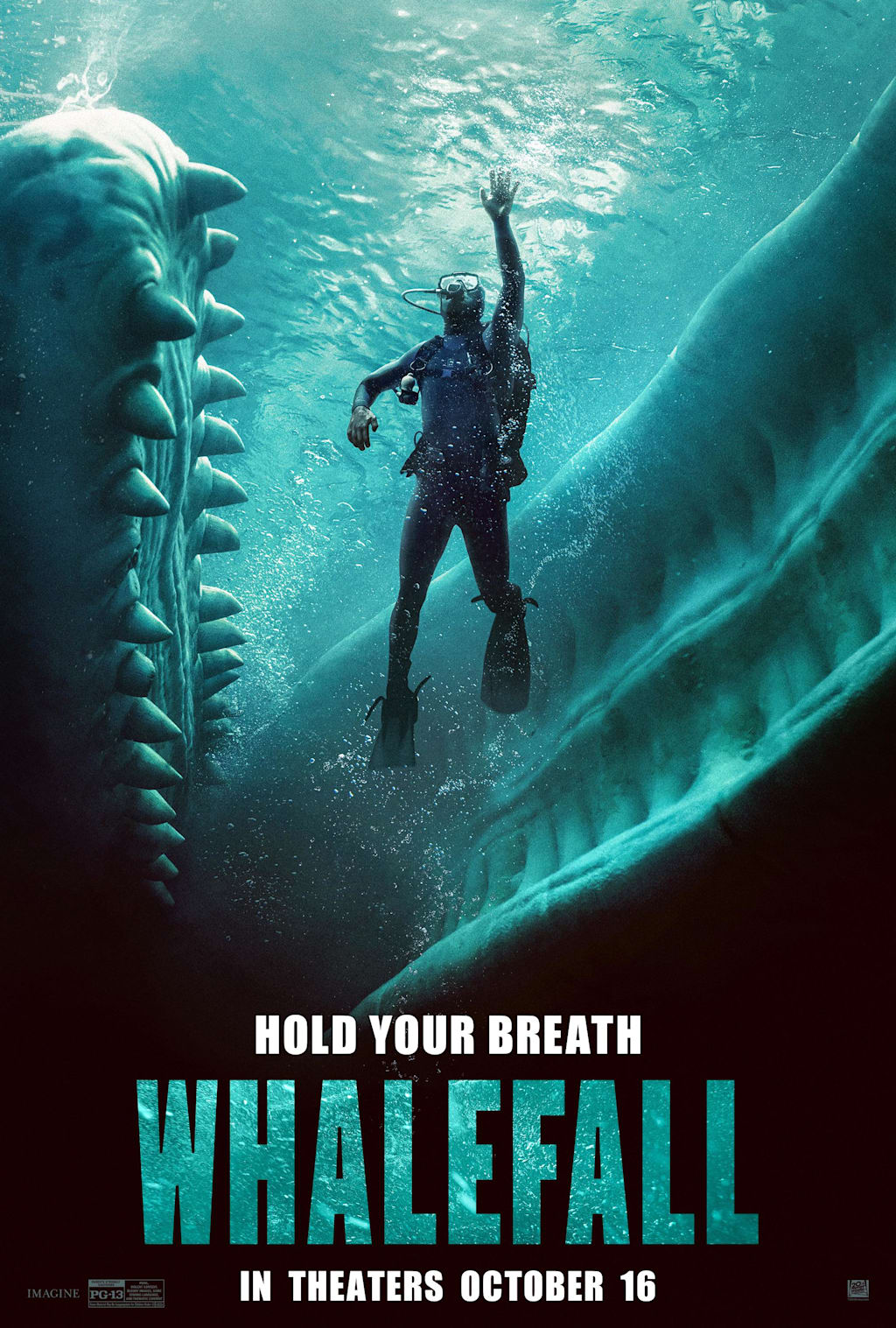
Directed by: Brian Duffield
Written by: Brian Duffield and Daniel Kraus
Starring: Austin Abrams, Josh Brolin, and Lea Thompson
Release Date: October 16, 2026
The Trouble With Knowing Too Many Movies
Those who dabble in screenwriting are familiar with two schools of thought that have genuinely helped writers over the years. Robert McKee was a champion and teacher of three-act structure. McKee didn’t invent it, of course, but he codified its principles throughout his prestigious career teaching screenwriting.
The other leading theory is Save the Cat, the approach championed by the late Blake Snyder. The title refers to a scene in which your main character does something heroic to establish that they’re the kind of person we want to root for. Think Tony Stark intervening in an overseas war in Iron Man before settling into his larger battle for control of Stark Industries.
Beyond the title, however, Save the Cat popularized the Beat Sheet, a series of story beats intended to preserve tension, develop characters, and move a story forward. It’s a simplification, but a helpful one, especially for aspiring screenwriters.
Snyder’s Beat Sheet contains what he refers to as “the dark night of the soul.” This is the point where things seem hopeless for our hero before they find the courage and strength to overcome their obstacles on the way to a glorious future.
Before Save the Cat, legendary film critic Roger Ebert identified something similar, laying out his own kind of beat sheet: “False Crisis, False Dawn, Real Crisis, Real Dawn.” Because Ebert saw so many movies, far more than the average filmgoer, he could spot these beats in nearly every movie he watched.
This is an experience that eventually happens to every critic. After so many years watching and criticizing films, you begin to see patterns. Depending on your perspective, you either grow comfortable with the repetition or begin begging for movies to do something different.
If you’ve ever wondered why film critics champion strange movies, foreign films, and movies far outside the mainstream, sometimes it’s because those movies break the monotonous patterns of mainstream American cinema. Oftentimes, these unconventional films are also really, really good on top of being unconventional.
Anyway, this is the long way of getting around to discussing the abundantly conventional thriller Whalefall.
Not conventional in the sense that a guy being swallowed by a whale is an overly familiar story trope. That’s a pretty unusual predicament. No, Whalefall is conventional in the sense that it follows the beats of Blake Snyder and the structure of Robert McKee.
And, most damningly, it has that false crisis, false dawn, real crisis, real dawn structure that can’t help but make me squirm in my seat.
It’s all performed and filmed adequately. It’s claustrophobic and a little weird, though it could be weirder.
Swallowed by the Plot
Star Austin Abrams is certainly capable of being weird. He brought some weird to both Weapons and Resident Evilrecently. Sadly, Whalefall gives Abrams little to work with. He’s trapped and entirely at the mercy of the plot.
Even with a guy trapped inside a whale as its wild premise, the rest of the movie unfolds in deeply conventional fashion. Abrams’ Jay Gardiner finds his physical plight mirroring the emotional turmoil of losing his father, Mitt Gardiner (Josh Brolin).
Jay and Mitt butted heads constantly. Mitt wanted Jay to join him in working on the ocean, diving, touring, and living off Mother Ocean. Jay, in turn, decided to get as far away from the ocean as possible by attending college in Iowa.
After Mitt dies, his body lost to the ocean he loved, Jay returns home. One year after his father’s death, Jay decides to venture into the ocean and bring his father home.
Unfortunately, fate has other plans for young Jay.
Ignoring warnings from Mitt’s best friend, Hewey (John Ortiz), and a growing crowd of law enforcement officers on a nearby beach, Jay goes diving, descending deep into the water in search of something belonging to his father’s remains.
Turns out, there was a good reason to heed those warnings.
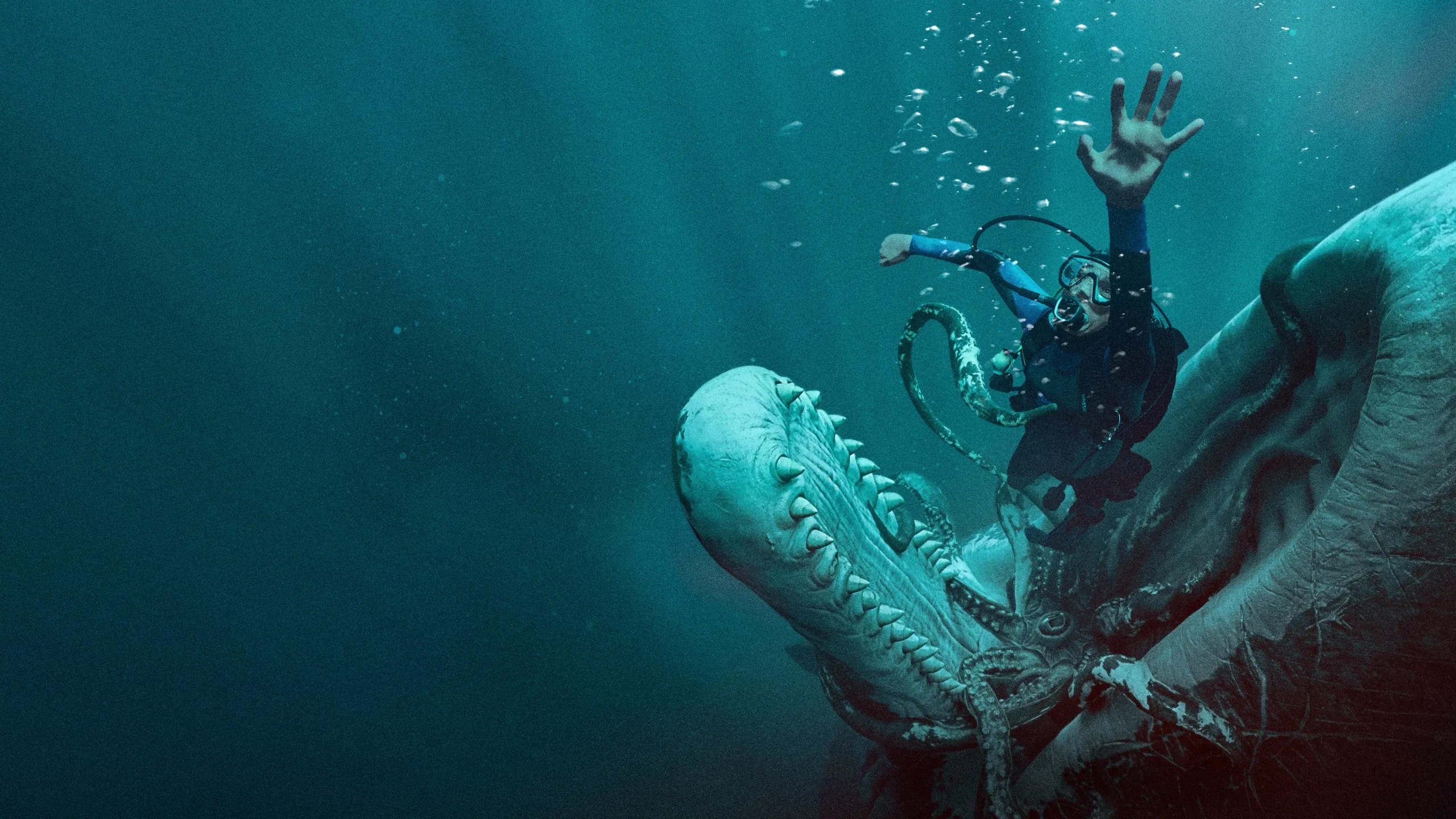
An aged whale, driven a little batty by sonar and old age, has swum close enough to shore while chasing an octopus to accidentally capture Jay in its gaping maw.
Trapped inside the whale, Jay relies on memories of his father to stave off the paralyzing fear of running out of oxygen and the whale diving deep enough to nearly crush a human being.
The ways in which the flashbacks to Jay and Mitt’s troubled relationship reflect Jay’s current predicament quickly become predictable. The otherwise unique idea starts to feel all too familiar as a story.
Father Knows Best, Eventually
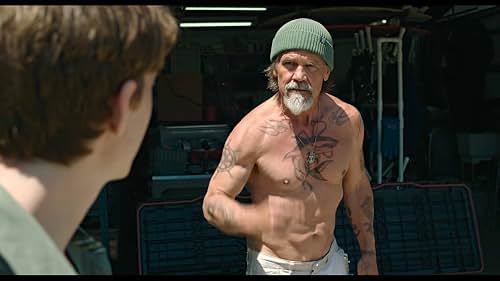
It becomes a bit cloying to watch Jay develop a new understanding of his often-drunk but always well-meaning and self-assured father.
Josh Brolin is fantastic, but as the movie progresses, his role increasingly feels like a function of the plot rather than an exploration of the meaningful emotional beats of a father-son relationship.
The problem isn’t that Jay’s predicament forces him to reconsider his relationship with his father. That’s a perfectly reasonable foundation for a story. The problem is how neatly everything fits together. The physical struggle and the emotional journey are so tightly synchronized that the movie’s underlying machinery becomes increasingly difficult to ignore.
What should be a complicated, uncomfortable reckoning between a son and his dead father becomes another series of familiar revelations, delivered at precisely the moments the story needs them.
There’s a difference between a movie earning an emotional payoff and a movie simply arranging its pieces to produce one. Whalefall too often feels like the latter.
A Whale of a Missed Opportunity
On the whole, Whalefall isn’t bad. It’s just a little too familiar.
If you’re someone who hasn’t seen many movies, it might be thrilling to watch. If you’ve seen a lot of movies, the unique premise might be enough to get you through it, but it’s unlikely to be an experience that sticks with you long after it’s over.
There’s something inherently compelling about a man trapped inside a whale, fighting for his life while confronting the unresolved emotional baggage he carries with him. It’s a premise that practically begs for an unusual, uncomfortable, perhaps even genuinely strange movie.
Instead, Whalefall gives us a reasonably well-made thriller that follows a familiar path toward a predictable emotional destination.
Sometimes, the problem with knowing how a story works is that you spend less time experiencing it and more time watching the machinery turn.
And when you’re trapped inside a whale, you really don’t want to spend your time thinking about the machinery.

About the Creator
Sean Patrick
Hello, my name is Sean Patrick He/Him, and I am a film critic and podcast host for the I Hate Critics Movie Review Podcast I am a voting member of the Critics Choice Association, the group behind the annual Critics Choice Awards.
Enjoyed the story? Support the Creator.
Subscribe for free to receive all their stories in your feed. You could also become a paid subscriber, letting them know you appreciate their work.
Comments
There are no comments for this story
Be the first to respond and start the conversation.