
Vision Quest (1985): The Wrestling Coming-of-Age Movie That Refused to Be Just Another ’80s Teen Movie
Matthew Modine, Madonna, wrestling, first love, and a very different kind of 1985 teen movie.

Not Every Teen Movie Needed a Detention Room
By 1985, the teen movie had become its own little industry.
The Breakfast Club had turned a Saturday detention into a cultural event. The Karate Kid transformed teenage insecurity into a martial-arts fairy tale. Footloose was getting ready to make dancing look like an act of rebellion.
And then there was Vision Quest.
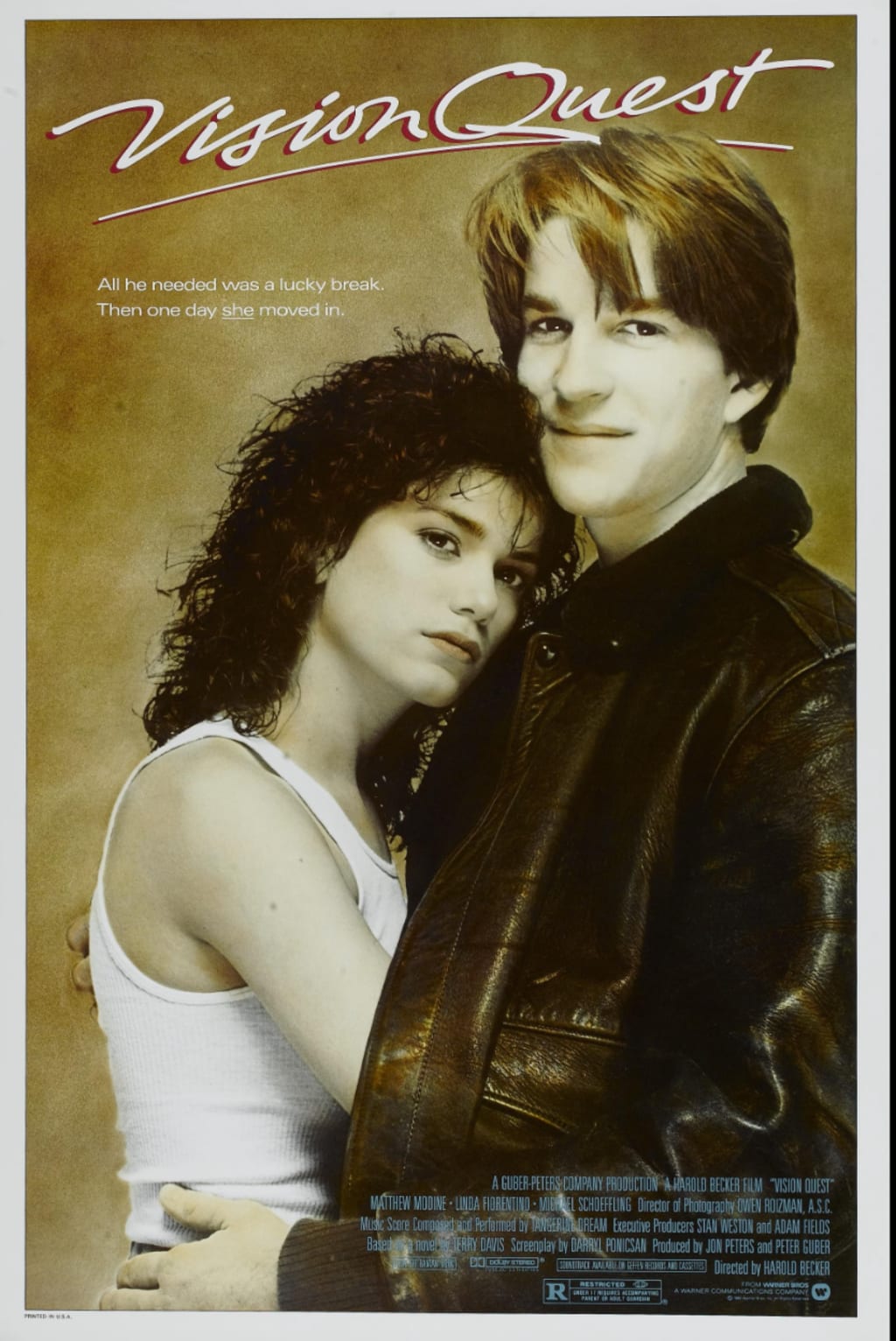
Released by Warner Bros. on February 15, 1985, Harold Becker’s film looked, at first glance, like it should fit comfortably into the decade’s growing collection of teenage wish-fulfillment movies. It had a handsome young star, an older woman he falls for, a high-school wrestling championship, a killer soundtrack and, because apparently 1985 wasn’t already 1985 enough, a brief appearance by Madonna.
But Vision Quest isn’t really interested in being a conventional teen movie.
It is quieter. Stranger. More melancholy.
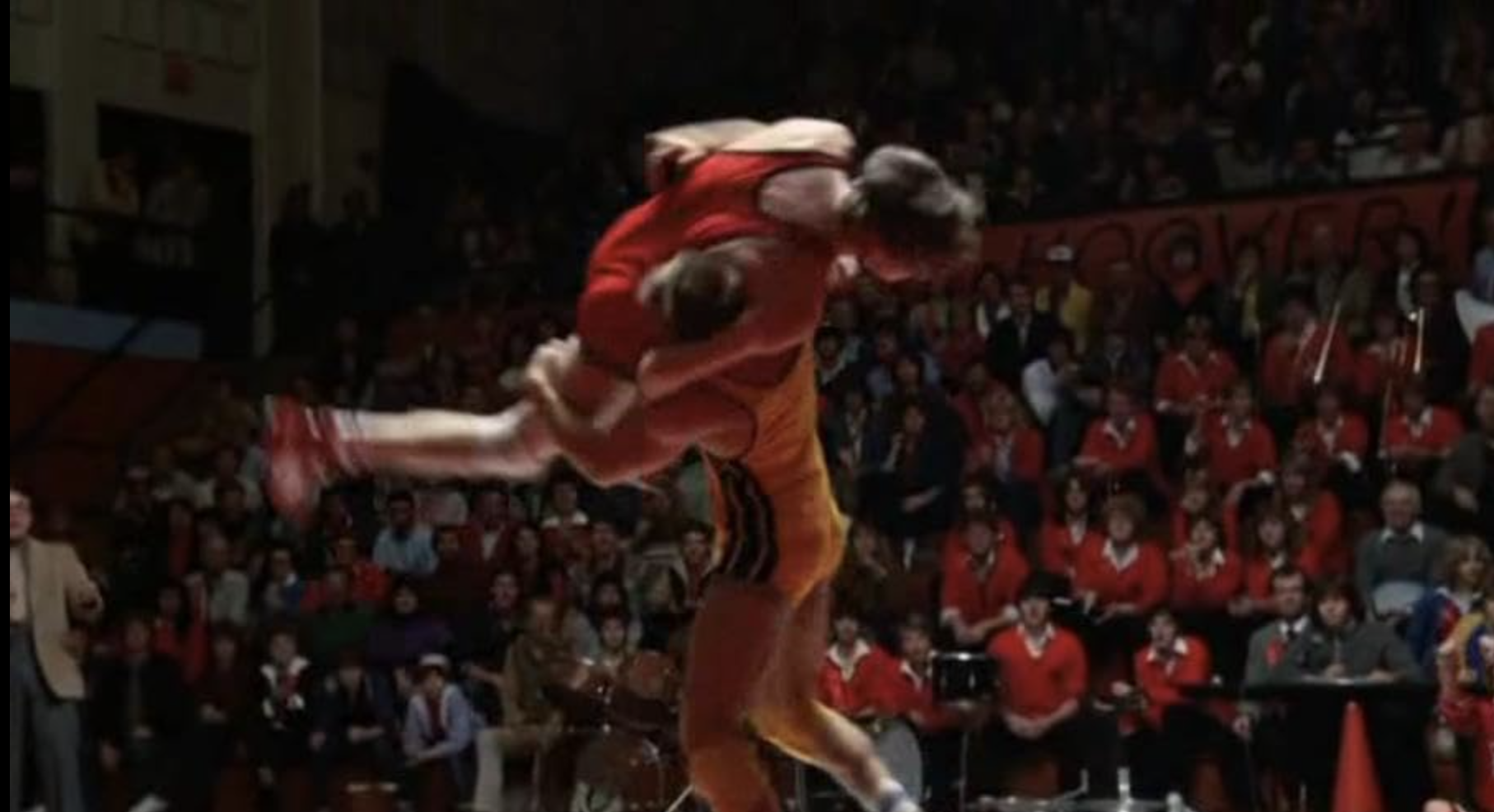
It is a movie about an eighteen-year-old kid who decides that he needs to do something extraordinary before he leaves high school. He wants to drop more than twenty pounds and challenge Brian Shute, the undefeated state wrestling champion in a lower weight class.
That sounds like the setup for another Rocky knockoff.
It isn’t.
Vision Quest is really about obsession. About first love. About figuring out who you are before the world starts telling you who you’re supposed to be.
And somewhere along the way, Matthew Modine had to become a movie star without looking like he was trying to become one.
From Terry Davis’s Novel to Spokane
Vision Quest began as Terry Davis’s 1979 young-adult novel, written in the first person from the perspective of Louden Swain. The book was admired by novelist John Irving and was grounded in the physical and emotional world of wrestling rather than the more familiar cinematic version of high-school sports.
The title itself is important.
Louden’s attempt to wrestle Shute isn’t simply about winning a match. It becomes his personal vision quest—a test that he has imposed upon himself because he believes he needs to prove something before moving into adulthood.
Hollywood took notice.
The project went through an earlier incarnation involving Friday the 13th director Sean Cunningham before Peter Guber and Jon Peters eventually became involved. Harold Becker took over as director, with Darryl Ponicsan adapting Davis’s novel for the screen. The AFI Catalog notes that Guber and Peters ultimately optioned the rights to Davis’s book after the earlier version of the project changed hands. (AFI Catalog)
The movie makes some significant changes to the novel.
The romance with Carla, played by Linda Fiorentino, becomes more prominent. And while the book’s climactic wrestling match doesn’t provide quite the same cinematic payoff, the movie takes us all the way into Louden’s showdown with Shute.
That was probably inevitable.
Movies need their endings.
Especially movies about wrestling.
Matthew Modine Didn’t Want to Be the Next Teen Idol
The most interesting thing about Vision Quest may be Matthew Modine himself.
Modine was already an intriguing young actor when the movie arrived. He had appeared in Baby It’s You, Streamers and Alan Parker’s Birdy, while 1985 also brought him Mrs. Soffel.
Suddenly, he was everywhere.
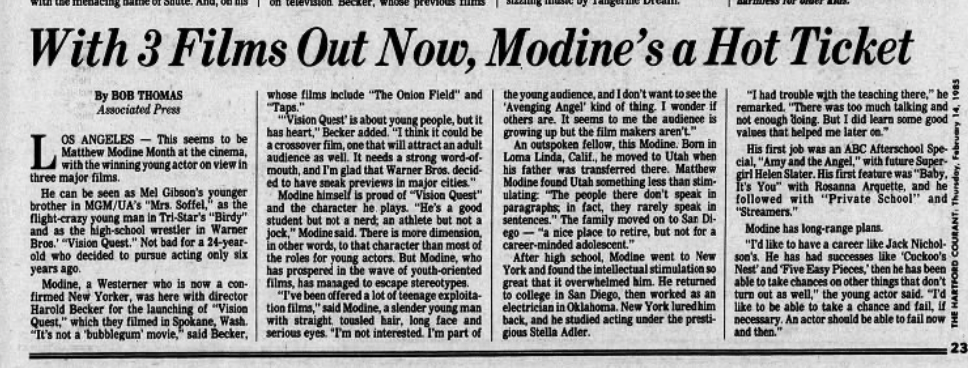
And yet Modine seemed remarkably uncomfortable with the idea that he was becoming a “movie star.”
That reluctance is part of what makes his performance as Louden work.
Modine described Louden as a good student but not a nerd, an athlete but not a stereotypical jock. In other words, he saw more dimensions in the character than were usually being offered to young actors.
That’s an important distinction.
Louden isn’t the bullied kid who discovers karate.
He isn’t the unpopular kid who gets the girl.
He isn’t even particularly interested in becoming popular.
He’s a kid who has decided that one thing matters to him so much that he’s willing to reorganize his entire life around it.
Modine understood that.
And perhaps he understood it because he wasn’t exactly a conventional teenage success story himself.
His youth had been restless and unsettled. His family moved between California and Utah. He tried football in high school and didn’t exactly turn into the next great quarterback. He briefly tried wrestling. After high school he wandered through New York, attended college in San Diego, worked as an electrician in Oklahoma and eventually studied with Stella Adler.
That makes Louden feel less like a movie character constructed in a Hollywood laboratory.
There is a little bit of Modine’s own restlessness in him.
And Modine wasn’t interested in playing Louden as some perfect young hero. He reportedly liked the fact that the character was complicated enough to escape the usual categories.
That also explains one of the movie’s most refreshing qualities.
There really aren’t any villains.
There is Shute, the terrifying wrestling champion. There is Louden’s father, who doesn’t always understand his son’s obsession. There are coaches and teachers and friends who occasionally get frustrated with him.
But nobody is twirling a mustache.
Nobody is standing around waiting to crush the kid’s dreams.
The conflict is inside Louden.
And that makes Vision Quest considerably more interesting than its sports-movie premise suggests.
Linda Fiorentino, Michael Schoeffling and a Very Young Madonna
The supporting cast is terrific.
Linda Fiorentino makes her feature-film debut as Carla, a twenty-something drifter who rents a room from Louden’s father while she tries to figure out where her own life is going. Fiorentino doesn’t play Carla as some magical older woman who exists solely to educate a teenage boy about sex and love.
She’s lost, too.
That’s the point.
Carla and Louden are both trying to figure out what comes next. They just happen to be approaching adulthood from opposite directions.
Michael Schoeffling, meanwhile, is perfect as Kuch, Louden’s friend and fellow wrestler. Schoeffling actually had a wrestling background, and the production used that experience. AFI’s production records note that he had earned a college wrestling scholarship and had a serious competitive background before becoming an actor. (AFI Catalog)
And then there’s Madonna.
Yes, that Madonna.
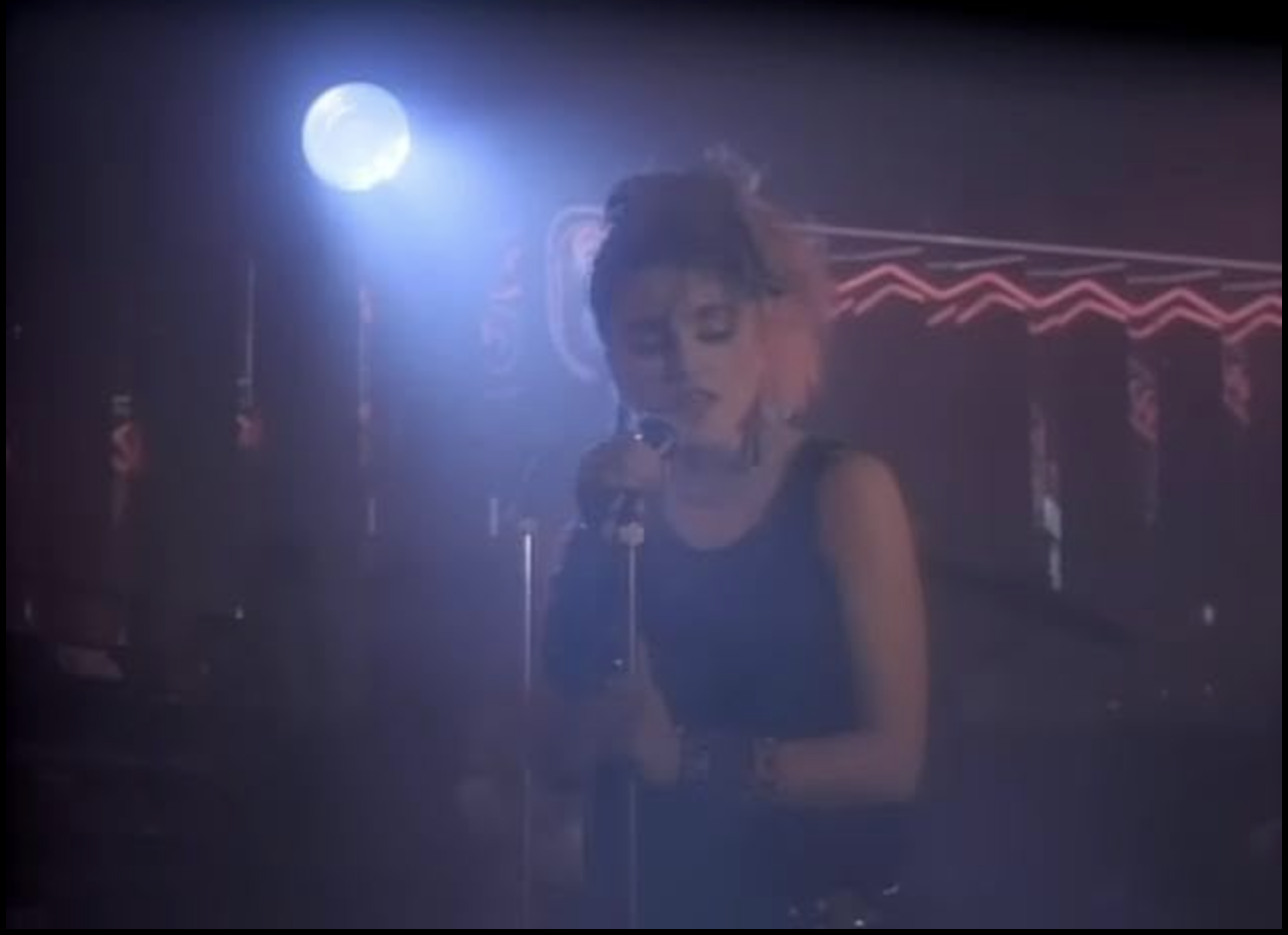
She appears briefly as a nightclub singer, performing “Crazy for You” and “Gambler.”
At the time, she wasn’t yet the gigantic cultural institution she would become.
That makes the cameo fascinating now.
It isn’t really a Madonna movie appearance. It’s a tiny piece of 1985 accidentally preserved on film.
And then “Crazy for You” exploded.
The soundtrack was released just days before the movie, and the Madonna single eventually became a No. 1 hit. The film was subsequently retitled Crazy for You in several international markets, including the United Kingdom and Australia, as distributors tried to capitalize on Madonna’s rapidly expanding fame. (Wikipedia)
Suddenly, a movie about a teenage wrestler in Spokane had become part of the Madonna phenomenon.
Only in the 1980s.
Making Wrestling Look Like Wrestling
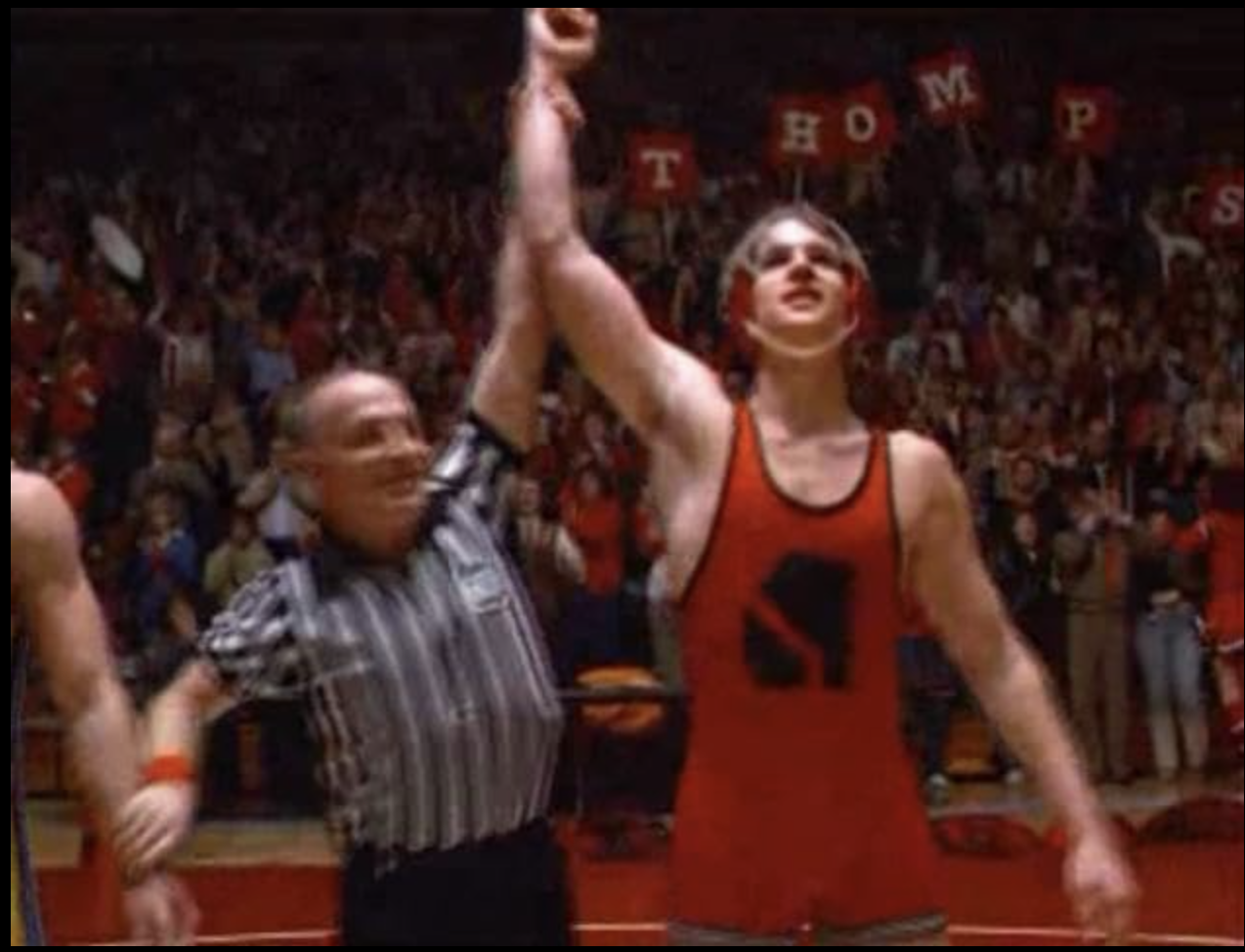
One of the things I love about Vision Quest is how physical it feels.
The production went to Spokane, Washington, and actually made the city part of the movie rather than simply using it as a generic backdrop.
Rogers High School became Thompson High. Other local schools provided interiors and gym locations. Madonna’s nightclub scene was filmed at Spokane’s Big Foot Tavern. The climactic wrestling match was shot at Spokane Falls Community College. (Wikipedia)
More than 2,000 Spokane residents were used as background performers.
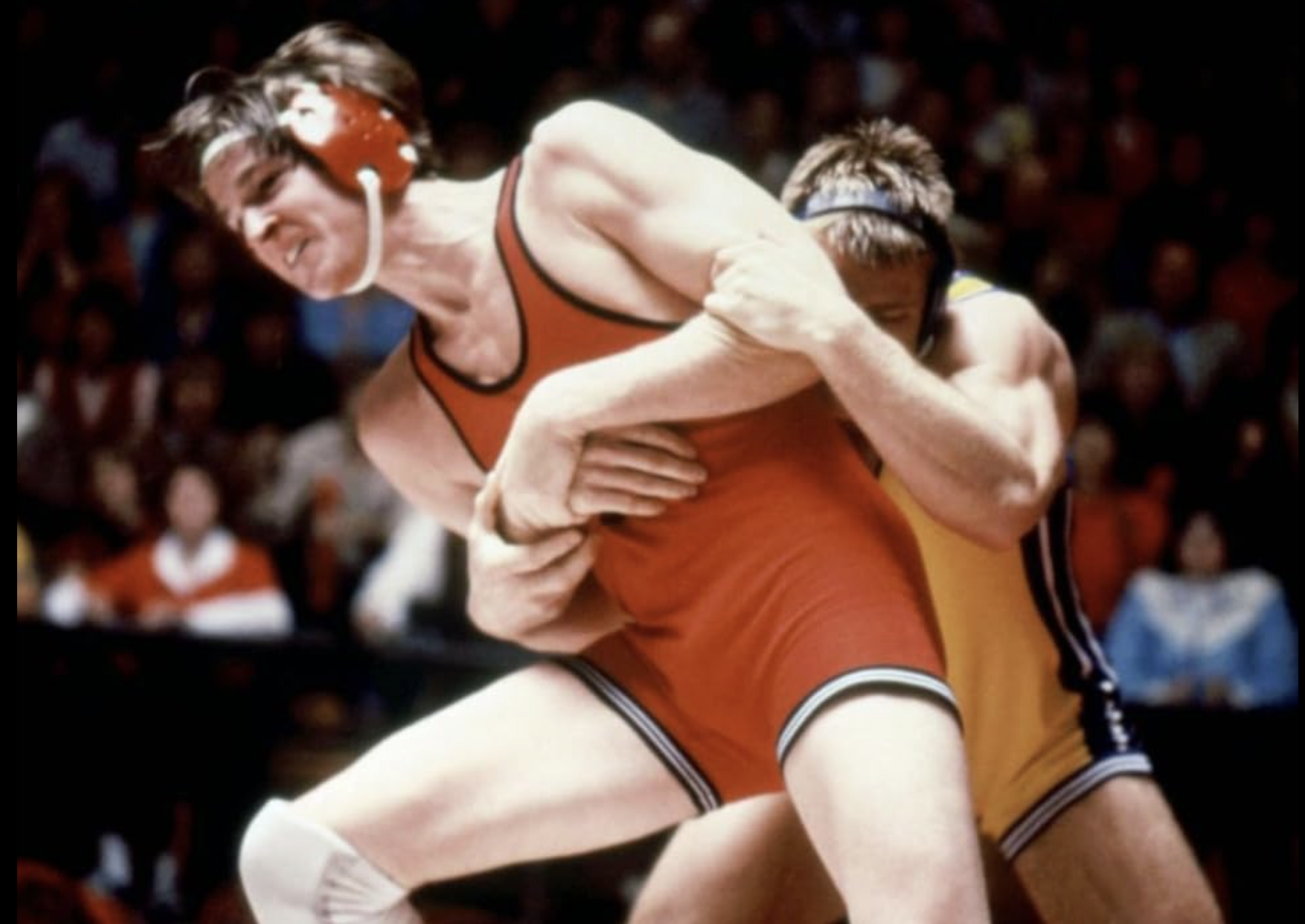
And the wrestling wasn’t something the filmmakers simply figured they could fake.
Matthew Modine trained extensively before filming. AFI records indicate that fifty local high-school wrestlers were selected and trained with Modine for eight weeks before production. (AFI Catalog)
That preparation shows.
There is an exhaustion to Louden’s weight-cutting regimen that feels uncomfortable rather than inspirational.
He’s running.
He’s lifting.
He’s starving himself.
He’s pushing his body toward a number on a scale because he has convinced himself that this particular achievement will somehow make his life make sense.
That’s what separates Vision Quest from a lot of the inspirational sports movies of the period.
The movie doesn’t completely endorse Louden’s obsession.
It understands it.
There’s a difference.
The Soundtrack Became Bigger Than the Movie
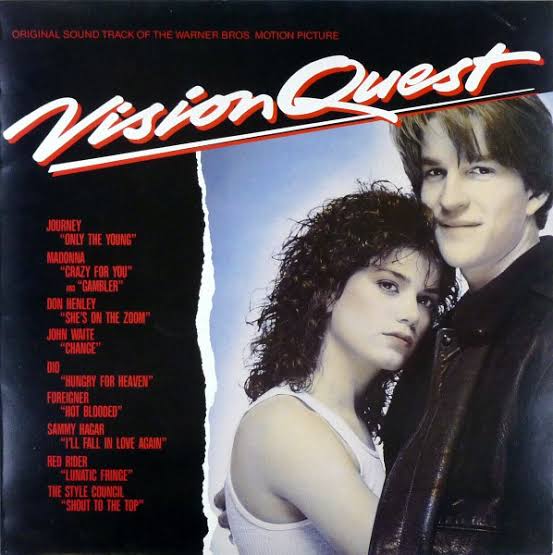
The other thing Vision Quest had going for it was the soundtrack.
And what a soundtrack.
Journey’s “Only the Young.”
John Waite’s “Change.”
The Style Council’s “Shout to the Top!”
Red Rider’s “Lunatic Fringe.”
Foreigner’s “Hot Blooded.”
Madonna’s “Gambler.”
And, of course, “Crazy for You.”
The soundtrack was released by Geffen Records on February 12, 1985, three days before the movie opened. (Wikipedia)
There is a temptation today to look at this collection of songs and think, Of course they were going to put all of that in an ’80s teen movie.
But that’s exactly why it works.
The music doesn’t just decorate Vision Quest.
It dates it.
You can almost smell the decade coming through the speakers.
Interestingly, the film’s original score was provided by Tangerine Dream, with Owen Roizman handling cinematography. Roizman’s photography gives Spokane a cold, lived-in quality that helps keep the movie grounded even when the soundtrack is practically screaming “1985!” at us. (IMDbPro)
It is an unusual combination.
A very sincere coming-of-age story wrapped in an extremely commercial soundtrack.
The Movie That Didn’t Need a Villain
This is where Vision Quest separates itself from the teen-movie pack.
Louden isn’t trying to defeat the world.
He’s trying to understand himself.
His relationship with Carla is part of that. So is his friendship with Kuch. So is his relationship with his father. So is the strange, almost philosophical intensity with which he approaches wrestling.
The movie understands that becoming an adult isn’t necessarily about winning.
Sometimes it’s about discovering why you wanted to win in the first place.
That is a much more complicated idea than the average inspirational sports movie gives us.
And it makes the final match more interesting.
Yes, the movie gives us the big cinematic payoff. Louden gets his shot at Shute.
But the match isn’t really the destination.
It’s the culmination of everything Louden has been doing to himself.
The final narration makes that explicit. Louden looks back on that period of his life and realizes that his “vision quest” wasn’t simply about wrestling Shute.
It was about living.
And loving.
And realizing that there isn’t an endless supply of tomorrows waiting for us.
A Modest Hit That Found a Second Life
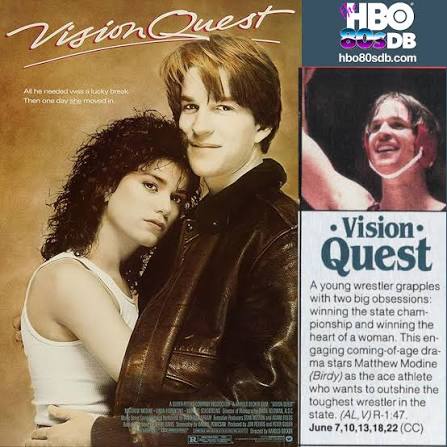
Vision Quest wasn’t a blockbuster.
It opened against the enormous machinery of the 1985 movie year and ultimately earned roughly $13 million domestically. Box Office Mojo lists its final domestic gross at $12,993,175. (Box Office Mojo)
For comparison, The Breakfast Club would ultimately approach $46 million domestically.
Vision Quest was never going to compete with the Brat Pack phenomenon on those terms.
But that’s not really the interesting story.
The interesting story is what happened afterward.
The movie developed a life on home video, television and among wrestling fans. Its reputation grew slowly, helped by the fact that the film captures something that many sports movies don’t: the peculiar intimacy of an individual sport.
Wrestling is brutal because there is nowhere to hide.
There is no quarterback to blame.
No teammate can make the tackle for you.
When you’re out there, you’re alone.
That makes Louden’s quest feel almost existential.
And it probably explains why the movie has continued to resonate with wrestlers and coaches decades after its theatrical run.
Matthew Modine’s career certainly benefited from the film. His performance helped demonstrate that he could carry a movie, and his next major step would be Stanley Kubrick’s Full Metal Jacket. Modine has since discussed using scenes from Vision Quest as part of the material he presented when auditioning for Kubrick. (Beckeresque)
Not bad for a movie that opened quietly in February 1985.
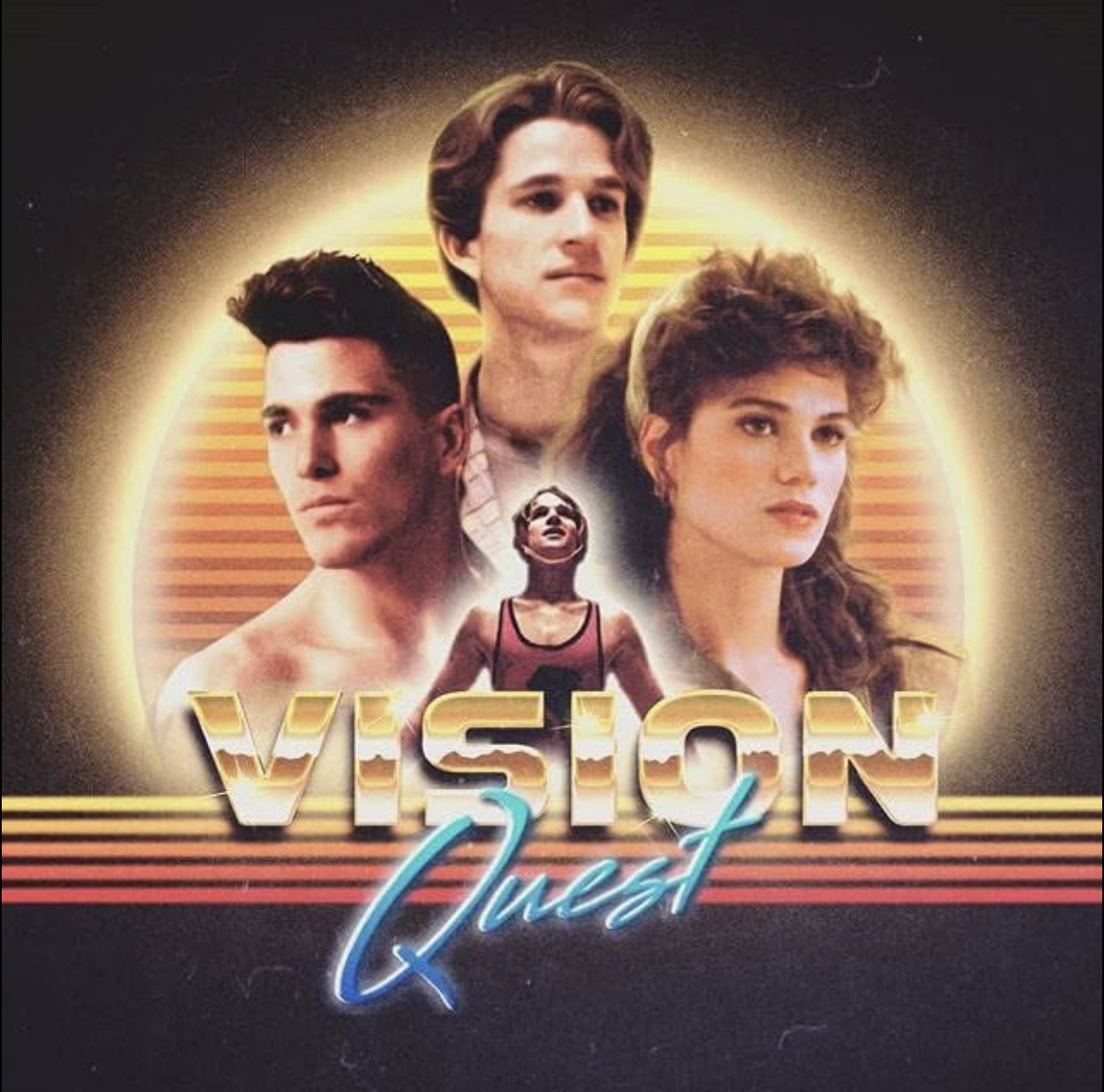
Looking Back at Vision Quest
There’s a tendency to remember the 1980s through its biggest movies.
That’s understandable.
The decade gave us enormous cultural monuments.
The Breakfast Club.
Back to the Future.
Top Gun.
The Karate Kid.
Ferris Bueller’s Day Off.
But the 1980s were also filled with movies that were trying to figure out how to be something slightly different.
Vision Quest belongs in that category.
It’s a sports movie, but it isn’t really about sports.
It’s a teen movie, but it isn’t really about being a teenager.
It’s a romance, but neither of its lovers has any idea what they’re doing.
And it’s a Madonna movie only if you’re willing to define “Madonna movie” as “a movie in which Madonna happens to sing for a couple of minutes.”
What makes Vision Quest endure is its sincerity.
It doesn’t have to make Louden the coolest kid in school.
It doesn’t have to make Shute evil.
It doesn’t have to make Carla his perfect soulmate.
It doesn’t even have to pretend that winning a wrestling match will magically solve everything.
Instead, it gives us a kid who desperately wants his life to mean something.
And maybe that’s why the movie still works.
Because eventually every one of us has our own version of that wrestling match.
We pick a mountain.
We decide we’re going to climb it.
We convince ourselves that reaching the top will change everything.
And then, if we’re lucky, we discover that the real vision quest was everything that happened while we were trying to get there.
That’s a pretty good message for a teen movie.
Even one with Madonna singing in the corner.
Revisiting Vision Quest (1985), Harold Becker’s unusual coming-of-age wrestling drama starring Matthew Modine, Linda Fiorentino and a young Madonna.
Vocal tags: Vision Quest · Matthew Modine · 1980s Movies · 80s Movies · Wrestling Movies · Teen Movies · Madonna · Linda Fiorentino · Movies of the 80s · Coming of Age Movies
About the Creator
Movies of the 80s
We love the 1980s. Everything on this page is all about movies of the 1980s. Starting in 1980 and working our way the decade, we are preserving the stories and movies of the greatest decade, the 80s. https://www.youtube.com/@Moviesofthe80s
Enjoyed the story? Support the Creator.
Subscribe for free to receive all their stories in your feed.
Comments
There are no comments for this story
Be the first to respond and start the conversation.