
'Uglies' Movie Review
A Lackluster Adaptation of a Once Groundbreaking YA Dystopia
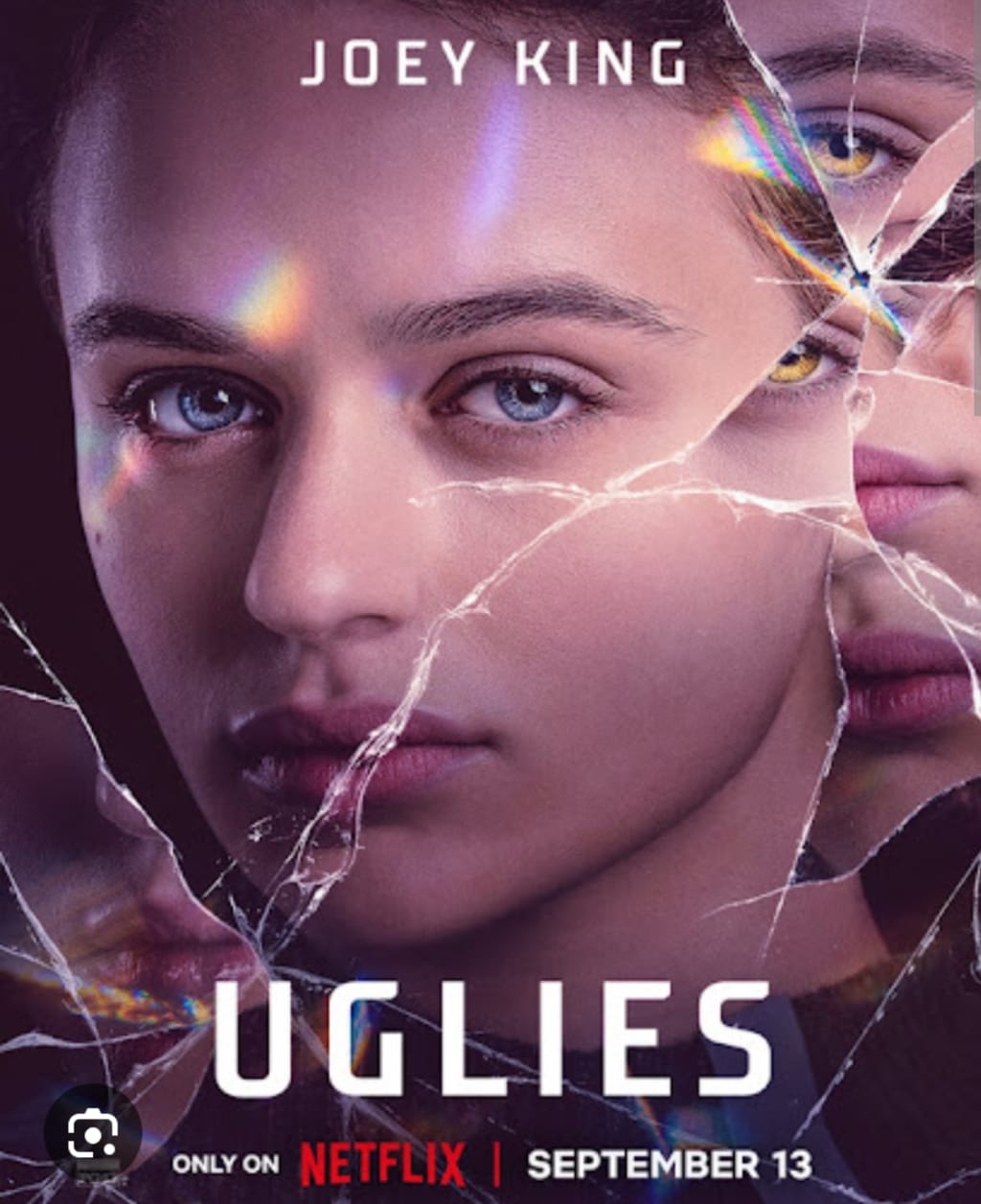
Netflix's latest foray into the realm of YA dystopia, Uglies, directed by McG, is a visually sleek but thematically shallow adaptation of Scott Westerfeld’s popular 2005 novel. Despite strong performances from its young cast, including Joey King as protagonist Tally Youngblood, the film struggles to find relevance in a world where conversations around beauty and social conformity have already evolved well beyond the film’s core message.
In a future where teenagers undergo a mandatory surgery at age 16 to become "Pretty," society has ostensibly solved the issue of inequality by making everyone uniformly attractive. This utopian facade is immediately familiar to fans of the genre, with Uglies borrowing heavily from the likes of The Hunger Games and Divergent. King’s Tally, like many YA heroines before her, is a resourceful but reluctant chosen one, torn between conforming to society’s expectations and uncovering the truth about the world she lives in.
The film opens with promise, as Tally narrates her world’s history, where society crumbled due to conflict between the "naturally beautiful" and the "unattractive." The post-apocalyptic setting, complete with slick CGI landscapes and "pretties" sporting unnervingly perfect features, is aesthetically polished, but the film fails to offer a fresh take on these well-worn dystopian tropes. The world-building feels rushed, and instead of drawing viewers into the universe, the story opts for surface-level exposition, leaving many questions about the society's deeper workings frustratingly unanswered.
Joey King does her best with the material, bringing depth to a character who is grappling with self-worth in a world that dictates beauty as the ultimate virtue. Her dynamic with her best friend, Peris (Chase Stokes), offers fleeting moments of emotional gravity, but the film quickly shifts its focus to Tally's internal struggle with the looming surgery and the decision to either embrace or reject it.
While the Uglies novel felt like a prescient critique of beauty standards when it was released nearly two decades ago, the film adaptation feels woefully outdated. In an era where social media constantly reshapes our understanding of identity, conformity, and beauty, the film’s message about the dangers of valuing appearance over individuality feels simplistic. The dialogue, particularly in moments of supposed revelation, lacks subtlety. Lines like “I didn’t know the cost of being pretty was your mind” are delivered with all the weight of a public service announcement, making it difficult to take the film’s themes seriously.
The film’s biggest misstep, however, lies in its failure to fully explore the darker, Orwellian undertones of its world. Dr. Cable, played by a miscast Laverne Cox, is supposed to represent the cold, calculating villain behind the prettification process, but her character lacks the depth and menace needed to make her a memorable antagonist. Similarly, the film’s climactic showdown between Tally and the forces behind the "Pretty" system is predictable and devoid of any real stakes, with a sequel clearly in mind rather than a satisfying conclusion.
Despite its shortcomings, Uglies is not without moments of entertainment. The camaraderie between Tally and Shay (Brianne Tju), who introduces her to the rebellious group known as “The Smoke,” provides some of the film’s more engaging scenes, even if their rebellion against the system feels half-baked. The film also benefits from its visual design, with vibrant, otherworldly cityscapes and costume choices that cleverly highlight the unsettling uniformity of the prettified society.
Ultimately, Netflix’s Uglies is a missed opportunity. It rehashes familiar YA tropes without offering anything new to say about beauty, conformity, or rebellion. For fans of the novel, there may be enough here to warrant a watch, but for those seeking a fresh, thought-provoking dystopian adventure, Uglies is more style than substance—an Instagram-filtered version of a story that needed much more depth.
About the Creator
Enjoyed the story? Support the Creator.
Subscribe for free to receive all their stories in your feed.
Comments
There are no comments for this story
Be the first to respond and start the conversation.