
Uefa doubles down on Fifa boycott but holds greater weapon to unseat Gianni Infantino
Growing tensions between UEFA and FIFA reveal a deeper power struggle over football governance, financial control, and the future leadership of the global game.
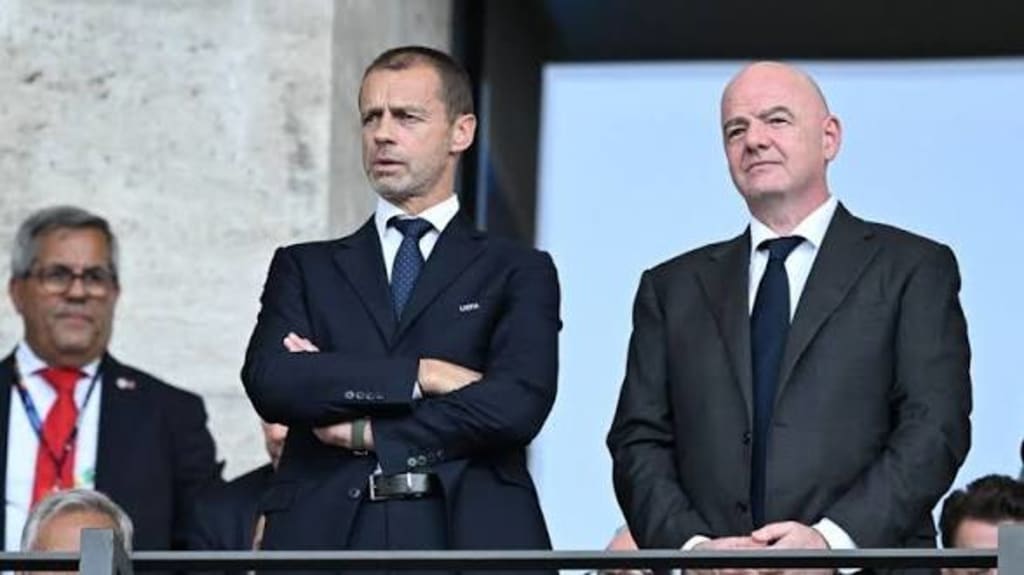
The relationship between European football’s governing body and FIFA has entered another period of uncertainty as UEFA strengthens its opposition to certain FIFA decisions while holding significant influence that could reshape the balance of power in world football. The growing dispute highlights a wider battle over leadership, governance, commercial interests, and the direction of international football under FIFA president Gianni Infantino.
While UEFA has stopped short of launching a direct campaign to remove Infantino, European officials possess considerable political and financial influence that could become a powerful tool if tensions continue to rise. With Europe representing the strongest commercial market in global football, UEFA’s position carries enormous weight in any debate over FIFA’s future.
Rising Tensions Between UEFA and FIFA
For years, UEFA and FIFA have cooperated on major football issues, including international competitions, player regulations, and global development programs. However, disagreements have increasingly emerged over FIFA’s expansion plans, tournament scheduling, financial strategies, and decision-making processes.
European clubs and national associations have expressed concerns that FIFA’s growing calendar of international competitions could place excessive pressure on players while reducing the importance of domestic leagues and UEFA competitions.
The debate reflects a fundamental disagreement about how football should develop in the modern era. FIFA has emphasized global expansion and increasing opportunities for teams from different regions, while UEFA has focused on protecting the competitive quality and commercial value of European football.
UEFA’s Influence in World Football
UEFA’s power comes from several factors, including its financial strength, influential member associations, and the popularity of European competitions.
The UEFA Champions League is widely considered the most commercially valuable club competition in world football, attracting billions of viewers and generating significant revenue. Europe’s top clubs also include some of the most powerful sporting organizations globally, giving UEFA substantial influence over football economics.
Because of this position, UEFA has the ability to shape discussions within FIFA. Support from European football associations is often crucial in international elections and major policy decisions.
However, UEFA must also balance confrontation with cooperation because European teams and players continue to rely on FIFA competitions such as the World Cup.
The FIFA Leadership Question
Gianni Infantino has led FIFA since 2016 and has overseen major changes, including expansion of the FIFA World Cup, increased financial distributions to member associations, and a broader global development strategy.
Supporters argue that Infantino has strengthened FIFA’s financial position and expanded football opportunities worldwide. Critics, however, have questioned aspects of FIFA’s governance model and expressed concerns about transparency, decision-making, and the increasing number of international matches.
The possibility of challenging FIFA leadership remains complicated. Removing or replacing a FIFA president requires significant political support from member associations across different continents.
UEFA alone cannot determine FIFA’s leadership, but its influence could become a decisive factor if a broader coalition for change develops.
The Power of a Potential UEFA Challenge
One of UEFA’s strongest weapons is its ability to influence FIFA elections and policy debates.
European football associations represent a powerful voting bloc within FIFA’s congress. If UEFA were to unite with other confederations dissatisfied with FIFA leadership, it could create substantial political pressure.
Additionally, UEFA’s control over major competitions gives it commercial leverage. European clubs generate a large portion of global football revenue, and any disagreement involving club participation, scheduling, or tournament structures could have significant consequences.
However, using this influence carries risks. A public conflict between FIFA and UEFA could create instability within football, affecting players, fans, sponsors, and broadcasters.
Concerns Over Competition Expansion
One of the major disagreements between UEFA and FIFA involves the expansion of international competitions.
FIFA has pursued plans to increase the number of teams participating in major tournaments, arguing that expansion creates more opportunities for developing football nations and increases global engagement.
UEFA and some European stakeholders have raised concerns that constant expansion could weaken competition quality and increase player workload.
Elite footballers already face demanding schedules involving domestic leagues, European competitions, international matches, and commercial commitments. Additional tournaments could increase injury risks and reduce recovery time.
The debate has become a symbol of a larger question: Should football prioritize global growth or protect the traditional competitive structure that made the sport commercially successful?
Financial and Commercial Battle
Behind many disagreements between football organizations lies the issue of money.
Broadcast rights, sponsorship deals, ticket sales, and commercial partnerships generate enormous revenue. Control over competition formats and calendars directly affects financial opportunities for governing bodies, clubs, and investors.
UEFA’s success in developing European competitions has strengthened its position, while FIFA continues seeking new revenue streams through expanded tournaments and global partnerships.
The struggle is not only about sporting philosophy but also about who controls football’s most valuable commercial assets.
Possible Future Scenarios
The relationship between UEFA and FIFA could develop in several ways.
One possibility is renewed cooperation, with both organizations reaching agreements over competition calendars, player welfare, and financial distribution.
Another possibility is continued political tension, with UEFA using its influence to challenge FIFA policies without attempting a direct leadership change.
A more dramatic scenario could involve a coordinated effort by multiple football confederations to seek new FIFA leadership. However, such a move would require significant international support and careful political planning.
The Future of Global Football Governance
The dispute between UEFA and FIFA represents a larger conversation about how football should be managed in the modern era.
The sport has grown into a global industry worth billions of dollars, but its traditional governance structures are facing increasing pressure from clubs, players, supporters, and governments.
UEFA’s resistance demonstrates that football’s most powerful organizations are no longer willing to accept major decisions without debate. At the same time, FIFA’s global approach reflects the ambitions of countries seeking greater involvement in the international game.
As football continues to evolve, the balance between global expansion and traditional power centers will remain one of the sport’s biggest challenges.
Conclusion
UEFA’s renewed opposition to FIFA policies has exposed deep divisions within football’s leadership structure. While Gianni Infantino remains firmly positioned as FIFA president, UEFA possesses significant influence that could become a powerful force in future governance battles.
The coming years may determine whether FIFA and UEFA can find common ground or whether the rivalry develops into a major political struggle for control of world football. Regardless of the outcome, one thing is clear: the future direction of the global game will depend heavily on how these powerful institutions manage their competing visions for football’s next generation.
About the Creator
Enjoyed the story? Support the Creator.
Subscribe for free to receive all their stories in your feed.
Comments
There are no comments for this story
Be the first to respond and start the conversation.