
Things I Have Learned From my 12th Rewatch of 'Game of Thrones'
"If you think this has a happy ending, you haven't been paying attention"

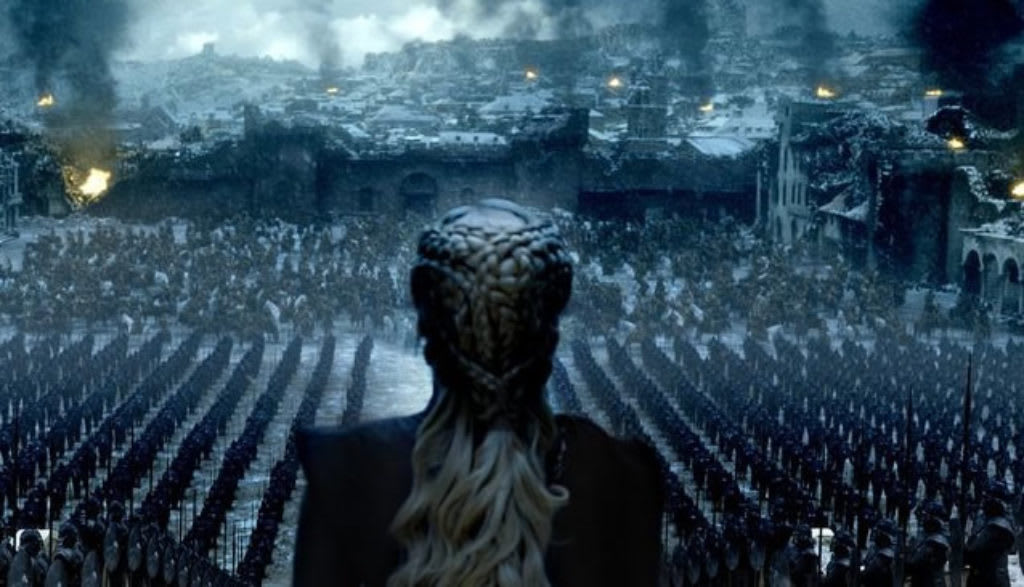
You love it. You hate it. You binged it. You’ve never watched it. You’ve rewatched it. You at least know it exists.
Whichever camp you are in, it cannot be denied that Game of Thrones captivated a generation.
For almost a decade, it dominated television, social media and every Monday morning conversation in the workplace. People who had never shown the slightest interest in fantasy suddenly had strong opinions about dragons, dynastic succession and whether it was acceptable to fancy your own aunt if you did not know she was your aunt at the time.
It was an extraordinary cultural moment.
Then came the final season.
To say people were disappointed would be like saying King’s Landing experienced a small fire. Viewers were furious. Character arcs appeared to collapse. Geography ceased to matter. Years of prophecies, revelations and ominous conversations seemed to evaporate. Daenerys destroyed the city she had crossed the world to claim, Bran became king because he apparently had the best story, and Jon Snow was sent back to the Wall to serve in an organisation that no longer appeared to have a purpose.
People swore they would never watch it again.
I have now watched it twelve times.
Clearly, I am a woman of principle.
With every rewatch, I expect to become immune to it. I know when the deaths are coming. I know which weddings should be politely declined. I know not to become emotionally attached to a direwolf. I know that if somebody begins a sentence with “When I am king,” there is an excellent chance they will not live long enough to complete their five-year plan.
Yet I still become completely absorbed.
Twelve rewatches have not persuaded me that the ending was good. They have, however, taught me that Game of Thrones was always far more than its destination. It was a vast, messy and frequently magnificent journey—and some of the things it does best become clearer when you already know where the road leads.
Ned Stark Was Not the Hero—He Was the Warning
The first time you watch Game of Thrones, Ned Stark feels like the protagonist. He is honourable, dependable and played by Sean Bean, which should have been our first warning.
We assume the story will follow him as he uncovers the truth about the royal children, protects his family and defeats the corrupt people surrounding the throne. That is how stories are supposed to work. The good man discovers the conspiracy, exposes the villains and restores order.
Instead, Ned announces everything he knows to the people most likely to kill him.
On a first watch, his death is shocking. On a twelfth, it feels like watching someone walk towards an enormous sign marked “CERTAIN DEATH” while insisting that honour requires him to ignore it.
Ned is not foolish, but he is completely unsuited to King’s Landing. He believes other people will obey the same moral rules he does. He gives Cersei the opportunity to escape because he cannot bear the thought of her children being harmed. It is compassionate, decent and disastrous.
His death teaches us the central rule of the series: being morally right does not make you politically safe.
It also creates almost every major conflict that follows. Ned’s execution scatters the Stark children across the world, begins a war, helps destroy the Baratheon regime and leaves a wound in the North that never properly heals.
The apparent hero dies before the first season ends, but his influence survives almost everyone who arranged his death. That may be the closest Game of Thrones comes to suggesting honour has value. It will not necessarily save you, but people may continue fighting for what you represented long after the cleverer people have destroyed one another.
The Starks Are Terrible at Taking Advice
The Stark family motto may be “Winter is Coming,” but it should probably be “That Sounds Sensible, So We Won’t Do It.”
Ned is warned about King’s Landing. He goes anyway.
Catelyn is told not to arrest Tyrion. She does it in a public inn and accidentally accelerates a war.
Robb is warned that breaking his marriage agreement with Walder Frey will have consequences. He breaks it and then returns to the Twins with his mother, his wife, his unborn child and most of his important supporters.
Jon is repeatedly warned that the Night’s Watch will not accept his decisions. He continues making those decisions without properly explaining himself and is surprised when he is stabbed.
Sansa may be the only Stark who eventually learns that good intentions are not armour. Unfortunately, she has to endure years of abuse, manipulation and humiliation before anyone accepts that her caution might be useful.
The Starks spend much of the series making emotionally understandable but strategically catastrophic choices. We love them because they are loyal, passionate and recognisably human. We also spend an extraordinary amount of time shouting at them through the television.
Sansa’s Story Changes When You Stop Expecting Her to Be Arya
On my first watch, I found early Sansa frustrating. She wants to marry Joffrey, become queen and live inside the songs she has been taught since childhood. Beside Arya—rebellious, funny, sword-wielding Arya—Sansa can appear passive and naïve.
Rewatching the series makes that judgement feel deeply unfair.
Sansa is a child whose entire understanding of the world has been constructed through stories of handsome princes, noble knights and beautiful queens. She has been raised to believe that making a good marriage is her purpose. Then she is taken to court and discovers that the songs have lied.
She survives without dragons, magical assassins or combat training. Her weapons are courtesy, observation and the ability to give powerful people what they want to hear. When she tells Joffrey that her loyalty belongs to him, we know she despises him. When she navigates conversations with Cersei, Littlefinger and Ramsay, every carefully chosen word becomes an act of survival.
Her growth is quieter than Arya’s, but it is no less significant.
By the end, Sansa understands something most of the contenders for the Iron Throne never learn: independence may be more valuable than power over other people. She does not want to rule the Seven Kingdoms. She wants the North to be free from them.
I may dislike how hurriedly the final seasons deliver parts of her development, but Sansa herself improves with every rewatch.
Cersei Is Usually Telling Us Exactly Who She Is
Cersei lies constantly, but she is also one of the most brutally honest characters in the series.
She tells Ned that when you play the game of thrones, you win or you die. She tells Sansa that the more people you love, the weaker you are. She tells anyone who will listen that she will burn the world to protect her children.
Then she proceeds to prove herself right, repeatedly and at great cost to everyone around her.
Cersei is not a secret mastermind. Many of her decisions are impulsive, short-sighted and fuelled by resentment. She creates enemies faster than she destroys them. She arms the Faith Militant, apparently failing to consider that a group of religious extremists might also object to her own behaviour. She destroys the Sept and eliminates many immediate threats, but in doing so kills innocent people, causes Tommen’s suicide and ensures that her last remaining child dies because of her choices.
She loves her children, but her love is possessive and destructive. She does not protect them by becoming kinder or safer. She attempts to make herself so powerful that nobody can touch them, creating the danger that consumes them in the process.
Lena Headey communicates entire political strategies with one raised eyebrow and a glass of wine. The fact that she never received an Emmy for playing Cersei remains one of the great crimes of Westeros—and ours.
Tyrion Was Cleverer When the Writing Was Cleverer
Early Tyrion is magnificent.
He survives by understanding what people want, testing their loyalty and using their weaknesses against them. He identifies Cersei’s informant by giving Pycelle, Littlefinger and Varys different versions of the same plan. He prepares King’s Landing for Stannis’s attack when almost everyone else is panicking, drinking or abusing the population. His conversations with Varys are battles conducted through smiles.
Later Tyrion appears to survive mainly by telling everyone that he drinks and knows things.
The decline in Tyrion’s intelligence is one of the clearest signs of the wider decline in the writing. Once the series moves beyond George R. R. Martin’s published material, Tyrion repeatedly gives Daenerys advice that fails. His plans are predictable, his enemies outmanoeuvre him and his faith in Cersei continues long after any sensible person would have stopped trusting her.
It is not impossible that Tyrion would make mistakes. He is traumatised, isolated and struggling to reconcile his loyalty to Daenerys with his horror of violence. That could have been fascinating.
But the series does not always explore why his judgement is deteriorating. It simply keeps insisting he is intelligent while allowing him to make increasingly inexplicable decisions.
Rewatching reminds me how much I miss the Tyrion who could control a room without needing the script to tell us he was the cleverest person inside it.
The Best Scenes Are Usually Just People Talking
Game of Thrones became famous for battles, dragons and shocking deaths, but many of its greatest scenes involve two people sitting in a room.
Robert and Cersei discussing whether their marriage ever had a chance.
Tyrion demanding a trial by combat.
Jaime confessing to Brienne why he killed the Mad King.
Olenna Tyrell calmly admitting that she arranged Joffrey’s murder.
Varys and Littlefinger trading threats beside the Iron Throne.
Tywin skinning a stag while explaining family legacy.
Arya serving as Tywin’s cupbearer while both of them slowly realise the other is more interesting than expected.
These scenes work because the dialogue is doing more than delivering information. Every sentence contains a negotiation. Characters reveal themselves while trying not to reveal too much. Power moves back and forth without anybody drawing a sword.
In the later seasons, characters begin travelling enormous distances in a single episode while exchanging dialogue designed primarily to move the plot towards its next explosion. The spectacle becomes larger as the conversations become smaller.
The dragons are impressive, but they were never the only reason we cared.
Jaime’s Ending Was Not the Problem—The Execution Was
Jaime Lannister has one of the most compelling arcs in the series. He begins as the man who pushes a child from a tower and becomes someone capable of loyalty, vulnerability and genuine courage. His relationship with Brienne forces him to confront the difference between being called honourable and behaving honourably.
Then, near the end, he leaves Brienne and returns to Cersei.
Many viewers saw this as the destruction of his redemption arc. I did too. Rewatching has made me slightly more forgiving of the idea, though not the way it was handled.
Recovery is not a straight line. People return to harmful relationships. They choose familiarity over freedom. Jaime has spent his entire life defining himself through Cersei, and escaping that bond may never have been as simple as riding north and sleeping with someone kinder.
His return could have been tragic rather than meaningless: a man who has changed but cannot quite believe he deserves to remain changed.
The problem is that the final season rushes the decision. Jaime and Brienne’s relationship changes overnight, he abandons her almost immediately and his internal conflict is compressed into a handful of scenes. He claims he never cared about innocent people, contradicting the confession that transformed our understanding of him in the first place.
The destination could have worked. The path to it needed far more time.
This is true of almost everything in the final season.
Daenerys’s Ending Did Not Come From Nowhere—but It Came Far Too Quickly
Daenerys has always been capable of cruelty.
She watches her brother die without looking away. She burns Mirri Maz Duur alive. She crucifies the masters of Meereen. She executes people who refuse to submit and increasingly treats disagreement as betrayal.
Her violence is initially directed at people the audience considers evil, so we cheer. When she says she will take what is hers with fire and blood, it sounds empowering because the people standing in her way are slavers, warlocks and tyrants.
Rewatching with knowledge of the ending makes the warnings more visible.
But foreshadowing is not character development.
The fact that Daenerys has threatened to burn cities does not automatically make her decision to massacre civilians psychologically convincing. The final season rapidly removes everyone who might stabilise her. Jorah dies. Missandei is executed. Two of her dragons are killed. Jon withdraws from her emotionally. Varys betrays her. Tyrion repeatedly fails her. Westeros does not welcome her as the liberator she believed she would be.
These events provide the foundations for a tragic collapse. What they do not provide is enough time.
Daenerys goes from risking everything to defend humanity at Winterfell to burning terrified families in King’s Landing within a handful of episodes. The bells ring. The city surrenders. She looks towards the Red Keep and makes the choice that defines her forever.
The series needed to let us live inside that transformation. Instead, it seems to use grief and hereditary madness as shortcuts. A woman who has spent years declaring herself a breaker of chains becomes a mass murderer because the plot has reached the point where Jon must kill her.
The tragedy is not that the ending was completely unsupported. It is that a potentially extraordinary ending was reduced to a sudden turn.
The Night King Really Should Have Mattered More
For seven seasons, Game of Thrones reminds us that political conflict is a distraction. Kings and queens fight over a chair while death marches south. “Winter is Coming” is not merely a weather warning. It is the promise that every petty human rivalry will become irrelevant when the true enemy arrives.
Then Arya kills the Night King halfway through the final season and everyone returns to arguing about the chair.
Arya delivering the fatal blow is not my problem. She is a trained assassin, and the moment itself is thrilling. My problem is that the White Walkers bring no lasting revelation with them. Their symbols remain unexplained. The Night King’s motivations are reduced to destroying memory. Jon’s resurrection has no direct bearing on defeating him. Bran’s abilities contribute remarkably little beyond providing live updates from a flock of ravens.
The great existential threat lasts one very dark night.
On every rewatch, the White Walker scenes retain their atmosphere. The opening beyond the Wall is still unnerving. Hardhome is still terrifying. The Army of the Dead remains one of the show’s most powerful images.
Knowing how abruptly that story ends, however, drains some of its menace. Winter was coming. It arrived, stayed briefly and apparently left before breakfast.
Theon Has One of the Most Complete Stories
Theon Greyjoy is arrogant, insecure, cruel, pathetic, brave and deeply damaged.
He betrays the Starks because he wants to prove he belongs to the Greyjoys, only to discover that he is not fully accepted by either family. His need for identity drives him towards atrocities, and his punishment under Ramsay is so extreme that even viewers who despised him begin to feel horror rather than satisfaction.
His recovery is slow. He does not become brave in a single triumphant moment. He remains frightened. He runs from Euron’s attack and leaves Yara behind. Then he chooses to rescue her. He seeks Sansa’s forgiveness. He returns to Winterfell and dies defending Bran in the home he once betrayed.
Bran tells him he is a good man, giving Theon the forgiveness he has spent years believing he does not deserve.
Unlike many of the final character arcs, Theon’s ending feels earned. He cannot undo what he did, but he can decide what he does next. His redemption does not erase his crimes. It gives his final choice meaning.
Twelve rewatches later, his story may be the one that affects me most.
The Music Was Telling the Story Too
Ramin Djawadi’s score is not simply background music. It is one of the show’s most reliable storytellers.
“The Rains of Castamere” becomes a threat long before the first knife is drawn at the Red Wedding. “Light of the Seven” introduces piano into the score as Cersei’s plan unfolds beneath the Sept, creating something that feels both sacred and horrifying. “The Night King” gives the battle at Winterfell a mournful inevitability that the episode’s lighting occasionally struggles to provide.
The final season may have divided the audience, but the music never stopped understanding the assignment.
On a rewatch, the themes become warnings. A melody enters before we consciously recognise what it means. The music remembers old loyalties, old violence and old grief, even when the characters do not speak of them.
Djawadi deserves a place on the Iron Throne more than most of the candidates.
The Ending Was Not Too Dark; It Was Too Fast
“If you think this has a happy ending, you haven’t been paying attention.”
Ramsay Bolton says this to Theon, but the line became a warning attached to the entire series. Game of Thrones was never going to end with everybody alive, emotionally healthy and sharing wine in the gardens of a peacefully governed Westeros.
The problem was not that Daenerys became a tyrant, Jaime returned to Cersei, Jon did not become king or the Iron Throne was destroyed.
The problem was speed.
The final two seasons seem determined to reach a collection of predetermined endings without allowing the characters enough time to arrive there naturally. Journeys that once took episodes happen between scenes. Alliances form and collapse almost immediately. Revelations that should transform the political landscape—such as Jon being the legitimate son of Rhaegar Targaryen and Lyanna Stark—ultimately function mainly as pressure on Daenerys.
Bran becoming king might have worked if the series had spent more time demonstrating what kind of ruler he could be. Instead, Tyrion asks who has a better story than Bran the Broken while several people in the meeting silently qualify as extremely reasonable answers.
Even Jon’s ending is strangely unclear. Is he being punished? Is he returning to the Night’s Watch? Is he abandoning Westeros to live freely beyond the Wall? The final image suggests liberation, but the dialogue treats it as exile.
The pieces of a powerful conclusion are there. They simply have not been given enough room to breathe.
I Still Love It
This may be the most important thing I have learned from watching Game of Thrones twelve times: a disappointing ending does not automatically erase everything that came before it.
It changes it. It complicates it. It occasionally makes a carefully constructed mystery feel like an elaborate route to nowhere. But it does not remove the shock of Ned’s execution, the horror of the Red Wedding, the satisfaction of Joffrey’s death, the tension of the Battle of the Bastards or the sight of Daenerys’s dragons being born from the flames.
It does not erase Arya and the Hound travelling together, Brienne being knighted, Tyrion’s trial, Cersei’s walk of atonement, Jon facing an army alone or Sansa finally returning home.
At its best, Game of Thrones made television feel enormous. It created a world in which minor characters had histories, loyalties carried consequences and a conversation held three seasons earlier could suddenly acquire devastating significance. It trusted its audience to remember names, families, betrayals and promises. It made us believe that anything could happen, then punished us for believing that our favourite characters would be protected by narrative convention.
At its worst, it seemed to forget the patience and complexity that had made it extraordinary.
Perhaps that is why I continue to rewatch it. I am not returning because I expect the ending to change. Daenerys will still hear the bells. Jaime will still ride south. Bran will still somehow leave the council as king.
I return for the journey.
I return to hear the music begin over the map. I return to Winterfell before the family is scattered, to King’s Landing when the schemes are still intricate and to the moment three tiny dragons emerge from a funeral pyre. I return to the characters before they know what is waiting for them.
After twelve rewatches, I know there is no happy ending.
I have been paying attention.
I press play anyway.
My final most important realisation: Gendry Should Have Been King—and I Will Die on This Hill
Gendry has always been my favourite character, partly because he undergoes one of the biggest yet most understated journeys in the entire series.
He begins as an anonymous apprentice blacksmith in Flea Bottom, unaware that he is the son of King Robert Baratheon. He escapes King’s Landing, travels north with Arya, is captured and sold to Melisandre, survives having his royal blood extracted for dark magic, spends an undisclosed but apparently considerable amount of time rowing, returns with an enormous war hammer, fights beyond the Wall and helps defend the living at Winterfell.
Then Daenerys legitimises him as Gendry Baratheon and makes him Lord of Storm’s End.
Everyone promptly behaves as though this has no wider political significance whatsoever.
Admittedly, Gendry begins the series as Robert’s unacknowledged bastard rather than his lawful heir. But Joffrey, Myrcella and Tommen are not Robert’s children, Stannis and Renly are dead, and Daenerys’s legitimisation formally gives Gendry the Baratheon name. By the final council, he is the last recognised son of the king whose dynasty most recently held the Iron Throne.
If Westeros is still pretending that hereditary succession matters, Gendry has one of the strongest claims in the room.
More importantly, he has a better understanding of ordinary people than almost anybody else being considered. He was not raised in a castle and taught that ruling was his birthright. He grew up among the people who suffer whenever the noble families begin another war. He knows what it means to work, to go hungry, to be used by powerful people and to discover that your life can be threatened because of a father you never knew.
He can also make his own weapons, which feels like a practical skill for a king to possess.
Gendry’s journey takes him from the poorest streets of King’s Landing to the lordship of one of the Seven Kingdoms. He has Baratheon blood, experience of life among both the nobility and the smallfolk, and direct knowledge of the war against the dead. He is brave without being obsessed with glory and powerful without spending the entire series trying to acquire power.
In other words, he is almost comically better qualified than Bran.
When Tyrion asks who has a better story than Bran the Broken, Gendry is sitting nearby as the secret son of a murdered king who escaped a royal purge, survived blood magic, fought the dead and returned to claim his father’s ancestral home.
Perhaps he should have raised his hand.
I am not pretending Gendry spent the series preparing to govern. He did not. But neither did Bran, whose principal qualifications appear to be possessing an excellent memory, speaking in riddles and making everyone at political meetings deeply uncomfortable.
Gendry would also have offered Westeros something it desperately needed: a king who understood that the people being ruled were not merely pieces on a beautifully carved map.
His parentage mattered from the beginning. Ned discovered the truth while investigating Robert’s children. Cersei ordered Robert’s bastards to be murdered precisely because their existence threatened the legitimacy of her own children. Melisandre sought Gendry because there was power in a king’s blood. Again and again, the series reminded us that he was Robert Baratheon’s son.
Then, when the throne finally became vacant, it apparently forgot.
Perhaps Gendry would not have wanted the crown. That would make him more appealing still. Westeros had endured enough rulers who believed the throne belonged to them and were prepared to burn the kingdom proving it.
The boy from Flea Bottom who never asked to be royal, however, might have understood that ruling was a responsibility rather than a prize.
Gendry Baratheon should have been king.
I have watched the series twelve times, and I become more convinced of it every time.
About the Creator
Enjoyed the story? Support the Creator.
Subscribe for free to receive all their stories in your feed. You could also become a paid subscriber, letting them know you appreciate their work.
Comments
There are no comments for this story
Be the first to respond and start the conversation.