
The Worst Movie of 2026 Just Made $30,000 in One Day
Here’s Why Everyone Is Lining Up to Watch a Two‑Person Animation Trainwreck.
I. Prologue
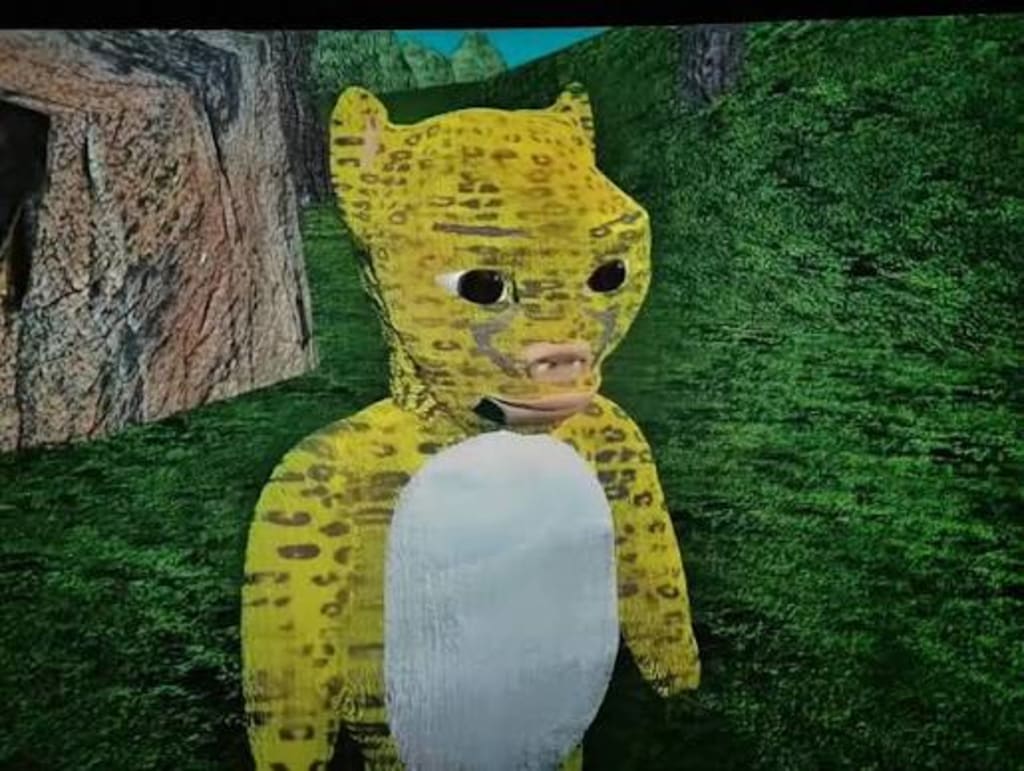
Hall 7 of the Nanjing Xinjiekou Cinema. The moment the lights dimmed, a cow appeared on the screen. The 3D modelling sat somewhere between a PlayStation 2 game and a college graduation project; you could see jagged edges around the joints when it moved. The background was a flat stretch of unrealistically green grassland, like a free template downloaded from some stock footage site. A dozen or so people sat scattered across the auditorium. In the front row, a boy raised his phone, aimed it at the screen, and started recording. In the back, someone let out a laugh they couldn't hold in. The sound bounced off the empty hall and faded.
That same afternoon, on a backend monitor at a film‑data company in Beijing, a red curve shot up at a steep angle within fifteen minutes. Niu Lai's real‑time box office was doubling.
No one had seen this coming.
II. Before the Numbers
First, get a sense of just how "bad" this film really is. Let the numbers speak, because numbers don't lie, but sometimes they're more brutal than adjectives.
On August 5, opening‑day box office: 342 yuan. Only eleven people in all of China bought tickets. Those eleven probably thought they were showing up for a niche Chinese‑style animated feature – after all, the official poster was beautifully done: an ink‑wash cow standing against a mountain range, atmosphere cranked to the max, with a tagline that read, elegantly, "A heartwarming, inspirational Chinese‑style animated film."
Then they walked in and realised they'd been fooled. Not by the cow on the poster, but by their own belief that a film that makes it to theaters must at least meet some baseline standard.
Over the first nine days, cumulative box office: 7,169 yuan. Total audience: 236 people. The best single‑day turnout was about a dozen. By day seven, at a cinema in Jiangning, Nanjing, Niu Lai was scheduled for a late‑night slot, right next to a re‑release of Your Name. That day, Your Name. made over 4,000 yuan; Niu Lai made zero.
By then, everyone assumed the film was dead. Its takings couldn't even scrape together the character for "ten thousand" – it was barely worth mocking.
On the production side: two people. Director Xin Yumeng handled directing, screenwriting, voice acting, and post‑production all by himself. Co‑writer Sun Lifang also did voice work. Two people, working with their bare hands, produced a feature‑length film that received a state distribution license. The production company used to be a renovation firm; it had a registered capital of 100,000 yuan and, according to its annual report, a single employee. The distributor, after seeing the final cut, advised the director: "Maybe don't release it."
He didn't listen.
III. The Trending Topic
Around 2 p.m. on August 14, the hashtag "#NiuLaiBoxOffice7352YuanNoWan#" appeared on Weibo's trending list. Click in, and the first thing you saw was a three‑figure box‑office screenshot – 7,352. Below it, a comment: "Ten days in theaters and it can't even reach 'ten thousand.'"
The sheer absurdity of that sentence was funnier than any joke. A theatrical release, with a distribution license, showtimes, and a ticketing page – yet ten days' revenue couldn't match a month's salary for an average office worker. It didn't feel like a film anymore; it felt like a data artefact from some performance‑art project.
That's when things started to go off the rails.
That evening, traffic to Niu Lai's Maoyan page jumped 600‑fold. The next day, showtimes went from fewer than five to 300, then to 1,140 cinemas. Occupancy rates hit over 30% – higher than Fengshen Part 3 in some cities.
Audiences suddenly poured in. They weren't here for a good movie. Maoyan's "interested" demographics showed that 70% were between 18 and 24. They all bought tickets for the same reason: "I have to see just how bad it really is."
Today, five cinemas in Nanjing have scheduled eight showings; tomorrow, fourteen more will join. A cinema manager put it bluntly in an interview: "If people buy tickets, we'll screen it. It's all the same to us." Translation: we don't choose films – we choose box office.
IV. The Weight of a Single Character
Between the absence of that single character for "ten thousand" and the arrival of 300,000 yuan in box office, only 24 hours passed.
What happened in those 24 hours? Nothing. The film hadn't changed. The quality hadn't changed. The poster hadn't changed. The director was still the same two people. The only thing that changed was the size of the crowd watching.
"Negative attention is still attention" has been a mantra on the internet for years, but Niu Lai might be the first film to break out precisely because of its sheer pitifulness. Bad films get trashed all the time, but even bad films have a spectrum – "mediocre bad" versus "so‑bad‑it's‑stylish." Niu Lai's badness wasn't a matter of style; it was a matter of capability, of budget, of the sheer limit of "two people dragging a theatrical release across the finish line." And that limit set it apart from all the factory‑line mediocre dreck.
It was bad with a hint of sincerity, bad with a story behind it.
So the audience's motivation became something more nuanced: I'm not buying a film; I'm buying a conversation piece. I'm buying the sentence I'll post on my Moments afterwards – "I went to see Niu Lai." Which translates to: I participated in this week's biggest collective internet action.
V. But Some Aren't Here for the Fun
The comment sections were a festival of memes. "The light of Chinese animation." "Better than Nezha." "I cried three times." All sarcasm. Douban's short‑review area turned into a large‑scale rhetoric contest, who could craft the sharpest satire, the most layered irony. Scroll through ten pages and you'd be hard‑pressed to find a single genuine review.
That in itself isn't a problem. The internet's comment sections have always been playgrounds. But playgrounds don't have gates at the entrance, and people bringing kids have no idea what's going on inside.
One mother wrote on Weibo: "I bought tickets because I saw the five‑star ratings. I took my child in, and after fifteen minutes she asked, 'Mom, is this a cartoon?' I didn't know how to answer." Her child is four years old and has only seen Chang'an San Wan Li and Nezha. She doesn't demand much from a film – she doesn't expect her kid to grasp deep themes – but at least the images should be rounded, the colours warm, the story followable. Niu Lai offered none of that.
She hadn't realised those five‑star reviews were all ironic. And you can't really blame her. Who would expect that beneath a cartoon's five‑star rating, three hundred amused adults were hiding?
VI. When the House Lights Come Up
The afternoon show let out. A cleaner came in – there was no popcorn on the floor; tonight's audience hadn't really eaten, they'd been too busy staring at the screen, like they were completing an assignment. The screen had already switched back to standby – a blue default background with "HDMI 1" on it.
That cow was gone.
Next week, new releases will arrive, and Niu Lai will likely be squeezed out. The traffic will leave faster than it came, because the internet's memory is fifteen minutes, while a film's theatrical run lasts thirty days – and traffic can't wait that long. So this carnival probably has one weekend left.
But for the two people who hand‑cranked this film into existence, this entire week must feel deeply unreal. The fame didn't come because they did something right. On the contrary, it came because they couldn't quite reach the passing line.
I probably won't go see it. Not because I'm not curious – I am. But I keep thinking: a film should be watched because it deserves to be watched, not because it deserves to be laughed at. The latter is still box office, but the audience it buys have no film in their eyes – only raw material.
As the crowd filed out, two girls in the back row walked and laughed. One said, "I'm going home and writing three thousand characters tearing this apart."
The other replied, "Then you made a profit – thirty yuan for three thousand characters, one cent per character."
They left. The hall emptied. The lights came all the way up. The seats went back into place. Everything returned to how it was before any of this happened.
Tomorrow morning at ten, someone will buy a ticket again, sit in that same seat, and face that stiff‑jointed little cow walking across that impossibly green flatland.
And that's exactly what they came for.
About the Creator
Jin
Writer of reamstories
https://reamstories.com/jin
Enjoyed the story? Support the Creator.
Subscribe for free to receive all their stories in your feed. You could also become a paid subscriber, letting them know you appreciate their work.
Comments
There are no comments for this story
Be the first to respond and start the conversation.