
The Untold Reason Stephen Chow Keeps Casting Zhang Mei'e
15 years, 5 films, and he never asked her to "improve." Her awkwardness is his secret formula.
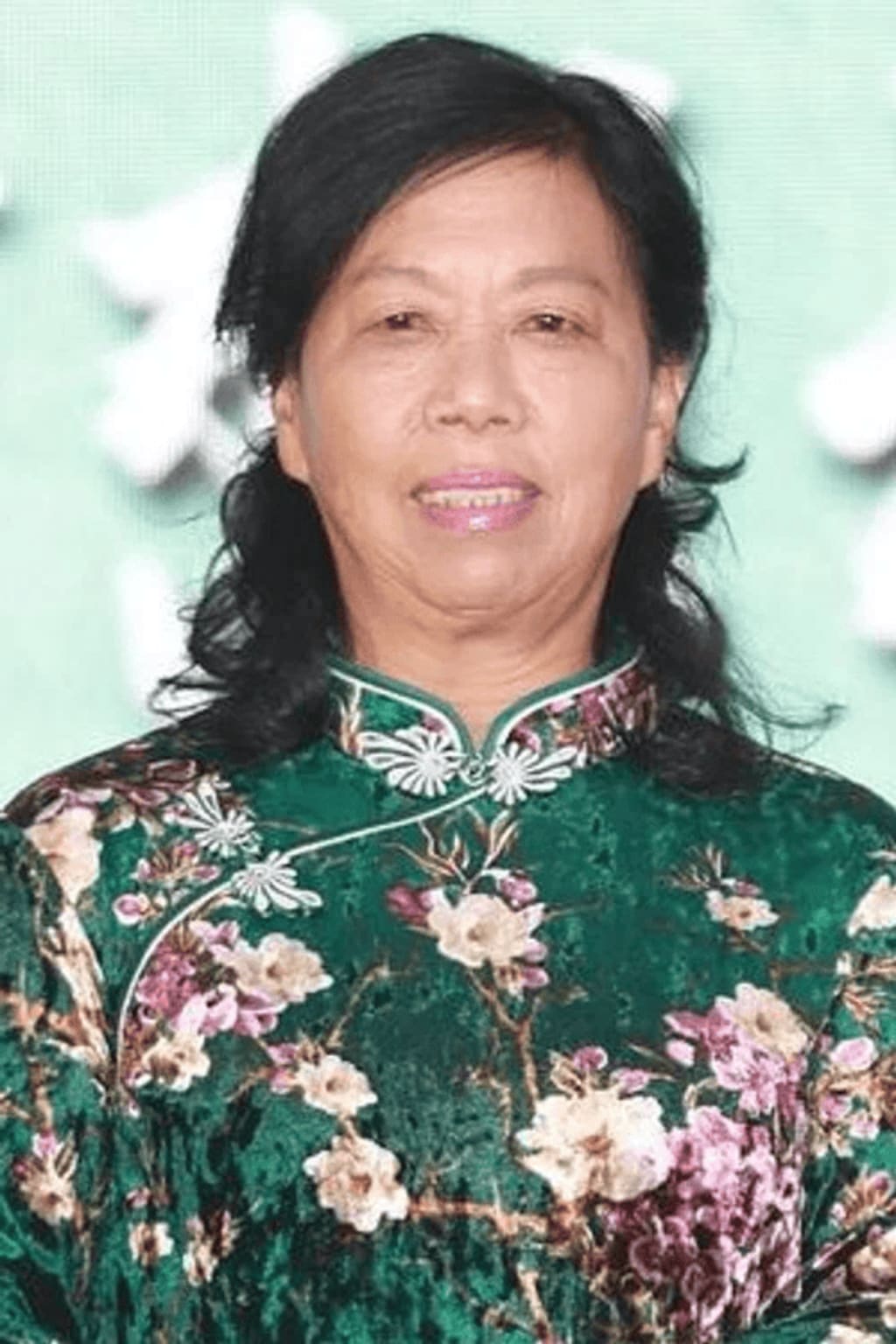
1. A Face
Hengdian, 2011.
Stephen Chow was looking for four “extremely ugly women.” For Journey to the West: Conquering the Demons, he needed four attendants for the character played by Show Luo. His instruction to the casting assistant was blunt: as ugly as possible—ugly enough that the audience would remember them after a single glance.
The assistant raised the daily pay for extras from 80 to 150 yuan and sifted through the regular pool of extras in Hengdian. Among the photos that came back was a sixty‑one‑year‑old village woman.
Her name was Zhang Mei'e. Born in 1950, she had only a primary‑school education. Her husband had died early, and her two sons worked far away in other cities. At fifty‑eight, she started following a few women from her village to film sets, working as an extra—the cheapest kind, earning a few dozen yuan a day, sometimes not even getting a boxed meal, squatting outside the set eating the steamed buns she had brought from home.
When Stephen Chow saw her photo, he said little. He asked to have her come in for an audition.
On the day of the audition, Zhang Mei'e wore a faded floral‑print jacket, her hair tied back with a black rubber band. Her face was covered with sunspots and deep wrinkles, the kind carved by years of outdoor labor. Standing among a crowd of young, pretty extras, she looked like a lump of earth pried straight from a field. People around her glanced at her with that look of “how did she even get an audition?”
She wasn't much of a talker. She answered questions briefly, sparing every word. The audition required her to act as a village woman being harassed. She widened her eyes and made a stiff, almost blank, bewildered expression.
Stephen Chow watched from the side. He didn't ask her to do a second take.
Later, in an interview, he remarked: “She just has that feeling. Can you teach that? You can't.”
2. A Mistake
During the shooting of the “Four Wilderness Beauties” scene in Journey to the West: Conquering the Demons, Stephen Chow demonstrated to Zhang Mei'e in person—she had to be fierce, menacing, baring her teeth as she shouted at the hollow prince.
She tried to follow. But when the camera rolled, the lens pushed in, and her mind went blank. She forgot all the expressions he had shown her. The only line she remembered was: “Why didn't you say so earlier?”
So she repeated that one line.
“Why didn't you say so earlier?”
“Why didn't you say so earlier?”
She spoke in the local rural accent of the Hengdian area, drawing out every syllable, her tone flat as a straight line with no rise or fall. Her face showed neither ferocity nor menace—only a dull, nearly innocent seriousness.
Behind the monitor, Stephen Chow didn't call “cut.”
After that take, everyone assumed it would have to be reshot—forgotten lines, repetition, broken rhythm. In any other production, that footage would have been trashed. But when Chow edited the film, he kept that sequence.
In the final cut, Zhang Mei'e, expressionless, repeats her line to Show Luo, her delivery clumsy and stubborn, like a stuck tape recorder. Show Luo's over‑the‑top performance contrasts with her flatness—one floating in the air, the other sunk in mud. The result is absurd, not a designed absurdity, but the kind that arises from “this thing shouldn't be here, yet here it is.”
After the film's release, the “Four Wilderness Beauties” became one of the most talked‑about segments. Many viewers said they didn't know why it was funny, but they couldn't help laughing.
When Zhang Mei'e was later interviewed, she said: “I was nervous and forgot my lines. I only remembered that one sentence.”
The reporter asked if she knew why Stephen Chow kept that take.
She said: “No. He never told me.”
3. A Habit
After Journey to the West, Zhang Mei'e thought that was just a fluke in her extra career. She was already sixty‑three, and it seemed unlikely that any decent role would come her way again.
But the next year, when Stephen Chow started filming The Mermaid, his assistant called her: “Brother Sing wants you to come.”
In The Mermaid, she played a tourist with only a few lines, barely on screen for a moment. Yet she noticed something odd—the way Chow directed her on set was exactly the same as during Journey to the West. He didn't ask her to “act”; he just asked her to “say” her lines. He didn't correct her accent, didn't adjust her tempo—she did it her way, and that was fine.
Then came Journey to the West: The Demons Strike Back, then The New King of Comedy, then Kung Fu Soccer. Fifteen years, five films. Zhang Mei'e became one of the most frequent supporting actors in Stephen Chow's movies.
She later rented a room in Hengdian for three hundred yuan a month. She no longer had to follow the extras' agents. Every time Chow's office called, she packed her things and went. When the shoot was done, she returned to her ordinary life—buying groceries, cooking, chatting with neighbours at the village entrance. Her daily routine hardly changed.
But the world around her did.
Over those years, the village women who had started out with her either quit acting or found other work. The extra pool in Hengdian turned over again and again. Younger faces appeared, with more elaborate makeup, and fewer of those unpolished, raw features.
Zhang Mei'e remained.
Her accent didn't change. Her posture didn't change. The rhythm of her lines—that slow, stubborn beat that never synced with her scene partners—didn't change at all. Even the wrinkles on her face deepened with time, but that state of “I don't care where the camera is, I'll do it my way” was exactly the same as the nervous village woman who had forgotten her lines on the set of Journey to the West.
Someone once asked her why she didn't take acting lessons, work on her diction, improve her craft.
She said: “I don't understand those things. The director tells me what to do, and I do it.”
Stephen Chow never asked her to “improve.”
4. A Contrast
Tsui Hark also used Zhang Mei'e in Journey to the West: The Demons Strike Back.
The character was similarly a “clown”—old, ugly, coarse. But in the final cut, Zhang Mei'e became only “ugly.” Her lines were cut into fragments, her tempo sped up, her accent suppressed to a barely intelligible range. She appeared on screen, audiences recognised that face, they smiled—and then she was carried away by the plot, like a piece of background décor set down carelessly.
No one found that segment funny.
Not because Tsui Hark can't do comedy, but because his way of using Zhang Mei'e was different from Stephen Chow's. Tsui Hark saw only the external “old and ugly.” He took that element and placed it in his frame, and it remained just a face. Stephen Chow saw the untameable, self‑contained rhythm in her—her strange accent, her phrasing that never matched anyone else's, that stubbornness of “I'm talking, and I don't care if you're listening.”
One is appropriation; the other is discovery.
The difference is not technical—it's a difference in how you look. When Stephen Chow looks at Zhang Mei'e, he doesn't see a “clown archive.” He sees a person. This person has her own way of speaking, her own sense of timing, her own logic for responding to the world. He doesn't need to change her; he only needs to put her in the right scene and let her be.
That's hard. Most directors don't have the patience to wait for someone to “just be.” They are used to coaching, correcting, polishing—shaping the actor into what they want. What Stephen Chow does is the opposite: he finds something already in a person, and then he leaves it alone.
5. A Back‑Shot
In Kung Fu Hustle, there is a scene where the landlady storms down the stairs, yelling at the barber, while the barber stands in the alley filling a bucket of water. The shot is a long take with complex blocking. Two extras on the right side of the frame step aside half a second too early, and one of them even reaches out to pull the other into position.
It's a goof.
If you go frame by frame, that half‑second mistake is obvious. But most viewers never notice it, because Kung Fu Hustle is a fast‑paced, highly stylised film, and those tiny “imperfections” are swallowed by the overall momentum.
But Stephen Chow noticed. He is a director known for doing dozens of takes and obsessing over frame control. By his standards, that blocking error should have been cut.
He didn't cut it.
Not because he missed it, but because he knew that extras are like that. They are not professionals. They get nervous, over‑do, under‑do, or think too much—or too little, or think correctly but move too slowly. Those “mistakes” are part of live filming; they are living things.
Zhang Mei'e carries exactly that quality.
She is not a professional actor and she will never become one. Her capacity for learning limits her ceiling—she could never learn “better acting.” But precisely because she can't learn it, the raw, unpolished things in her have never been smoothed away.
Stephen Chow spent eight years as a bit‑part extra when he was young. He knows what it feels like to stand in front of a camera with no idea what to do, to ad‑lib when you forget your lines, to shoot a single take twenty‑odd times only to have the director shake his head. He has seen too many “skilled” actors and too many “tamed” performances.
Zhang Mei'e is the untamed kind.
She appeared in his lens at sixty‑one and stayed through seventy‑six. Over those fifteen years, she neither improved nor declined—she simply remained herself. To Stephen Chow, that probably matters more than any “improvement.”
6. One Sentence
In a later interview, Zhang Mei'e mentioned a moment on set. She said Stephen Chow rarely explained much to her; he would usually just let her go through a take, and if it passed, it passed, if not, they'd do another. Once, after finishing a scene, he walked over and said something to her.
She recalled: “He said, 'This way is fine. No need to change.'”
When Zhang Mei'e repeated that line, her tone was still flat, like a straight line. No emotion, no excitement, none of that “gratitude” packaged by the media.
She just said it.
—This way is fine. No need to change.
For Zhang Mei'e, that was a director's affirmation. For Stephen Chow, it was probably also a summary of his own decades of comedy‑making: if something is already right, leave it alone.
His insistence on casting Zhang Mei'e, perhaps, is just that simple.
About the Creator
Jin
Writer of reamstories
https://reamstories.com/jin
Enjoyed the story? Support the Creator.
Subscribe for free to receive all their stories in your feed. You could also become a paid subscriber, letting them know you appreciate their work.
Comments
There are no comments for this story
Be the first to respond and start the conversation.