
The Undertone Ending Explained: Evie, Abizou, the Final Recording and the True Meaning of the Horror (Spoilers)
The Undertone’s disturbing ending leaves Evie trapped between a possible demonic curse and a psychological breakdown. Here is what the final recording, her mother, pregnancy, Abizou and the film’s hidden symbolism really mean.

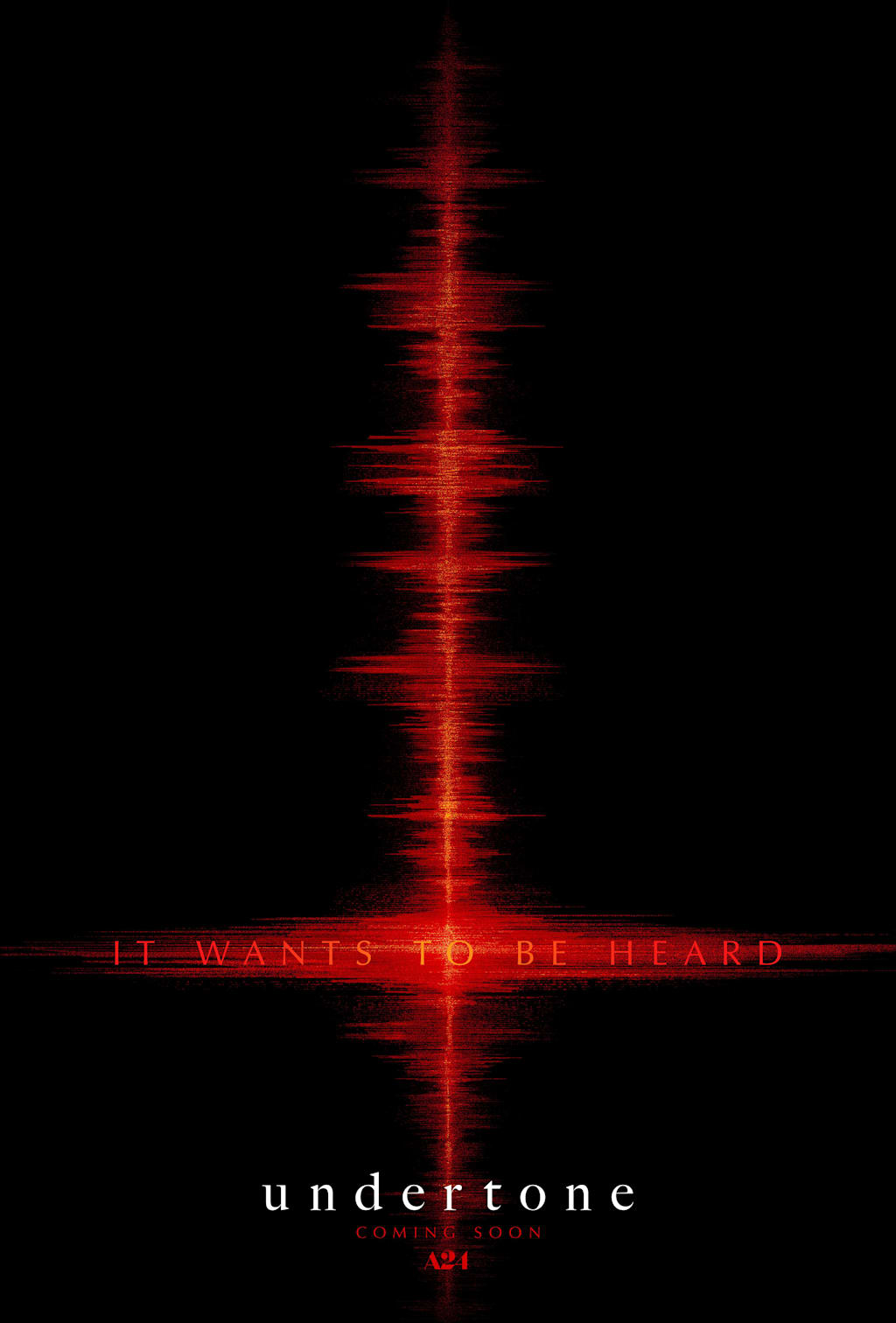
Spoiler Warning: This article contains major spoilers for The Undertone, including its ending and key theories.
The Undertone is not a conventional horror film filled with monsters, jump scares and a large cast of characters. Instead, it builds terror through isolation, sound, grief, religious imagery and the increasingly fragile mental state of its protagonist, Evangeline “Evie” Babic.
Evie spends most of her life inside the house caring for her bedridden mother while also co-hosting a horror podcast called The Undertone with Justin. Ironically, although she discusses paranormal stories for a living, Evie does not genuinely believe in supernatural phenomena.
That skepticism begins to collapse after Justin receives ten mysterious audio recordings involving a couple named Jessa and Mike.
What begins as material for another podcast episode slowly turns into something far more disturbing.
By the final recording, Evie can no longer tell whether she is investigating a supernatural curse or becoming part of it herself.
What Are the Mysterious Audio Recordings?
Justin receives an unusual email containing ten audio files.
The recordings were supposedly made by Mike because his girlfriend Jessa had begun talking in her sleep. Mike wanted proof, but the recordings gradually captured increasingly disturbing events.
In the first audio, Jessa sings the nursery rhyme London Bridge Is Falling Down while asleep.
Later recordings contain reversed children's voices, strange banging sounds, unexplained whispers and increasingly disturbing behavior from Jessa.
Justin believes some of the reversed audio contains hidden messages.
The most important phrase eventually becomes:
“Come in Abizou.”
What initially appears to be meaningless chanting begins to look like an invitation.
According to the explanation discussed in the film, Abizou is associated with the deaths of unborn or newborn children. That connection becomes especially disturbing after Evie discovers that she herself is pregnant.
Why Is Evie’s Pregnancy So Important?
Evie learns that she is approximately six weeks pregnant at the same time that her mother's condition is rapidly deteriorating.
Instead of feeling uncomplicated happiness, Evie appears frightened and conflicted.
She is already physically and emotionally exhausted from caring for her mother. Her boyfriend is offering little meaningful support, she has struggled with alcohol in the past, and she does not seem convinced that she wants to become a mother.
Later, Evie makes an appointment at a women's clinic, strongly suggesting that she may be considering an abortion.
This is where the supernatural story and Evie's psychological conflict begin merging.
Abizou is described as an entity connected with pregnancy, infertility and the destruction of children. Evie's deepest fears are also suddenly centered on pregnancy and motherhood.
Whether Abizou is real or not, the demon perfectly represents what Evie is already afraid of.
Why Does the Virgin Mary Statue Keep Moving?
One of the most unsettling recurring images in The Undertone is the Virgin Mary statue beside Evie's mother.
Evie repeatedly moves the statue away, yet it seems to return.
On the supernatural level, this suggests that something inside the house is physically moving objects.
But symbolically, the statue has a much deeper meaning.
Evie was raised Catholic by her deeply religious mother. The Virgin Mary represents an idealized image of motherhood, purity and religious devotion.
Evie is almost the opposite of that ideal in her own mind.
She is uncertain about her pregnancy.
She considers abortion.
She drinks despite knowing that she is pregnant.
She feels resentment toward the responsibilities of caring for her dying mother.
She even admits that she fears she will not be a good mother.
The statue therefore becomes a physical representation of judgment.
No matter how many times Evie puts it away, the beliefs she inherited from her mother keep returning.
What Happened to Jessa and Mike?
During the final podcast session, a caller claims to have known Jessa and Mike.
According to him, both were later discovered dead at the bottom of their staircase with plastic bags over their heads.
Even more disturbing, drawings of dead babies were apparently found covering the walls.
Jessa had also been five months pregnant.
Their deaths mirror several images that later appear around Evie.
This creates the possibility that Jessa and Mike were previous victims of the same curse and that the audio recordings were designed to pass that curse to someone else.
Evie and Justin may not simply be discussing their story.
They may be repeating it.
Who Sent the Ten Recordings?
This is one of the film's biggest unanswered mysteries.
The sender's address itself provides an important clue because it appears connected to the reversed phrase meaning “Come in Abizou.”
That opens several possibilities.
The most straightforward supernatural explanation is that Abizou sent the recordings.
The ten files were not evidence of a haunting.
They were bait.
The victim listens to them one after another until the final recording completes some type of invitation or ritual.
Another possibility is that Jessa and Mike somehow became part of the curse and passed it forward before or after their deaths.
There is also a more interesting interpretation: the recordings function like a viral curse.
Whoever hears them becomes the next victim.
If that is true, Evie's horror podcast becomes the perfect delivery system because potentially thousands of listeners could hear the same sounds.
The curse no longer needs to enter one house.
It can spread through audio.
Why Is 3:00 AM Important?
Evie and Justin usually record according to Evie's timezone at around 3:00 in the morning.
As the story progresses, that hour becomes increasingly important.
During their final session, Justin notices something impossible: despite living in different countries and time zones, both clocks appear to be approaching 3:00 AM simultaneously.
Eventually Evie's clock reaches exactly 3:00 and stops.
The house immediately becomes chaotic.
Lights flicker and burst.
Children can be heard crying.
Strange voices appear.
Callers begin saying increasingly disturbing things.
The film treats 3:00 AM as a kind of threshold—the moment when ordinary reality and whatever has been hiding underneath it finally overlap.
What Happens During the Final Podcast Recording?
The tenth recording is the point of no return.
As Evie and Justin listen, the sounds from Jessa and Mike's house seem to begin happening inside Evie's own home.
Then several callers enter the podcast.
One repeatedly asks for someone named Mary.
That is particularly terrifying because Evie had told her unconscious mother that if her unborn child was a girl, she wanted to name her Mary.
Another caller warns them that they should never have listened to all ten recordings during the witching hour.
Then a woman named Abby calls asking for help because she cannot cope with her crying baby.
Evie and Justin hear water running in the background and fear that Abby may be about to hurt the child.
That conversation causes Evie to finally admit her own guilt.
She confesses that she feels responsible for her mother's death.
Evie believes her mother cared for her throughout her life, yet when her mother needed her most, Evie could not even consistently sit beside her and pray.
This confession is crucial.
The monster attacking Evie is not simply Abizou.
It is guilt.
Did Evie Kill Her Mother?
Probably not in the literal sense suggested by Evie's confession.
Earlier, the nurse explains that Evie's mother is near death and describes the rattling breathing that commonly occurs at the end.
Later, while Evie is asleep, her mother appears to take her final breath.
So when Evie says that she “killed” her mother, she seems to be speaking emotionally rather than confessing to murder.
Evie believes she failed her.
She left the house.
She resented being her caregiver.
She avoided prayers.
Part of her wanted the exhausting situation to finally end.
When her mother actually dies, those thoughts become unbearable.
Evie's guilt turns ordinary human exhaustion into something she interprets as moral failure.
That emotional guilt is exactly what the horror exploits.
Why Does Evie's House Turn Red?
During the climax, Evie's surroundings become increasingly surreal.
Her television begins showing the disturbing “I Feel Wonderful” material previously discussed on the podcast.
Even unplugging the television does not stop it.
The house becomes red.
Lights fail.
The sink runs.
The drawings Evie has unconsciously been making with crayons combine into the image of a demonic figure surrounded by dead children.
The visual transformation suggests that Evie's inner world has finally consumed physical reality.
If Abizou is real, this is the moment when the entity fully enters the house.
If the psychological interpretation is correct, this is the moment Evie completely loses her ability to distinguish reality from hallucination.
Either interpretation leads to the same result:
Evie is no longer in control.
Why Does Evie See Her Dead Mother?
Evie eventually enters her mother's bedroom and discovers that the bed is empty.
The Virgin Mary statue is there instead.
Her supposedly dead mother appears standing inside the bathroom before moving unnaturally toward her.
Evie screams for her mother.
The sequence is intentionally difficult to interpret because the film combines images, sounds and extremely brief flashes rather than clearly showing everything that happens.
On a supernatural level, Abizou may be using or possessing Evie's mother's body.
But psychologically, Evie's mother represents the source of Evie's guilt.
Evie cannot accept her death without simultaneously confronting everything she thinks she did wrong as a daughter.
The mother returning from the dead is therefore exactly what Evie fears most: judgment coming back to confront her.
What Does the Plastic Bag Mean?
During the climax, extremely brief images apparently show Evie with a plastic bag around her head.
That detail connects her directly to Jessa and Mike, who were reportedly discovered with plastic bags over their heads.
It strongly suggests that Evie's story is following the same pattern.
If the supernatural theory is correct, Abizou's victims may repeat similar deaths.
If the psychological theory is correct, the imagery could indicate that Evie harms herself during her breakdown.
Either way, the parallel tells us that Evie has become the next person in the cycle.
Does Evie Fall Down the Stairs?
The film does not clearly show the final event.
Instead, sound becomes more important than visuals.
We hear screaming.
Evie calls for her mother.
There are disturbing clicking or teeth-chattering sounds.
A baby cries.
Then we hear what strongly resembles Evie falling down the stairs.
This is important because Evie previously had a nightmare in which she fell down the staircase and discovered blood on her hand.
The earlier nightmare may therefore have been a premonition.
It may also symbolize a miscarriage.
Evie's fear of losing her child—or choosing not to continue the pregnancy—has been present underneath the entire story.
The staircase image brings that fear into the climax.
Did Evie Lose Her Baby?
The film deliberately refuses to confirm it.
However, several clues connect the ending with the possible death of Evie's unborn child.
Her earlier nightmare shows a fall and blood.
Abizou is associated throughout the story with pregnant women and dead children.
The final sequence includes the sound of a crying baby.
The drawings surrounding the demon contain dead children.
Evie's pregnancy has also become psychologically tied to her fear, guilt and religious upbringing.
One interpretation is that Evie falls down the stairs and loses the pregnancy.
Another is that she had already chosen to terminate the pregnancy and the imagery represents the guilt she associates with that decision.
The movie keeps this deliberately ambiguous.
The Supernatural Explanation of The Undertone
The simplest interpretation is that everything supernatural actually happened.
Abizou is real.
Jessa and Mike encountered the entity first.
Their recordings either captured the demon or were deliberately created to summon it.
When Evie listens to all ten files and repeatedly interacts with the reversed phrase, she unknowingly invites Abizou into her own life.
Her pregnancy makes her a perfect target.
The moving statue, unexplained voices, flickering lights, synchronized clocks, callers and appearance of her dead mother are therefore genuine supernatural events.
By the ending, Abizou has reached Evie.
Her final transformation proves it.
The Psychological Explanation of The Undertone
The second interpretation is much darker because it requires no real demon at all.
Evie is experiencing enormous psychological pressure.
Her mother is dying.
She is an exhausted caregiver.
Her relationship is strained.
She discovers an unexpected pregnancy.
She considers abortion.
She has a history of alcohol problems.
She drinks again.
She uses medication for anxiety.
She barely sleeps.
She has been listening to frightening recordings for hours during the middle of the night.
Combined together, these factors could push Evie toward a psychological breakdown.
From this perspective, Abizou is the form her guilt takes.
The demon gives a face to everything Evie cannot accept about herself.
Abizou Is Evie's Guilt Made Physical
This may be the film's most important symbolic interpretation.
Abizou represents Evie's fear that she is a bad daughter and will become a bad mother.
Evie feels guilty because she resents caring for her mother.
She feels guilty because she does not share her mother's religious devotion.
She feels guilty because she may not want her pregnancy.
She feels guilty because she drinks.
She feels guilty because part of her wants the exhausting caregiving period to end.
Eventually those emotions become so powerful that they take the shape of a demon.
This explains why the supernatural events become stronger as Evie's guilt becomes stronger.
Why Are Nursery Rhymes So Important?
Two nursery rhymes repeatedly appear in the story: Baa, Baa, Black Sheep and London Bridge Is Falling Down.
Their role is bigger than simply creating creepy sounds.
Baa, Baa, Black Sheep connects Evie to her mother.
Her mother sang it to her when Evie was young.
Now Evie sings it back to her dying mother.
The relationship has reversed.
The child has become the caregiver.
That is one of the movie's central ideas.
Things associated with safety during childhood—songs, mothers, prayers and religious objects—gradually become threatening.
The same memories that once comforted Evie now remind her of expectations she believes she has failed to meet.
The reversed nursery rhymes represent that corruption perfectly.
Something innocent becomes terrifying when heard from another direction.
What Does the Title The Undertone Mean?
The title works on multiple levels.
An undertone is something existing beneath the surface.
It may not be immediately obvious, but it changes how everything else feels.
That describes the entire film.
The apparent story is about a haunted set of audio recordings.
Underneath it is a story about grief.
Underneath the demonic possession is guilt.
Underneath Evie's pregnancy is fear.
Underneath her relationship with her mother is unresolved religious conditioning.
Even the podcast format reinforces that idea because Evie is constantly listening for hidden sounds underneath ordinary recordings.
Eventually, she begins hearing the hidden things inside herself.
The Religious Trauma Interpretation
The Undertone can also be viewed as a story about inherited religious guilt.
Evie's mother raised her Catholic, and the house remains filled with religious imagery.
Evie no longer appears to share her mother's faith in the same way, but she cannot completely escape the moral framework she inherited.
Her pregnancy intensifies that conflict.
If Evie does not want to continue the pregnancy, her own wishes collide with the beliefs she grew up around.
That helps explain why motherhood becomes associated with demonic imagery.
Evie is not necessarily being punished by a literal demon.
She may believe, consciously or subconsciously, that her choices make her deserving of punishment.
The supernatural horror externalizes that conflict.
What Happens to Evie at the End?
In the final moments, Evie's voice changes.
She whispers to Justin that something is wrong.
Then her voice becomes increasingly demonic.
Finally, she repeats the reversed invitation connected with Abizou.
That is the clearest indication that, on the supernatural level, the demon has finally entered her.
The invitation has been completed.
The recordings worked.
Evie has become the next victim.
But if we choose the psychological interpretation, the altered voice represents the final collapse of Evie's identity.
The guilt, fear and exhaustion she has been fighting throughout the movie have completely overwhelmed her.
In either interpretation, the person we knew as Evie is effectively gone.
Did Evie, Her Mother and the Baby All Die?
The film refuses to provide a definitive answer.
Evie's mother appears to have already died naturally before the final podcast.
The fate of Evie's pregnancy remains uncertain.
Evie's own fate is also hidden behind sound, flashes of imagery and ambiguity.
The supernatural interpretation suggests a tragic ending in which Abizou claims Evie and possibly her unborn baby after already influencing the deaths of Jessa and Mike.
The psychological interpretation suggests that Evie suffers a catastrophic breakdown following her mother's death and her pregnancy crisis, possibly falling down the stairs or harming herself.
Neither version is officially forced on the viewer.
That ambiguity is the point.
The Real Meaning of The Undertone
The Undertone works because the demon is frightening even if it does not exist.
At its core, this is a film about caregiving, grief, motherhood, exhaustion and inherited beliefs.
Evie loves her mother, yet caring for her is destroying her emotionally.
She is pregnant, yet she does not know whether she wants to become a mother.
She has moved away from her mother's religious worldview, yet she still judges herself through it.
Those contradictions create the real horror.
Abizou simply gives them a name.
The movie turns familiar symbols—nursery rhymes, a mother's voice, children's drawings, prayers and the Virgin Mary—into frightening objects because those things now carry emotional weight for Evie.
The horror was therefore never only hiding inside the audio recordings.
It was already underneath Evie's life.
That is the true “undertone.”
The Undertone Ending Explained
The ending of The Undertone is intentionally ambiguous.
If we believe the supernatural explanation, Abizou used the ten recordings as a trap. Jessa and Mike became earlier victims, Evie unknowingly completed the invitation, and the demon finally entered her home and possessed her.
If we believe the psychological explanation, there may never have been a demon. Evie's dying mother, unwanted or uncertain pregnancy, insomnia, alcohol use, anxiety, religious guilt and emotional isolation combined into a devastating breakdown.
The most interesting interpretation is that the movie does not actually require us to choose.
Abizou can be real inside the story while simultaneously representing Evie's guilt.
That is why the ending feels so disturbing.
Whether Evie was destroyed by a supernatural entity or by everything she had buried inside herself, the result is essentially the same.
By the time her voice becomes demonic and she repeats the invitation one final time, the darkness that existed beneath the surface has finally taken over.
And that is the real horror of The Undertone.
About the Creator
parwinder singh
🎬 Movie & Entertainment Writer sharing reviews, ending explanations, story breakdowns, plot twists and hidden details from Bollywood, Hollywood, South Indian cinema, Korean dramas and OTT releases.
Enjoyed the story? Support the Creator.
Subscribe for free to receive all their stories in your feed.
Comments
There are no comments for this story
Be the first to respond and start the conversation.