
The Tarokka Deck Was Never Just a Prop
It Was Meant to Be the Heart of Barovia

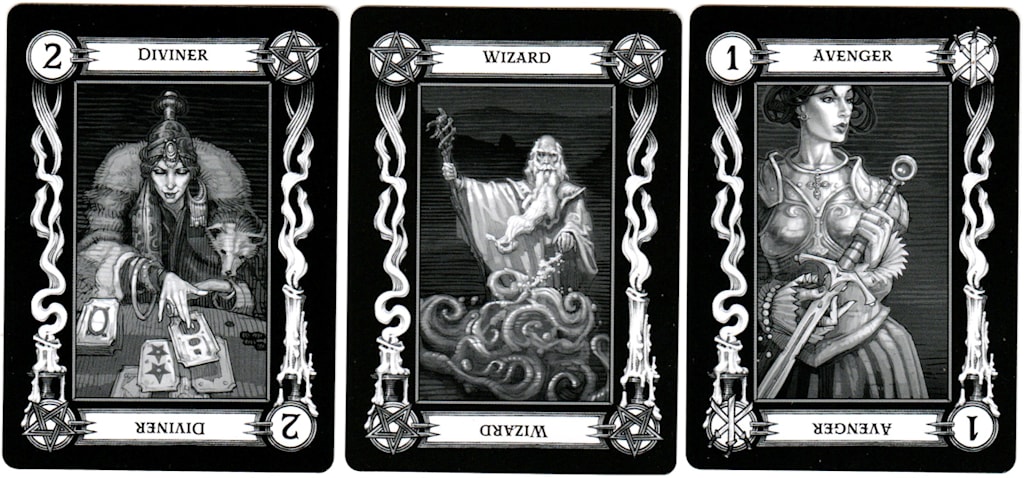
There’s a moment in Curse of Strahd that should feel like a threshold. Not just a memorable scene or a clever piece of game design, but a genuine shift in the campaign's atmosphere. It is the moment players stop asking what they want to do next and start wondering what Barovia has planned for them.
The cards are laid out. The candles burn low. Madam Eva’s voice drops into something older than language, and for a second, the entire table is supposed to feel like fate has just leaned in close, and then… it often tragically becomes a list:
Go here. Find this. Kill that, and move on.
The Tarokka deck is one of the most visually iconic pieces of Dungeons & Dragons storytelling, but in practice it often ends up underused in the one way it was clearly designed to be used: as a living, breathing force of narrative inevitability, but often in it's pracitcal application it doesn’t feel like fate. It feels like a randomized quest generator the Dungeon Master feels obligated to use, rather than integrates into the fabric of the story , and part of that is because it just wasn't created by people who understand tarot.
Part of the disconnect lies in how the deck is commonly presented. While inspired by real-world tarot traditions, the Tarokka functions primarily as an adventure randomization tool.
Its cards determine locations, allies, and objectives, but rarely invite the kind of layered interpretation that gives tarot its enduring mystique.
A tarot reading is not compelling because it provides answers; it is compelling because it creates meaning. The symbols shift depending on context, the question being asked, and the people involved. The reading becomes a conversation between story and interpretation.
The Tarokka, by contrast, often stops at logistics. Once the cards have identified where the Sunsword is hidden or who might aid the party against Strahd, their work is effectively done.
The symbolism that should haunt the campaign becomes background decoration. The cards point players toward objectives, but they rarely continue speaking after the reading has ended.
As a result, one of the most atmospheric moments in Curse of Strahd can end up feeling surprisingly transactional. A ritual that should evoke prophecy becomes a method of distributing quest markers. The imagery remains memorable, but the sense of fate. The feeling that unseen forces are shaping events beyond the characters' understanding often slips away.
That's not because the Tarokka is a bad idea. It's because its greatest strength, its symbolic language, is usually treated as flavor rather than as an active part of the narrative.
To restore what that moment is meant to feel like, the Tarokka has to be allowed to behave less like a quest generator and more like a mythic interpretive system. The cards should not stop speaking once they’ve assigned a location or an ally; they should continue to echo through the campaign, reframing events as they unfold. A reading should not conclude when Madam Eva finishes speaking. It should begin there.
One way to achieve this is to treat the revealed cards as ongoing lenses rather than fixed outcomes. If the Beast is drawn in relation to Strahd, then every encounter with him should carry that symbolic weight: moments of restraint, moments of hunger, moments where his cruelty feels less like strategy and more like instinct.
If the Mists appear in a reading tied to an item, then that object should never simply be “found. It should be approached through confusion, misdirection, and narrative obscurity, as if the world itself resists clarity.
Another approach is to let the cards resurface in altered forms throughout play. NPC dialogue, environmental details, and even failed skill checks can echo the imagery of the reading. The Tarokka becomes a language the world repeats back to the players, not just a message they once received. In doing so, the campaign stops feeling like a list of objectives and starts feeling like something that is unfolding according to rules the party only partially understands.
Finally, the DM has to be willing to reinterpret outcomes dynamically rather than treating them as locked assignments. The meaning of a card should matter more than its literal placement. The reading is not a contract.
It is a prophecy, and prophecies in gothic horror are never static. They are self-fulfilling, misinterpreted, resisted, and sometimes only understood in hindsight.
When handled this way, the Tarokka reading regains its intended weight. It stops being a moment where the story hands out destinations, creating a Barovia that is far more sinister, and entrenched by the dealings of fate.
About the Creator
Azure Naeole
Reader, Writer, Traveler, Witch.
Enjoyed the story? Support the Creator.
Subscribe for free to receive all their stories in your feed.
Comments
There are no comments for this story
Be the first to respond and start the conversation.