
'The Sure Thing' (1985): Rob Reiner Proves He’s More Than Meathead
How John Cusack, Daphne Zuniga and a cross-country road trip turned a teenage sex comedy into one of the sweetest romantic comedies of the 1980s.

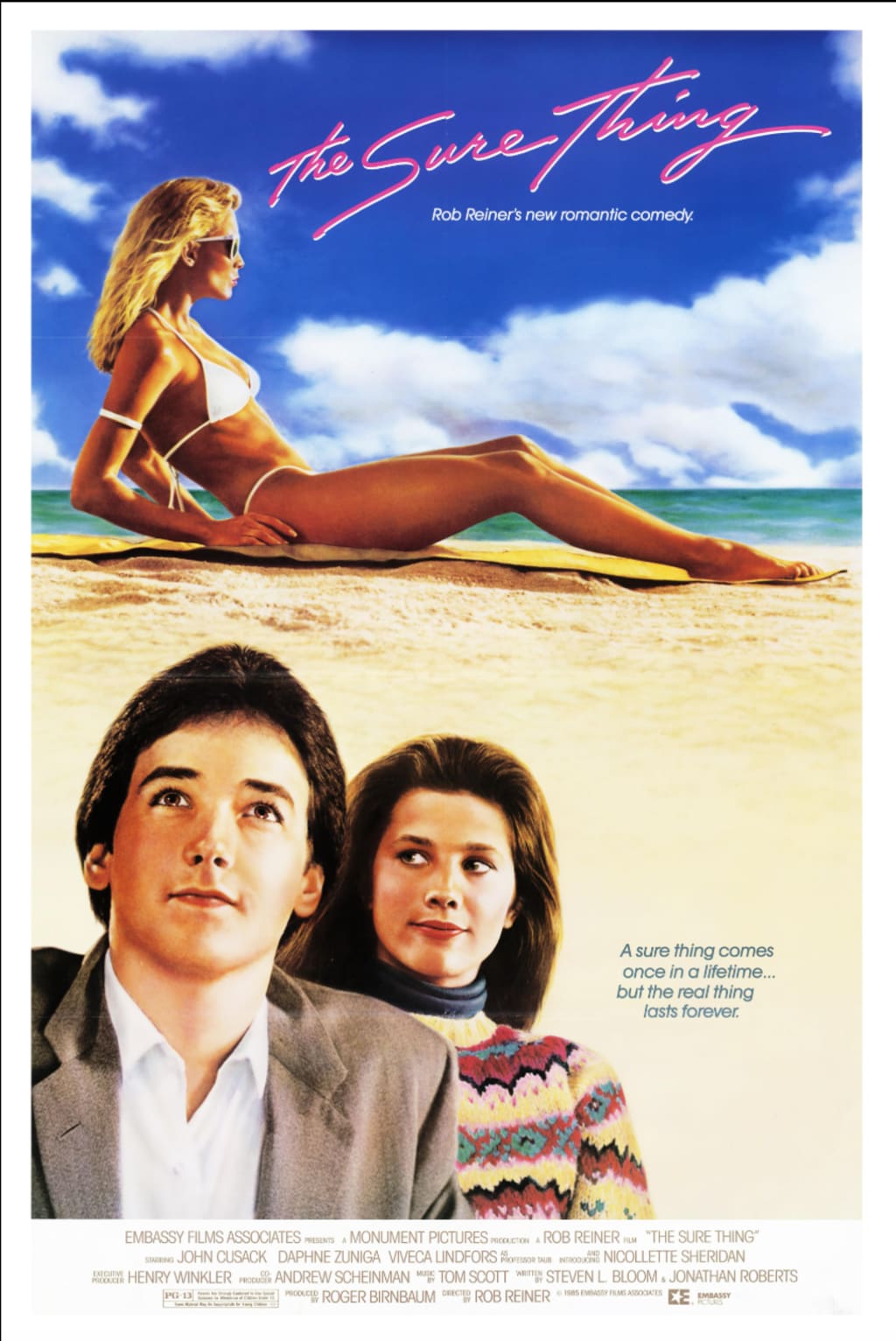
In a Decade of Teen Sex Comedies, This One Had Feelings
By 1985, the teenage movie had become a pretty well-defined American institution.
There were teenagers getting naked.
There were teenagers trying to get naked.
There were teenagers devising increasingly elaborate schemes to get other teenagers naked.
And there was Porky’s.
That isn’t meant as an insult. Porky’s was enormously successful and helped establish the commercial possibilities of the 1980s teen comedy. But by the middle of the decade, it was easy to imagine that this was what a movie about teenagers was supposed to be.
Then came The Sure Thing.
There is sex in The Sure Thing. There are jokes about sex. There is even a character whose entire purpose is to be the sex fantasy promised to a college freshman by his best friend.
But the movie isn’t really about getting laid.
It’s about discovering that maybe you don’t actually know what you want.
That distinction is everything.
Directed by Rob Reiner, fresh off This Is Spinal Tap, and starring a young John Cusack and Daphne Zuniga, The Sure Thing is one of those movies that initially looks like it belongs to one genre and then quietly becomes something else.
It’s a road movie.
It’s a college comedy.
It’s a coming-of-age story.
And, underneath all of that, it’s a romantic comedy in the old Hollywood tradition.
The basic setup is practically screwball comedy: two people who can’t stand each other are thrown together on a long journey and gradually discover that the person they thought was completely wrong for them might actually be exactly right.
The difference is that these aren’t Cary Grant and Katharine Hepburn.
They’re college kids.
And Reiner understood that was enough.
Rob Reiner Was Trying to Escape Meathead
In 1985, Rob Reiner had a problem.
It was a pretty good problem to have, but it was still a problem.
Everybody knew him.
They just didn’t necessarily know him as a director.
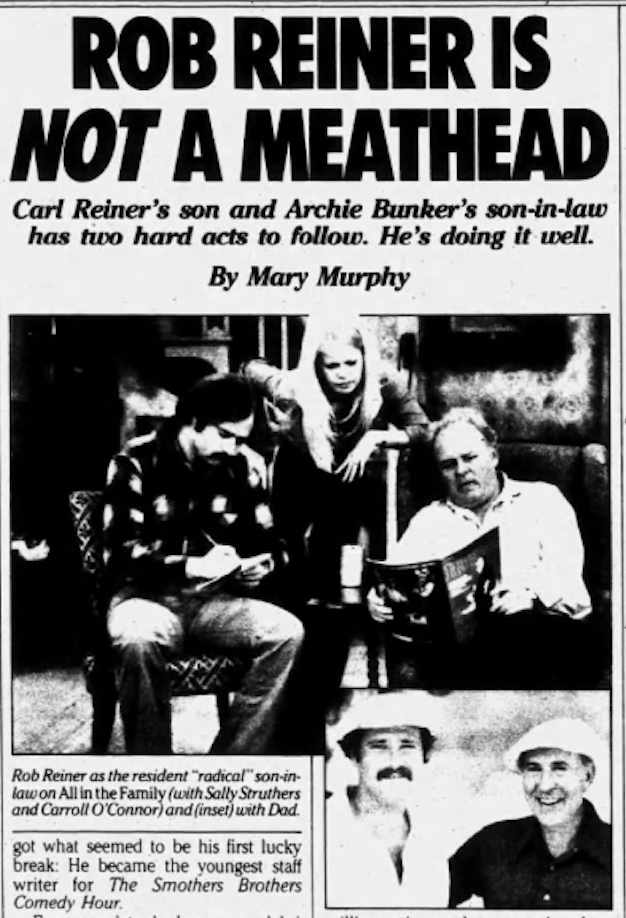
For years, Reiner had been Archie Bunker’s son-in-law on All in the Family. He was Meathead.
That nickname had followed him into adulthood and, understandably, had become something of a professional irritation.
In a 1985 profile by Mary Murphy published in Family Weekly and syndicated in newspapers including the Miami Herald, Reiner talked about how strange it was to have the character remain attached to his identity.
“If I suddenly became a scientist and I won the Nobel Prize,” he explained, people would still say, essentially, “Meathead wins the Nobel Prize.”
But something had changed.
“I used to really annoy me, but it doesn’t anymore,” Reiner said. “I have a different perception of myself.”
That change in perception was important because Reiner was suddenly becoming something he hadn’t been when America first knew him.
A director.
And not just any director.
This Is Spinal Tap had arrived in 1984 and introduced audiences to a filmmaker with a very particular comic sensibility. Reiner understood absurdity, but he didn’t need to shout at it.
He could let the joke sit there.
He could let people behave seriously while everything around them became increasingly ridiculous.
And The Sure Thing would give him an opportunity to try something different.
Something sincere.
Something romantic.
Something that didn’t have to be embarrassed about having a heart.
Reiner had grown up around show business. His father, Carl Reiner, was already a legend.
“I just admired him so much,” he told Murphy. “Everybody said they loved my father. That he was a genius. And I said, I want to be like that.”
That is a difficult inheritance.
Imagine growing up with Carl Reiner as your father and then trying to establish your own identity.
Imagine being known by the entire country as Meathead.
And then imagine walking into Hollywood saying:
Actually, I’d like to direct.
The Movie Started With a Ride Board
The story behind The Sure Thing is almost perfectly suited to the movie.
Steven L. Bloom was a student at Brown University when a friend at Emory arranged a spring-break “sure thing” for him.
Bloom needed a way to get there.
So he found a ride through a campus bulletin board.
That experience eventually became the foundation for the screenplay Bloom wrote with Jonathan Roberts, best known at the time as co-author of The Official Preppy Handbook.
It was their first produced feature screenplay.
The premise was simple enough.
A college guy wants to get across the country because his friend has promised him a girl.
He finds a ride.
Unfortunately, his traveling companion is a girl he doesn’t particularly like.
Even more unfortunately, she’s exactly the kind of person who is going to force him to grow up.
The screenplay found its way to Reiner while he was finishing This Is Spinal Tap.
And Reiner saw something in it.
But he also saw something he wanted to change.
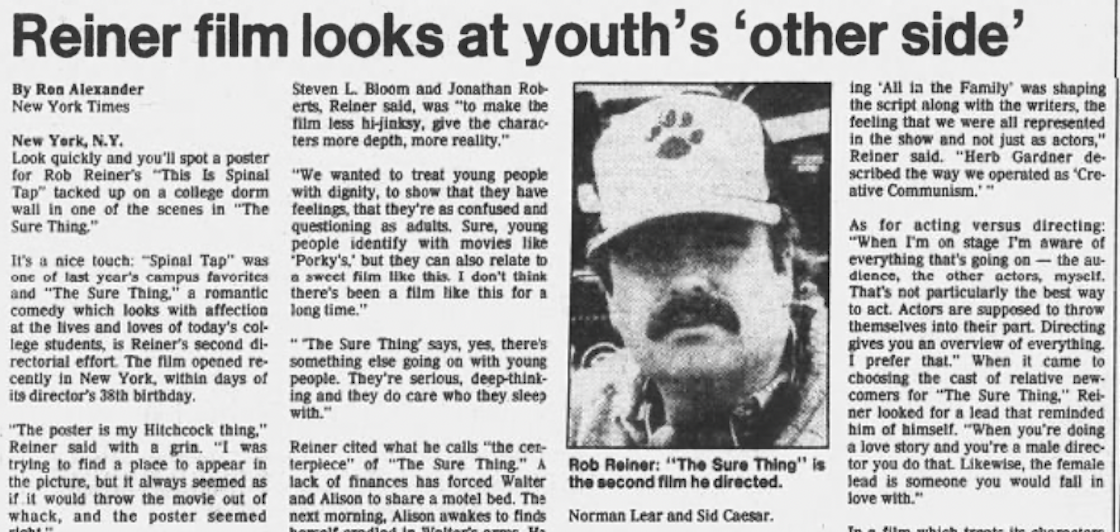
In a 1985 New York Times interview with Ron Alexander, Reiner described his contribution in wonderfully simple terms:
“To make the film less hi-jinksy, give the characters more depth, more reality.”
There is almost an entire philosophy of filmmaking in that sentence.
Less hi-jinksy.
More reality.
Reiner wasn’t interested in simply making another teenage sex comedy.
“I saw it as a film about the exchange of feelings,” he said.
And then he articulated the movie’s real purpose:
“I liked the idea of a young man discovering that sex and love don’t have to be exclusive of each other… that, in fact, it’s really preferable for them to be connected.”
That’s a pretty radical idea for a 1985 teen movie.
Not because it’s particularly profound.
Because it is so obvious.
Teenagers have feelings.
Teenagers get confused.
Teenagers fall in love.
Teenagers sometimes want sex and sometimes want something more complicated than sex.
Reiner’s goal was simply to allow them to be human.
“We wanted to treat young people with dignity,” he said, “to show that they have feelings, that they’re as confused and questioning as adults.”
And that became the difference between The Sure Thing and a lot of the movies surrounding it.
It wasn’t trying to pretend teenagers weren’t horny.
It was simply suggesting that they weren’t only horny.
Finding John Cusack
The casting of John Cusack turned out to be one of those decisions that looks obvious in retrospect.
It wasn’t obvious at the time.
Cusack was still remarkably young.
Reiner initially didn’t even want to meet him.
The casting directors kept pushing.
Eventually Cusack auditioned.
And Reiner changed his mind.
Cusack got the role of Walter “Gib” Gibson, a college freshman whose confidence is mostly a carefully maintained illusion.
The casting created practical complications because Cusack was underage. Producer Roger Birnbaum ultimately dealt with the legal and emancipation issues surrounding the production.
It was a strange moment in Cusack’s career.
He had already appeared in films, but The Sure Thing was something different.
This was a leading role.
And he immediately understood the value of the director he was working with.
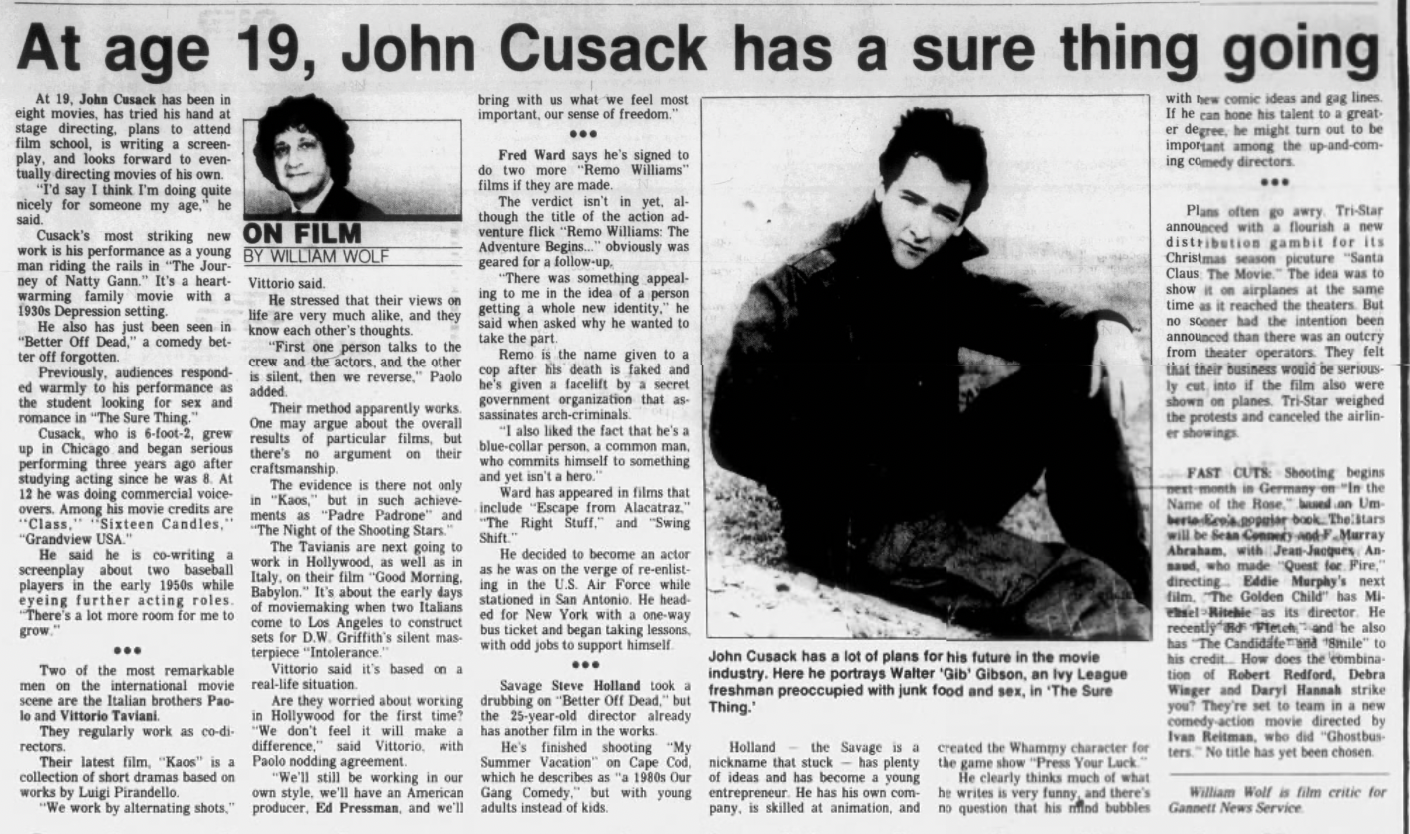
In contemporary interviews, Cusack spoke about Reiner with something approaching awe.
“He’s there for you,” Cusack said. “He was an actor so he knows what the actor goes through.”
Then came the part that sounds almost absurdly generous in retrospect:
“Rob Reiner is about as good as you can get. I would do a film for him without reading the script.”
Not a bad director to believe in when you’re a young actor trying to figure out what kind of career you’re going to have.
And Cusack wasn’t the only future star in the cast.
Anthony Edwards plays Lance, the friend who promises Gib the “sure thing.”
Tim Robbins appears as Gary Cooper.
Viveca Lindfors brings an entirely different level of experience to the movie as Professor Taub.
Daphne Zuniga plays Alison Bradbury, Gib’s academic opposite and eventual romantic counterpart.
And Nicollette Sheridan makes her film debut as the titular Sure Thing.
That’s quite a collection of young talent for a $4.5 million movie.
The Sure Thing Meets the Real Thing
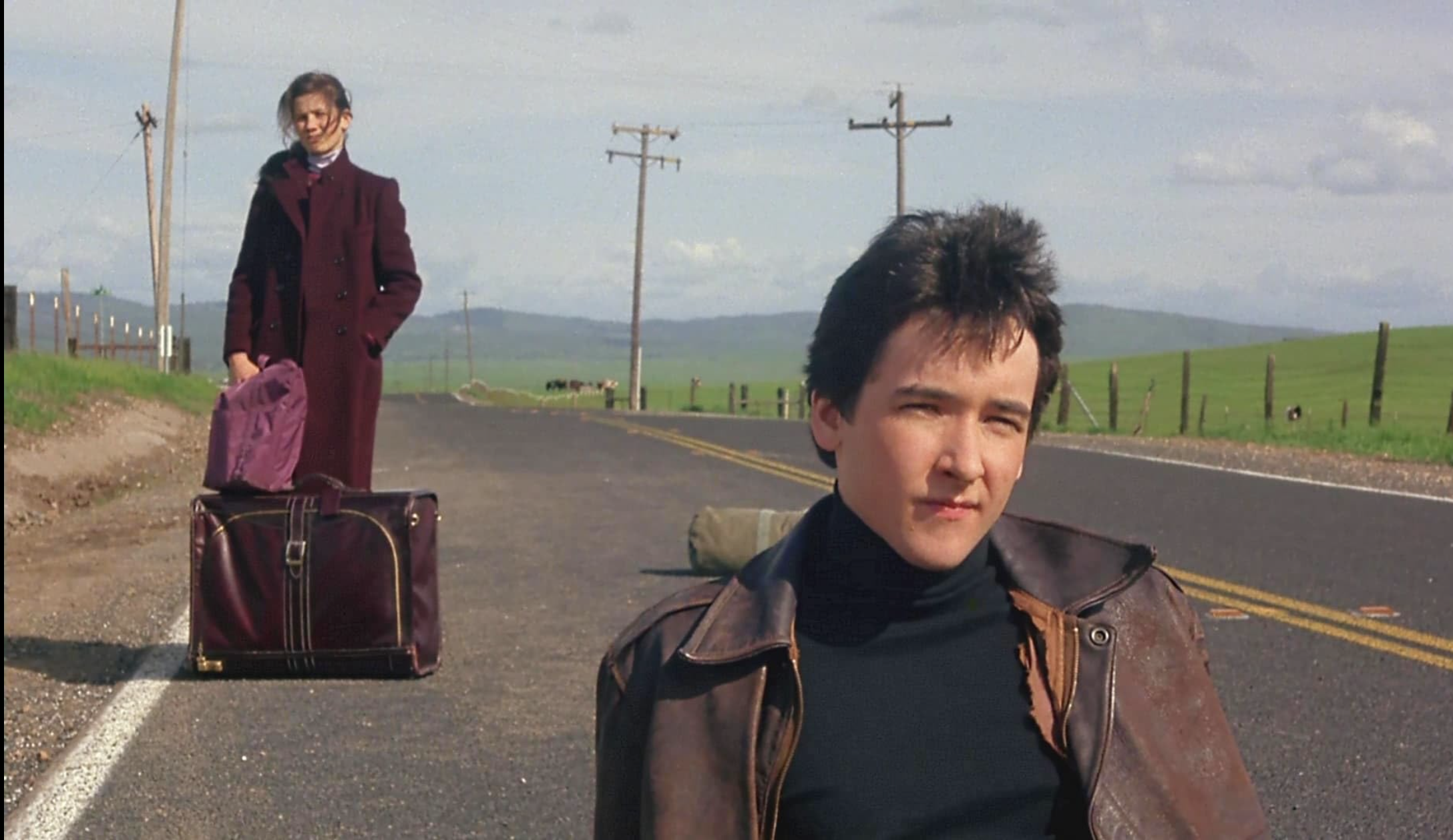
Gib’s destination is California.
Alison’s destination is also California.
Their reasons are completely different.
Gib is chasing a sexual fantasy.
Alison is heading west to see her boyfriend.
They aren’t supposed to become a couple.
That’s precisely why they do.
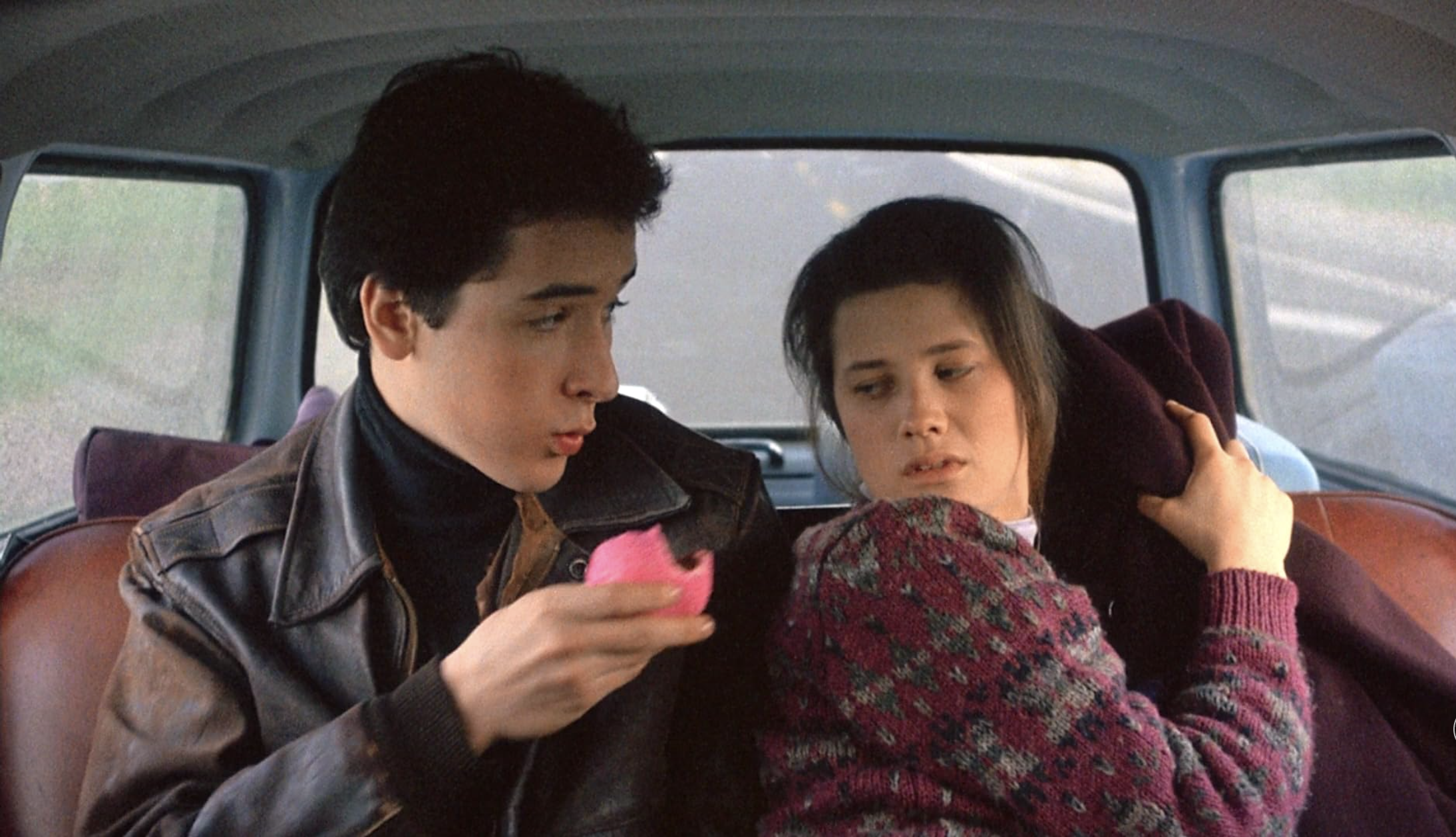
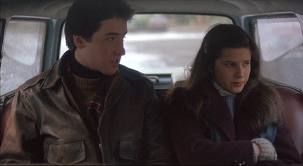
After their original ride falls apart, the two are forced into the kind of increasingly miserable circumstances that romantic comedies have been using since the invention of romantic comedies.
They hitchhike.
They argue.
They insult one another.
They get stranded.
They meet strange people.
They discover things about each other they didn’t expect.
And somewhere along the way, the movie’s central joke changes.
The sure thing isn’t the sure thing anymore.
The real thing is.
This is where the It Happened One Night comparison becomes unavoidable.
Reiner and the writers clearly understood the tradition they were working in. A bickering man and woman thrown together on a journey, gradually falling in love despite themselves?
That’s basically a romantic-comedy blueprint.
But Reiner later noted that the comparison wasn’t exactly intentional in the way critics sometimes assumed. He hadn’t even seen It Happened One Night when he made The Sure Thing.
Sometimes you don’t have to copy a classic.
Sometimes you just have to understand why the classic worked.
Reiner Keeps the Comedy, Loses the Cynicism
What makes The Sure Thing work is that it doesn’t become a lecture.
This is not The Teenagers Learn a Valuable Lesson.
Gib is still a horny college freshman.
He’s still funny.
He’s still immature.
He’s still capable of being a complete idiot.
Alison isn’t some perfect moral counterweight, either. She’s uptight. She’s judgmental. She’s occasionally ridiculous.
They’re both wrong about each other.
That’s what makes the romance believable.
The movie doesn’t require either character to become a completely different person.
They simply have to see each other clearly.
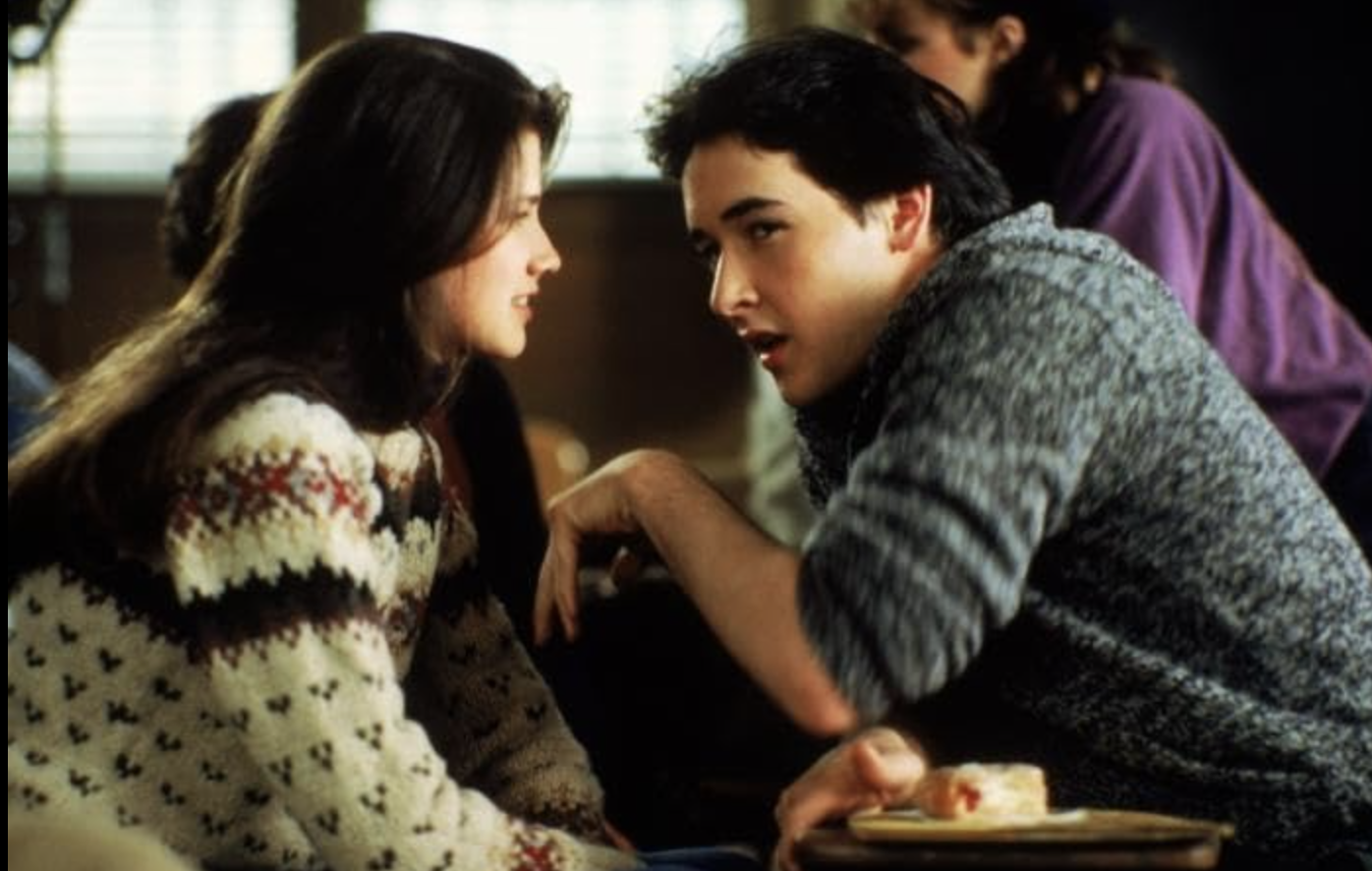
And Cusack and Zuniga are terrific together.
Cusack’s Gib is a familiar 1980s male archetype—the smartass who uses jokes to hide insecurity—but Cusack gives him enough vulnerability that the character never becomes obnoxious.
Zuniga’s Alison could easily have become the standard “uptight girl who needs to loosen up” character.
Instead, she gets to be intelligent, funny and occasionally difficult.
The movie doesn’t punish her for being serious.
It doesn’t reward Gib for being a jerk.
They meet somewhere in the middle.
That sounds simple.
It isn’t.
And Then There’s the Sure Thing
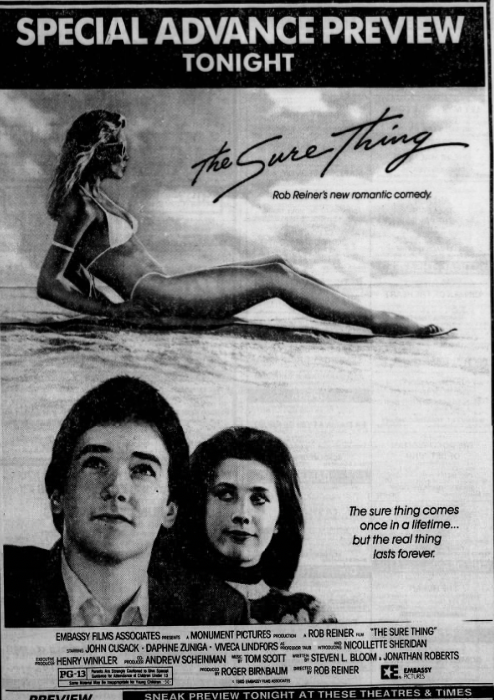
Nicollette Sheridan’s character exists almost as a joke made flesh.
She is the fantasy.
The blonde in California.
The promise.
The thing Gib thinks he wants.
And Sheridan understood exactly what the part required.
Cusack remembered falling “madly in love with her” during production.
“It was terrifying,” he said. “I couldn’t believe it.”
But off-screen, the real chemistry story was different.
When asked about his relationship with Daphne Zuniga, Cusack essentially dismissed the conventional Hollywood narrative.
“No, I’m good friends with Daphne. She’s as sweet as can be.”
That actually makes the movie better.
Because The Sure Thing isn’t about actors falling in love while making a movie.
It’s about two fictional people falling in love because the story gives them the time and space to discover one another.
There is no need to manufacture a romance behind the scenes.
The romance is on the screen.
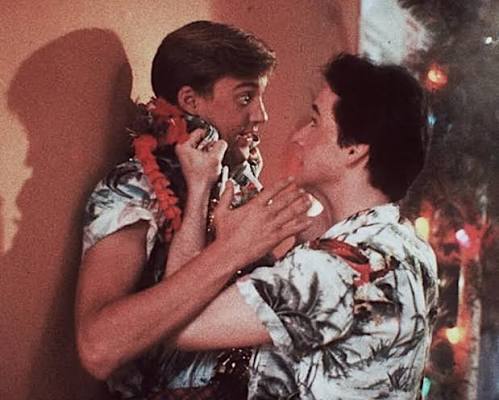
A Little Spinal Tap Sneaks In
Reiner couldn’t resist leaving a fingerprint on the movie.
At one point, a This Is Spinal Tap poster appears on a dorm wall.
It’s a tiny joke.
Almost an Easter egg before Easter eggs became an industry.
But it also feels like a little message from Reiner to the audience:
Yes, I made that movie.
Yes, I know how to make a comedy.
But I’m trying something else now.
The soundtrack also places the movie firmly in its moment, with music from artists including Rod Stewart, Huey Lewis and the Cars contributing to the distinctly 1985 atmosphere.
There was no proper soundtrack album released at the time.
The movie didn’t need one.
The music is part of the texture rather than the marketing.
And that’s really what The Sure Thing does so well.
It captures the 1980s without becoming trapped inside them.
The Movie Almost Had a Different Release
The Sure Thing was originally planned for release in late 1984, but the schedule changed.
Sneak previews were held in February 1985, and Embassy released the film nationwide on March 1.
It opened with approximately $3.1 million and eventually earned $18.1 million domestically. (Box Office Mojo)
That isn’t Back to the Future money.
It isn’t Porky’s money.
But against a reported production budget of about $4.5 million, it was a healthy theatrical success. (Wikipedia)
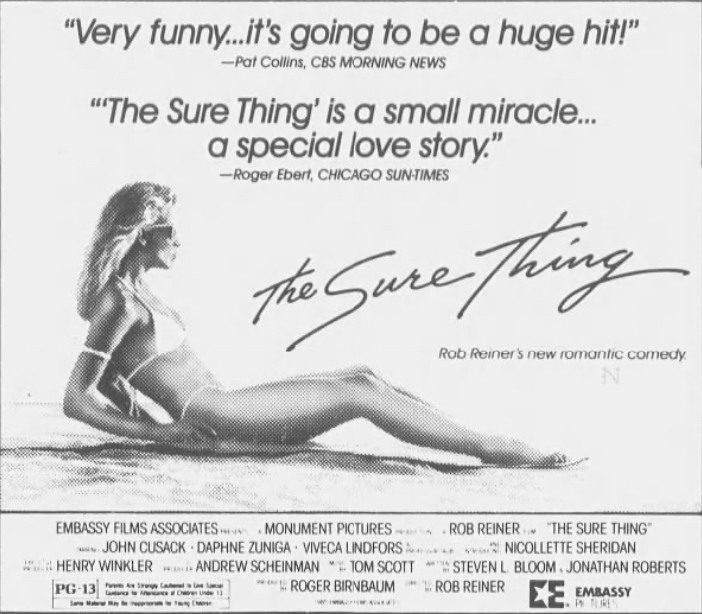
And the reviews were unusually enthusiastic.
Roger Ebert called it a “small miracle.”
That is not something you normally expect to read about a movie whose opening premise involves a college freshman trying to cross the country to have sex.
But Ebert understood what Reiner had done.
He pointed out that most teen movies treated teenagers as if they had been born with a complete understanding of sex and no emotional uncertainty whatsoever.
The Sure Thing did the opposite.
Its characters were shy.
They were insecure.
They were confused.
They behaved like people.
And when Gib and Alison finally kiss, the moment actually means something because the movie has taken the time to make us care about them. (Roger Ebert)
Janet Maslin made essentially the same argument in The New York Times, calling the movie “glowing proof” that traditional romantic comedy could be adapted for teenage audiences.
That’s an important distinction.
The Sure Thing wasn’t trying to invent a new form of teen movie.
It was proving that the old forms still worked.
The Little Movie That Became Part of Something Much Bigger
Looking backward, it’s impossible not to see The Sure Thing as the beginning of something.
Not just for John Cusack.
For Rob Reiner.
The director who made The Sure Thing would soon make Stand by Me.
Then The Princess Bride.
Then When Harry Met Sally…
Then A Few Good Men.
That’s an extraordinary run.
And suddenly The Sure Thing looks less like an isolated experiment and more like an early statement of intent.
The filmmaker who would eventually make one of the great modern romantic comedies was already interested in the mechanics of people falling in love.
The difference was that here he was doing it with college kids in a battered car.
The film also looks increasingly like an early John Cusack movie in the best possible sense.
The slightly rumpled clothes.
The smart mouth.
The romantic idealism hiding underneath the sarcasm.
The ability to be funny without being a comedian.
Cusack would spend much of the next decade refining that persona, most famously in Say Anything…, Better Off Dead, One Crazy Summer and eventually Grosse Pointe Blank.
But Gib Gibson is already there.
The prototype.
The guy who thinks he’s got everything figured out until a girl gets into the passenger seat.
Thirty Years Later, the Movie Still Works
The British Film Institute eventually included The Sure Thing among Reiner’s essential films, describing it as “sassy yet never bawdy and sentimental while never mawkish.” (BFI)
That’s about as good a description as you’re going to get.
The movie is sentimental.
It should be.
It’s a romantic comedy.
But it doesn’t beg you to feel something.
It earns it.
That may be why The Sure Thing has aged better than some of the more aggressively “1980s” teen comedies.
It isn’t built entirely around what was considered funny about teenagers in 1985.
It’s built around something much older.
Two people who don’t understand each other.
A journey.
A series of obstacles.
And the gradual realization that the person you’ve been looking for might have been standing next to you the entire time.
That’s not dated.
That’s just romantic comedy.
In 2015, Shout! Factory released a 30th Anniversary Blu-ray containing commentary from Reiner and retrospective interviews with Reiner, Cusack, Zuniga, Sheridan, Bloom, Roberts and others. (Movie Gazette Online)
By then, The Sure Thing had acquired something it didn’t necessarily have in March 1985.
A reputation.
A second life.
A cult audience.
The little movie had survived.
Meathead Grows Up
There is something wonderfully appropriate about Reiner making The Sure Thing at exactly the point when he was trying to figure out who he was.
He had been Meathead.
He was Carl Reiner’s son.
He was the guy from All in the Family.
Then he became the director of This Is Spinal Tap.
And now he wanted to make a romantic comedy about young people who were trying to figure out what love meant.
In that 1985 interview, Reiner talked about no longer being bothered by the Meathead label.
He had developed a different perception of himself.
You can see that perception in The Sure Thing.
It is a movie about people refusing to be defined by the first impression someone has of them.
Gib looks like one kind of guy.
Alison looks like another.
Neither is quite what they appear to be.
Maybe that’s why the movie feels like such a good introduction to Reiner the filmmaker.
He was doing the same thing.
America thought it knew Rob Reiner.
Turns out it didn’t.
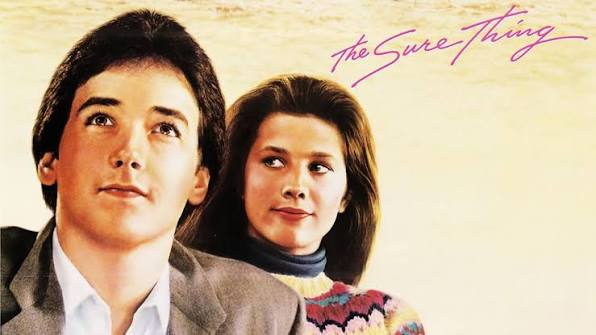
The Sure Thing Was Never Really the Sure Thing
The title is a joke.
Then it becomes a metaphor.
Gib spends the movie believing that the sure thing is the blonde waiting for him in California.
But by the end, the thing he thought was guaranteed isn’t important anymore.
The uncertain thing is.
The complicated thing.
The person who annoyed him.
The person who challenged him.
The person who actually knew him.
That’s the real thing.
And maybe that’s why The Sure Thing remains such an easy movie to love.
It doesn’t try too hard.
It doesn’t announce its importance.
It doesn’t need to.
In a decade when teen comedies could be very loud about sex, Rob Reiner made one that was quietly interested in love.
And John Cusack got into a car with Daphne Zuniga and started driving toward the future.
Neither of them knew exactly where they were going.
That’s probably the point.
Sometimes the best movies aren’t the ones where everything is a sure thing.
They’re the ones where you don’t quite know where you’re going until you get there.

Rob Reiner’s The Sure Thing turned the teen sex comedy into a smart, funny road-trip romance—and helped launch John Cusack as a leading man.
Tags
The Sure Thing, Rob Reiner, John Cusack, Daphne Zuniga, 1985 Movies, 1980s Movies, Teen Comedies, Romantic Comedies, This Is Spinal Tap, Movies of the 80s
Sources
Primary / contemporary sources
Mary Murphy, Family Weekly / Miami Herald, 1985 profile of Rob Reiner — particularly valuable for Reiner’s comments about the “Meathead” label, his father Carl Reiner, and his changing perception of himself.
Ron Alexander, The New York Times, 1985 — contemporary interview with Reiner concerning the development and philosophy of The Sure Thing, including his desire to give the characters “more depth” and “more reality.”
William Wolf, 1985 contemporary profile/interview with John Cusack — Cusack’s comments on Reiner and his fellow performers.
John Douglas, 1985 contemporary interview/profile with John Cusack — additional comments on Zuniga, Sheridan and Lindfors.
Contemporary newspaper coverage of the film’s production, release and reception supplied from the author’s research archive.
Film and historical references
AFI Catalog — The Sure Thing — production, cast, crew, locations and contemporary trade/publication references.
British Film Institute — The Sure Thing — film and production information.
British Film Institute — Rob Reiner: 5 Essential Films — later critical assessment of The Sure Thing and its place in Reiner’s career.
Roger Ebert — The Sure Thing — May 1, 1985 contemporary review.
Box Office Mojo — The Sure Thing — opening and domestic box-office figures.
The Sure Thing, 30th Anniversary Blu-ray, Shout! Factory — retrospective interviews and Rob Reiner commentary; contemporary home-video documentation of the film’s continuing reputation.
About the Creator
Movies of the 80s
We love the 1980s. Everything on this page is all about movies of the 1980s. Starting in 1980 and working our way the decade, we are preserving the stories and movies of the greatest decade, the 80s. https://www.youtube.com/@Moviesofthe80s
Enjoyed the story? Support the Creator.
Subscribe for free to receive all their stories in your feed.
Comments
There are no comments for this story
Be the first to respond and start the conversation.