
'The Secret of the Sword' (1985): When He-Man and She-Ra Hit Theaters as a 90-Minute Commercial
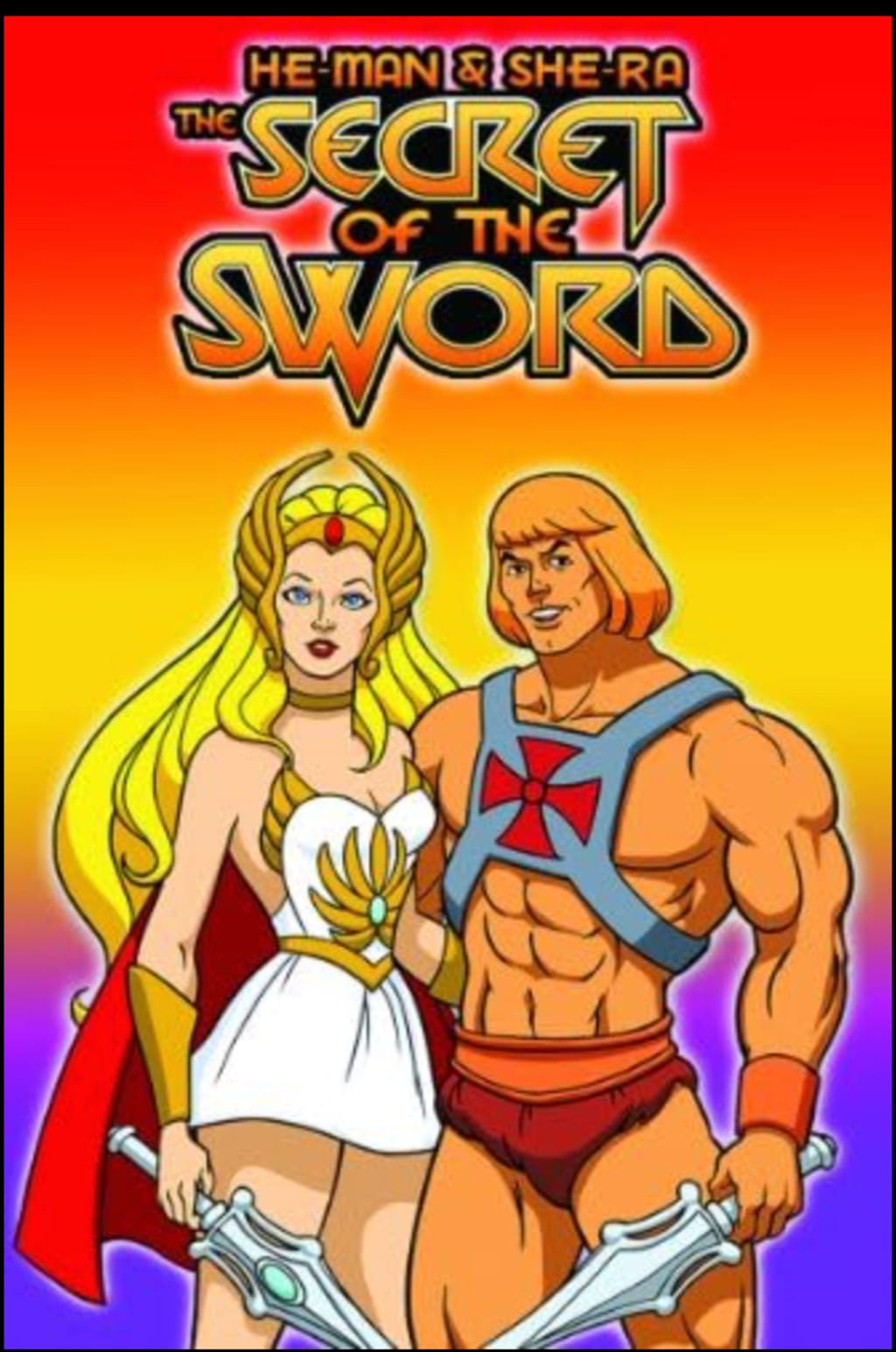
Filmation brought the Masters of the Universe to the big screen in 1985, introducing She-Ra to movie audiences. The critics, however, saw something less than heroic in this feature-length toy advertisement.

I Have the Power. Do I Have to Watch This?
I was a He-Man kid.
I had the toys. I watched He-Man and the Masters of the Universe on Saturday mornings. I remember the appeal of the whole ridiculous enterprise: the muscles, the magic swords, the monsters, the villains, and the general understanding that the fate of the universe could usually be settled by somebody shouting loudly enough.
It was glorious stuff when you were a kid.
What I don’t remember is seeing The Secret of the Sword in a theater back in 1985. Maybe I did. Maybe I didn’t. The memory isn’t there, and I’m not going to manufacture one just because the movie happens to be part of my childhood’s general pop-culture landscape.
Watching it as an adult, I discovered that there is a considerable difference between remembering He-Man fondly and spending roughly an hour and a half watching him lumber through a story that feels as though it belongs on television.
I was bored.
Not outraged. Not offended that somebody had tampered with my childhood. Just bored.
And that was a little disappointing. I wanted to enjoy revisiting this stuff. I remembered the toys and the television show, after all. Surely there was something here that could reconnect me with the kid who sat in front of the television on Saturday mornings.
Instead, I found myself understanding the contemporary critics who saw The Secret of the Sword as little more than a feature-length commercial for Mattel.
They weren’t exactly subtle about it in 1985, either.
Mattel Had a New Heroine to Sell
Released in March 1985, The Secret of the Sword brought He-Man to theaters and introduced his twin sister, Adora, to audiences who hadn’t yet encountered her television adventures.
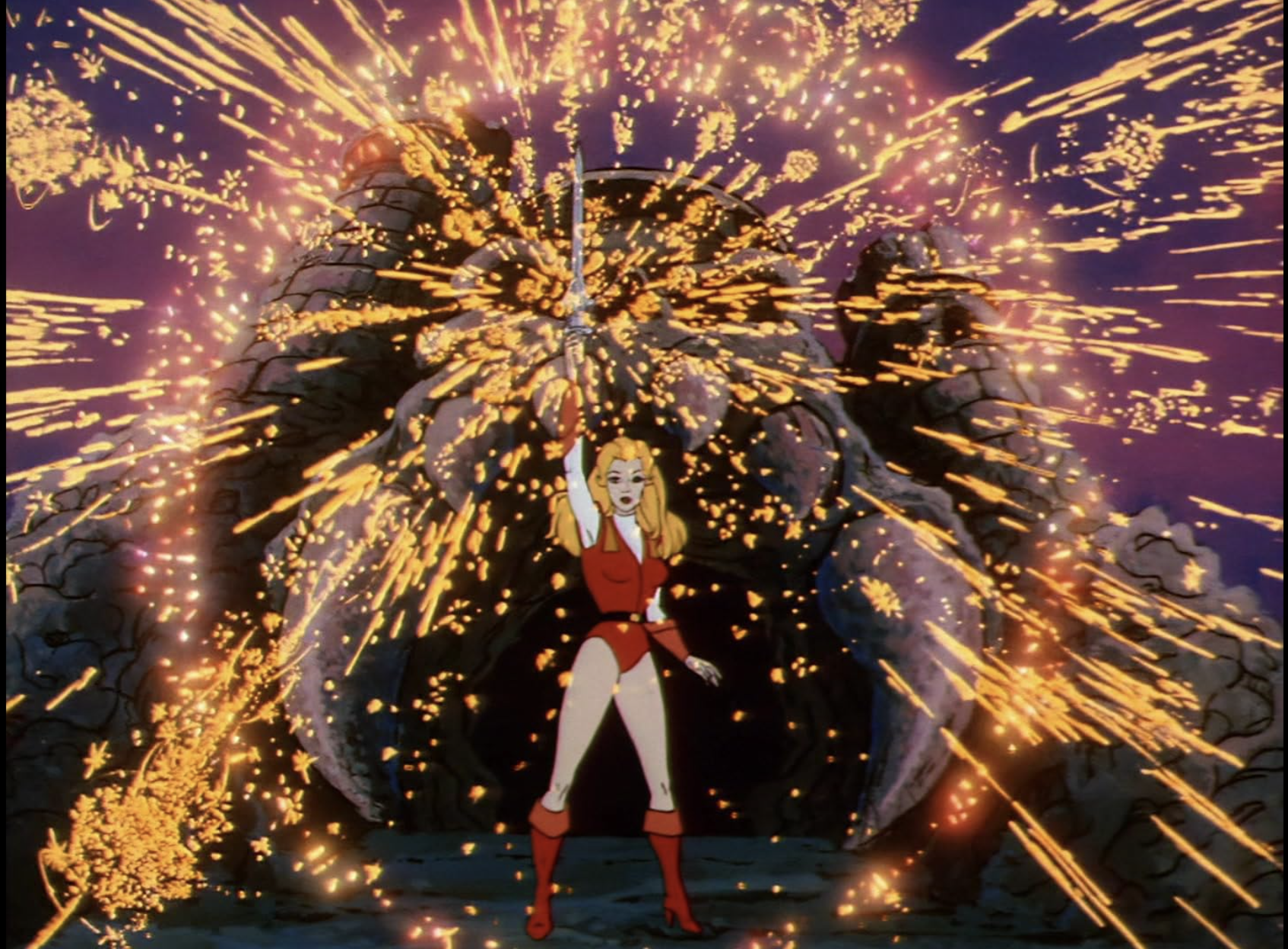
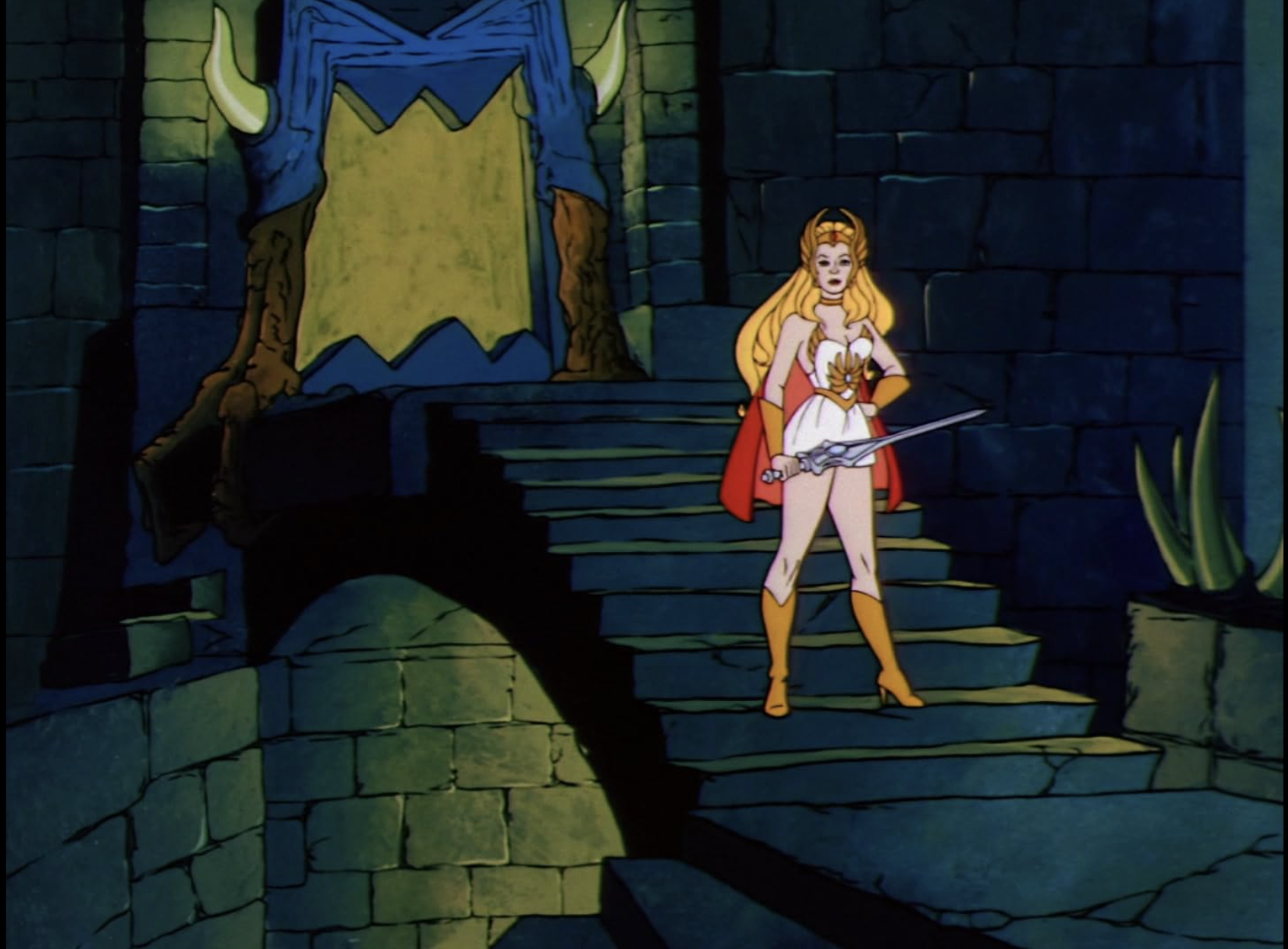
Produced by Filmation and distributed by Atlantic Releasing, the animated feature followed Prince Adam to Etheria, where he discovered that Adora had been raised by the evil Horde. Once she learned the truth about her past, Adora took up the Sword of Protection and became She-Ra, Princess of Power.
Hordak and his forces were in for trouble.
Mattel, meanwhile, had a new character to market.
The company’s Masters of the Universe toys had become a major success, helped along by the animated series that premiered in 1983. The television show gave the action figures personalities, histories, and adventures. Kids weren’t simply buying plastic warriors. They were buying pieces of a universe they could recreate on their bedroom floors.
I understood that appeal. I was one of those kids.
She-Ra expanded the franchise and gave Mattel a heroine around whom it could build a new toy line and television series. The character was connected to He-Man through their shared history, but she had her own world, enemies, and supporting cast.
There was nothing inherently wrong with any of this. Toy companies have been selling stories alongside their products for generations. A commercial motive doesn’t automatically prevent somebody from making good entertainment.
The question is whether the entertainment can stand on its own.
That’s where The Secret of the Sword starts having problems.
Five Episodes in Search of a Movie
Here’s the part that explains a lot about the finished product: The Secret of the Sword wasn’t originally conceived as a standalone theatrical adventure.
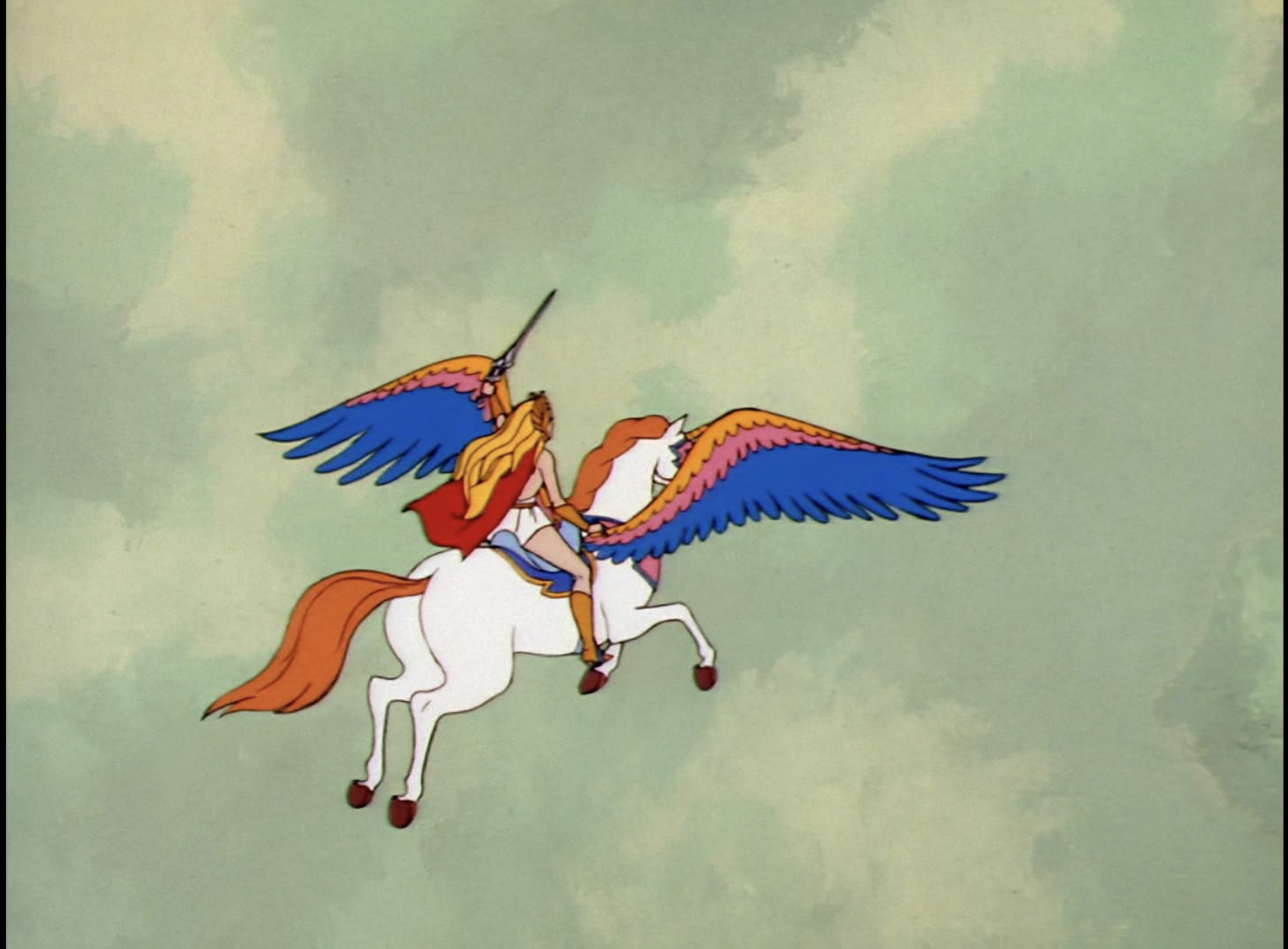
It was assembled from the first five episodes of She-Ra: Princess of Power, with edits to make the material work as a feature. The storyline was later broadcast in episodic form as The Sword of She-Ra during the television series’ September 1985 premiere week.
Screenwriters Larry DiTillio and Bob Forward helped establish the story, while five directors—Ed Friedman, Lou Kachivas, Marsh Lamore, Bill Reed, and Gwen Wetzler—received credit for the film.
The familiar Filmation voice cast returned, including John Erwin as He-Man and Prince Adam and Melendy Britt as She-Ra and Adora.
On paper, the arrangement made sense. Introduce She-Ra in theaters, establish her backstory, and send audiences home ready for the television series.
But there’s a difference between putting five television episodes together and creating a movie that feels as though it was designed for the big screen.
A feature film needs momentum. Its scenes should build toward something. Its characters should develop, its conflicts should escalate, and its ending should feel like the culmination of a story rather than the end of a television installment.
The Secret of the Sword often feels like television because that’s what it started out as.
The plot moves from one development to the next, introducing characters and conflicts while trying to establish an entirely new world. There’s plenty happening, but activity isn’t the same thing as excitement.
And the animation doesn’t help.
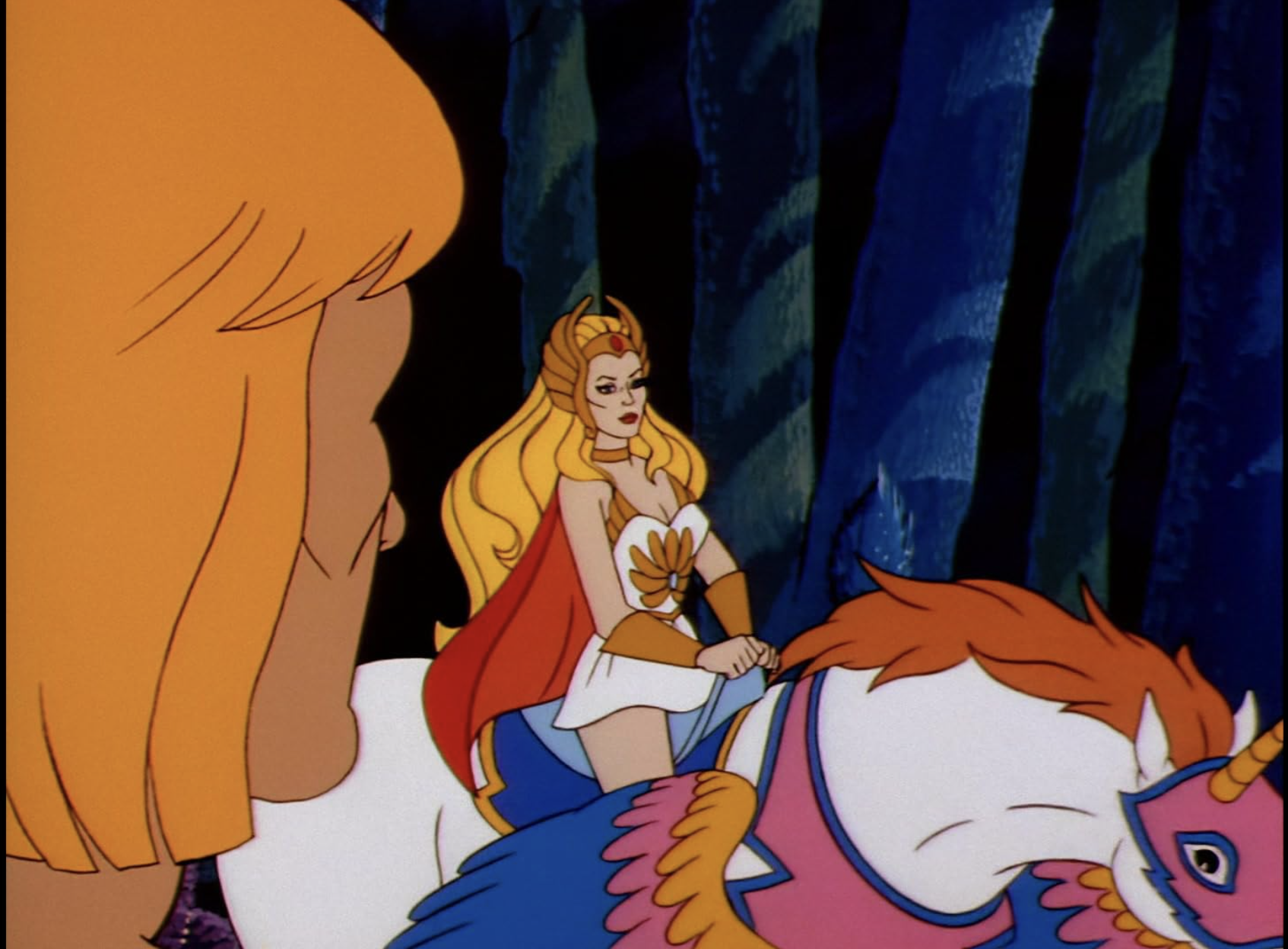
Filmation’s limited animation was a familiar feature of 1980s television. Characters held poses, backgrounds were reused, and movement was often restricted to whatever was necessary to get a scene from one line of dialogue to the next.
You could accept that on Saturday morning. You were watching a cartoon, and the toys waiting for you afterward were probably more important than the number of frames devoted to He-Man swinging his sword.
In a movie theater, the limitations become harder to ignore.
The screen is bigger, the running time is longer, and the audience has been asked to pay for something more than another installment of a television show.
Watching The Secret of the Sword now, I found myself thinking less about the excitement of discovering Etheria and more about how long it was taking to get anywhere.
That isn’t the sort of reaction a childhood favorite is supposed to inspire.
Then again, this wasn’t a childhood favorite I remembered watching in the first place.
The Critics Weren’t Buying It
Contemporary reviewers had little patience for the film’s shortcomings.
Mick Martin of The Sacramento Union called it “a 90-minute commercial aimed at kids.” He criticized the animation as “terrible” and described the story as “a pastiche of the ‘Star Wars’ movies and Superman comics.”
Martin also questioned how the five directors had approached the production, speculating that they had worked separately on different sequences before the material was assembled.
His verdict was one star out of five.
Joe Butkiewicz was even harsher, calling the film “technically inept and ethically bankrupt.”
His objection went to the heart of the commercial-versus-artistic argument. As he put it, “the concern here seems to be the promotion of toys, rather than presenting an adventure story to kids.”
That’s a pretty serious charge. It also raises a question worth asking about children’s entertainment generally: is the movie there to tell a story, or is the story there to sell the movie’s associated products?
Of course, those objectives can coexist. Plenty of movies have been made to sell toys, and plenty of them have turned out to be entertaining.
Bututkiewicz wasn’t persuaded. He found the animation cheap and considered the film inferior to The Care Bears Movie, awarding it a one-star “Poor” rating.
Jay Carr had a similar reaction to the running time, observing that the film “may be the longest commercial spot in movie history.”
“It’s so busy selling that it scarcely has time to rout the bad guys,” Carr wrote.
Charles Solomon compared the experience to “sitting through 90 minutes of Saturday-morning television. Only the size of the screen has been changed.”
Desmond Ryan of The Philadelphia Inquirer was no kinder, describing the production as “a feature-length piece of stunningly incompetent animation.”
The reviews weren’t identical, but the complaints kept circling back to the same things: the animation looked cheap, the story felt episodic, and the film didn’t seem to offer enough to justify its theatrical presentation.
It’s difficult to dismiss all of that as a bunch of adults failing to appreciate a cartoon made for children.
Children deserve good entertainment, too.
And if the best defense of a theatrical movie is that it might keep a toddler occupied on a rainy afternoon, perhaps the filmmakers should have aimed a little higher.
Nostalgia Isn’t a Magic Sword
I don’t have any particular problem with movies that exist to sell toys. I’m not going to pretend that the entertainment industry was an innocent place before somebody figured out that a popular character could move merchandise.
The 1980s were full of commercial entertainment, and some of it was terrific.
I still remember playing with He-Man toys and watching the cartoon. Those memories haven’t disappeared just because I found The Secret of the Sword dull.
But the memories belong to the toys and the television show. They don’t automatically transfer to every other product associated with the franchise.
That’s something we don’t always acknowledge when we revisit the entertainment of our childhoods. Sometimes we love the original experience. Sometimes we love the memory of it. And sometimes we discover that the thing we’ve returned to isn’t nearly as entertaining as we hoped.
Nostalgia can make us generous. It can also make us feel obligated to enjoy something simply because it belongs to an era we remember fondly.
I’m not interested in doing that.
The Secret of the Sword has historical significance. It introduced She-Ra to theatrical audiences, established the foundations of her original animated mythology, and helped launch a new branch of the Masters of the Universe franchise.
The film also illustrates how closely toys, television, and movies were connected in the 1980s. Mattel had a successful property, Filmation had the means to animate it, and a theatrical release offered another way to introduce a new character to the public.
The strategy worked well enough commercially. Reported box-office figures put the film’s domestic gross at approximately $7.6 million against an estimated $2 million production budget, although gross receipts alone don’t tell us how much money ultimately reached the producers.
She-Ra would go on to become a recognizable character in her own right, eventually inspiring a new generation through the 2018 animated series She-Ra and the Princesses of Power.
All of that matters.
It just doesn’t make the original movie more exciting to watch.
By the Power of Grayskull, I’m Ready to Turn This Off
I went into The Secret of the Sword with a connection to its world. I had played with the toys. I’d watched He-Man on Saturday mornings. I understood why the characters appealed to kids, because I was one of those kids.
What I didn’t find was a movie that made me feel particularly nostalgic.
Instead, I watched a television storyline stretched across a theatrical running time, with limited animation and a narrative that never gave me much reason to care about what happened next.
The contemporary critics who called it a toy commercial weren’t entirely wrong. Their language was often brutal, but their central complaint remains difficult to ignore.
This was a film with a commercial purpose and a ready-made audience. What it lacked, at least for me, was the entertainment value needed to make that audience’s trip to the theater worthwhile.
Maybe I would have enjoyed it more at seven years old. Maybe the opportunity to see He-Man and She-Ra on a big screen would have been enough. I can’t say. I don’t remember seeing it then, and I’m not going to invent a childhood memory to give the movie a better review.
I can only judge the experience I had watching it now.
And the experience was boring.
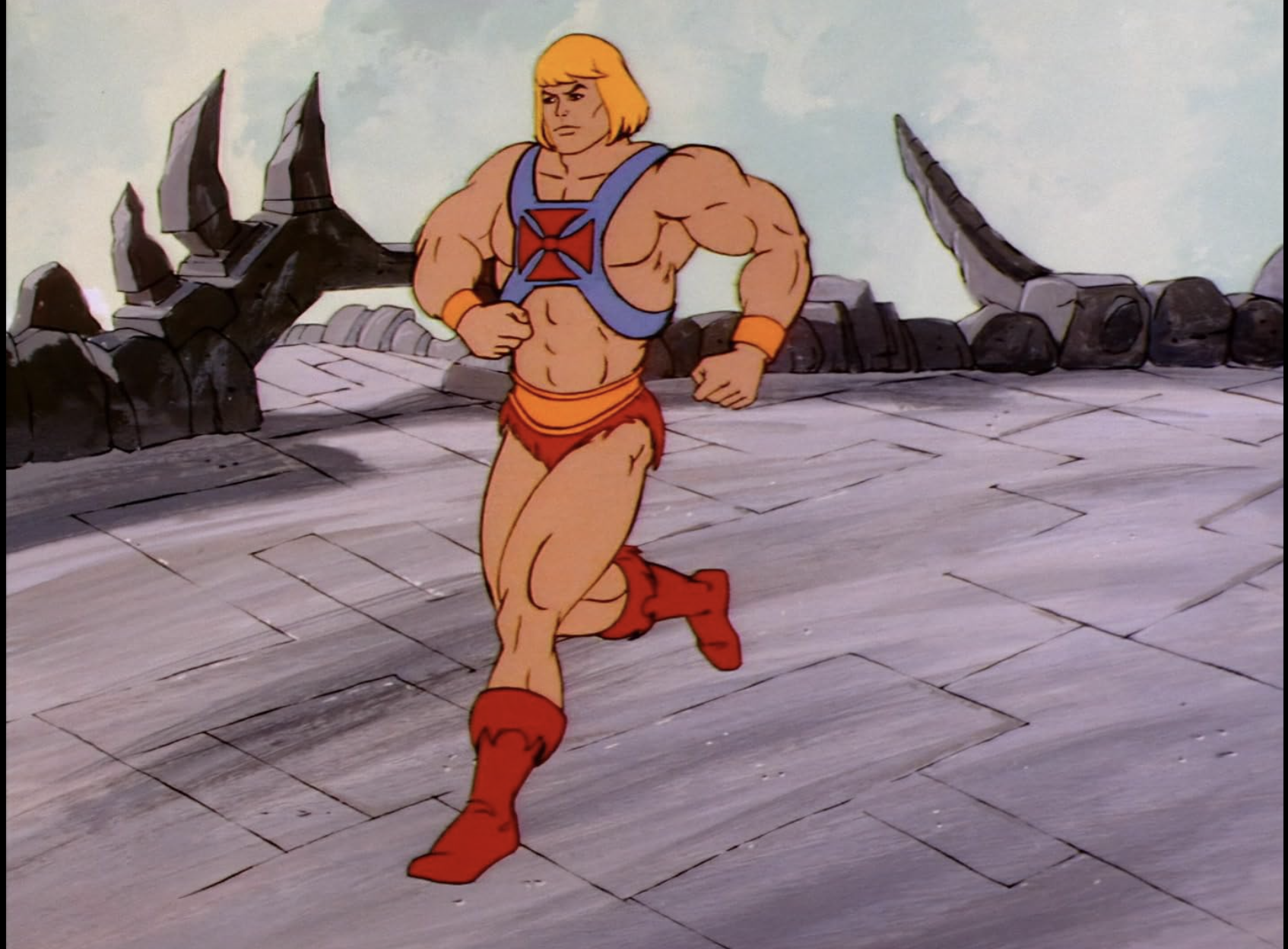
I still have affection for the world of He-Man. I understand the appeal of the toys, the cartoon, and the absurdly muscular hero who could solve most of his problems by raising a sword toward the sky.
But nostalgia has its limits.
Sometimes you return to an old favorite and discover that the magic is still there.
Sometimes you discover that you were mostly having fun with the toys.
For me, The Secret of the Sword was very much the latter.
I have the power. I just don’t have the patience for another viewing.
Revisit The Secret of the Sword (1985), the theatrical debut of She-Ra. Explore Filmation’s He-Man movie, its toy-driven origins, and the scathing contemporary reviews.
Tags
The Secret of the Sword, He-Man, She-Ra, Masters of the Universe, Filmation, Mattel, 1980s Animation, 1980s Movies, Princess of Power, Animated Movies, Movie Reviews, Movies of the 80s.
Contemporary Newspaper Reviews
Mick Martin, The Sacramento Union — review of The Secret of the Sword.
Joe Butkiewicz — contemporary review of The Secret of the Sword.
Jay Carr — contemporary review of The Secret of the Sword.
Charles Solomon — contemporary review of The Secret of the Sword.
Desmond Ryan, The Philadelphia Inquirer — review of The Secret of the Sword.
Production and Historical References
Filmation and Mattel production credits for The Secret of the Sword (1985).
Original theatrical advertisements and promotional materials for The Secret of the Sword.
She-Ra: Princess of Power — original animated television series and its five-part opening storyline, The Sword of She-Ra.
Contemporary newspaper advertisements documenting theatrical screenings, promotional comics, and sweepstakes.
Box-office and production-budget records for The Secret of the Sword.
Editorial note: The film’s reported running time, box-office total, and production budget vary across secondary sources.
About the Creator
Movies of the 80s
We love the 1980s. Everything on this page is all about movies of the 1980s. Starting in 1980 and working our way the decade, we are preserving the stories and movies of the greatest decade, the 80s. https://www.youtube.com/@Moviesofthe80s
Enjoyed the story? Support the Creator.
Subscribe for free to receive all their stories in your feed.
Comments
There are no comments for this story
Be the first to respond and start the conversation.