
The River: When Hollywood Tried to Save the American Farm
Mark Rydell’s 1984 drama put Mel Gibson and Sissy Spacek on the front lines of a very real American crisis—and discovered that sometimes the biggest enemy isn’t the river.


The Farm Is Dying
There is something almost strange about watching The River today.
Released in 1984, Mark Rydell’s sprawling drama arrived at a moment when Hollywood suddenly became fascinated with the American farmer. The River was one of three major 1984 movies—alongside Country and *Places in the Heart—to confront the increasingly desperate state of American agriculture.
That probably wasn’t a coincidence.
The American family farm was disappearing beneath a mountain of debt, foreclosures, corporate consolidation and economic forces that seemed completely indifferent to the people working the land. For generations, the farm had represented something close to the American ideal: work hard, raise a family, own your land and pass it down to your children.
By the 1980s, that bargain was beginning to look broken.
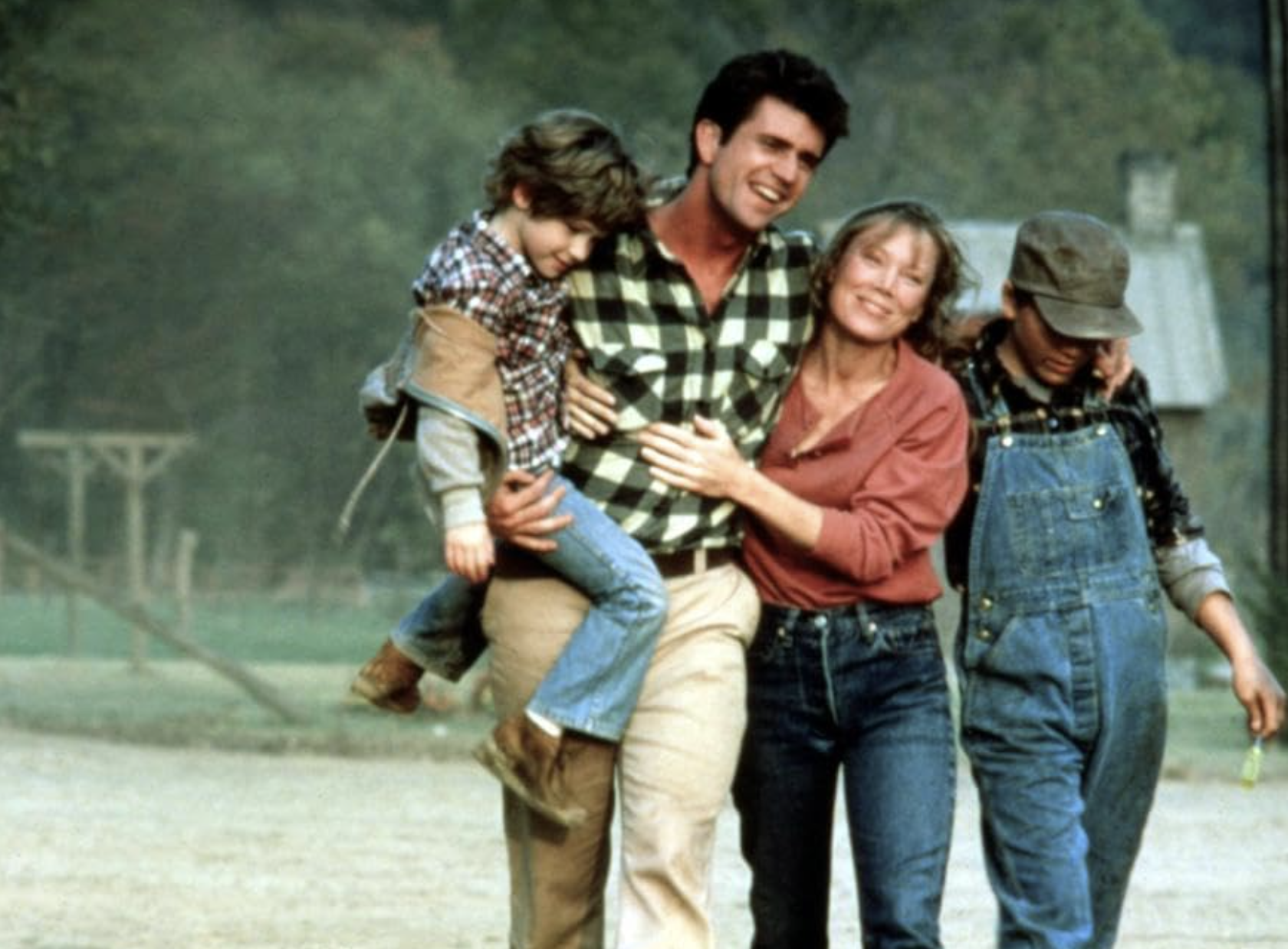
The River puts that collapse into the middle of a Tennessee farm family already being squeezed from every direction.
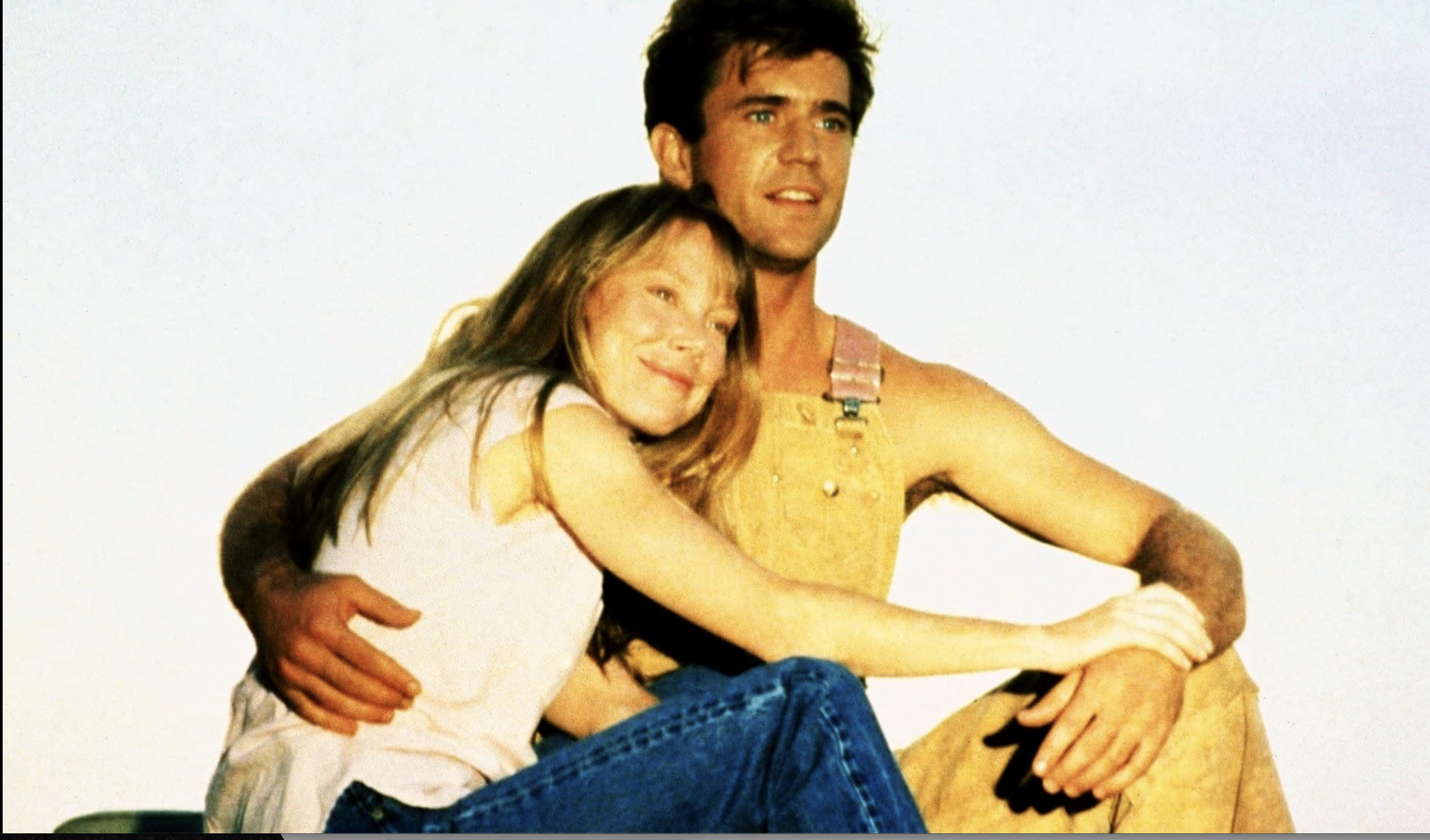
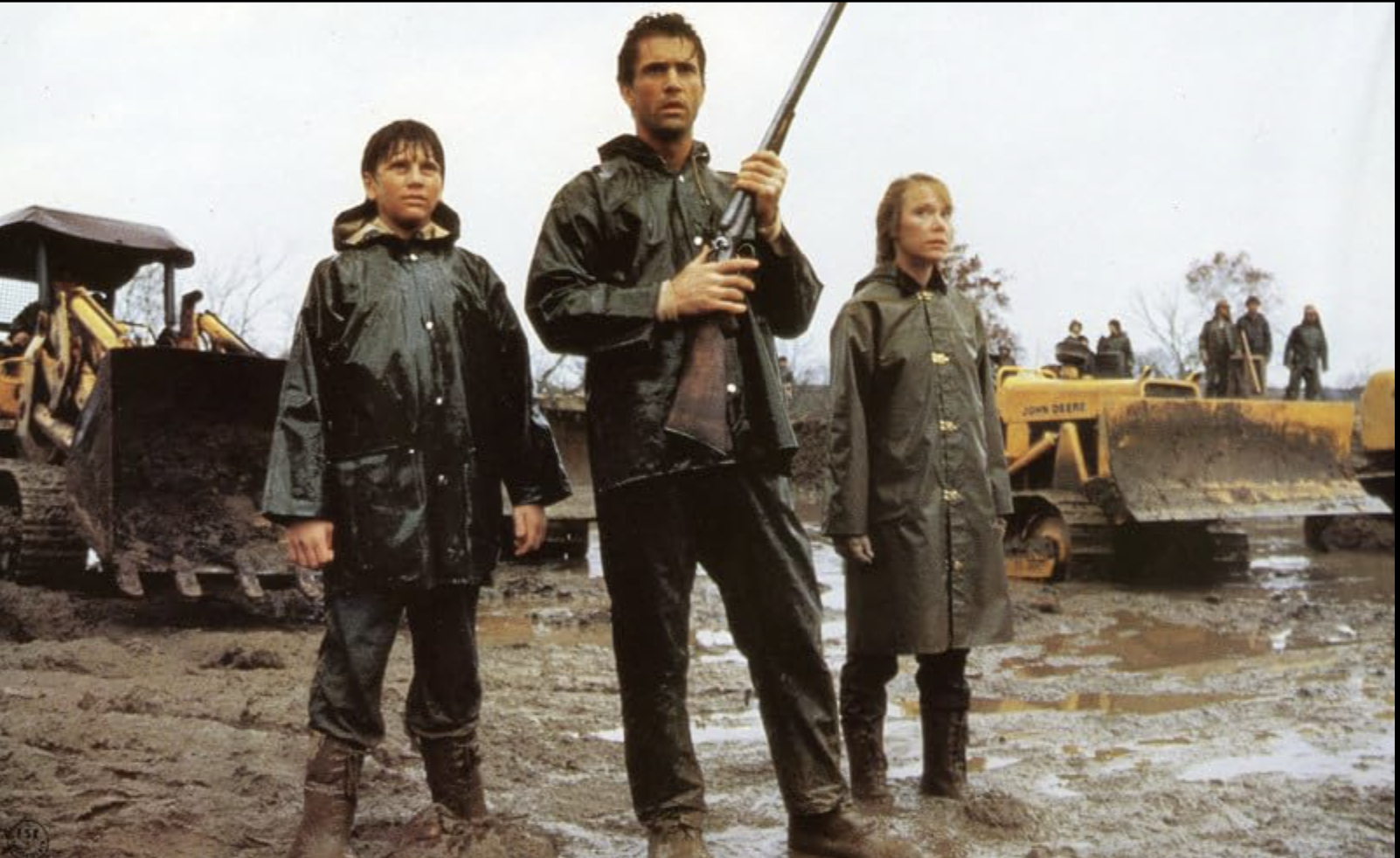
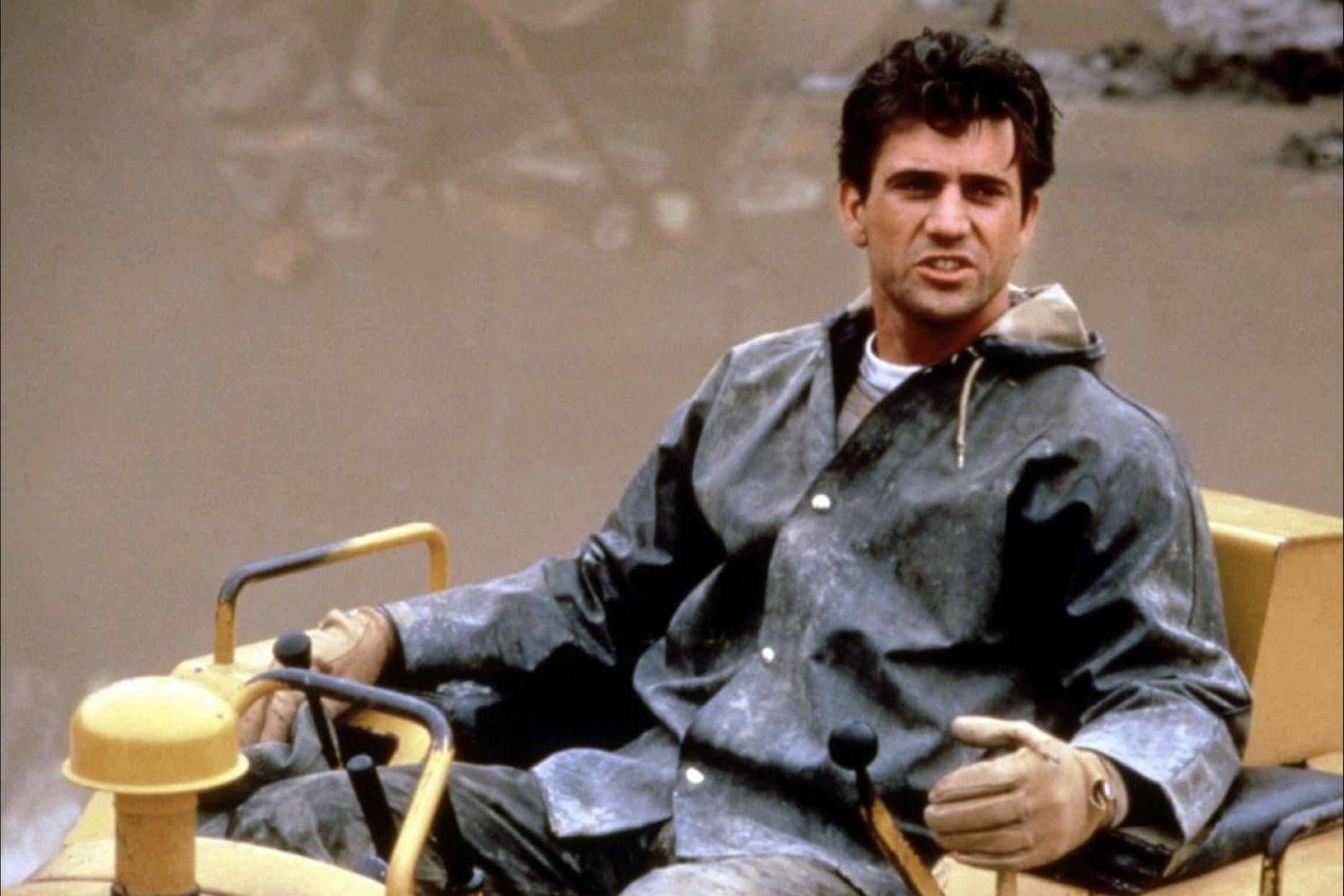
Sissy Spacek plays Mae Garvey, a determined wife and mother trying to hold her family together. Mel Gibson, making his first major American starring appearance, plays her husband Tom. Together, they are fighting the river, the bank, a land developer and an economy that seems determined to make sure they lose.
And the remarkable thing about The River is that the family isn’t simply fighting to save a farm.
They’re fighting to preserve a way of life.
A Very Different Kind of Mel Gibson
It is easy to forget just how early Gibson was in his American career when The River arrived.
He had already become an international star through Mad Max and The Road Warrior, but Hollywood was still trying to figure out exactly what to do with him. Here, there was no post-apocalyptic wasteland and no exploding gasoline tanker.
There was a tractor.
And a Tennessee accent.
Gibson actively pursued the role of Tom, even though there were concerns about whether his Australian accent could disappear convincingly enough beneath a Southern drawl. He spent his time away from filming The Bounty working on the voice.
It worked well enough to get him the part.
Harrison Ford had also been considered for Tom, while Jessica Lange was initially offered Mae before ultimately moving on to Country.
Rydell, fresh from directing On Golden Pond, wanted Spacek badly. He saw in her the kind of toughness the role required—not the exaggerated toughness of a Hollywood heroine, but the quiet determination of someone who has spent her entire life doing difficult things because somebody has to do them.
Spacek would prove to be one of the film’s greatest assets.
The Enemy Isn’t Just the River
The screenplay by Robert Dillon and Julian Barry was inspired by real stories of Tennessee farmers pushed into industrial work to keep their farms alive.
That detail gives The River much of its power.
Tom isn’t simply fighting a bad harvest. He is being pushed into a system where saving the family farm requires him to leave it.
The irony becomes particularly brutal when Tom and other farmers take jobs at a steel foundry, only to discover that they are unknowingly being used as strikebreakers.
The film understands something that many economic dramas don’t: desperation doesn’t always give people good choices.
Sometimes it gives them choices that hurt other desperate people.
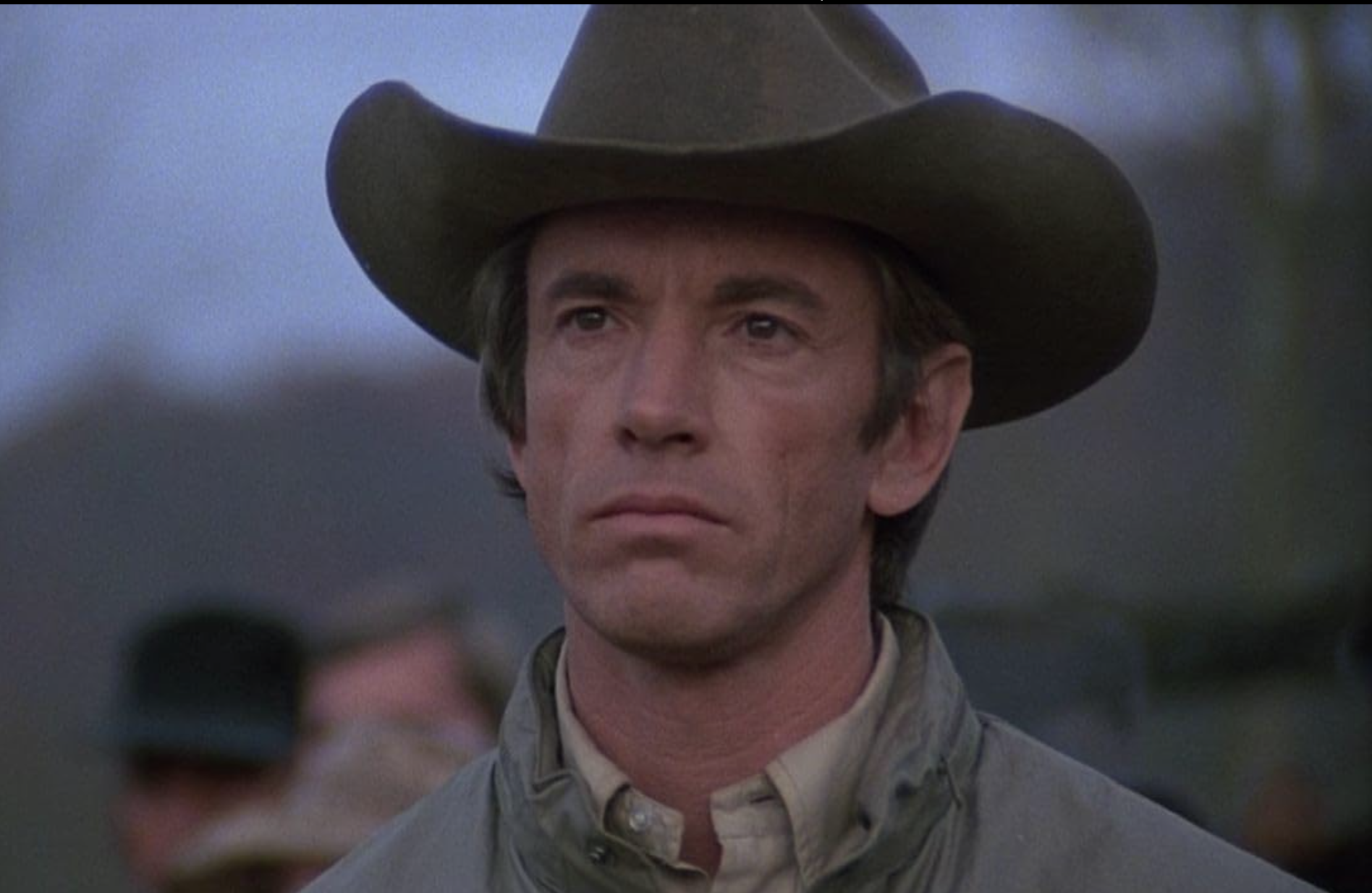
Meanwhile, the Garveys are being squeezed by their bank and targeted by a predatory land developer played by Scott Glenn. The river itself seems almost like another character, threatening to wipe out everything the family has spent generations building.
The result is a movie in which nearly every road leads back to the same question:
How much can a family sacrifice before there is nothing left to save?
Hollywood Builds a Farm
Rydell wasn’t interested in making The River look like a Hollywood approximation of rural Tennessee.
The production went to considerable lengths to make the world authentic.
Filming took place primarily in East Tennessee, with additional work at a Birmingham steel mill. Universal purchased roughly 440 acres along the Holston River and constructed a fully functioning farm set there, which the production then aged and weathered until it looked like a place that had actually been lived on for decades.
The cast spent weeks in the community before filming, learning local speech patterns and becoming familiar with farming equipment.
Then came the floods.
The production worked with the Tennessee Valley Authority to coordinate controlled water releases from Fort Patrick Henry Dam, allowing Rydell to capture the kind of flooding that could make the family’s entire struggle feel terrifyingly real.
This was expensive, complicated filmmaking.
But Rydell had something of an advantage behind the camera.
He reunited with cinematographer Vilmos Zsigmond, whose photography gives The River the sweeping, almost painterly look of an American landscape painting. The farm isn’t just a setting. It is something beautiful enough to make the possibility of losing it genuinely painful.
And then there is John Williams.
John Williams Goes to the Farm
John Williams is probably the last composer most people associate with a struggling Tennessee farm.
That’s part of what makes his score for The River so effective.
There are no giant orchestral declarations telling us that the Garveys are Important American Heroes. Instead, Williams creates something lyrical and deeply rooted in Americana, drawing on the musical traditions associated with composers like Aaron Copland.
The score gives the movie a sense of history.
It sounds like a place that existed long before Tom and Mae—and might disappear after them.
For a movie about a vanishing way of life, that is exactly the right emotional register.
A Beautiful Movie That Couldn’t Quite Find Its Story
The problem with The River is that all of its individual pieces are better than the movie they create.
The performances are strong. The photography is gorgeous. The production is ambitious. Williams’ score is beautiful.
But the screenplay occasionally seems to be fighting with itself.
Is this a family drama?
A romance?
An economic tragedy?
A social protest movie?
A disaster picture?
A love letter to the American farmer?
The answer is essentially all of them.
And sometimes that is too much.
Vincent Canby and other critics admired the craftsmanship while finding the story overly sentimental and thematically muddled. Gibson’s Tom could also be difficult to embrace, a stubborn man whose determination sometimes comes across less like heroism and more like self-destruction.
Gibson himself would later suggest that he may have been too young for the role.
Spacek, meanwhile, emerged with much of the critical praise. Mae feels like the emotional center of the movie, the person who understands that survival isn’t necessarily about winning. Sometimes it’s simply about refusing to quit.
The $18 Million Farm Movie
Universal reportedly spent around $18 million making The River, an enormous investment for a movie about people struggling to keep a farm.
The studio gave it a limited release on December 19, 1984, in part to position it for awards consideration. It expanded in January 1985, but audiences didn’t exactly stampede toward the box office.
The film ultimately made only about $11.5 million domestically.
It was a financial disappointment.
Still, Hollywood clearly recognized the quality of what had been put on screen. The River received four Academy Award nominations and won a Special Achievement Oscar for Sound Effects Editing.
The movie may not have found a large audience, but the industry noticed the craftsmanship.
The Movie Hollywood Forgot
Today, The River sits in the enormous shadow of Places in the Heart, the other 1984 farm drama that became the more enduring classic.
That’s a little unfair.
The River is not a perfect movie. It can be sentimental, occasionally heavy-handed and frustratingly unfocused.
But there is something increasingly fascinating about it.
It captures a moment when Hollywood looked at the American family farm and realized that something fundamental was disappearing.
The movie wasn’t interested in turning that disappearance into statistics. It wanted us to see the people standing in the middle of it.
That may be why the film’s best moments still work.
Tom and Mae aren’t fighting some abstract economic crisis. They’re fighting to keep a roof over their children’s heads. They’re fighting to keep their land. They’re fighting to make sure that the work of previous generations wasn’t all for nothing.
And eventually, that’s what the river becomes.
It isn’t just the water rising around the house.
It is everything changing around them.
The banks are changing. Industry is changing. Agriculture is changing. America is changing.
And the Garveys are discovering that hard work may no longer be enough to keep what they’ve earned.
Perhaps the most poignant thing about The River is that Hollywood knew this story was worth telling in 1984.
It just didn’t know how quickly the America it was trying to preserve was already disappearing.
Universal eventually gave the 440-acre farm property used for the production to Hawkins County, Tennessee.
In a way, that feels like the perfect final footnote to The River.
The movie tried to preserve a piece of American life on film.
And for a little while, the land itself survived too.

About the Creator
Movies of the 80s
We love the 1980s. Everything on this page is all about movies of the 1980s. Starting in 1980 and working our way the decade, we are preserving the stories and movies of the greatest decade, the 80s. https://www.youtube.com/@Moviesofthe80s
Enjoyed the story? Support the Creator.
Subscribe for free to receive all their stories in your feed.
Comments
There are no comments for this story
Be the first to respond and start the conversation.