
The Opening Credits Say Jeffrey Lau, Not Stephen Chow
What A Chinese Odyssey reveals about authorship, industrial infrastructure, and the lazy comfort of "he's just not as good anymore."
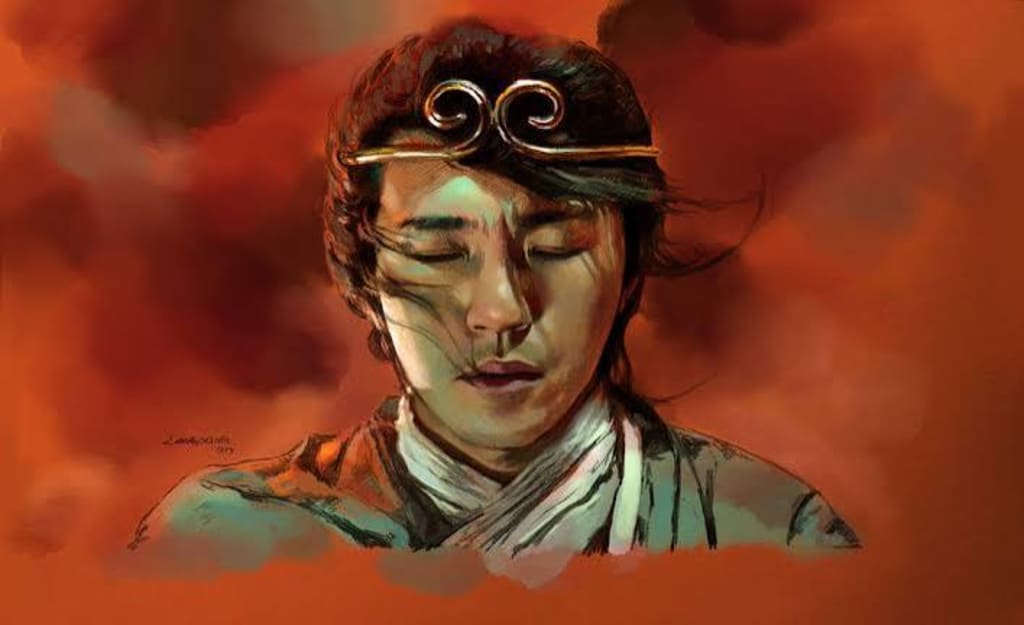
In the opening credits of A Chinese Odyssey, the director's credit reads Jeffrey Lau. Not Stephen Chow.
There is nothing to argue about this fact. Stephen Chow is the lead actor. He is Joker, he is Sun Wukong, he is the man standing below the city wall watching the Sunset Warrior and saying, "He looks like a dog." His performance carries the part of the film people remember most. But the director's credit is Jeffrey Lau, and that is there in black and white.
The problem lies in the words "who made it." When audiences ask "who made it," they are often not asking about the credit. They are asking who the film's soul belongs to. So A Chinese Odyssey is naturally placed in the "Stephen Chow works" sequence, and Jeffrey Lau's name becomes background. On the other side, some people use the director's credit as a weapon and say, "This wasn't made by Stephen Chow," as if Stephen Chow's performative contribution can be reset to zero with one click. Both approaches are lazy.
A more accurate formulation is this: A Chinese Odyssey is a product of a specific industrial and cultural context, directed by Jeffrey Lau, starring Stephen Chow, and deeply participated in by him. Jeffrey Lau's narrative structure, comic pastiche, and emotional orchestration; Stephen Chow's performance rhythm, facial control, and shifts between comedy and pathos; the crews and production conditions of Hong Kong cinema's golden age; plus the way audiences at the time accepted "mo lei tau" nonsense comedy. Remove any one of these, and it would not be the A Chinese Odyssey we have now. Giving all the credit to Stephen Chow disrespects Jeffrey Lau. Using the director's credit to deny Stephen Chow disrespects cinema.
The same logic applies to Kung Fu Hustle. It is a film directed by Stephen Chow, and Columbia Pictures was one of its important investors and international distributors. Saying "Columbia was behind Kung Fu Hustle" is fine. The density of the Pig Sty Alley set, the completion of the action design, the fluency of the genre fusion: these were supported by a mature industrial system. But to conclude from that "Kung Fu Hustle is not a Stephen Chow work" is absurd. Investors and distributors can deeply affect a film, but the director's credit and authorship cannot be wiped out by a capital background.
There is one observation in the original post that has value: Stephen Chow's best works tend to appear in periods when Hong Kong's film industry was still mature and his collaborative teams were still strong. Screenwriters, cinematographers, editors, action directors, art directors, composers, the production system. Call them infrastructure, not background. Stephen Chow's comedy needs precise rhythm and a reliable production team to catch it. The more complete the industrial system, the easier it is for his ideas to be realized. This observation holds up.
But to push it into "the stronger the film industry, the stronger Stephen Chow; when the industry is weak, he is exposed" goes too far. Under the same industrial system, other people also made bad films. The directorial control Stephen Chow showed in King of Comedy, Shaolin Soccer, and Kung Fu Hustle was not an answer automatically written by Columbia or Hong Kong's industry. Industry provides conditions and constraints. It does not provide automatically generated masterpieces.
The original post says that Stephen Chow later stopped working with Columbia because "Chow felt Columbia was meddling too much, and Columbia felt Chow was just an actor who understood nothing and had no right to look down on the industry's production standards and dramatic structure." Backstage claims like this sound dramatic, but outsiders can hardly verify them. Disagreements between collaborators over creative control, production standards, editing rights, and distribution strategy are extremely common in the film industry. To write it as "Columbia thought Stephen Chow understood nothing" makes it look more like rumor than a fact that can serve as an argument.
Then there is the bigger problem. The original post uses "after Kung Fu Hustle, Stephen Chow's works got worse one after another" to prove "Columbia was right." This is hindsight bias. In a collaborative disagreement, who was right cannot be inferred backward from the later reputation of the works. A director failing later does not mean every intervention by the producers back then was correct. A director succeeding later does not mean every refusal of intervention back then was wise. If good box office later proves that refusing all intervention back then was entirely right, then film collaboration becomes a gamble.
The original post also says: Stephen Chow's talent lies in performance, not directing; the films he directed are "somewhere between third-rate and second-rate." This is half right.
Stephen Chow is first and foremost a superlative comedy actor; there is almost no controversy about this. His facial control, sense of rhythm, physical comedy, and shifts between comedy and pathos are top-tier in Chinese-language cinema. His performative authorship is so strong that audiences attribute directorial credit to him as well. But to say he "doesn't understand screenwriting" and that his directing is "only third-rate to second-rate" is too harsh. The staging in King of Comedy where Yin Tiantiao shouts "Work hard!" at the sea; the rhythm of the "If a person has no dreams" scene in Shaolin Soccer; the ensemble and action scenes of Pig Sty Alley in Kung Fu Hustle: these cannot be explained by "third-rate to second-rate." Stephen Chow as a director has clear strengths: control of comic rhythm, guidance of performance, instinct for genre mixing, and design of visual gags. He also has obvious weaknesses: narrative structure sometimes slackens, ensemble control is unstable, and his later works tend to repeat themselves. A fairer evaluation is this: Stephen Chow is a comedy creator with a strong authorial voice, with both peaks and limitations as a director, but it is not appropriate to cut him down with a single "third-rate to second-rate."
The original post cites Jiang Wen, Zhang Yimou, Scorsese, and Kurosawa to prove that "first-rate directors never run out of talent." This argument has momentum, but it does not hold logically. These directors are top-tier samples; they cannot represent all directors. Using the late-career states of top masters to judge Stephen Chow is itself a selective comparison. Masters also fail. Zhang Yimou's creative curve also has obvious ups and downs. Wong Jing said, "Creation doesn't rely on inspiration. If you say you have no inspiration and can't write, you're just bad." This is half true: professional creators cannot live on inspiration. But it cannot prove that no director ever declines. Professionalism can guarantee a floor; it cannot guarantee that every film is a peak. The decline in quality of Stephen Chow's later works cannot be simply attributed to "getting old" or "having no inspiration," but neither can one deny changes in creative state, collaborative teams, the industrial environment, and market logic. Compressing a complex problem into "this is just his level" looks sharp, but it is only another kind of laziness.
The sharpest part of the original post mocks the fan narrative that Stephen Chow was the "emperor" on set, a one-man show, everything decided by him alone; but when it came to the credits, he suddenly fell silent and let other people's names go up. This mockery has a point. Mythologizing Stephen Chow as "all the good works were actually directed by him" disrespects the facts of the credits and also disrespects collaborators such as Jeffrey Lau, Lee Lik-chi, and Wong Jing. Behind Hong Kong cinema's golden age were capital and production systems; an actor, no matter how big a star, could not be "emperor" on every set. Calling Stephen Chow "Emperor Xian on set" is caustic, but it points out a logical hole in the fan narrative.
But demythologizing is not the same as inverted mythologizing. Just because fans attribute all credit to Stephen Chow, one cannot turn around and say Stephen Chow is "nothing without the industry," "a third-rate director," "this is just his level." That is likewise simplifying complex creation into a single conclusion. Fan myth and anti-myth are two sides of the same coin: both assume a film can have only one author; the only difference is whose name they write as the author.
If the question is "Why can't Stephen Chow make another A Chinese Odyssey?" the most direct answer is: because A Chinese Odyssey was never a film independently directed by Stephen Chow. It was directed by Jeffrey Lau, starred Stephen Chow, and jointly completed by Hong Kong's film industry and the culture of the time. Asking Stephen Chow "why can't you make it" already over-attributes a collective work to a single actor.
But the more worthwhile questions are: Why, after Kung Fu Hustle, has Stephen Chow found it difficult to reproduce the reputation and authorship of his early works? Why did Stephen Chow's comedy system fail after Hong Kong's film industry declined? Why does the audience's expectation of the three words "Stephen Chow" become a burden on his creation? Why do we always attribute collective creation to a genius, and then, when the genius stumbles, reduce him to nothing?
Whoever is written in the opening credits is whoever is written there, but credits are not responsible for explaining how a scene was acted into being. Jeffrey Lau's name is in the director's column, Stephen Chow's performance is in every frame, and the industrial system is in the rolling names at the end. Acknowledging that these three things are true at the same time is more useful than arguing about "who really made it."
About the Creator
Jin
Writer of reamstories
https://reamstories.com/jin
Enjoyed the story? Support the Creator.
Subscribe for free to receive all their stories in your feed. You could also become a paid subscriber, letting them know you appreciate their work.
Comments
There are no comments for this story
Be the first to respond and start the conversation.