
The Odyssey Movie Review: Can Christopher Nolan Deliver a True Epic?
Is The Odyssey worth watching?

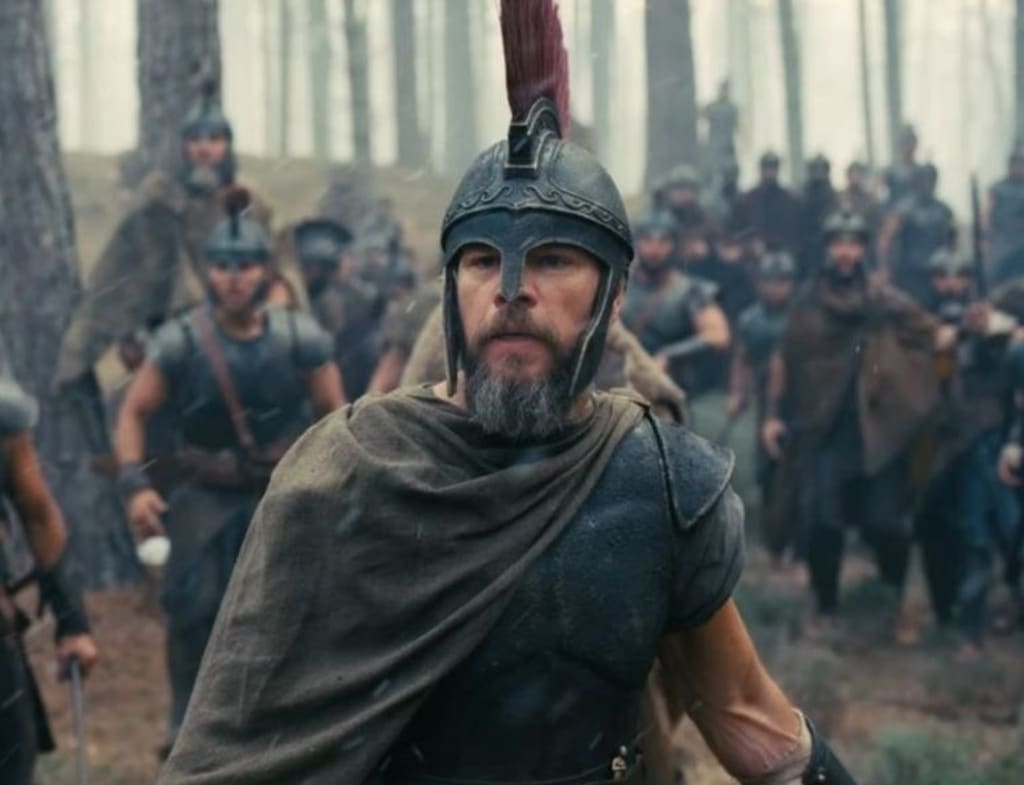
Why Historical Epics Deserve a Comeback - And Why The Odyssey Has Me Concerned
There’s something timeless about the historical epic. Giant armies clashing on dusty battlefields. Mythical creatures lurking beyond the horizon. Legendary heroes trying to outwit gods, monsters, and fate itself. It’s the kind of grand-scale storytelling Hollywood used to excel at.
And honestly? It’s a genre that feels long overdue for a real return.
Sure, studios have flirted with the formula over the last twenty years. Some attempts landed beautifully, others crashed and burned. But when these movies work, they create the kind of cinematic spectacle modern blockbusters rarely match.
Movies like 300 proved audiences still had an appetite for swords-and-sandals storytelling. That film may have been wildly stylized and historically questionable, but it understood one crucial thing: epics are supposed to feel larger than life.
Now Hollywood seems ready to try again.
Christopher Nolan’s The Odyssey Could Be the Next Great Epic
Christopher Nolan has officially turned his attention toward Homer’s Odyssey, assembling a massive ensemble cast and tackling one of the most influential adventure stories ever written.
At least on paper, it sounds incredible.
The story follows Odysseus, the Greek king trying to return home after the Trojan War. After spending ten years fighting, he somehow manages to spend another decade getting lost at sea thanks to angry gods, monsters, temptations, and catastrophes at nearly every stop along the way.
Meanwhile, back home in Ithaca, his wife Penelope struggles to hold everything together while rival suitors circle the throne like vultures.
What makes the tale so fascinating is the sheer scale of the journey. Mythology, religion, survival, war, loyalty, revenge, monsters, and human endurance all collide in one sprawling narrative. Few stories carry this much dramatic weight.
Which is why my reaction to the trailer surprised me.
Instead of excitement, my overwhelming response was… indifference.
And that’s strange because this project seemingly has every ingredient needed for success.
- One of the greatest adventure stories ever written
- A huge all-star cast
- An acclaimed director with multiple blockbuster hits
So why does it all feel strangely flat?
The Challenge of Adapting Homer’s Odyssey
One major complication with adapting ancient literature is translation.
The Odyssey was originally written in ancient Greek, meaning every modern version is shaped heavily by whoever translates it. Different translations can create completely different tones, themes, and interpretations.
Nolan has reportedly cited the 2017 translation by Emily Wilson as a major influence on the film.
That matters because translators inevitably bring their own worldview into the material. Wilson’s version has been praised for offering a more contemporary and accessible interpretation of Homer’s work, particularly through a modern perspective on gender and power dynamics.
For some audiences, that’s a strength.
For others, it raises concerns that modern social commentary could overshadow the raw mythological grandeur that made the original story endure for thousands of years.
And that tension is becoming increasingly common in modern adaptations of classic literature.
The Cast Looks Impressive, But Also Surprisingly Ordinary
The cast list is undeniably stacked.
Matt Damon and Anne Hathaway headline the film, and both are experienced performers with strong résumés.
But there’s a strange problem that kept pulling me out of the trailer: nobody actually feels mythical.
Instead of seeing legendary figures from ancient Greece, I kept seeing celebrities playing dress-up.
There’s Zendaya.
There’s Robert Pattinson.
There’s Tom Holland.
They’re all recognizable faces, but recognition can sometimes work against immersion in a story like this. Epic fantasy and mythology often benefit from actors disappearing into their roles. Here, the celebrity factor feels impossible to ignore.
Zendaya’s casting as Athena has sparked particular discussion online. Not because she lacks star power, but because modern Hollywood increasingly relies on the same handful of actors for nearly every major franchise or prestige production.
At a certain point, overexposure becomes a real issue.
Modern Dialogue Can Undermine Historical Fantasy
Another thing that stood out immediately was the dialogue style.
The characters speak with modern American accents and casual contemporary phrasing. Technically, yes, ancient Greeks obviously didn’t speak theatrical British English. But historical epics traditionally use elevated speech patterns for a reason.
It creates atmosphere.
It gives the world a sense of importance and mythic scale.
When characters in a legendary adventure sound like they just walked out of a coffee shop in Los Angeles, the illusion starts to crack.
Language matters in storytelling. Dialogue helps establish tone, culture, and immersion. Historical fantasy works best when it feels slightly removed from ordinary life.
That doesn’t mean every line needs Shakespearean grandeur, but there’s a middle ground between authenticity and modern casualness that many classic epics understood perfectly.
Is Christopher Nolan the Right Director for a Mythological Epic?
This may be the biggest question surrounding the project.
Nolan is undeniably talented. Films like Inception, Interstellar, and Oppenheimer showcase his ability to handle massive concepts and ambitious storytelling.
But emotional warmth has never really been his strongest quality.
His films are often cerebral, precise, and technically impressive, sometimes at the expense of human connection. Characters can feel more like vehicles for ideas than fully lived-in people.
That style works brilliantly for science fiction thrillers and psychological dramas.
But The Odyssey needs more than spectacle and intellectual ambition. It needs heart. It needs wonder. It needs larger-than-life emotion alongside the action and mythology.
Based on the trailer, I’m not fully convinced Nolan has found that balance.
Visually, the movie looks muted and restrained rather than awe-inspiring. The cinematography leans heavily into bleak realism instead of mythic grandeur. Combined with the modern dialogue and celebrity-heavy casting, the result feels oddly grounded for a story involving gods and monsters.
Could The Odyssey Still Surprise Everyone?
Absolutely.
Trailers can be misleading. Early impressions are often wrong. And Nolan has earned the benefit of the doubt more than most directors working today.
There’s every chance this becomes the defining historical epic of the modern era — the movie that revives large-scale mythological storytelling for a whole new generation.
But right now, there’s also a lingering feeling that the project may be working against its own source material rather than embracing what made it timeless in the first place.
Either way, it’ll be fascinating to see how audiences respond when the film finally arrives.
Because if Hollywood truly wants to revive the historical epic, The Odyssey may end up determining whether this genre finally rises again… or disappears beneath the waves for another decade.
About the Creator
Bella Anderson
I love talking about what I do every day, about movies, and earning money online. Follow me if you want to read something useful and joyful.
Enjoyed the story? Support the Creator.
Subscribe for free to receive all their stories in your feed.
Comments
There are no comments for this story
Be the first to respond and start the conversation.