
The Lost Intermission
How Hollywood traded bathroom breaks for box-office speed—and why 3-hour movies are forcing a reckoning.
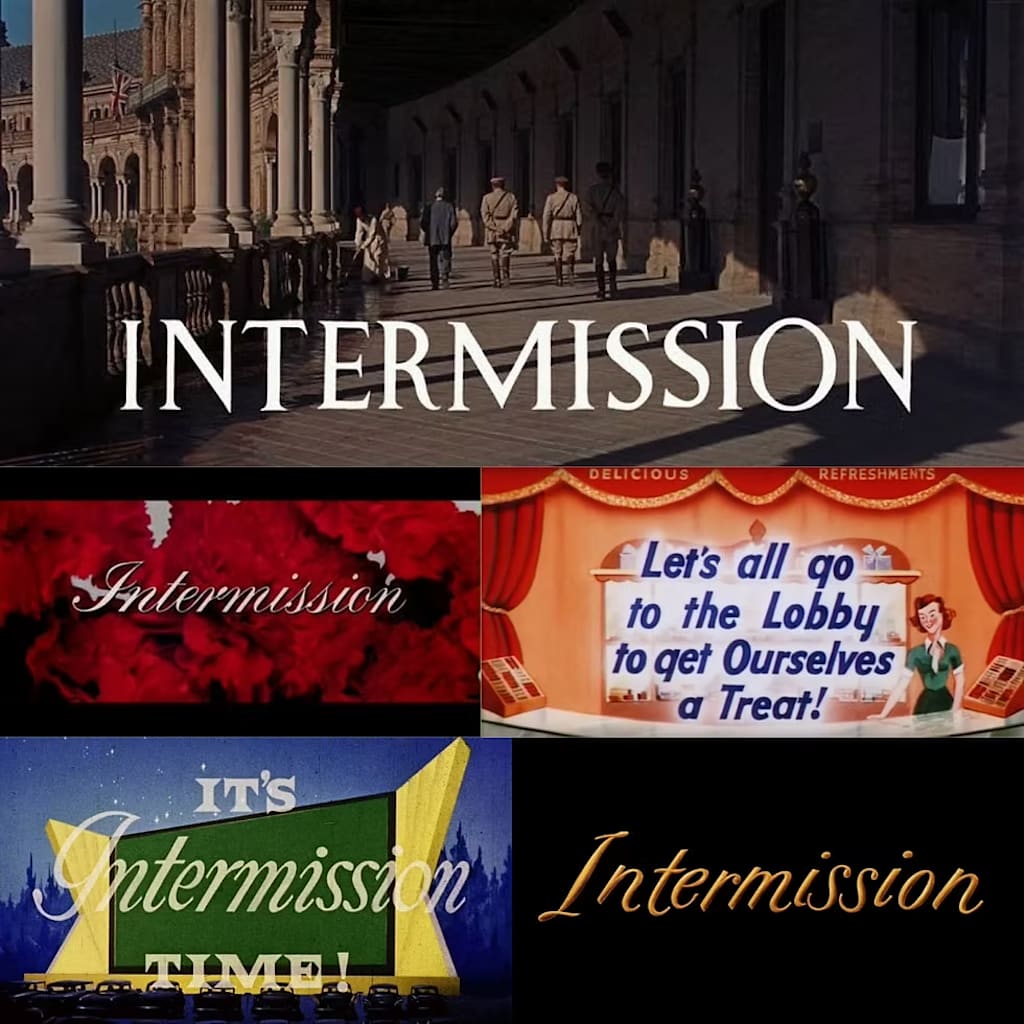
When the screen flashes "180 minutes," most viewers don't feel excitement for an epic story. They feel a quiet panic: Can my bladder hold out for three hours?
On streaming, you pause, get water, use the bathroom, come back. In a theater—dark, loud, sealed—you're stuck. You sit through the whole thing, no breaks. So why don't cinemas add a 10‑minute intermission, like theaters or sports games do?
The short answer isn't "you might not come back." It's a half‑century battle between commercial logic, technology, and how we watch movies. Let's walk through how we got here.
1. The Lost Era of "Road Shows": Intermission as Status Symbol
The 1950s. Hollywood's golden age. Also its most anxious.
Television was eating the country. U.S. TV ownership went from 9% in 1950 to 65% in 1955. People stopped dressing up, paying for tickets, and risking bad movies. Why bother? The couch was free.
Hollywood's counterpunch was the road show—a term borrowed from Broadway. High‑ticket, limited‑run, lavish presentations. These weren't just screenings; they were social events. The films had to be Ben‑Hur, Lawrence of Arabia, The Sound of Music. You bought a hard, embossed ticket. You sat in a grand auditorium. You watched 70mm film on a wide screen.
In that world, intermission wasn't optional—it was part of the ritual. Writers built it into the script: first act ends, lights up, curtain falls. You went to the lobby, had coffee, talked about the first half, maybe just showed off that you were there.
Intermission said: this is art, not just entertainment. It also served a practical need—film reels only held about 15 minutes per spool, so a 3‑hour movie needed two reels. The changeover time became the break. And for theater owners, it was a goldmine: vendors rolled carts down the aisles selling overpriced ice cream and soda. Everyone bought.
In that era, intermission was natural. It served experience.
2. The Multiplex Takeover: Selling Throughput, Not Showmanship
That didn't last. By the late '60s, road shows faded—too expensive, too fussy. In came the multiplex. The new logic wasn't experience; it was turnover.
In a 10‑screen megaplex, time is inventory. Every screening slot matters. If you insert a 15‑minute intermission into a 3‑hour movie, what breaks?
Schedules collapse. Five shows a day become four. That's dozens of tickets lost per screen, per day.
Staffing costs rise. You need people to patrol the aisles, manage crowds, clean up—and labor isn't cheap.
Concession paradox. Sure, you'd sell more snacks during the break, but theaters already make their margin on pre‑show popcorn and soda. They'd rather you buy before you sit down than create a bottleneck mid‑show.
But the deeper issue is storytelling. Modern blockbusters are engineered for "no‑pee" pacing—explosions, reveals, jokes every minute. Writers sometimes slip in quiet scenes as informal "bathroom windows," but they're not a full‑stop pause. Directors don't want you walking out before a climax. Once you leave, the emotional field breaks.
3. Why Some Countries Keep the Break
North America and China gave up intermission. But elsewhere, it survives.
Europe's slow‑cinema tradition. Art houses still schedule intermissions for 4‑hour epics like The American Friend or The Best of Youth. It's a matter of respect—for the film, for the audience.
India's built‑in interval. Bollywood films run 3 hours by default, but the break is part of the script's DNA. The interval usually hits right when the villain is at his worst and the hero's fate hangs in the balance. Then come songs, ads, and a second‑half payoff. The break isn't a concession—it's a narrative tool that raises anticipation.
4. Oddities and Exceptions: When Theaters Say "Go Pee"
A few outliers.
In 2020, China re‑released Interstellar (169 min). COVID rules required ventilation and disinfection mid‑show, so they forced a 5‑minute break. It wasn't for audience comfort—but it did let everyone breathe, literally and figuratively.
Then there's Quentin Tarantino. For The Hateful Eight, he deliberately wrote a 12‑minute intermission—out of nostalgia for 70mm road shows. Theaters played a snowy landscape loop with guitar music. In interviews, Tarantino said: "I know audiences aren't used to it, but I want them to stand up, walk around, talk, think about what just happened, then sit back down." That line nails what we lost: intermission gives you time to think, not just receive.
More recently, The Brutalist (2025, 215 min) was shot with a planned 15‑minute intermission. Director Brady Corbet: "It's not a compromise. It's part of the movie. We decided where Act 1 ends, and those 15 minutes of music and black screen are themselves a narrative beat."
5. What's Next? From "Putting Up With It" to "Making It Work"
Maybe we're seeing a shift. Longer films, higher ticket prices—an intermission might become less a business sacrifice and more a basic respect for the person in the seat.
Some theaters are testing it. In 2023, the UK's Picturehouse Cinemas launched an intermission initiative for films over 2h45m, offering free tea during the break. Customer satisfaction scores jumped 12 percentage points, and zero complaints about missing plot connections. Australia's Palace Cinemas tried the same for Killers of the Flower Moon and made it permanent.
Of course, not everyone's convinced. Critics point out that not every long film fits a break. "If you're watching Oppenheimer, deep in his breakdown, and suddenly the lights come up and someone next to you starts eating a hot dog—that's a kind of murder." Fair point. The intermission has to match the film's rhythm. You can't force it on everything.
A middle ground? Mark showtimes clearly: "includes intermission" vs. "no intermission." Let audiences pick. Or offer "immersive" (no break) and "friendly" (with break) screenings. Give people choice instead of deciding for them.
6. What About Your Bladder?
Back to the original question. If theaters are all about immersion and throughput, do you just suffer?
In practice, the industry leaves it to you: drink less, pee right before the show, and sprint during the quiet scenes.
But here's a better rule: if you really have to go, just go. You can guess the few minutes you missed. You can't guess your own health. Movies are stories; your body is the thing that lets you experience them.
And as Killers of the Flower Moon (3.5h), Oppenheimer (3h), and The Brutalist (3.5h) keep coming, the conversation is shifting—from "should we have intermission?" to "when should we have it?" Maybe soon, more theaters and filmmakers will look back at that lost tradition—not for nostalgia, but to do what movies are supposed to do: deliver a great dream and respect the dreamer.
About the Creator
Jin
Writer of reamstories
https://reamstories.com/jin
Enjoyed the story? Support the Creator.
Subscribe for free to receive all their stories in your feed. You could also become a paid subscriber, letting them know you appreciate their work.
Comments
There are no comments for this story
Be the first to respond and start the conversation.