
The Lord of the Rings Didn’t Just Use New Zealand. It Conscripted It.
How a near-bankrupt studio, a small country, and 12.5 million handmade chainmail rings built Middle-earth for real.
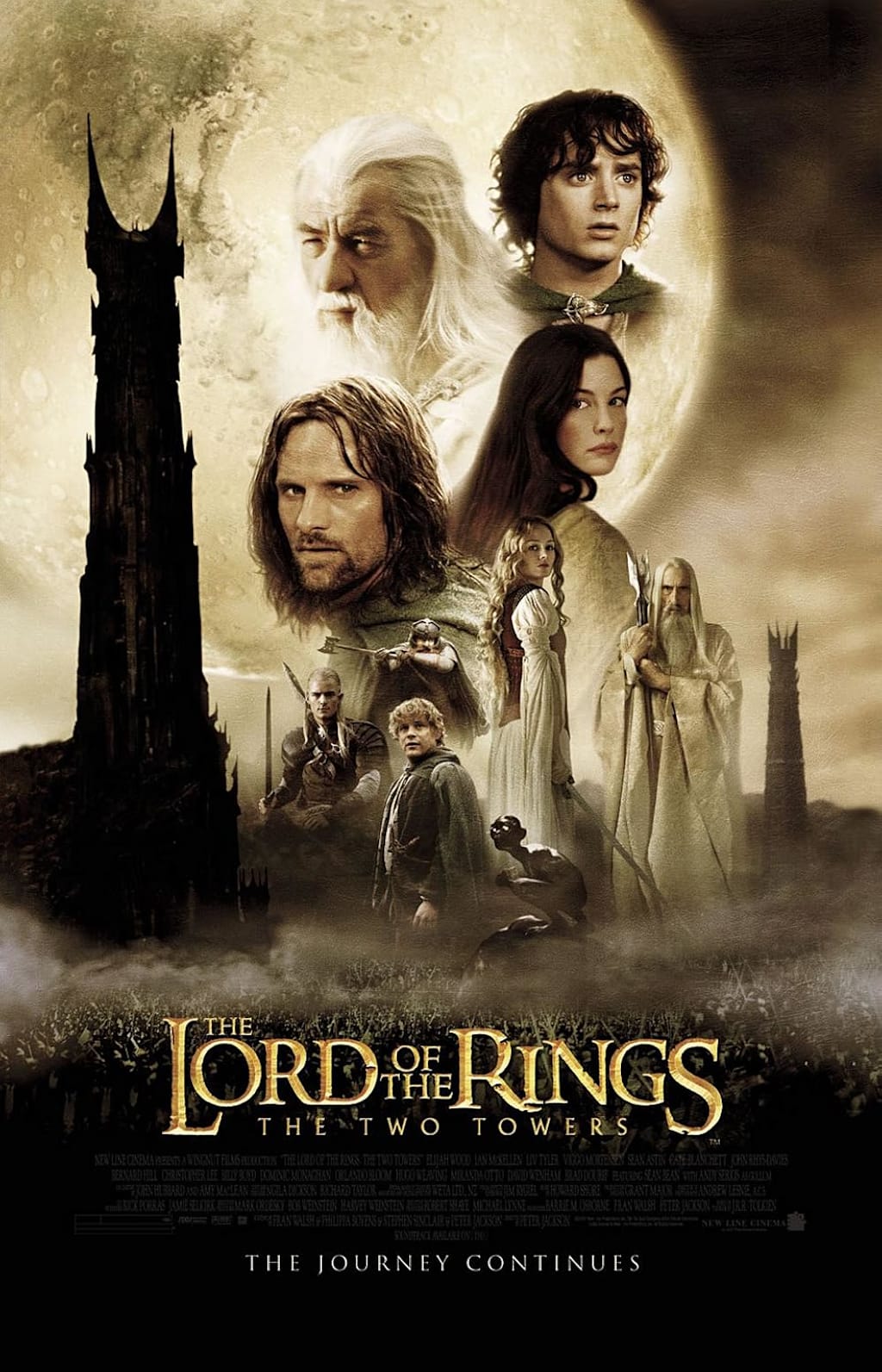
Many people rewatching The Lord of the Rings still get a strange illusion. The film does not look like a Hollywood production. It looks as if a country staked its entire fortune and built Middle-earth for the world.
Budget alone cannot explain that feeling. Money, stars, and scale do not account for it. The source is heavier, clumsier, more collective. Behind the screen stood not a film crew but an entire country.
The feeling is accurate, though not literal. New Zealand did not empty its treasury; New Line Cinema remained the main financier. The point is that the production pulled a country’s government, military, industry, geography, people, and filmmakers into the same machine. Every frame carries the texture of a whole country being present.
I. It Was First a Project That Nearly Died
The Lord of the Rings was not destined to become an epic. The project first belonged to Miramax. The budget ballooned, and Harvey Weinstein demanded that the three books be compressed into two films. He threatened to replace the director. Peter Jackson refused. He was given four weeks to find a new backer.
Almost every major Hollywood studio refused. Fantasy had no future, they said. The budget was absurd.
Then he found New Line Cinema.
After the presentation, New Line founder Bob Shaye said, “There are three books. Why not make three films?”
That line gets quoted often. What gets quoted less is the risk. New Line invested about $280 million. For an independent studio at the time, that was not an ordinary bet. It was a gamble that could have ended the company.
The trilogy’s total budget was about $281 to $285 million, less than $100 million per film.
That number is hard to believe today. In 1997, Titanic cost $200 million by itself. Harry Potter and the Sorcerer’s Stone, released the same year as The Fellowship of the Ring, cost about $125 million.
The trilogy was shot back-to-back, with all three films in production at once. Total box office reached about $2.98 billion, roughly a tenfold return. It is often called one of Hollywood’s best commercial and artistic investments.
But cost-effectiveness was the result, not the process. New Line put the company on the line. During production, costs ran far over budget. According to some accounts, New Line threatened to sell Jackson’s and screenwriter Fran Walsh’s houses to cover the overrun.
The project was never comfortable. It was a group of people burning their retreat and charging forward.
That temperament reached the screen. Audiences may not know the behind-the-scenes details, but they can feel them. Middle-earth was not assembled. It was gambled into existence.
II. New Zealand Was Not a Location. It Was Part of National Policy.
If New Line had only supplied money and New Zealand had only supplied scenery, the films would still have been Hollywood blockbusters shot abroad. What gave The Lord of the Rings its national feel was the deep involvement of the New Zealand state.
This went beyond a welcome. It was closer to a national strategy.
Then Prime Minister Helen Clark announced a support package of NZ$9 million. The goal was to maximize spillover benefits in tourism, technology, and film production. The government appointed a minister to coordinate related affairs.
New Zealand treated the film as a nation-branding project, not merely a film.
Tax policy mattered even more. When The Lord of the Rings was shot, New Zealand had no large-production subsidy. For this film, the government made an exception and gave up more than $100 million in tax revenue. A later subsidy policy, after 2003, provided nearly NZ$500 million to 35 films, including The Lord of the Rings.
The government also approved shooting in public protected areas. Air New Zealand painted aircraft with The Lord of the Rings advertising. New Zealand Tourism invested NZ$1.64 million in promotion.
So the phrase “full force of a nation” does not mean the government wrote a $280 million check. It means the country tuned its taxes, land, aviation, tourism, and diplomatic image to Middle-earth mode.
Before the film opened, the country had already staked itself.
III. The Military, the Extras, and a National Film Crew
One of the most astonishing facts about The Lord of the Rings is that it mobilized the state’s actual military.
To shoot vast sequences such as the Battle of the Black Gate, hundreds of New Zealand soldiers were sent to the set as extras. Peter Jackson once wanted 15,000 soldiers. He could not get them because they had been deployed to East Timor on peacekeeping duty.
The soldiers did not merely appear. The crew trained them in swords, shields, and spears.
The Mordor location, the Rangipo Desert, was a military exercise area littered with unexploded ordnance. The military cleared the site. Peter Jackson later said he worried an actor might step on a landmine.
The pay was striking. These soldiers received about NZ$20 per day. It was less a commercial hire than a low-cost collaboration under a national task.
Even top New Zealand fighter pilots wanted in. They could not take part.
Beyond the military, many extras came from ordinary life. Most Riders of Rohan were local New Zealand women who could ride. Many Elven soldiers were local students.
Casting happened inside a country, not on a Hollywood backlot. The population, skills, livestock, and geography became the production’s resource pool.
When a film needs a nation to play a nation, it creates a texture other films do not have. That collectivity is not performed. It is physically present.
IV. Making Steel the Hard Way
The Lord of the Rings was shot around 2000, when CGI was far less capable than it is now. The crew combined brute-force craft with emerging technology.
To make Hobbits look short, they did not rely only on effects. They used precise camera positions. In the tea scene at Gandalf’s house, the table was built with one large side and one small side. Forced perspective made the actors look vastly different in size. The effect still holds up because it existed in physical space.
The crew built huge detailed models of Rivendell and Gondor. These “bigatures” were large enough for people to climb inside. They gave the image a realism that pure CGI struggled to match.
The props were even more extreme. Rendering hundreds of thousands of soldiers’ armor with CGI would have been impossibly expensive. So the crew made it for real. They bought PVC pipe, cut it into small rings, and coated them. The work was done by hand.
Two staff members, known as the Chainmail Madmen, spent two years stringing rings. They produced about 12.5 million rings. The repetitive motion wore away their fingerprints.
That texture reads as real on camera. Post-production effects could not provide it.
The props department also reused waste. Expensive leather and fabric came from flea markets and recycling centers. After aging, wearing, and distressing, the materials looked historically weathered.
Armor was not the only physical object. Many things audiences assumed were CGI, such as the Ents, were built and performed for real.
This is why Middle-earth looks heavy. It has weight. Every piece of armor, every sword, every ring consumed human time. Audiences cannot see that labor, but they can feel it.
That feeling is the texture of national effort.
V. The Actors Were Not Stars. They Were Chosen by Middle-earth.
The casting had an anti-Hollywood stubbornness.
The films did not chase many big names. Apart from Gandalf, most actors were newcomers or art-house regulars. The studio wanted stars such as Daniel Day-Lewis. Jackson insisted on the actor who fit the role best, not the most famous actor.
That insistence made the films classics.
On the second day of shooting, Stuart Townsend, originally cast as Aragorn, was replaced. The director realized he was too young and lacked a kingly presence. Viggo Mortensen flew to New Zealand without reading the script.
The actors shot for 18 months with few breaks. Viggo chipped a tooth and broke toes. Sean Astin, who played Sam, had the sole of his foot pierced by broken glass underwater.
This was not posing in front of a green screen. It was mud, water, mountains, and horses. The cast traded their bodies for the shot. The crew was a legion. The actors came to serve, not merely to work.
That shared suffering becomes cohesion on screen. When you watch the Fellowship, you believe they walked those roads. They did.
VI. Weta and the Industry Chain
One of the film’s most far-reaching effects was the creation of a New Zealand film industry almost from nothing.
Weta Workshop, founded to make props, produced more than 48,000 items for the trilogy. That included 1,000 handmade suits of armor and more than 2,000 weapons. Many details exceeded what the camera needed. The goal was realism.
At peak production, the project employed 1,500 New Zealanders per week. Post-production involved 350 people. The project used 5,000 local suppliers across digital effects, catering, transport, telecommunications, and construction.
A country undertook an industrial mobilization, not a film crew making a movie.
Today, many blockbusters outsource effects worldwide, spread shooting across countries, and stitch actors and scenes together with green screens. That approach is efficient and controllable. It also loses the density of everyone in one place doing one thing.
The Lord of the Rings did the opposite. It nailed the supply chain to New Zealand. Weta, the crew, suppliers, local government, the military, extras, and tourism authorities all orbited Middle-earth.
The film became more than a film. It was a national industrial upgrade. New Zealand’s film industry was, in part, raised by The Lord of the Rings.
VII. Middle-earth = New Zealand
The Lord of the Rings became part of New Zealand’s national identity and brand.
The film brought lasting tourism. Estimates suggest as many as one-third of North American visitors named The Lord of the Rings as their main reason for visiting New Zealand. Film-related tourism brings the country between NZ$50 million and NZ$500 million a year.
The government used the film’s image for national marketing. It issued The Lord of the Rings stamps. It set up a Middle-earth-themed New Zealand booth at international film markets.
The film’s success was inseparable from the support and investment of New Zealanders.
A fantasy story came back to define a real country. Today, when many people mention New Zealand, they think first of Middle-earth, not Wellington or Auckland. Snow mountains, grasslands, forests, and volcanoes became footnotes to the story.
The country lent its body to the film. The film gave the country a myth.
This two-way binding explains the national feeling. It went beyond one-sided government propaganda. A whole country culturally claimed the film.
VIII. Why It Still Feels Like National Effort
This way of making films is hard to repeat.
Today’s industry is more mature. CGI is stronger. Virtual production is faster. Global outsourcing is normal. In theory, more money could build a more realistic Middle-earth. It might still lack the texture of a whole country being present.
The epic feel of The Lord of the Rings comes from the story and from the process.
It is a handmade epic from the pre-digital age. It welded national geography, handicraft, collective adventure, directorial obsession, and practical aesthetics into one object. It had no retreat, so it had to be real. It lacked enough technology, so it used people. It did not outsource globally, so the country became the crew.
The epic on screen reflects the epic of production.
The films feel like national effort because they mobilized a country’s image, industry, military, people, and geography. They feel unlike ordinary Hollywood blockbusters because they were not assembly-line products. They were national handmade artifacts.
Your feeling is correct.
The finance of national effort is not the point. The participation is. Special effects did not make Middle-earth. New Zealand and a group of obsessives made it with hands, rings, boots, and bodies.
Every piece of armor, every ring, every horse, and every temporary extra says the same thing. This world is not virtual. It once existed.
That is why The Lord of the Rings remains unsurpassed.
About the Creator
Jin
Writer of reamstories
https://reamstories.com/jin
Enjoyed the story? Support the Creator.
Subscribe for free to receive all their stories in your feed. You could also become a paid subscriber, letting them know you appreciate their work.
Comments
There are no comments for this story
Be the first to respond and start the conversation.