
'The Killing Fields' The Movie You Can't Look Away From
The Killing Fields was released on November 2nd, 1984


The Killing Fields (1984) is a gripping British biographical drama directed by Roland Joffé, written by Bruce Robinson, and produced by David Puttnam.
The movie tells the true story of the friendship between New York Times reporter Sydney Schanberg and Cambodian journalist and interpreter Dith Pran, set against the chaos of the Cambodian Civil War and the terror of the Khmer Rouge regime from 1975 to 1979.
It’s based mainly on Schanberg’s 1980 New York Times Magazine article, “The Death and Life of Dith Pran.”
The film runs about 141 minutes and features Oscar-winning cinematography by Chris Menges, Oscar-winning editing by Jim Clark, and a haunting score by Mike Oldfield.
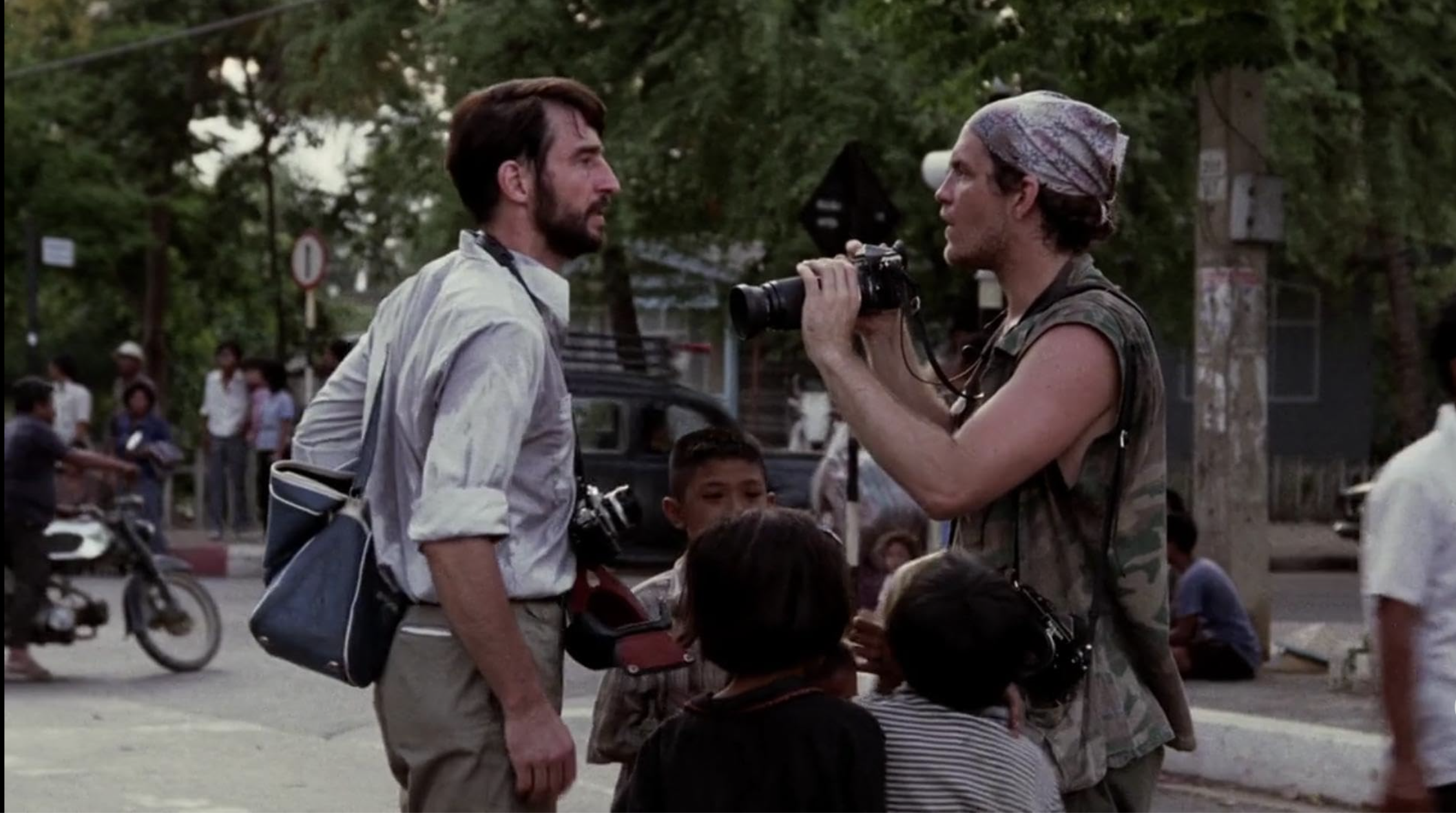
It stars Sam Waterston as Schanberg, Haing S. Ngor in his acting debut as Dith Pran, and John Malkovich as photographer Al Rockoff. The supporting cast includes Julian Sands, Craig T. Nelson, Spalding Gray, Athol Fugard, and others.
Plot Summary — and the Real History Behind It
The story begins in 1973 in Phnom Penh, Cambodia.
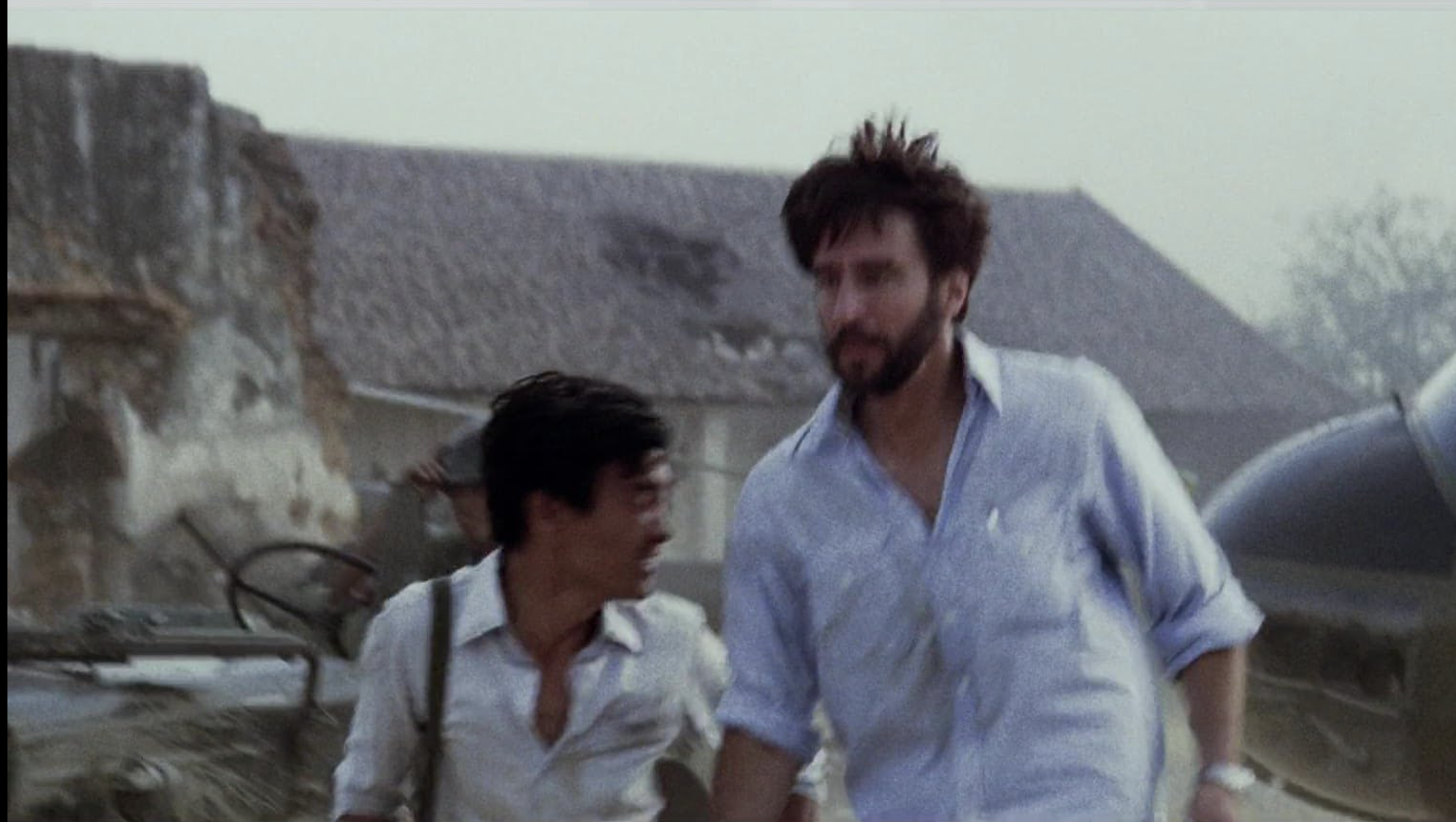
Schanberg is reporting on how the Vietnam War is spilling into neutral Cambodia, and Dith Pran is helping him navigate the country, translate, and understand what’s really happening on the ground.
Together, they investigate events like the U.S. bombing of Neak Luong. But as the Khmer Rouge gets closer to taking power, things become more and more dangerous.
When the U.S. pulls out and Phnom Penh falls in April 1975, Schanberg helps get Pran’s family evacuated. But Pran himself stays behind to help the journalists keep reporting.
Schanberg, Pran, Al Rockoff, Jon Swain, and other Western journalists eventually take shelter in the French embassy during the chaos. At one point, Pran helps save the group from being executed.
But while the foreign journalists are eventually evacuated, Pran is left behind.
That’s when the film shifts into its most harrowing section.
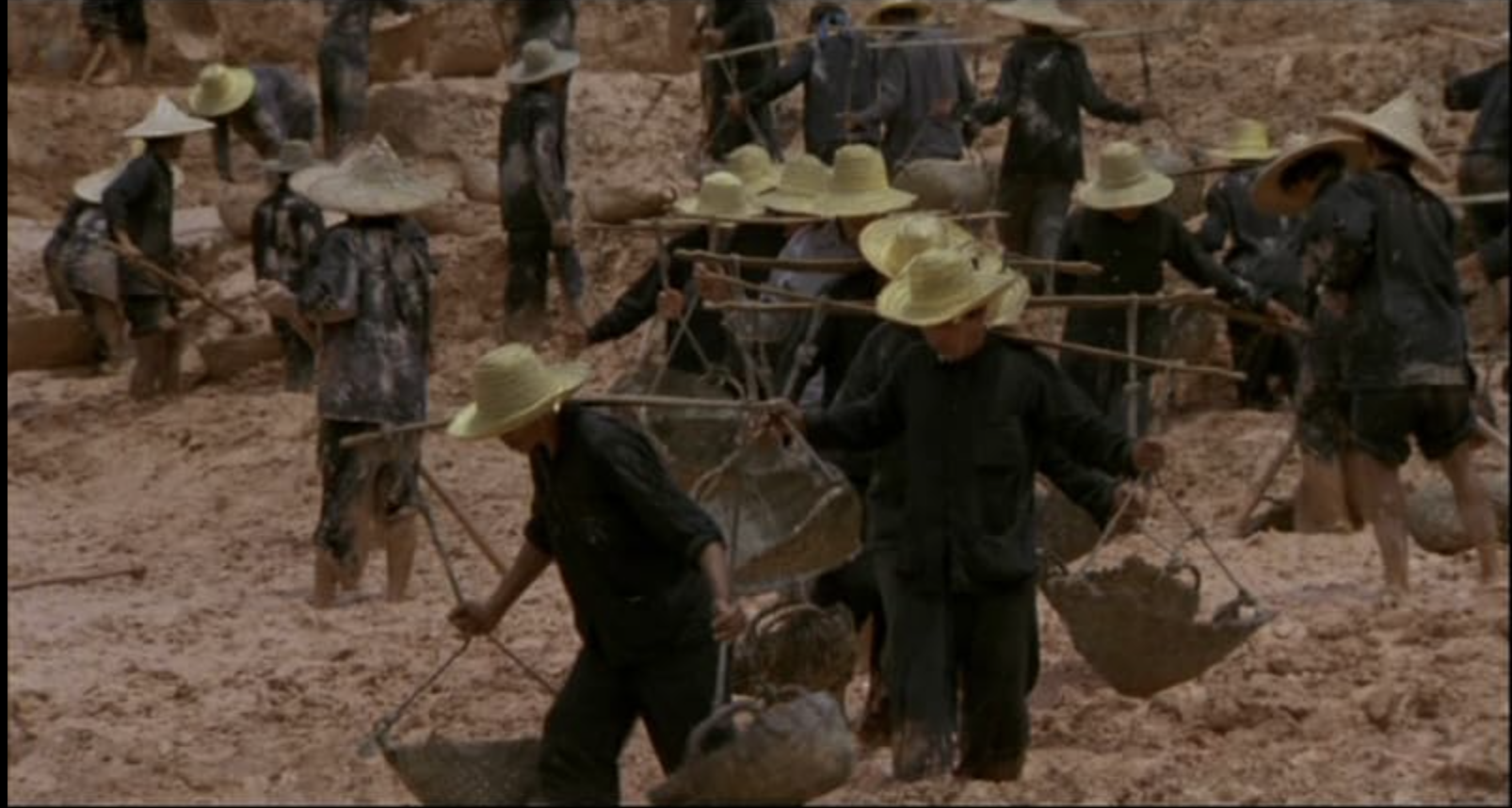
Under the Khmer Rouge’s brutal “Year Zero” policy, cities are emptied, people are forced into agricultural labor camps, and anyone seen as educated, professional, intellectual, or connected to foreigners becomes a target.
Pran has to hide who he really is. He pretends to be uneducated, keeps quiet about his background, and does whatever he can to survive.
He endures starvation, torture, forced labor, re-education, and the constant threat of death. He also witnesses the horrifying mass graves that would become known as the killing fields.
Eventually, Pran escapes and makes his way through a landscape filled with bones and bodies before reaching a refugee camp in Thailand in 1979.
Meanwhile, Schanberg is back in the United States, consumed by guilt and trying for years to find out what happened to his friend.
The film ends with their emotional reunion, set to John Lennon’s “Imagine.”
The title comes from a phrase Dith Pran himself used to describe the execution and burial sites scattered across Cambodia.
Historical Context and Accuracy
The Khmer Rouge, led by Pol Pot, took power in Cambodia in 1975 after years of civil war, made worse by U.S. bombing and the wider fallout of the Vietnam War.
Their goal was to completely remake society from scratch — what they called Year Zero.
The result was genocide.
Around 1.5 to 2 million people died, with some estimates going as high as 2.2 million, out of a population of roughly 8 million. People were killed through execution, starvation, disease, overwork, and torture.
The film is widely considered a strong and authentic depiction of the Khmer Rouge’s brutality. It shows the forced labor, paranoia, executions, starvation, and sheer scale of suffering with devastating force.
A lot of the major events in the movie are rooted in reality: the fall of Phnom Penh, the French embassy scenes, Pran’s decision to stay, his attempts to hide his identity, and his eventual escape.
Dith Pran really did survive more than four years under the Khmer Rouge. He lost many members of his family — around 50 relatives — and later used the phrase “killing fields” after seeing mass graves during his escape to Thailand.
That said, the film does take some dramatic liberties. Some timelines are compressed, and certain details of Pran’s escape and later experiences are simplified for the sake of the story.
The movie also focuses more on Schanberg’s guilt and the personal friendship between the two men than on the broader political picture. For example, the Vietnamese invasion that ended Khmer Rouge rule is only briefly addressed.
Real-life photographer Al Rockoff also criticized how he and Schanberg were portrayed, especially in some of the embassy scenes.
Still, overall, historians and critics have praised the film for bringing global attention to the Cambodian genocide and for capturing the horror and humanity of the story.
Production and Casting
Most of The Killing Fields was filmed in Thailand, with some helicopter and evacuation footage shot in San Diego, plus additional work in Toronto and the UK.
This was Roland Joffé’s feature film debut, but he had a strong team around him, including cinematographer Chris Menges and production designer Roy Walker.
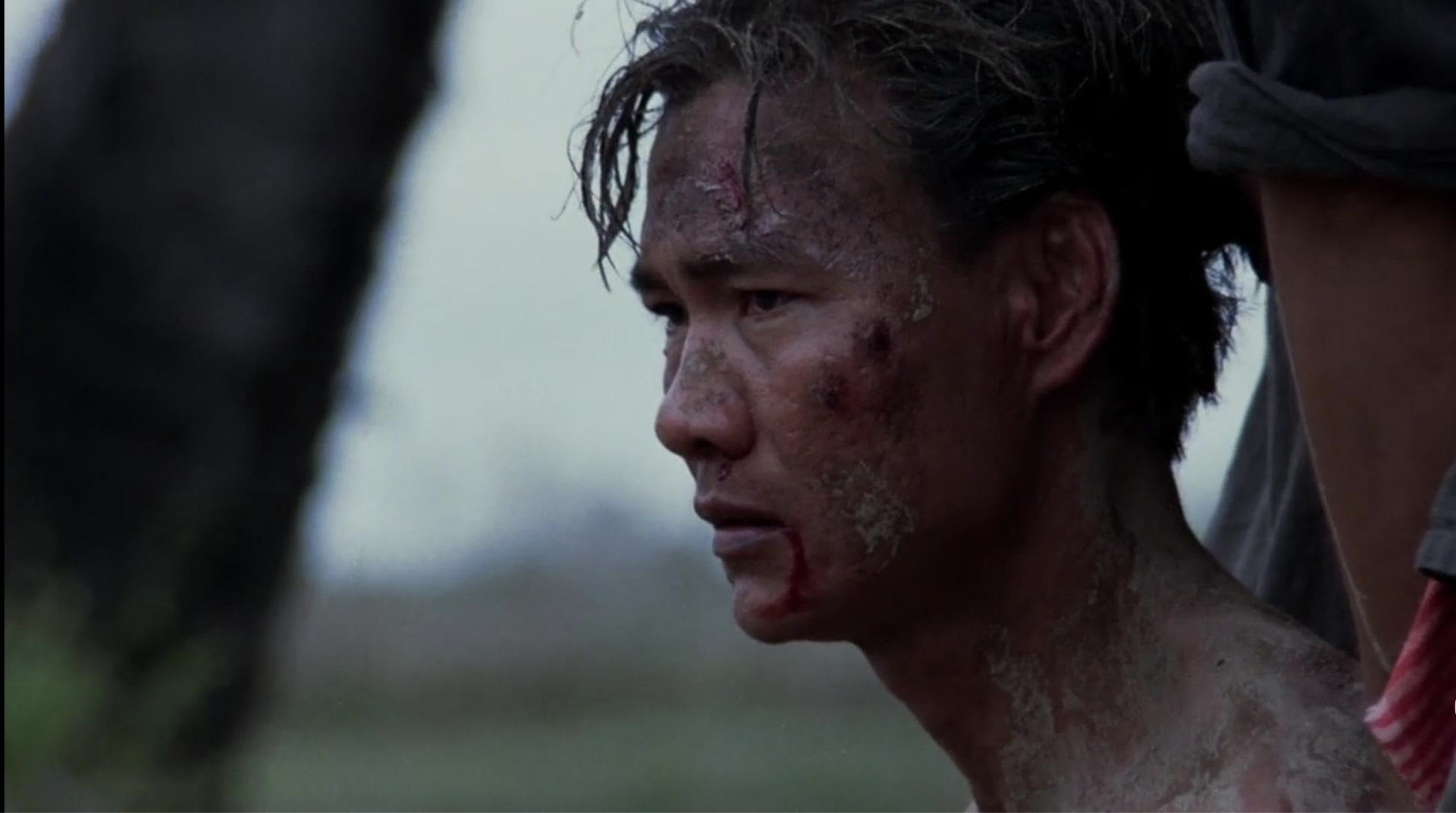
The most remarkable casting choice was Haing S. Ngor as Dith Pran.
Ngor was not a professional actor. He was a Cambodian doctor and an actual survivor of the Khmer Rouge. He was discovered at a wedding and brought an incredible level of authenticity to the role.
His own life had terrible parallels with Pran’s story. Ngor had survived torture and lost his wife during the Khmer Rouge years. Because of that, some scenes were extremely difficult for him to film, and he sometimes had to leave the set.
The movie had a budget of around $14.4 million and grossed about $34.7 million domestically.
Reception and Legacy
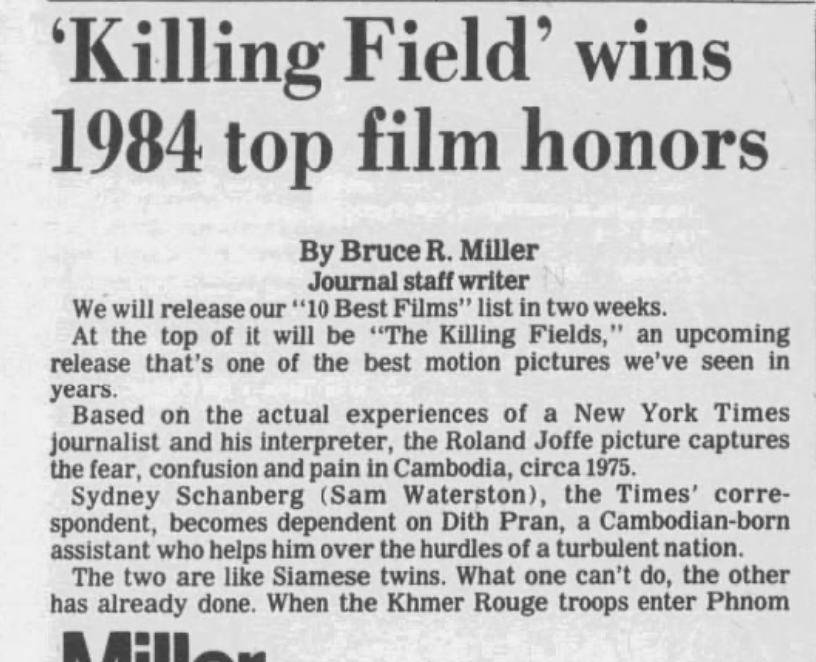
Critics praised The Killing Fields as a powerful, emotional, and morally urgent film.
It was admired for its performances, realism, cinematography, and its ability to turn a huge historical tragedy into a deeply personal story about friendship, guilt, survival, and resilience.
The film has remained highly respected over the years and still holds strong critical scores, including around 91% on Rotten Tomatoes.
It was nominated for seven Academy Awards, including Best Picture and Best Director, and won three:
Best Supporting Actor for Haing S. Ngor
Best Cinematography
Best Editing
It also won eight BAFTAs, including Best Film and Best Actor for Ngor.
Ngor became one of the first non-professional actors to win an Oscar. After the film, he used his platform to speak about what happened in Cambodia.
Tragically, Haing S. Ngor was murdered in Los Angeles in 1996.
Dith Pran went on to work as a photographer for The New York Times and became an advocate for genocide awareness. He died of pancreatic cancer in 2008, with Sydney Schanberg by his side.
Final Thoughts
The Killing Fields is not an easy watch. It’s intense, disturbing, and graphic in parts.
But it’s also an unforgettable film.
It’s a story about survival, loyalty, guilt, courage, and the human cost of political violence. More than that, it helped bring wider attention to one of the worst atrocities of the 20th century.
If you’re interested in serious 1980s cinema, historical dramas, or films that actually try to grapple with real-world horror, this one is absolutely worth watching.
Highly recommended — but be prepared. It hits hard.

About the Creator
Movies of the 80s
We love the 1980s. Everything on this page is all about movies of the 1980s. Starting in 1980 and working our way the decade, we are preserving the stories and movies of the greatest decade, the 80s. https://www.youtube.com/@Moviesofthe80s
Enjoyed the story? Support the Creator.
Subscribe for free to receive all their stories in your feed.
Comments
There are no comments for this story
Be the first to respond and start the conversation.