
The India Story Movie Ending Explained (Spoiler): Full Story Breakdown and Final Verdict
A courtroom drama that questions pesticides, food safety, corporate power, and the hidden cost of modern farming.

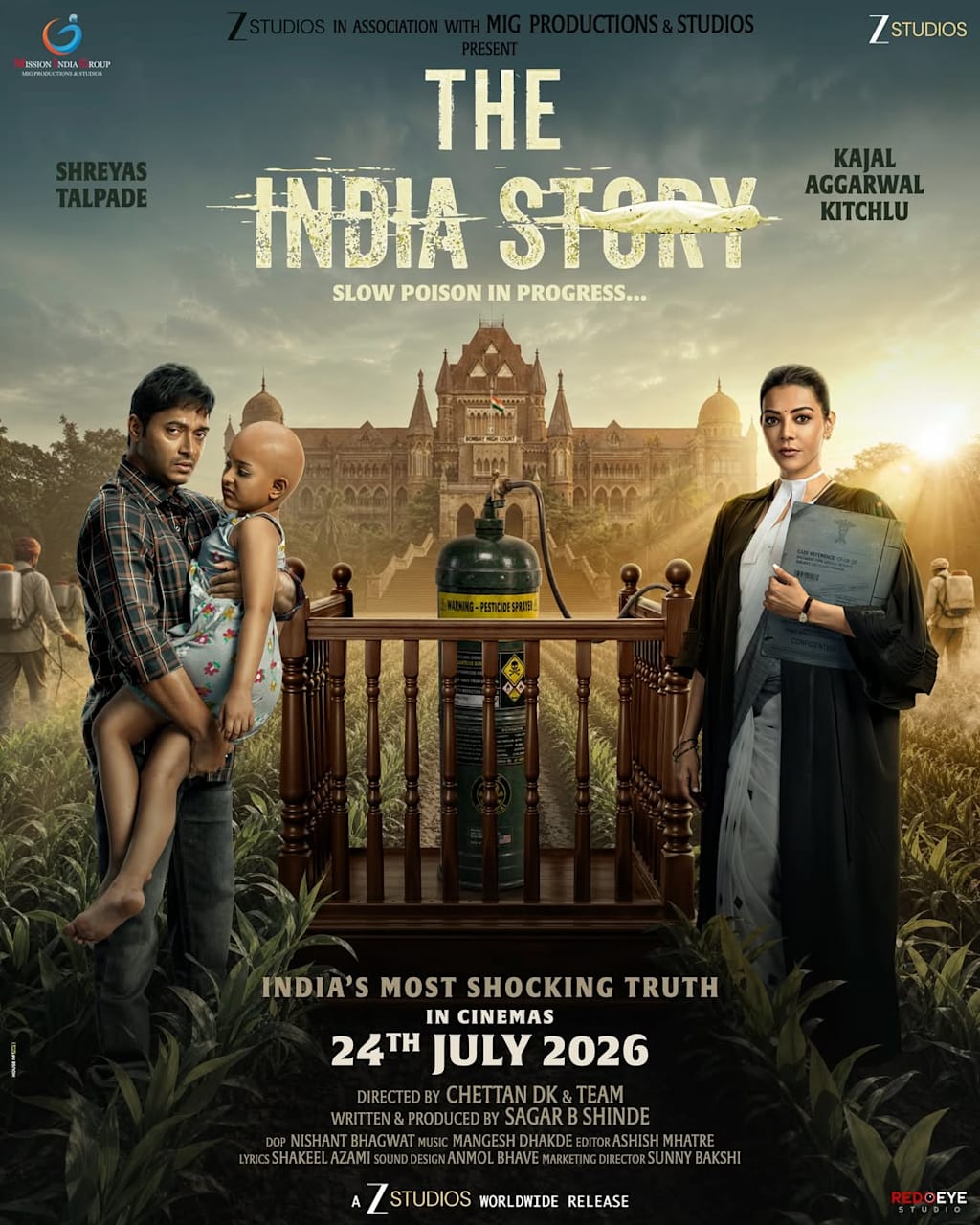
Spoiler Alert: This article contains major spoilers from The India Story. If you haven't watched the movie yet and want to experience the story yourself, consider watching it first.
Food is supposed to give us life. It is something we trust without questioning. Every day, we eat vegetables, grains, and dairy products believing that they are keeping us healthy. But what if the same food that we consider our biggest source of strength slowly starts becoming a danger?
This is the central question raised by The India Story, a courtroom drama that goes beyond one family's tragedy and explores a much larger issue involving agriculture, pesticides, corporate responsibility, and the health crisis affecting ordinary people.
Spoilers ahead.
The story begins with Yogesh Patil, a helpless father who refuses to accept that his daughter Pari's death was just a medical tragedy. After losing his daughter to cancer, Yogesh strongly believes that there is more behind her death. He repeatedly visits the police station with a complaint, claiming that his daughter was not a victim of natural circumstances but a victim of a larger system.
However, the police refuse to take his complaint seriously. According to medical reports, Pari died because of cancer, and there is no evidence connecting her illness to anything else.
But Yogesh refuses to give up.
After being rejected by multiple lawyers, his case finally reaches Advocate Archana, who decides to fight for him. She knows that this is not just an ordinary legal battle. Behind this case are powerful companies, government systems, and an entire industry worth billions.
When the courtroom proceedings begin, Archana makes a shocking claim. She argues that Pari's death was not caused only by cancer but was connected to the excessive use of harmful chemicals and pesticides in agriculture.
Suddenly, the case changes completely.
It is no longer just about one girl's death. It becomes a debate about what people are consuming every day and whether the food system itself has become dangerous.
The opposing side hires one of the country's most successful lawyers, Advocate Agnihotri. Known for winning difficult cases, he challenges Archana's arguments by saying that emotions cannot decide a case. According to him, courts require evidence, not assumptions.
He questions whether Archana has any proof that pesticides were actually responsible for Pari's cancer.
But Archana comes prepared.
She brings experts who explain how chemical farming became common after the Green Revolution. At that time, increasing food production was necessary because India was facing severe food shortages. Chemical fertilizers and pesticides helped increase agricultural output.
However, the problem began when these chemicals started being used excessively.
Experts explain that certain harmful substances can enter the soil, water, and food chain. Their impact may not appear immediately but can create serious health problems over time.
The case becomes stronger when Pari's doctor reveals that certain chemical elements were found in her body that are commonly associated with pesticides.
Archana also presents the reality of farmers.
She meets farmers who explain that many of them use chemical pesticides not because they want to harm anyone, but because they feel forced to. Chemical farming provides faster production and higher yields.
However, one farmer reveals a shocking truth.
The crops grown using pesticides are often sold in markets, while farmers sometimes grow separate organic food for their own families.
This statement leaves everyone questioning the system.
Why are people being forced into a method of farming where even those using it do not trust the final product?
As the case gains national attention, fertilizer companies become worried. They fear that if the court rules against them, their entire business could collapse.
But instead of ignoring the issue, even government officials begin realizing that the problem needs serious attention.
During another hearing, Archana raises another shocking issue — milk adulteration.
She questions how a country producing limited amounts of milk can meet such massive daily demand. The investigation reveals that artificial and chemical methods are sometimes used to create fake milk, which can have dangerous consequences for human health.
The court realizes that this case is much bigger than one family.
Finally, the judge accepts the case and orders a detailed investigation under officer Vijay Rathore.
This becomes the first major victory for Archana, but she knows the real battle has only begun.
During the investigation, Rathore and Archana discover more disturbing facts. They meet people involved in making fake milk using chemicals instead of actual milk. They also travel to Punjab, where they meet families affected by cancer.
They visit the famous cancer train running between Punjab and Bikaner, where many patients travel for treatment. Seeing so many cancer patients together leaves them shocked.
The investigation then takes them to Kerala, where a doctor explains how excessive pesticide use in certain farming areas has been linked to increasing health problems.
Meanwhile, Archana reveals a personal truth.
Yogesh Patil is not just her client — he is her husband, and Pari was her own daughter.
However, she chose to fight this case not as a grieving mother but as a lawyer because she wanted the truth to reach the entire country.
The movie then shows Pari's tragic journey.
She was a happy child living with loving parents. Everything changed when she suddenly became ill. After several tests, doctors diagnosed her with cancer.
The family was devastated because there was no history of cancer in their family.
Yogesh spends everything he has to save his daughter. He sells his house and spends millions on treatment. After a successful bone marrow transplant, Pari appears to recover.
But their happiness does not last long.
The cancer returns.
With no money left, Yogesh takes Pari to a government cancer hospital. There, they witness overcrowding, poor facilities, and the struggles faced by thousands of patients.
Sadly, Pari loses her battle.
This tragedy becomes the reason Yogesh decides to fight against the entire system.
In the final courtroom scene, Advocate Agnihotri argues that if anyone is responsible, even Pari's parents could be blamed because they were the ones who gave her the food.
Yogesh then gives an emotional statement.
He says that no parent would ever intentionally harm their own child. He apologizes to farmers because they are not the enemy. Farmers themselves are victims of a system that pushes them toward harmful chemicals.
He explains that farmers need awareness and support, not blame.
Yogesh demands strict action against dangerous pesticides and encourages a move toward organic farming.
After hearing all arguments, the court delivers its decision.
The judge orders stricter control over chemical pesticides and warns companies that excessive use of harmful chemicals will lead to severe action.
The court also orders that Yogesh Patil should be reinstated in the army.
The Meaning Behind The India Story Ending
The ending of The India Story is not just about winning a court case. It is about questioning the choices society has made in the name of development.
The movie does not portray farmers as villains. Instead, it shows that farmers are also trapped in a system where higher production often comes at the cost of health.
The biggest message of the film is that food security should not only mean producing more food. It should also mean producing safe food.
Organic farming may require more time and effort, but the movie argues that human life should always come first.
The India Story leaves viewers with an uncomfortable question:
If the food on our plate is slowly harming us, who is truly responsible — the farmer, the companies, or the system that allowed it to happen?
The answer may not be simple, but the conversation is necessary.
About the Creator
parwinder singh
🎬 Movie & Entertainment Writer sharing reviews, ending explanations, story breakdowns, plot twists and hidden details from Bollywood, Hollywood, South Indian cinema, Korean dramas and OTT releases.
Enjoyed the story? Support the Creator.
Subscribe for free to receive all their stories in your feed.
Comments
There are no comments for this story
Be the first to respond and start the conversation.