

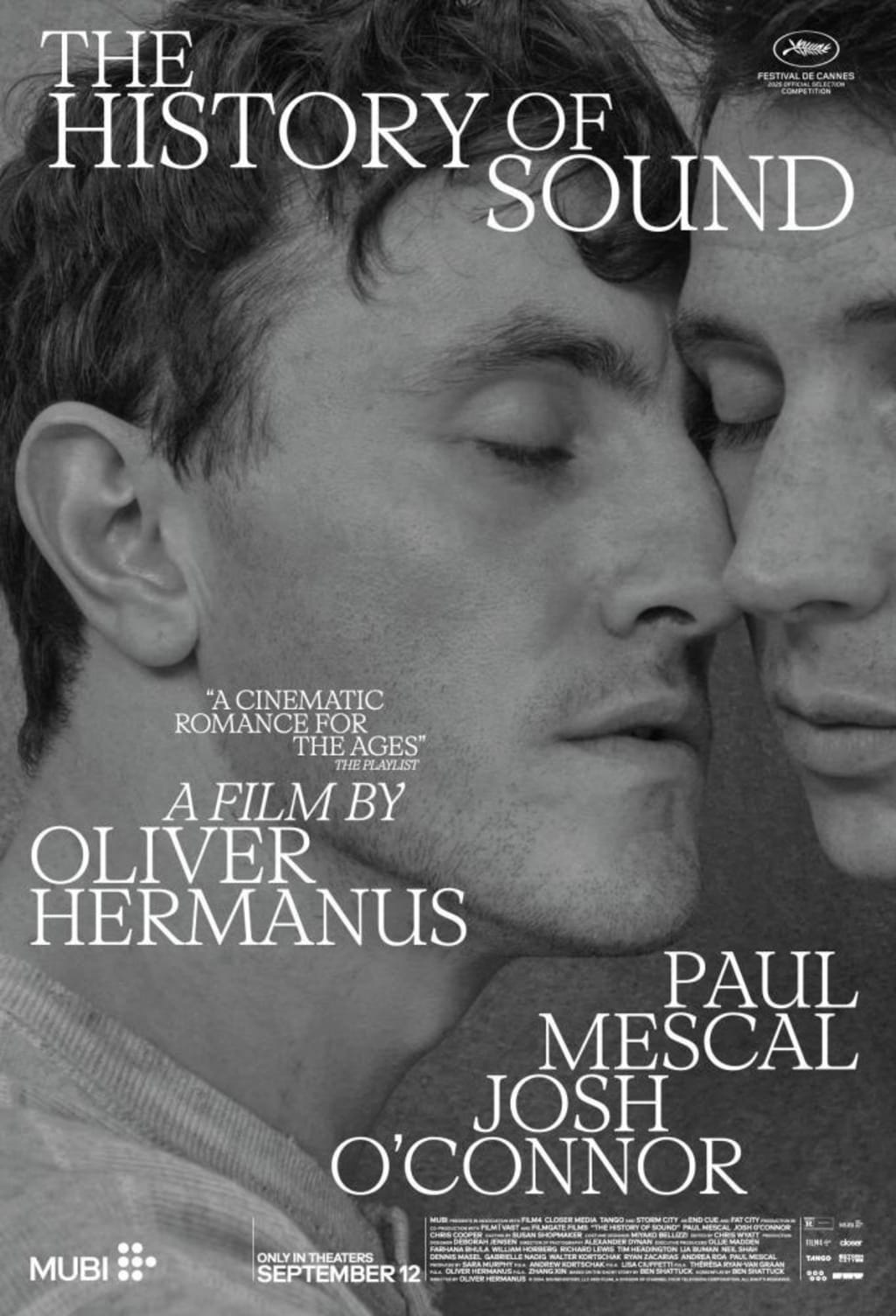
The History of Sound is a well-made, beautiful film with fine, touching performances. I defy anyone to disagree with that. It is a film that is difficult to fault. But it is also difficult to love. Ironic given that a central plot line is the difficulty of love for two young men, who should be made for each other.
The History of Sound is a melancholic drama about the relationship between Lionel (played by Paul Mescal) and David (Josh O’Connor). It is a tender love story portrayed by two young, bankable stars, who are making interesting choices in their career. However, do not expect passion or sensationalism.
The film uses Lionel as voice over and in the prologue set in 1910 on an isolated farm in Kentucky, we learn that he is musically gifted with a clear voice, perfect pitch and a synaesthesia that allows him to see each note as colour or to feel it as taste. However, disappointingly this interesting quirk, this insight into the world of sound is not revisited. The sense that music can be the magic of switching senses and disorientating experiences is not the focus of the film.
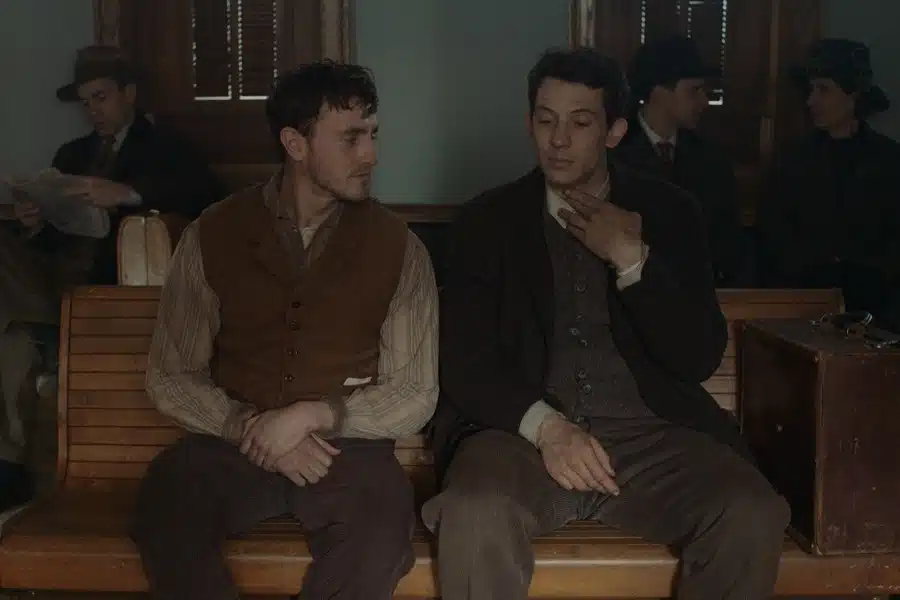
Lionel, after gaining a scholarship, meets David at the New England Conservatory of Music. There is an instant connection through their love of traditional folk songs. But also, there is an acknowledgement of difference in class and experiences. Lionel is a farmer’s son who has already exceeded his family’s expectations. David is a wealthy orphan, looking for a past that can explain his present. The burgeoning romance is disrupted by World War I. David is called to serve, and Lionel must return to farm work.
In the winter of 1920, David asks Lionel to join him on a journey to record the folk songs of their compatriots in rural Maine. A period of his life that David describes as his happiest. Lionel and David’s relationship is contextualised by war and early sound technology. David carries with him a wax cylinder to record the often mournful folks songs that are carried from generation to generation. Sound becomes a literal and metaphoric vibration that gently moves and shapes the world around us.
There are moments of tenderness, of beautiful photography and meaningful social history. The best scenes are those shared by the two leads. When David is not there, not only does Lionel miss him, but we do too. But, the promise of those early thoughts on the diverse ways we can experience the world are not revisited. Instead, it is a small world inhabited by men unable to articulate much outside of their love of music.
It is a film of grey, winter skies and even Rome is muted in colour. And despite the exquisite purity of the folk music, sometimes it would be nice to hear something more complex. If this film were a building, it would be a museum. If it were a food, it would be brown rice, worthy and good for you. If it were a texture, it would be smooth and tasteful. What it fails to be is playful.
All of the artistic choices made by the director make sense within the world of the film. But it can feel very drawn out. The pacing is slow, perhaps old-fashioned.
I’m neither panning nor recommending this movie. If you have the time and patience, the rewards are there. It has an emotional pull. I am still thinking of some of the quietly devastating scenes, but also aware that whilst watching, I fidgeted in my seat.
If you've enjoyed what you have read, consider subscribing to my writing on Vocal. If you'd like to support my writing, you can do so by leaving a one-time tip or a regular pledge. Thank you.
About the Creator
Rachel Robbins
Writer-Performer based in the North of England. A joyous, flawed mess.
Please read my stories and enjoy. And if you can, please leave a tip. Money raised will be used towards funding a one-woman story-telling, comedy show.
Enjoyed the story? Support the Creator.
Subscribe for free to receive all their stories in your feed. You could also become a paid subscriber, letting them know you appreciate their work.
Comments
There are no comments for this story
Be the first to respond and start the conversation.