
The Hidden Story Behind Jellycat’s Global Madness
Behind the soft smiles lies a billion-dollar emotional economy of nostalgia and design

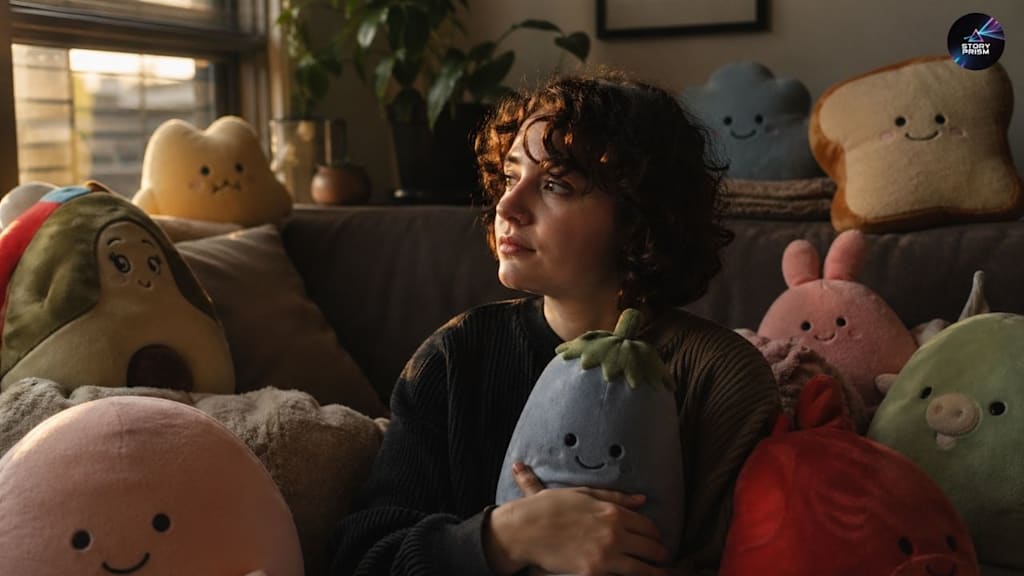
The Soft Revolution Nobody Took Seriously
At first glance, they look harmless—almost absurd. A smiling strawberry. A soft crocodile. A loaf of bread with tiny eyes and a permanent grin. But walk into the world of Jellycat, and something strange begins to happen. People don’t just look at these plush toys. They react to them.
Some smile. Some laugh. Some quietly pick one up and hold it longer than they intended.
And that’s where the story begins.
Because Jellycat is not really about toys anymore.
It’s about people.
________________________________________
A Quiet Brand That Became Loud Without Trying
Founded in London in 1999, Jellycat started as a soft toy company with an unusual design philosophy: make things playful, slightly weird, and emotionally expressive.
While other toy brands leaned into realism, Jellycat went in the opposite direction. A mushroom could smile. A cloud could have personality. A peanut could look like it just told a joke.
No one predicted what would happen next.
Over time, these plush characters stopped being “just toys.” They became collectibles. Then gifts. Then emotional companions.
And eventually, cultural symbols.
________________________________________
The Rise of “Emotional Objects”
In a world saturated with digital noise, something unexpected happened: people started craving physical softness again.
Not just comfort in the emotional sense—but in texture, form, and presence.
Jellycat filled that gap almost accidentally.
A person might buy a plush bunny for a child. But later, they find themselves buying one for themselves. Then another. Then a small smiling dumpling for their desk. A croissant for their car. A tiny frog for their nightstand.
It doesn’t feel like shopping anymore.
It feels like collecting feelings.
________________________________________
Why Adults Are Driving the Craze
What makes Jellycat unusual is not that children love it—that’s expected.
What’s unexpected is the adult obsession.
Across social media platforms, adults showcase shelves filled with plush toys that look more like emotional artifacts than playthings. Some call them “comfort objects.” Others call them “soft companions.”
But beneath the aesthetic lies something deeper.
Modern life is fast, sharp, and often emotionally detached. Screens replace touch. Notifications replace presence. Even relationships can feel fragmented.
In that environment, a soft toy with a gentle face becomes something surprisingly powerful.
It doesn’t demand attention. It doesn’t judge. It simply exists.
And for many people, that is enough.
________________________________________
The Psychology of Cute Design
Jellycat’s success is not accidental—it is psychological.
Their designs often trigger what experts call “kindchenschema,” a concept where humans respond positively to baby-like features: large eyes, rounded shapes, and soft textures.
But Jellycat pushes it further.
They don’t just create cute animals. They create emotional absurdity.
A smiling avocado. A laughing onion. A cheerful piece of toast.
The humor disarms the mind. The softness calms it. The combination creates attachment.
People aren’t just buying objects—they’re buying small interruptions of joy in an increasingly serious world.
________________________________________
From Toy Stores to Cultural Spaces
What was once confined to toy shelves has expanded into lifestyle retail, online culture, and even art-like appreciation.
Retailers now treat Jellycat products like seasonal drops. Certain designs sell out quickly. Others become “retired,” creating a subtle scarcity that fuels demand.
Pop-ups and curated displays feel less like toy sections and more like exhibitions of emotional design.
And that shift matters.
Because it shows something important: society is beginning to treat emotional comfort as a product category.
________________________________________
The Internet Effect
Social media has accelerated everything.
On TikTok and Instagram, Jellycat collections are displayed like personal museums. Videos show slow, calming unboxings. Soft lighting. Gentle music. Careful arrangement.
The tone is not “look what I bought.”
It’s “look what makes me feel safe.”
In a digital world often defined by speed and outrage, this softness stands out. It spreads quietly—but widely.
________________________________________
More Than a Brand, A Mood
It would be easy to dismiss Jellycat as a trend. But trends usually fade.
What Jellycat represents is something more stable: a shift in how people interact with objects.
We are entering an era where emotional design matters as much as functionality. Where objects are expected not just to be used—but to be felt.
A plush toy shaped like a smiling vegetable doesn’t change the world.
But it changes a moment.
And maybe that’s enough.
________________________________________
The Quiet Question Behind It All
So the question is not why Jellycat became popular.
The real question is why we needed it in the first place.
Why are so many people, across ages and cultures, finding comfort in something so simple, so soft, so intentionally unreal?
Maybe the answer is not about toys at all.
Maybe it’s about us.
And what we’ve been missing without realizing it.
________________________________________
About the Creator
Enjoyed the story? Support the Creator.
Subscribe for free to receive all their stories in your feed.
Comments
There are no comments for this story
Be the first to respond and start the conversation.