
'The Great Skycopter' Rescue' (1980): When the 1980s Took Flight
Bikers, oil thieves, flying machines, and one spacesuit-wearing DJ collide in one of the decade’s strangest forgotten adventures.

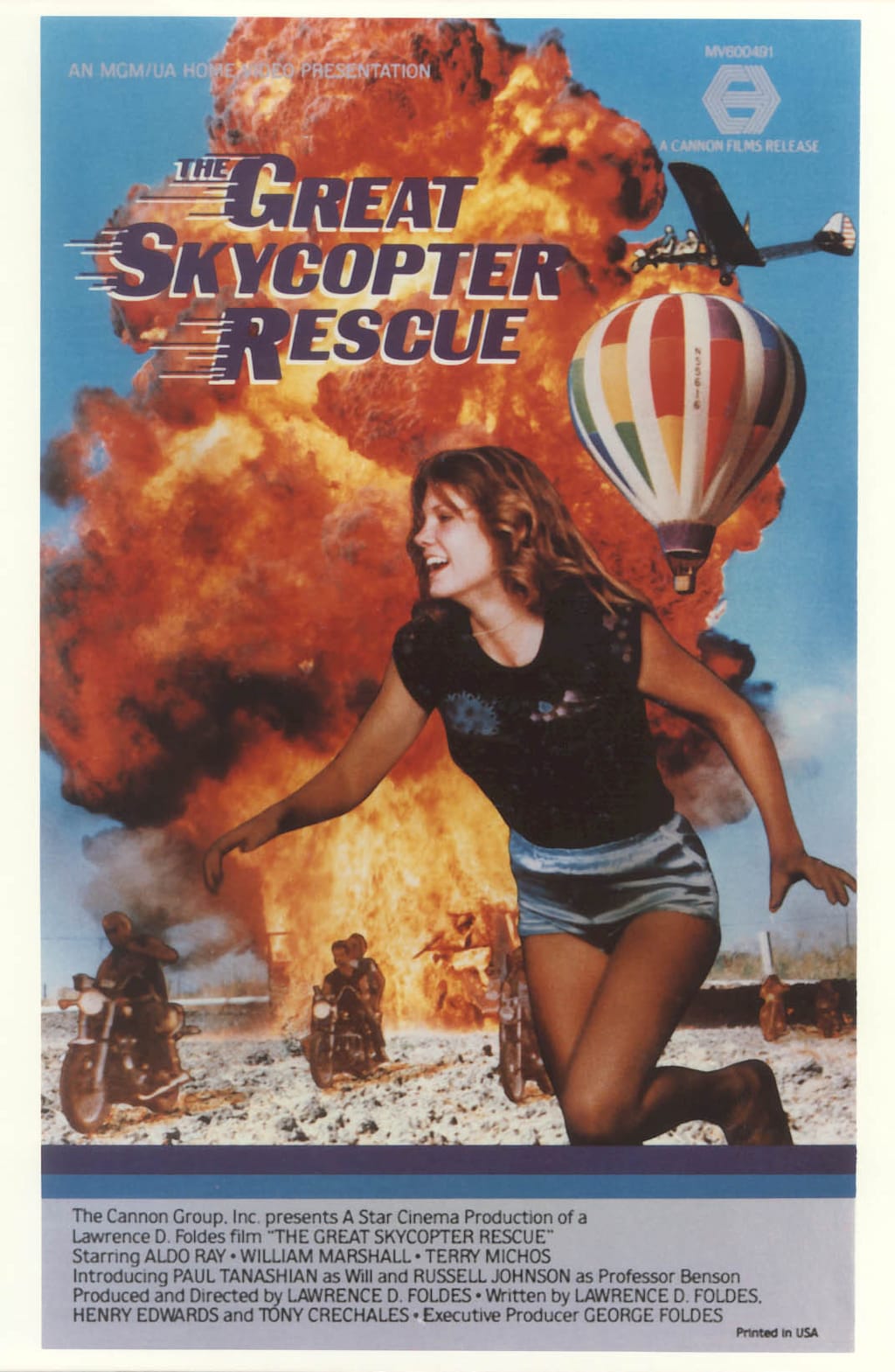
A Movie Built Around a Craze
In 1980, Lawrence David Foldes looked at the cultural landscape of America and apparently saw the ingredients for a movie: ultralight aircraft, gyrocopters, CB radios, motorcycle gangs, small-town corruption, disco-era fashion and a healthy supply of low-budget mayhem.
The result was The Great Skycopter Rescue, an eccentric independent action-adventure that feels like somebody crossed The Dukes of Hazzard with a homemade aviation documentary, threw in a biker movie and then handed the whole thing to a filmmaker barely out of his teens.
It is strange.
It is cheap.
It is occasionally ridiculous.
And it is exactly the kind of movie that makes the forgotten corners of 1980 worth exploring.
Foldes co-wrote and produced the film in addition to directing it, giving him an unusual amount of creative control over a production built around one very specific idea: what if the latest aviation craze could become the centerpiece of an action movie?
The answer, apparently, was The Great Skycopter Rescue.
From Ultralights to Outlaws
The movie grew from an idea by James “Jim” Courant, with Foldes developing the screenplay alongside Tony Crechales and Henry Edwards, who had previously worked on the screenplay for Sgt. Pepper’s Lonely Hearts Club Band.
The timing made sense.
By the end of the 1970s, ultralight aircraft and gyrocopters had captured the public imagination. These relatively inexpensive flying machines represented a new kind of freedom—part airplane, part motorcycle, and seemingly accessible to anybody willing to take the risk.
Foldes saw an exploitation opportunity.
Why not combine that fascination with the other obsessions of the moment?
So The Great Skycopter Rescue throws motorcycle outlaws, CB culture, rural America and oil exploration into the same blender. The result isn’t so much a conventional action movie as a cinematic snapshot of several fading 1970s crazes crashing headfirst into the 1980s.
Foldes was barely twenty when he made it. He had already worked in horror with Don’t Go Near the Park, but The Great Skycopter Rescue gave him the opportunity to attempt something considerably more ambitious.
The production was supported by Star Cinema and The Cannon Group, during the period before Menahem Golan and Yoram Globus transformed Cannon into one of the defining independent movie companies of the 1980s.
It was a different Cannon then.
And this was a very different kind of Cannon movie.
Welcome to Winters, California
Foldes surrounded himself with a curious collection of veteran performers and young newcomers.
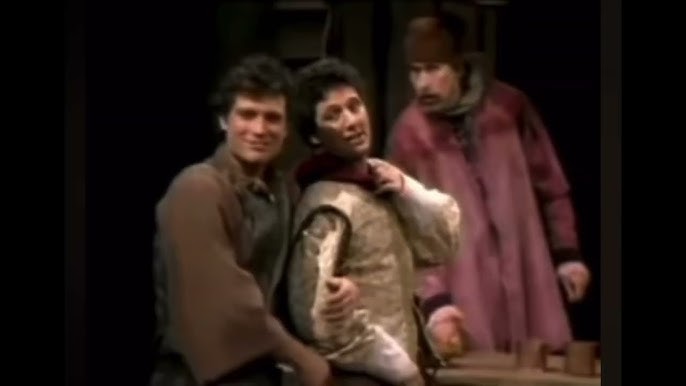
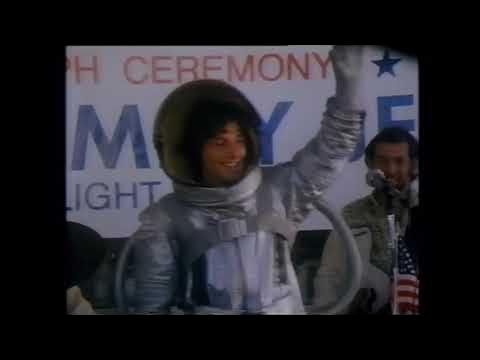
Terry Michos, best remembered as Vermin in The Warriors, plays Jimmy Jet, a bizarre radio DJ whose distinctive wardrobe includes what appears to be a spacesuit. Jimmy eventually finds himself pulled into the action and becomes the movie’s unlikely hero.
William Marshall, the commanding star of Blacula, plays the flamboyant Mr. Jason, an oil hunter whose ambitions put him squarely on the villainous side of the story.
Aldo Ray plays Sheriff Burgess, a local lawman whose badge doesn’t necessarily make him the most trustworthy man in town.
And then there’s Russell Johnson.
Yes, the Professor from Gilligan’s Island.
Johnson appears as Professor Benson, adding another layer of oddball familiarity to a cast that seems to have been assembled from several completely different movies.
The supporting cast includes Paul Tanashian and Terri Taylor alongside a collection of young aviators and local performers.
But the real stars of the movie aren’t necessarily the actors.
They’re the flying machines.
The Skycopters
Filmed on location in Winters, California, The Great Skycopter Rescue takes full advantage of the area’s rural landscape.
The production’s aerial sequences were supported by pioneering pilots Marion and Doc Springer, whose expertise gave the filmmakers access to the very machines around which the movie was built.
And Foldes uses them.
A lot.
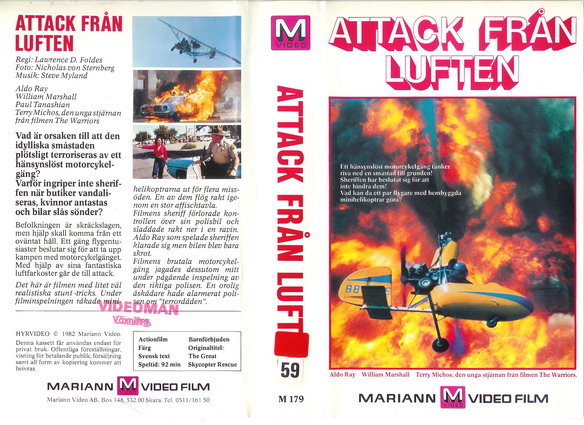
Hang gliders, ultralights and the titular “skycopter” dominate the movie’s action, giving the production an authenticity that its limited budget could never have created through conventional spectacle.
There is something undeniably charming about watching filmmakers attempt to turn these relatively fragile-looking machines into action-movie weapons.
The climactic aerial assault on the bikers is especially memorable. It plays like a backwoods, low-budget cousin of Apocalypse Now, only instead of helicopters descending upon a battlefield, you’ve got homemade flying machines taking the fight to a bunch of motorcycle outlaws.
It shouldn’t work.
And somehow, the sheer audacity of it makes it work a little.

A Strange Movie From a Strange Moment
The problem is that The Great Skycopter Rescue doesn’t always know what kind of movie it wants to be.
Is it a comedy?
An action movie?
A biker picture?
An aviation adventure?
A rural crime story?
A piece of exploitation?
The answer seems to be yes.
The movie’s choppy editing and thin screenplay don’t help. The story sometimes feels less like a carefully constructed narrative than a series of excuses to get the aircraft back into the sky.
And when the movie isn’t flying, it can drift into the rougher territory of late-1970s exploitation cinema, with violence and gratuitous material that occasionally clashes with the movie’s more playful ambitions.
That tonal instability is probably the biggest reason The Great Skycopter Rescue never became anything more than a curiosity.
But it is also part of its charm.
This isn’t a movie trying to hide its limitations.
It is a movie trying to do something.

Lost in the Theaters
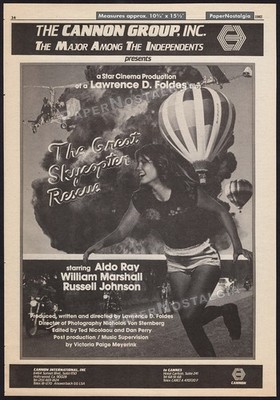
The Great Skycopter Rescue arrived in American theaters on December 31, 1980, with virtually no fanfare.
There was no major studio campaign waiting behind it. No stars capable of selling the picture to a national audience. No enormous advertising budget.
It simply appeared.
And then, for the most part, disappeared.
Reliable box-office information is difficult to come by, which is hardly surprising for a regional independent production like this. The film eventually became more visible internationally, particularly through home video, where it appeared under various alternate titles.
In West Germany, it was released as Am Himmel ist die Hölle los. In Brazil, audiences encountered it as Violência na Cidade.
Like so many low-budget American movies of the era, its real afterlife wasn’t in theaters.
It was on VHS.
The Legacy of the Skycopter
There isn’t much of a critical record surrounding The Great Skycopter Rescue. Modern viewers have generally been less than enthusiastic, with the movie’s low IMDb rating reflecting the problems that have always been obvious: uneven pacing, a thin story and editing that can make the whole production feel even more chaotic than it already is.
But there is another way to look at it.
Strip away the expectations of a conventional action movie and The Great Skycopter Rescue becomes a fascinating time capsule.
It captures a moment when a couple of young filmmakers could look at an obscure technological fad, convince themselves that it could carry a feature film, recruit a handful of recognizable actors and actually go out and make the thing.
That spirit is increasingly difficult to find.
The movie’s aerial photography is genuinely interesting, particularly because the flying sequences were performed with real aircraft rather than buried beneath layers of digital effects. The aviation work by Marion Springer and the other pilots gives the film something that money can’t necessarily buy: the feeling that you’re watching people actually take these machines into the sky.
And then there’s William Marshall, who attacks Mr. Jason with the kind of theatrical enthusiasm that makes even the strangest B-movie more entertaining.
A Flight Worth Remembering
Lawrence David Foldes would eventually move toward more serious dramatic work, including Finding Home. But before that, he made The Great Skycopter Rescue—a movie that could only have come from a particular moment in American filmmaking.
It is rough around the edges.
Sometimes it is bewildering.
Sometimes it is unintentionally funny.
And sometimes it is exactly the kind of gloriously strange movie that makes exploring the forgotten films of the 1980s worthwhile.
Because underneath all the bikers, oil hunters, CB radios and flying contraptions is something genuinely admirable.
A filmmaker barely twenty years old saw an idea he thought was worth pursuing and somehow got it into the air.
The Great Skycopter Rescue may not be a great movie.
It probably isn’t even a particularly good one.
But it is a wonderfully strange artifact of an era when American independent filmmakers could still chase the latest cultural obsession all the way to the sky—and hope audiences would follow them there.

About the Creator
Movies of the 80s
We love the 1980s. Everything on this page is all about movies of the 1980s. Starting in 1980 and working our way the decade, we are preserving the stories and movies of the greatest decade, the 80s. https://www.youtube.com/@Moviesofthe80s
Enjoyed the story? Support the Creator.
Subscribe for free to receive all their stories in your feed.
Comments
There are no comments for this story
Be the first to respond and start the conversation.