
The Game That Never Left
At 62, Rui Naiwei is still placing stones. She's been exiled, banned, and dismissed — but she's never stopped winning.
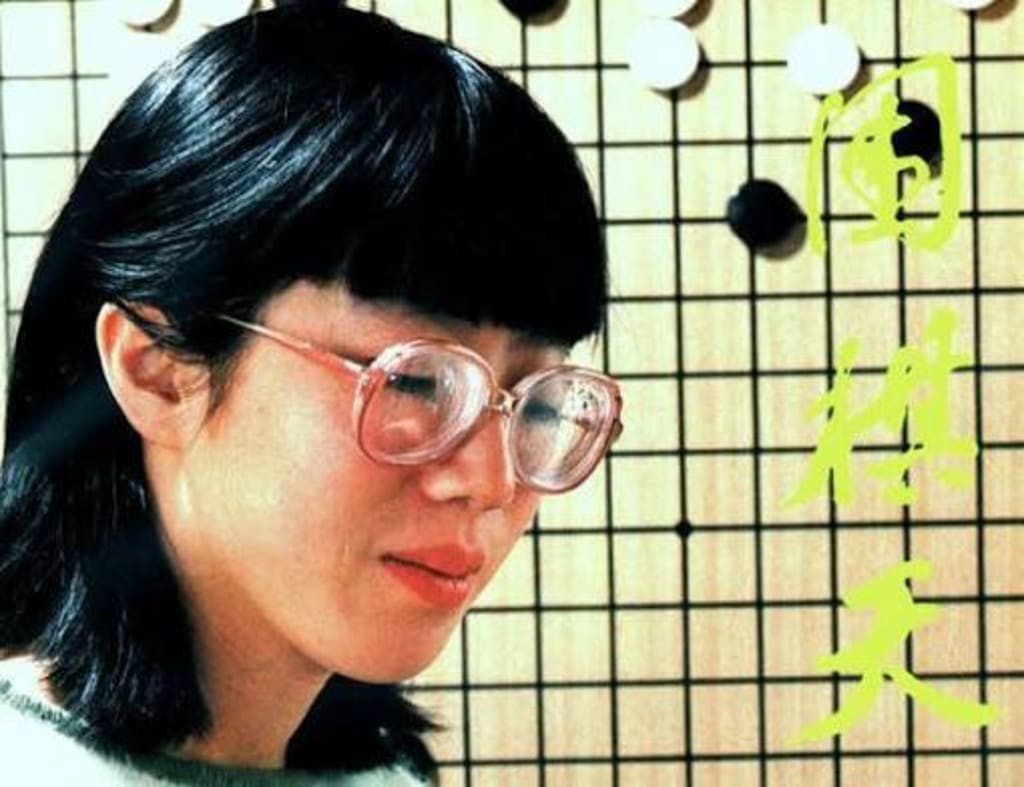
On the Yangtze River in 1987, fog rose in the evening.
Rui Naiwei walked into the Japanese male player's cabin, sat down, and played a game of Go. The clack of her stones carried through the thin partitions. Players in adjacent cabins heard it. An ordinary night. They finished, they parted, the fog stayed.
Later, that fog became a stack of confession papers. She sat at the team's desk, writing one character at a time. She had always written slowly, two or three hours behind everyone else. In elementary school, while classmates handed in their homework, she was still erasing. At the youth sports school, she was always the last to turn in her record of moves. This time she wrote more slowly. Every sheet started with "I was wrong," but she scratched it out three times, rewrote it three times. The version she finally submitted was neater than any she had ever written. She had only one method: if it wasn't good, erase and rewrite. If she lost a game, replay it from the beginning.
Rewriting didn't help. Her National Hand tournament qualification was revoked. The eleven-game losing streak against male players started. People in the team said she had "behaved improperly." She applied for the National Men's Individual Championship. Rejected. In her dormitory, she packed her bags, wrapping her Go stones in cloth and tucking them at the bottom of the suitcase. Someone urged her to bow her head and apologize. She said, "I did nothing wrong. I just played a game of Go."
The door slammed. She left. Twenty-seven years old.
Tokyo. The Go club smelled of mildew and old tea. Children called her "Teacher Rui." She wiped the stones, slipped a white one into her apron pocket, held it through the afternoon. That night in her rented apartment, she reached into her pocket. The stone was still there, warm from her palm. She placed it back in the bowl. Then she pulled out a pay stub: 200,000 yen—base salary from her insurance job. The club work barely covered rent.
She tried to become a guest professional in Japan. Local female players signed a petition to block her. The reason: "She's too strong. She'll take our opportunities." She looked at the letter in her apartment. She didn't throw anything. She didn't cry. She folded it and placed it in the drawer next to that stack of confession papers. Then she sat down and played a game.
In those days, her board always had only herself on the other side. She played every day anyway, stubborn as ritual. Neighbors heard the click of stones past midnight and assumed she had an opponent. They pushed open the window. A desk lamp, a board, a bowl of stones.
The Ing Cup.
She registered as an individual. No coach. No team leader. No teammates. Across the board: Koichi Kobayashi, Lee Chang-ho, Yang Jae-ho. Three men, all younger, all names carved into the history of world Go.
During the game against Lee Chang-ho, while the referee counted the stones, she glanced at her shoes. The soles had worn thin—bought the year she came to Japan, walked too many miles: from the club to the insurance office, from the office to the apartment, from the apartment to the post office to mail her registration form. Her shoes had covered more ground than the number of moves she had played on the board.
The referee announced her win. She didn't look up. She returned the stones to the bowl, one by one, slowly. Applause. Cameras. Someone called her name. She placed the last black stone into the bowl and closed the lid. A soft click.
She became the first female player to reach the semifinals of the Ing Cup. Newspapers said she had "smashed through the ceiling." Back in her apartment, she took off her shoes and set them by the door, then sat at the board and replayed the Lee Chang-ho game. At move thirty-seven, she stopped. She had thought about that move for four days. The next day, she went to see Wu Qingyuan. The master looked at her game for twenty minutes and said, "Here, you were afraid to kill."
She froze. She had thought about that move for four days—and hadn't dared to play it.
She knelt before Wu Qingyuan and became his disciple.
On the board lay a game she had lost. Wu did not lecture on joseki or fuseki. He said one thing: "Go is alive. You played it dead."
From then on, she had a daily ritual: studying Wu's old game records. Not memorizing—"reading." Like opening a novel she should have read long ago, turn a page, pause, turn another. Wu also made her copy Wang Xizhi's Preface to the Orchid Pavilion in calligraphy. She said, "My handwriting is ugly." Wu said, "I don't care about pretty. I care about steadiness." She copied it every day, her brush as slow as her stones.
Seoul.
She played fifty-one games that year, won forty-three. In the Korea Baduk Association records, her name was followed by a long line of "W." Someone asked if she was tired. "Not tired," she said. "As long as there's a game to play, I'm not tired." Over seven years in Korea, she swept every women's title. In the Jeonggwanjang Cup, she defended the fort for China against wave after wave of young opponents. She sat, played, reviewed, collected her stones, left.
The Korean Kuksoo Tournament.
She beat Lee Chang-ho, then Yoo Chang-hyuk. In the final, her opponent was Cho Hun-hyun—the emperor of Korean Go. She lost the first game, won the second. In the third, in byoyomi, she played a move that made Cho pause for a long time before he resigned. After the match, she stayed alone in the playing hall and replayed all three games. The cleaning woman came in to mop and asked, "Still not leaving?" "I want to finish this replay." The woman didn't rush her. She mopped and left.
A congratulatory telegram from the President of South Korea arrived while she was replaying the third game. Someone brought it to her. She nodded, placed the paper beside the board, and continued. She stayed until ten. When she left, the telegram was still at the edge of the board. She didn't take it.
She returned to China. Twenty-one years of wandering. In her luggage, the heaviest items were three sets of Go stones: one she had taken out of China, used in Japan for a decade; one bought in Japan, used for seven years in Korea; one bought in Korea, brought back home. Customs opened her suitcase. "What are these?" "Work tools." They looked and let her through.
In her fifties, her first major tournament back home was the Jianqiao Cup. She won, setting the record as the oldest champion. Then the National Games—gold. The National Mind Sports Games—gold. In 2023, at sixty, she received the "Best Fighting Spirit Award" in the Women's Weiqi League. On stage, holding the trophy, she smiled—a faint twitch at the corner of her mouth, then gone. Someone in the audience called, "Teacher Rui!" She looked over and saw Zhou Hongyu—then a junior member of the national team.
The Women's Weiqi League.
Her opponents: Zhou Hongyu 7-dan, Zhao Yifei 6-dan, Li Sixuan 6-dan. Their combined ages roughly equaled hers. She sat at the board, placing black and white stones. An old blade, its edge full of nicks—but it still cut deep.
Against Zhou Hongyu, she killed a dragon in the middle game. The moment the dragon fell, Zhou's hand hung in the air for a long time. Against Zhao Yifei, she reversed in the endgame. Zhao ran out of time first. Against Li Sixuan, a ko fight that lasted eighty moves. Li's stones were slick with sweat, as if she'd pulled them from water.
After those three games, Rui gave no interview. Back at the hotel, she opened a new set of stones and began reviewing. Pausing at a certain move in the Zhou Hongyu game, she stared for a long time, then murmured: "I should have played harder here."
She still does one thing every day: copies the Preface to the Orchid Pavilion.
Paper on the table, the ink in the stone slab half-dried. She adds a few drops of water, grinds it, dips her brush, lets it fall. Her strokes are as slow as placing stones. She writes, "In the ninth year of Yonghe, the year of Guichou…" Decades later, the strokes are still the same—steady, never hurried. Fellow players passing her door hear the brush slide across paper, like stones scraping across a Go board.
Some say her lasting strength comes from talent. Some say training. Some say the foundation Wu Qingyuan gave her. When she hears these remarks, she neither shakes her head nor nods. She simply puts away the game she just reviewed, returning the stones to the bowl—click, click, click—one by one, unhurried. Just like everything she has done in her life: slow, but never stopped.
About the Creator
Jin
Writer of reamstories
https://reamstories.com/jin
Enjoyed the story? Support the Creator.
Subscribe for free to receive all their stories in your feed. You could also become a paid subscriber, letting them know you appreciate their work.
Comments
There are no comments for this story
Be the first to respond and start the conversation.