
The First AI Theatrical Film Earned 630,000 Yuan in Two Days. The Producer Got 220,000.
A 10-million-yuan experiment, 22,000 admissions, and a hard lesson about selling AI to people who can watch it for free.
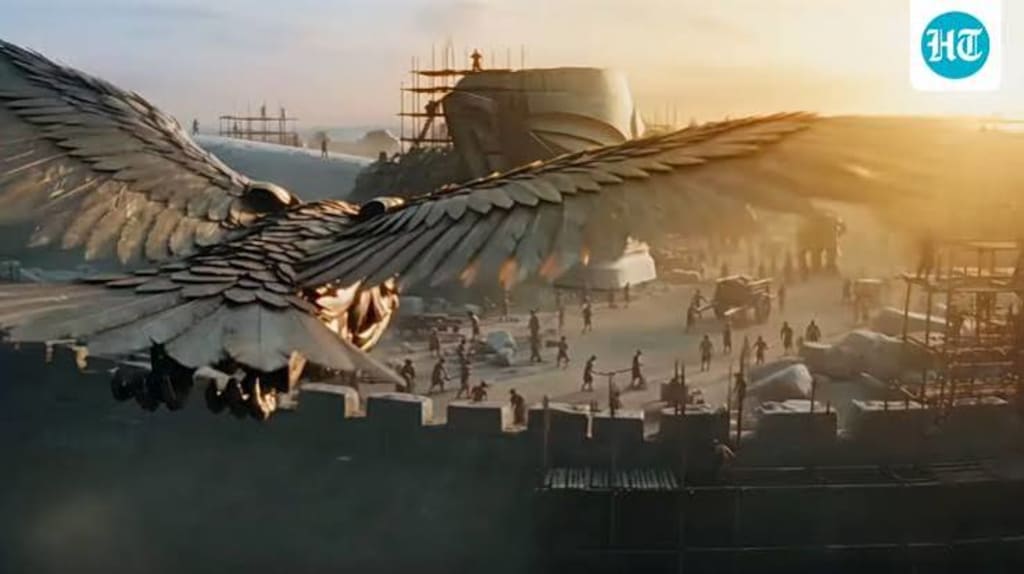
Two days after release, cumulative box office: 630,000 yuan. Producer revenue share: 220,000 yuan. Cumulative admissions: 22,000. Beacon AI predicts a final total of 2.07 million yuan. Maoyan has not issued a forecast.
Those four numbers need no adjectives. A 630,000-yuan box office corresponds to a 220,000-yuan producer share. Qu Jixiaojiang, head of Bona’s AIGMS Production Center, confirmed to media that the production cost was “in the range of 10 million yuan.” Divide 220,000 by 10 million. Recoupment progress: 2.2 percent. Two days in, that bar is welded in place.
The film is called Sanxingdui: Future Past. Promotional materials give it a louder title: the first AI theatrical film.
The numbers in the press release and the numbers on screen
Qu Jixiaojiang did the math. Shooting Sanxingdui the traditional live-action way might cost 800 to 900 million yuan. AI production costs around 10 million. That gap is the starting point for Bona’s AI film.
For that cost, the team put in nearly two years of technical exploration. It generated more than 1.2 million base images, ran hundreds of full-film iterations, set up 17 professional departments (cinematography, lighting, art, and others) modeled on a live-action crew, and involved nearly 100 people.
Every number is true in a press release. The 1.2 million base images are real. The 17 departments are real. The nearly 100 participants are real. Another set of numbers tells the story: two days after release, 22,000 people went to the cinema.
A 200-seat auditorium would need 110 full houses to reach 22,000 admissions. Across the country, two days of screenings add up to single-digit average admissions per showtime. Audiences made their choice on the ticketing app. That choice is more direct than any review: you generate your 1.2 million base images; I will scroll my free short videos.
The spacesuit never changes
Viewers who paid gave concrete feedback. The big set pieces are passably lavish, but the texture is stiff everywhere. Character expressions are rigid. The emoting is exaggerated and monotonous. The fake-human feeling is strong.
Fake-human feeling is the right term. AI imagery can fool people in a ten-second short video because the viewer does not get a second look. A theatrical film runs 90 minutes of continuous viewing. Micro-expressions, physical logic, costume changes, and continuity of movement are projected onto a big screen and examined frame by frame. A character who wears the same spacesuit from beginning to end is stylistically consistent in a short video. In a theatrical film it is a failure of asset management and narrative detail at the same time. Exaggerated, monotonous expressions mean the audience cannot read anything from the character’s face. If they cannot read anything, they will not care what happens next. If they do not care, those two hours become endurance.
The overall impression fits one line: it feels like an extended AI short video. Fine to watch for free to kill time. Paying for it is a donation to technological faith.
That line hurts more than the box office number. A low box office can be explained by weak marketing, bad scheduling, or an unfavorable release window. “Fine to watch for free” means the product positioning is wrong. The experience sits in the same bracket as free AI content on video sites. It is longer. It is slightly more polished. The polish has a ceiling.
Saving 800 million yuan does not help the audience
Bona’s cost logic holds on the production side. Traditional live action costs 800 to 900 million yuan. AI production costs around 10 million. The savings are real. Push the logic to the audience and it breaks.
Moviegoers do not check the producer’s cost sheet when buying a ticket. They ask one question: is this film good? You saved 800 million yuan. That is your business. You generated 1.2 million base images. That is your technical workflow. The audience sits in the dark and looks for something worth 90 minutes. If it finds it, the ticket is worth it. If it does not, then low cost, iterations, and a professional departmental split do not matter.
“Nearly two years of technical exploration” and “hundreds of full-film iterations” are pluses in industry media. They are zero on a ticketing page. Audiences do not buy tickets because the team worked hard. Diners do not order a dish because the chef spent three days cutting potatoes into matchsticks. If the dish does not taste good, fine knife work does not help.
The middle: more expensive than free AI, rougher than mature cinema
Video platforms produce large amounts of free AI content every day. Viewers scroll at no cost and swipe away without regret. A theatrical film must offer something free content cannot if it wants people to pay dozens of yuan plus two hours of travel and parking.
Sanxingdui: Future Past sits in the middle. Upward, it has no Avatar-level spectacle. The big scenes are lavishness built by piling on material. They look stiff on close inspection. They do not create a reason that the film must be seen on a big screen. Downward, it costs far more than free AI short videos. The extra cost does not buy an upgrade in experience. Narrative and emotion are dragged down by stiff performances. The technology is not stunning enough to make people forget the performances.
In commercial terms, this is the dead middle. The problem is not that it is bad. The problem is that it is not good enough by enough. Free content is a 60. Mature theatrical film is an 85. This sits at 70 and charges an 85 ticket price. Audiences can do that math.
If AI replaces every human link, humans have no reason to pay
AI’s share in the production chain is high. Modeling, generation, and image iteration are largely algorithmic. The press release stresses that the film looks “somewhat better than the free AI short videos on video sites.” That sentence admits the reference point is free content.
Follow the logic to the end and you reach an absurd place. AI screenwriter, AI generation, AI imagery. If the entire chain is AI, the most reasonable distribution method might be AI audiences watching, AI paying, a closed loop, cyber-ascension. Human audiences are superfluous in that loop. If they are superfluous, do not blame them for not buying tickets.
Film is made for people. People can accept rough technology. They will not accept the creator treating “technical exploration” as a reason to buy a ticket. Exploration is your cost. It is not my benefit. I pay for the result, not the process.
Stockholders should read the financial report, not the cinema
Investors who bought Bona shares and want to support the “first AI theatrical film” concept should read the financial report instead. Two days after release, the producer share is 220,000 yuan. Beacon predicts a final total of 2.07 million yuan, which corresponds to a final producer share most likely around 700,000 yuan. In Bona’s revenue ledger, that number would not fill a footnote. The implication is bigger than the number. “AI lowers costs” has not worked at the theatrical end.
Bona deserves credit for being first to eat the crab. Crab shells are hard. If you bite down and crack a tooth, you feel it. When other producers see this scorecard and think about using “AI production” as a marketing hook, they will weigh one question: are audiences paying for AI, or for something good to watch?
The answer is already in 22,000 admissions.
Final note
The first 48 hours of Sanxingdui: Future Past give the industry a concrete case. Technology can lower the barrier to production. It cannot lower the audience’s standard of judgment. AI can generate 1.2 million base images. It cannot generate anything above “it’s okay” when the audience leaves the theater. That “above” is the reason theatrical films can charge money.
The title “first AI theatrical film” has done its job: it got a film discussed. Discussion heat does not convert into box office. Among the people discussing it, only a minority pay. The rest scroll their free AI short videos and wait for the next one.
About the Creator
Jin
Writer of reamstories
https://reamstories.com/jin
Enjoyed the story? Support the Creator.
Subscribe for free to receive all their stories in your feed. You could also become a paid subscriber, letting them know you appreciate their work.
Comments
There are no comments for this story
Be the first to respond and start the conversation.