
The Eight Steps Hayden Panettiere Never Took
She survived fire stunts, fame, and fists. She couldn't survive the silence.
At four, she couldn't reach the makeup table. The prop master gave her an apple crate. She climbed up, toes gripping the wooden edge, took the script. She couldn't read all the words yet. When the director said "cry," she cried. On the set of One Life to Live, there was no child-sized trailer. She napped on a folding chair with a blanket from home, its edges frayed.
At eleven, she was opposite Denzel Washington. He didn't run lines with her. He asked: "What do you see?" She pointed at the monitor. "He's scared." Washington didn't praise her. They kept shooting. After the scene wrapped, she got a box of tissues instead of flowers. She had cried so hard her nose clogged. She shoved the tissues into her backpack, brought them home, never used them. They sat in a drawer.
On the set of Heroes, she did her own fire stunts. No double. The harness drop left a bruise on her right knee for three days. "One more take," she told the director. Not because she was dedicated. Because she knew: if she got the action right, no one would notice she was two years younger than her character. The script had its line—"Save the cheerleader, save the world." No one saved her in real life. She picked herself up off the floor, brushed the dust off her knee, and walked behind the monitor to watch the playback.
In the Kingdom Hearts booth, she spoke into the mic: "I understand… no matter where you are, you're always by my side." She took off the headphones, stood up, grabbed her bag, left. The director called after her: "That was good." She nodded. Got in the car. Closed the door. A voice actor's job is just a voice, no face. She hid in that soundproof booth. No need to explain her expression. No interviews to dodge. Just speak and leave. It was the safest place she knew.
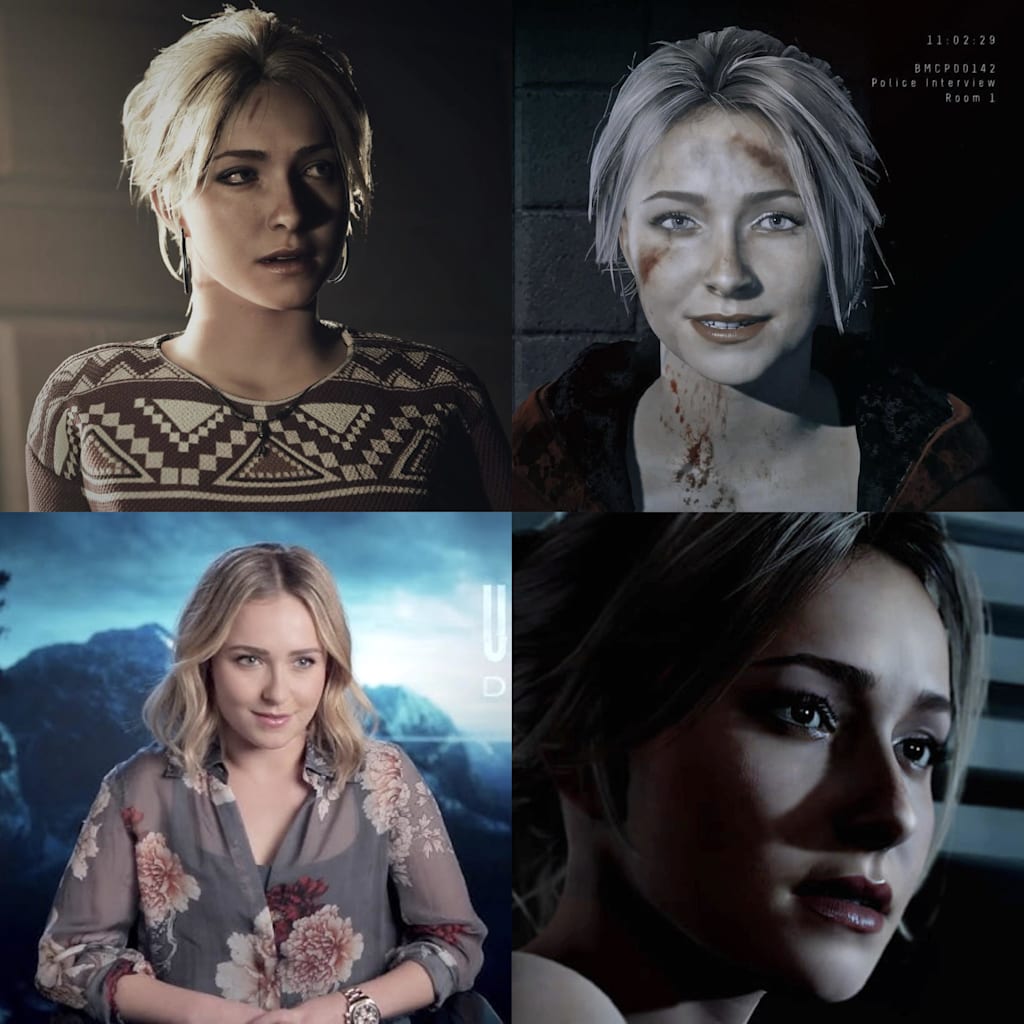
On the set of Until Dawn, everything was different. No face acting. The cameras tracked her body. She ran, hid, held her breath in front of a green screen. Her character, Sam, had to stand still in a corner, right hand pressed to her chest, while the player outside held the controller steady—no shaking, no heavy breathing. She shot that scene all afternoon, practicing stillness. After wrap, she stopped at a convenience store for water. The cashier said, "You look tired." She didn't answer.
Later, a fist landed on her body. She didn't call the police. Didn't go to the hospital. She wrote in her memoir: "I learned to stick heat packs on my back, so when I hit the wall, it hurt less." The heat packs cost ten yuan a pack from the supermarket. She stuck them where her shirt would cover. No one could see. It took fifteen minutes for a heat pack to warm up. She timed it. Fifteen minutes was just enough to steady her breathing.
In 2023, her brother Jansen died. An enlarged heart. Twenty-eight. She gave no interviews. No statements. One old photo—her and Jansen sitting by a pool, feet dipped in the water, ripples broken, sunlight too bright on the surface. The caption was a single period. Not an ellipsis. A period means she swallowed the words.
Three months ago, her memoir came out. She sat on a couch for a press interview. Her hands rested on her knees, pressing down—not relaxed. The host asked what the hardest decision was. She said she gave up custody of her daughter. She didn't say "I was in pain." She said: "My daughter's room is eight steps from mine. I counted." Eight steps. She looked down at her white sneakers. The laces were double-knotted.
She was last photographed at a mall in Los Angeles. Two plastic bags in her hands. One from a pharmacy, white, the seal taped shut. One from a convenience store, the edge of a hot dog bun peeking out. No makeup. Hair pulled back, stray strands stuck to her temples. She stood at the top of an escalator. The upward steps were in front of her. She paused. Three seconds. Turned. Took the stairs instead. One light was burned out at the stairwell entrance. She turned a corner in the dark. Gone.
In February 2026, the BBC quoted her father. He called her "an incredible light." At the bottom of the news page, a small line said the cause of death was not immediately available. That line had no color. No bold.
The apple crate from age four—no one knows where it went. The tissues from age eleven—probably expired. The heat packs she pressed against her back—peeled off, they left red marks that faded in hours.
Only the eight steps stayed. She counted them herself. From her door to her daughter's door, eight steps. She never walked the seventh.
About the Creator
Jin
Writer of reamstories
https://reamstories.com/jin
Enjoyed the story? Support the Creator.
Subscribe for free to receive all their stories in your feed. You could also become a paid subscriber, letting them know you appreciate their work.
Comments
There are no comments for this story
Be the first to respond and start the conversation.