
The Cotton Club (1984): Francis Ford Coppola’s Jazz Epic That Became One of Hollywood’s Most Infamous Productions
A dazzling blend of music, gangsters, and ambition, The Cotton Club was meant to be an Oscar contender. Instead, it became synonymous with murder, runaway budgets, and one of the most notorious productions of the 1980s.

The Movie That Promised Everything
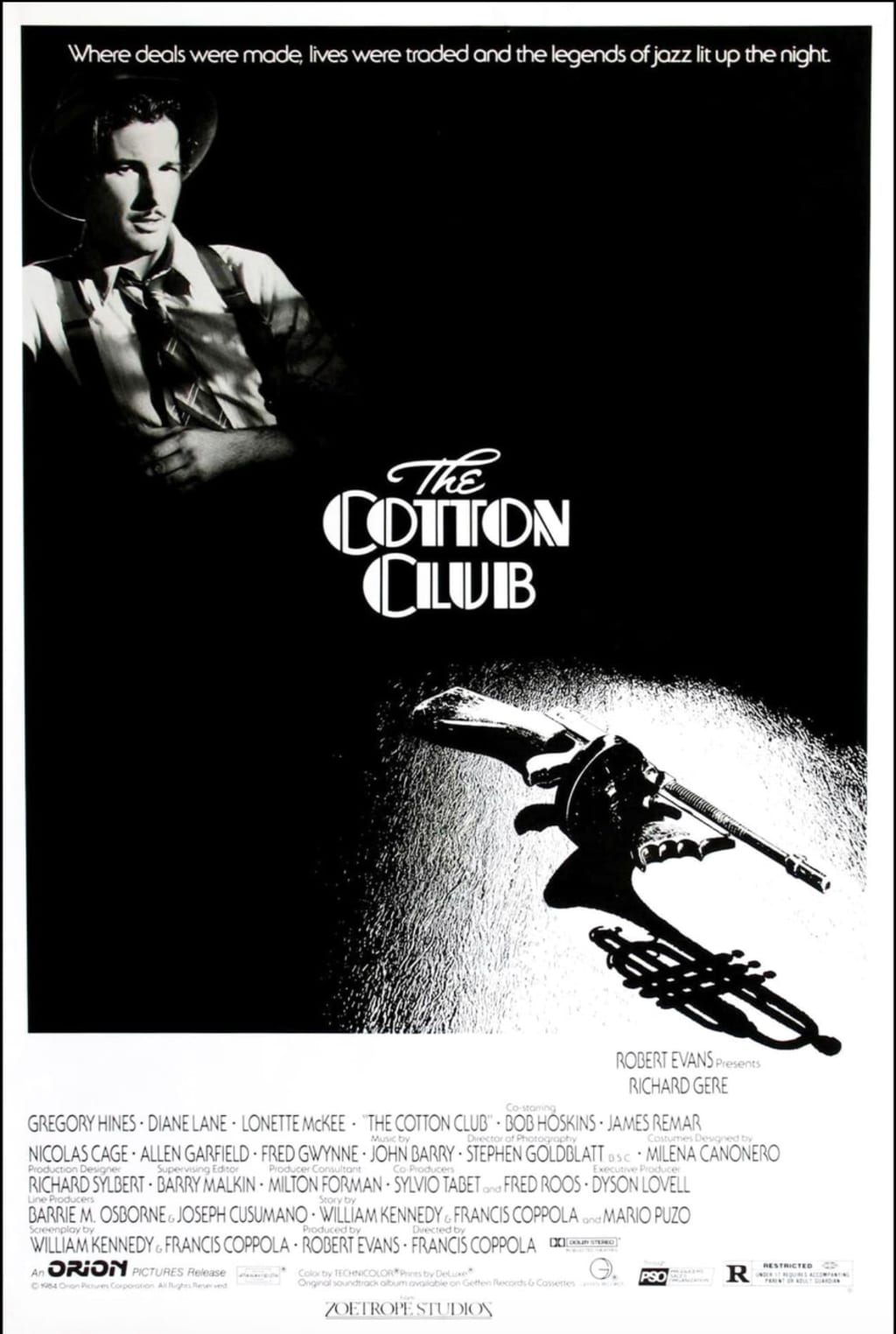
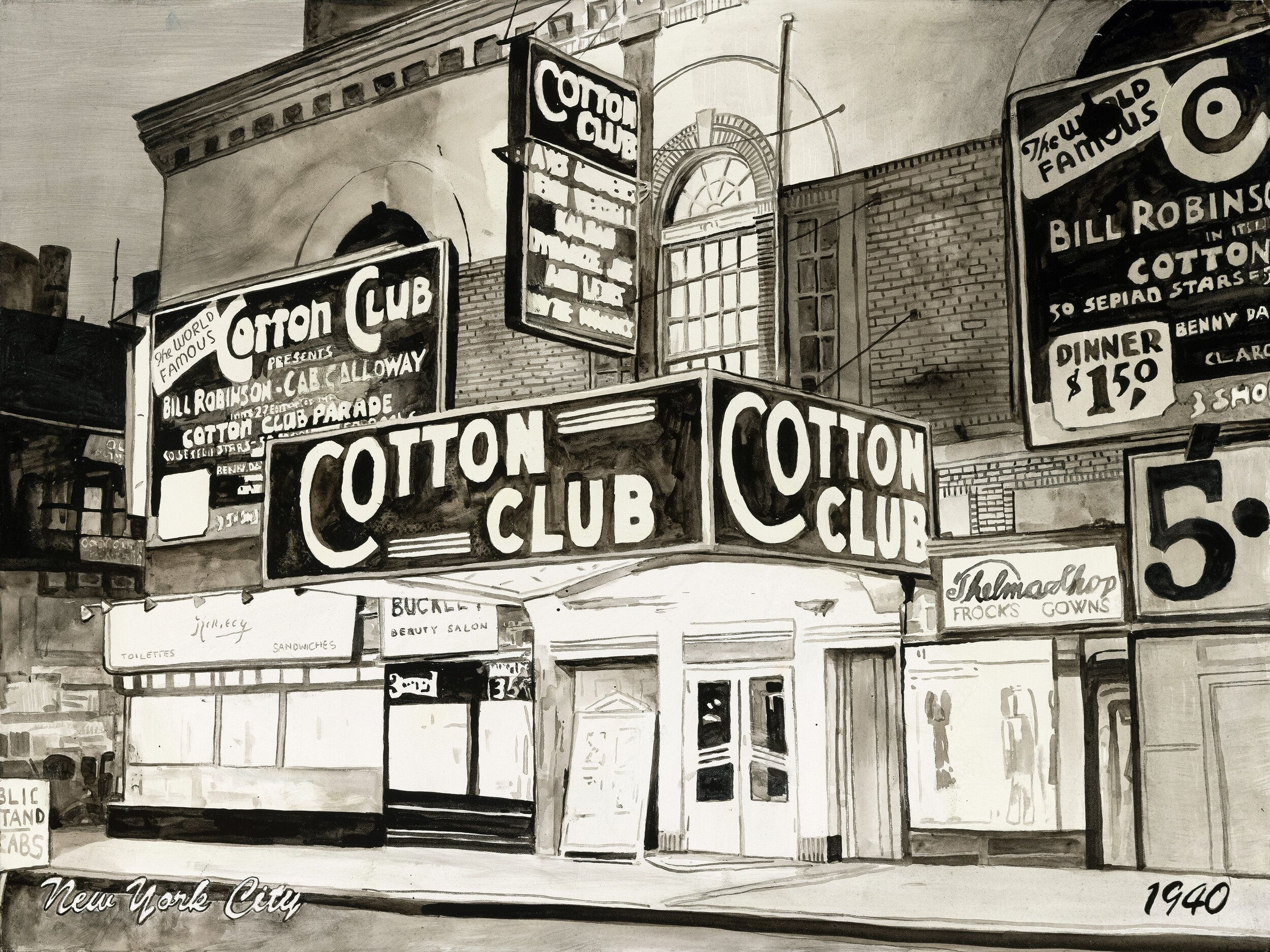
In 1984, Francis Ford Coppola unveiled The Cotton Club, an ambitious musical crime drama that sought to recreate the glamour, danger, and contradictions of Harlem’s legendary nightclub during the Prohibition era. Equal parts gangster saga and musical spectacular, the film explored the intersecting lives of performers, mobsters, and entertainers whose destinies collided beneath the club’s famous marquee.
The story embraced one of the venue’s greatest ironies. While the Cotton Club showcased many of the era’s greatest Black performers, its audiences were almost exclusively white. Coppola attempted to weave those contrasting worlds together, pairing stories of organized crime with the artistry of musicians and dancers who made the club famous.
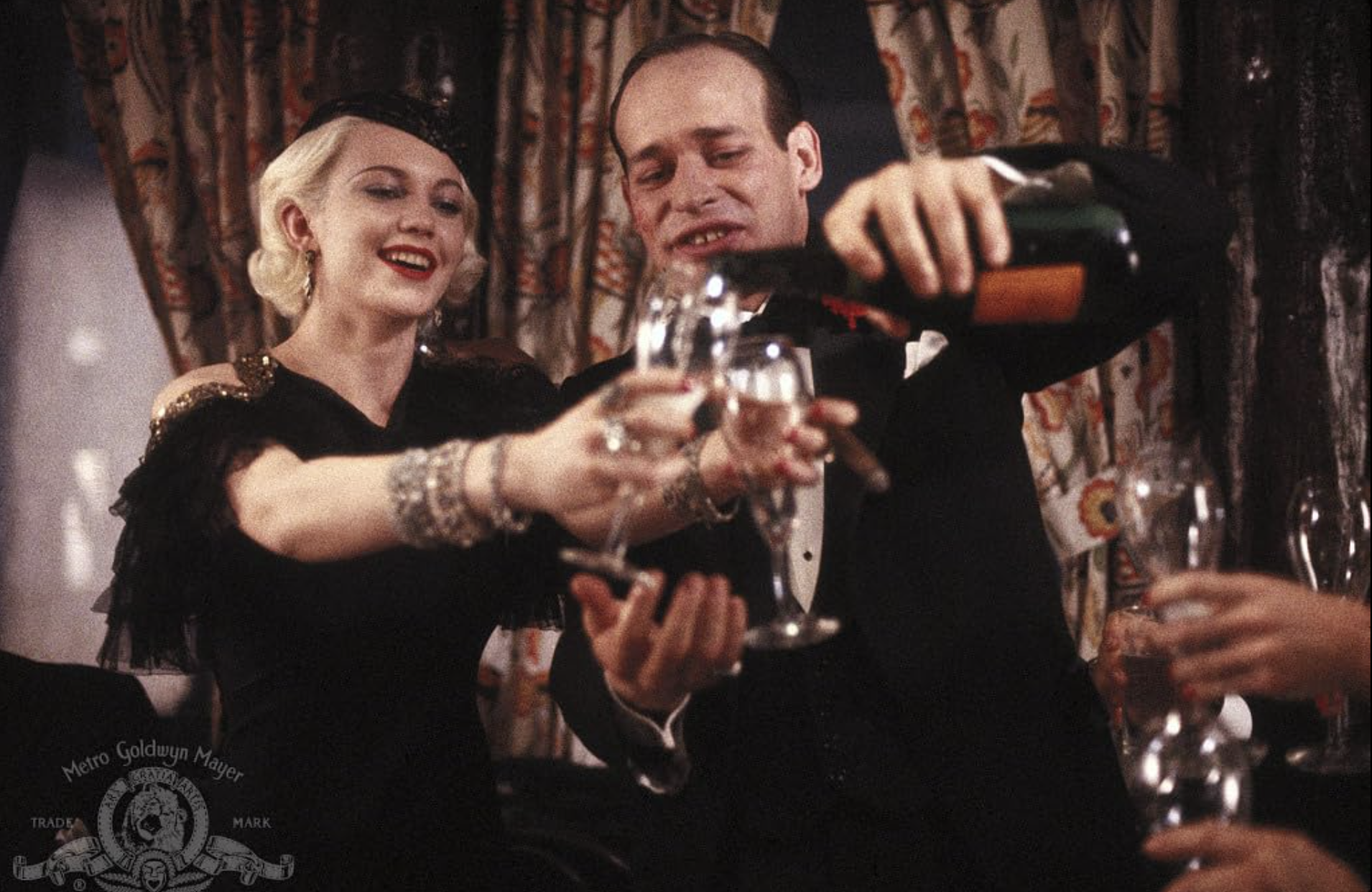
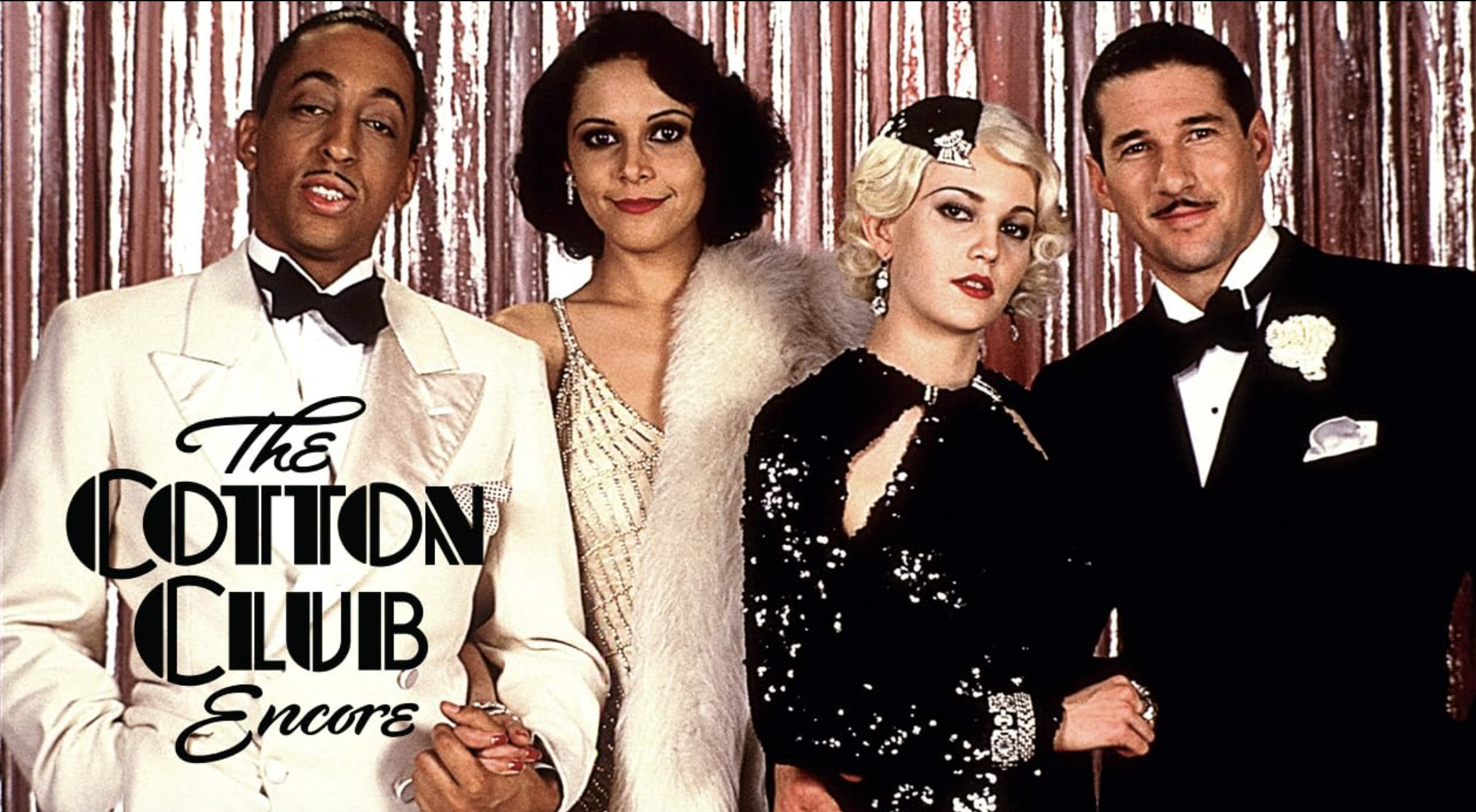
The production assembled an extraordinary cast. Richard Gere starred as cornet player Dixie Dwyer, while Gregory Hines delivered one of the finest performances of his career as tap dancer Sandman Williams. Diane Lane, Lonette McKee, Bob Hoskins, James Remar, Nicolas Cage, and Laurence Fishburne rounded out an ensemble that seemed destined for awards recognition.
Instead, the film would become one of the biggest cautionary tales in Hollywood history.
A Dream Born From Robert Evans
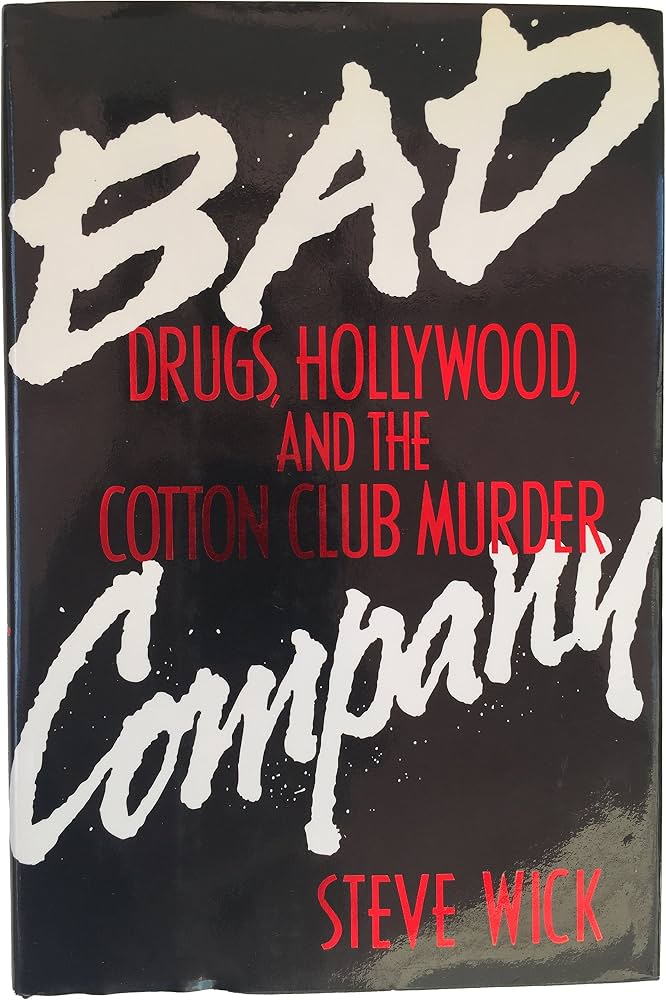
The project originated with legendary producer Robert Evans, whose successes on The Godfather and Chinatown had made him one of Hollywood’s most influential figures. Inspired by James Haskins’ 1977 pictorial history of the Cotton Club, Evans envisioned an epic period drama on the scale of Gone with the Wind.
Early plans looked promising.
Paramount Pictures backed the production, Mario Puzo was hired to write the screenplay, and Robert Altman signed on to direct. But after Altman’s Popeye disappointed at the box office, the studio lost confidence and the entire production collapsed.
Unwilling to abandon his passion project, Evans searched desperately for financing while battling legal troubles and mounting financial problems of his own.
Eventually, he convinced Francis Ford Coppola—himself struggling financially after the collapse of Zoetrope Studios—to come aboard. Coppola joined novelist William Kennedy in completely overhauling the screenplay before ultimately taking over as director, gradually pushing Evans out of creative control.
A Production Spiraling Out of Control
Casting remained fluid throughout pre-production, with stars including Al Pacino and Richard Pryor reportedly considered before Richard Gere and Gregory Hines assumed the leading roles.
Principal photography began in August 1983 in Queens, New York, but almost immediately the production descended into chaos.
Scripts were rewritten daily.
Entire scenes were discarded.
Lavish musical numbers were restaged.
The production reportedly burned through nearly $250,000 every day, while Coppola and Kennedy continued revising the screenplay throughout filming.
What had begun as a prestige picture quickly became one of the most expensive and unpredictable productions of the decade.
Murder, Mob Money, and Hollywood Scandal
If the escalating budget wasn’t enough, the financing behind The Cotton Club became even more controversial.
Funding reportedly involved Las Vegas casino interests and flamboyant promoter Roy Radin, who hoped to become one of the film’s producers.
Then the story took an astonishing turn.
In May 1983, before production had fully ramped up, Radin was murdered in a sensational Hollywood crime that would later become known as the “Cotton Club Murder.” The investigation uncovered a tangled web involving business disputes, organized crime allegations, and competing financial interests surrounding the film.
Although Robert Evans was questioned during the investigation, he was never charged with a crime after invoking his Fifth Amendment rights before a grand jury.
The scandal permanently attached itself to the production’s legacy.
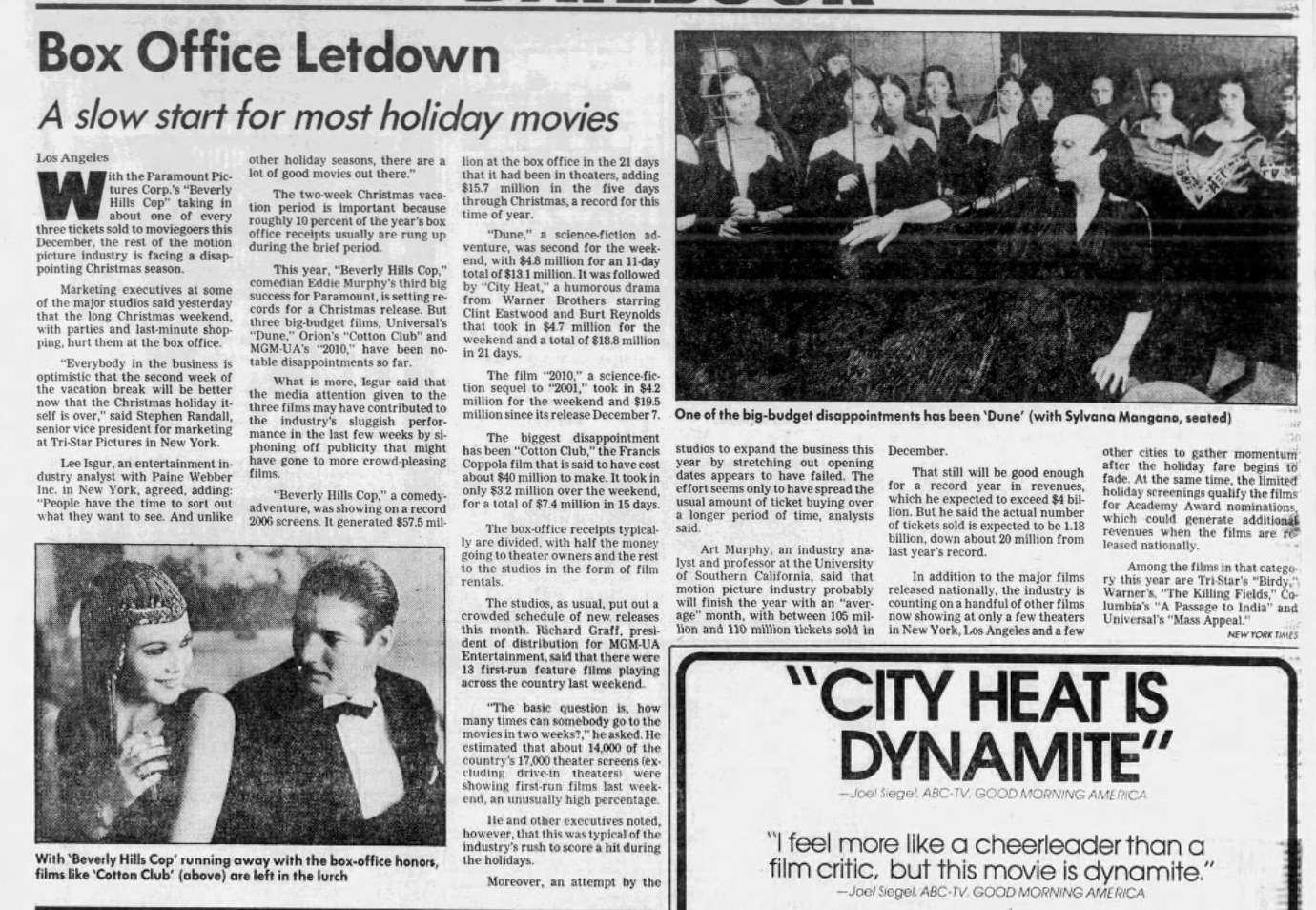
Meanwhile, lawsuits, power struggles, and endless financial disputes caused the budget to balloon to nearly $58 million, making it one of the most expensive films of 1984.
A Box Office Disaster
By the time The Cotton Club premiered in December 1984, expectations were enormous.
Unfortunately, audiences had other ideas.
Opening against Beverly Hills Cop, Coppola’s lavish period drama managed only about $2.9 million during its opening weekend. Its theatrical run ended with approximately $26 million domestically—less than half of its reported production budget.
The disappointing performance dealt a significant financial blow to Orion Pictures and cemented the film’s reputation as one of the decade’s most infamous box office disappointments.
Critics Couldn’t Agree
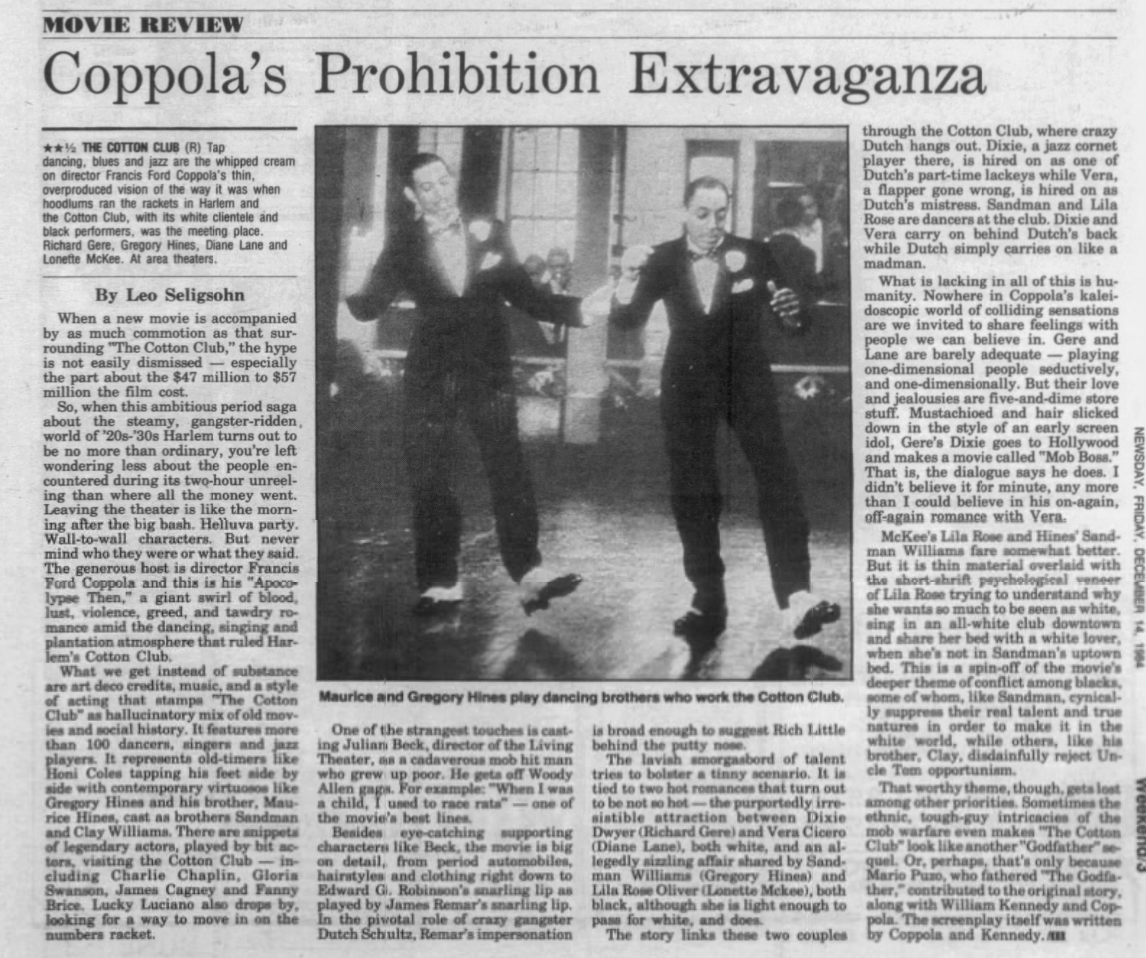
Critical reaction proved nearly as divided as audiences.
Many reviewers praised the spectacular production design, lavish costumes, and exhilarating musical performances, particularly Gregory Hines’ electrifying dance sequences. Others criticized the sprawling narrative, arguing that the gangster storyline overwhelmed the more compelling stories of the club’s performers.
Not everyone shared his enthusiasm.
Diane Lane even received a Razzie nomination, illustrating just how polarized opinions had become.
Despite the mixed reviews, the film earned Academy Award nominations for Best Film Editing and Best Art Direction, while also winning the BAFTA Award for its sumptuous costume design.
Francis Ford Coppola Finally Finished the Movie
For decades, Coppola maintained that the theatrical version wasn’t the film he intended audiences to see.
Studio executives had favored the white gangster storyline while trimming much of the material centered on the Black performers and their music, fundamentally altering the balance of the narrative.
More than thirty years later, Coppola decided to correct that mistake.
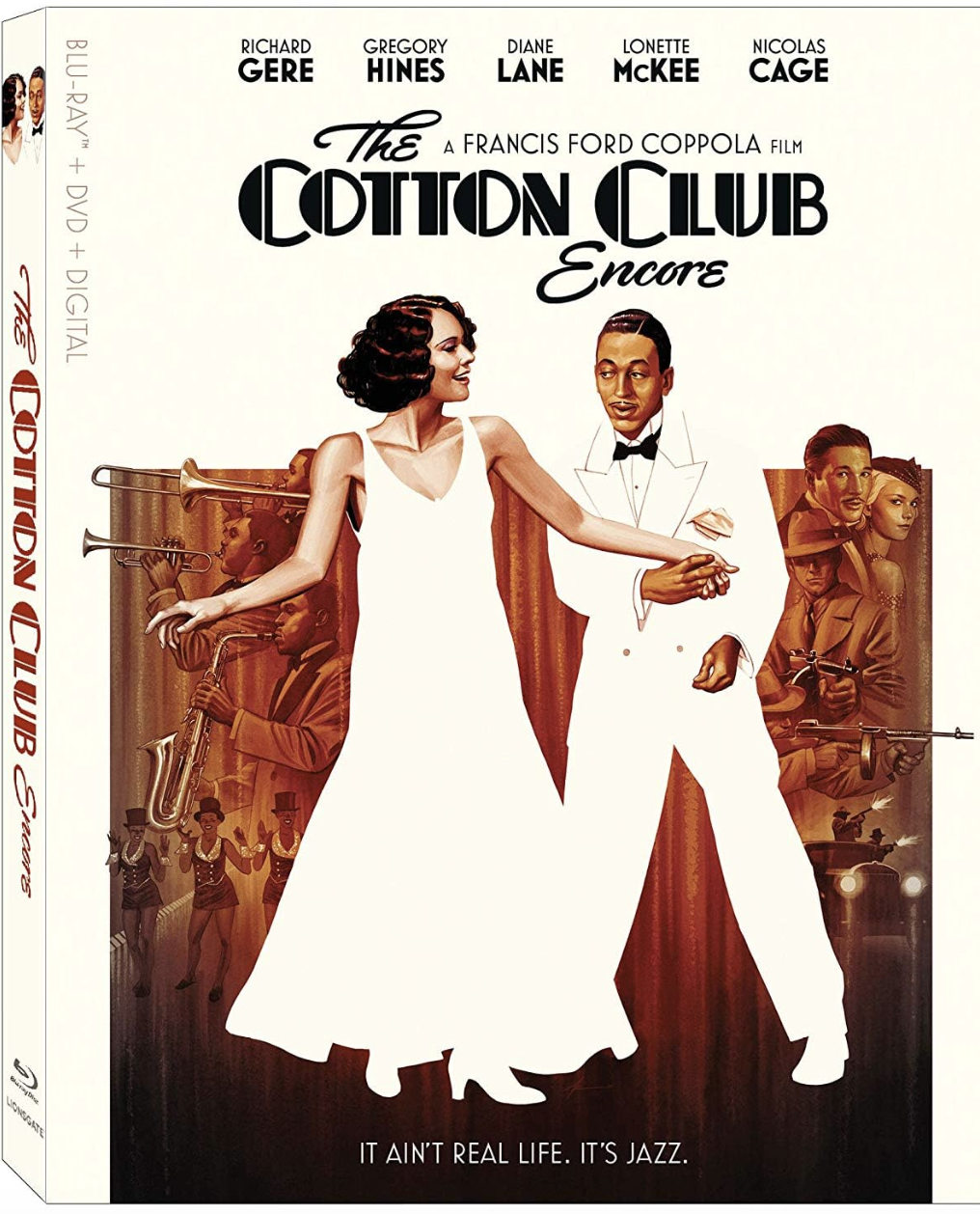
Investing roughly $500,000 of his own money, he assembled The Cotton Club Encore, which premiered in 2017.
The revised edition restored nearly thirty minutes of footage while reshaping the narrative to emphasize Gregory Hines, Lonette McKee, and the extraordinary musical performances that had originally been sidelined.
The result was a far richer and more cohesive film.
Critics who revisited the movie found an emotional depth and narrative rhythm largely absent from the 1984 theatrical release.
Final Thoughts
Today, The Cotton Club occupies a unique place in 1980s cinema.
It’s remembered not only for its spectacular production values but also for the chaos that surrounded its creation—a production plagued by financial turmoil, creative battles, criminal investigations, and impossible expectations.
Yet beneath the scandal lies an often-overlooked achievement.
The film captures the excitement of the Jazz Age with breathtaking musical performances, gorgeous cinematography, and some of Gregory Hines’ finest work on screen. Thanks to The Cotton Club Encore, audiences can finally experience something much closer to the movie Francis Ford Coppola originally envisioned.
Sometimes Hollywood’s greatest flops aren’t failures at all. They’re simply films that had to wait decades for history to catch up with them.

About the Creator
Movies of the 80s
We love the 1980s. Everything on this page is all about movies of the 1980s. Starting in 1980 and working our way the decade, we are preserving the stories and movies of the greatest decade, the 80s. https://www.youtube.com/@Moviesofthe80s
Enjoyed the story? Support the Creator.
Subscribe for free to receive all their stories in your feed.
Comments
There are no comments for this story
Be the first to respond and start the conversation.