
The Black Marble (1980): Joseph Wambaugh’s Offbeat Cop Romance That Almost Got Away
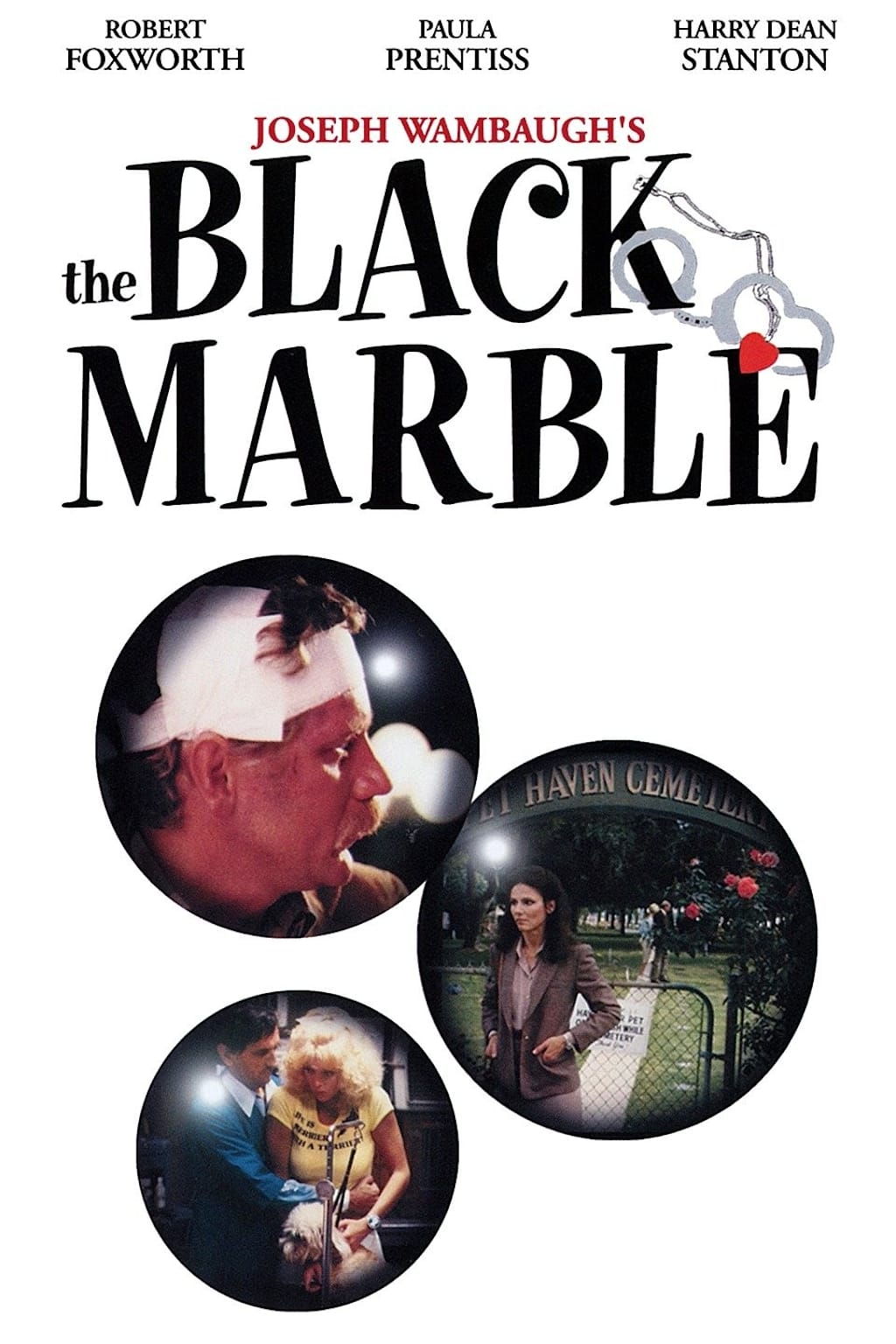
Robert Foxworth, Paula Prentiss, and Harry Dean Stanton star in a peculiar blend of police drama, romantic comedy, and canine caper that deserved a longer life.

A Bad-Luck Cop, a Difficult Romance, and One Very Important Dog
Some people are born under a lucky star. Others pick the black marble.
In The Black Marble (1980), a black marble is a metaphor for bad luck, and Detective Natalie Zimmerman (Paula Prentiss) has every reason to believe she’s drawn one. Her new partner, Sergeant A. M. Valnikov (Robert Foxworth), is an alcoholic, vodka-soaked, Russian American LAPD detective whose personal life appears to have been assembled from the remnants of several other people’s disasters.
He’s also not exactly what you’d call a barrel of laughs. At least, not intentionally.
Natalie is practical, tough-minded, and understandably suspicious of her new assignment. Valnikov, meanwhile, has the weary disposition of a man who has spent so much time looking into the abyss that he’s started bringing it home for dinner.
They are not an obvious romantic pairing.
Naturally, the movie puts them together.
Directed by Harold Becker and adapted by novelist and former LAPD sergeant Joseph Wambaugh from his own 1978 novel, The Black Marble is an odd little beast. It’s a police procedural, a romantic comedy, a study of professional burnout, and a darkly comic story involving the kidnapping of a valuable show dog.
That last element introduces us to Philo Skinner, played by Harry Dean Stanton, a desperate gambler whose affection for animals is considerably more dependable than his judgment. The dog-napping investigation brings together people who might otherwise have spent their lives avoiding one another.
It’s a strange collection of ingredients. Police alcoholism. Romantic awkwardness. Dog shows. Gambling. Vodka. And a general atmosphere of human beings trying to make sense of lives that have gone spectacularly off the rails.
You can see why the picture might have had trouble finding an audience.
You can also see why it might appeal to anyone who enjoys movies that don’t fit neatly into a box.
Roger Ebert certainly saw something worth appreciating. He gave the film three-and-a-half stars, describing it as a delightfully twisted comedy that continually surprises us with its offbeat characters. He conceded that it wasn’t seamless, but found it infectious and charming.
That’s a pretty good description of The Black Marble. It’s a movie with rough edges, questionable decisions, and a peculiar personality that occasionally threatens to escape from its own screenplay.
It also had a difficult time at the box office.
But then, if these characters had been particularly good at making sensible decisions, we probably wouldn’t have much of a movie.
Joseph Wambaugh Wanted More Control Over His Movies
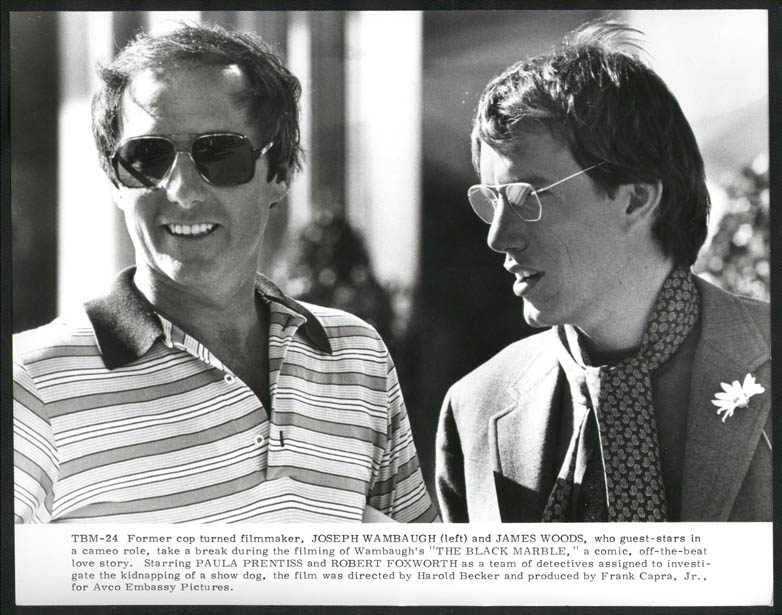
Joseph Wambaugh knew something about police work. Before becoming a bestselling novelist, he served as an officer in the Los Angeles Police Department, eventually rising to the rank of sergeant. His fiction drew on that experience, examining the psychological toll of the job and the often-uncomfortable distance between the public image of a police officer and the human being wearing the badge.
Hollywood, of course, was interested.
Wambaugh had already experienced the complications of seeing his work adapted for the screen. The film versions of his novels offered opportunities to bring his characters to a larger audience, but the process could also leave a writer wondering what had happened to the material he’d spent years developing.
His dissatisfaction with earlier adaptations, particularly The Choirboys, helped shape his determination to exercise greater control over subsequent projects.
The experience of The Onion Field (1979), directed by Harold Becker, brought Wambaugh and the filmmaker together again. Based on Wambaugh’s nonfiction account of the kidnapping and murder of a police officer, the film was a grim examination of violence, guilt, and the lasting damage inflicted on the people caught in its orbit.
The Black Marble would be a different proposition. The material still concerned damaged people and the emotional costs of police work, but this time the characters would be allowed to be funny, ridiculous, and occasionally romantic.
Wambaugh adapted his own novel for the screen, with Frank Capra Jr. producing and AVCO Embassy handling distribution.
He also took a substantial financial risk.
In an interview with Colin Dangaard published in the Green Bay Press-Gazette on March 30, 1980, Wambaugh spoke candidly about the hazards of producing films.
“Making movies is even more stressful than being a police officer,” he said, explaining that failure could force him to change his lifestyle considerably.
That’s not exactly the sort of statement you want to hear from the person financing your picture. It’s also a revealing glimpse into the stakes involved. Wambaugh wasn’t merely handing over a screenplay and hoping for the best. His own financial security was tied to the outcome.
He was equally blunt about why he wanted control.
“There’s not much you can count on in Hollywood, but one fact remains — money is power. I control this picture because I control the money. It’s that simple.”
Fair enough.
Hollywood has never been particularly famous for allowing writers to retain control of their creations simply because they’ve written something good. Money talks. Everyone else waits for a meeting.
Wambaugh had decided that if he wanted to protect his work, he needed to have a greater say in how it reached the screen.
The irony is that control over a film’s production doesn’t necessarily translate into control over its reception. You can assemble the cast, protect the screenplay, and get the movie into theaters. You cannot force an audience to fall in love with it.
The Black Marble would test that distinction.
Paula Prentiss Came Back With Something to Prove
One of the more unusual aspects of the film’s production was the physical transformation required of its leading actors.
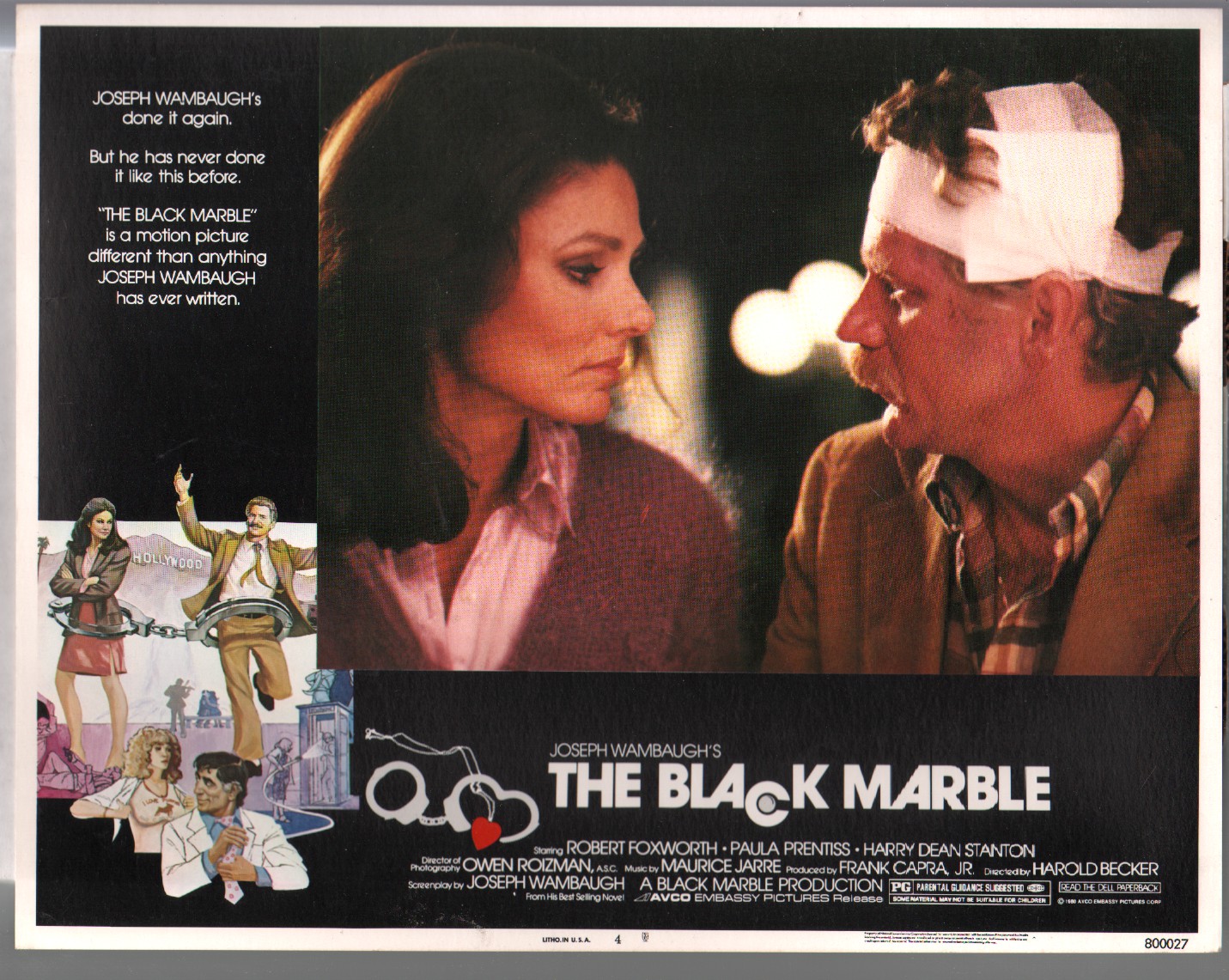
Paula Prentiss had been away from theatrical features for several years when she took the role of Natalie Zimmerman. Best known for her distinctive comic timing and screen presence, Prentiss was being asked to play a character whose toughness and emotional reserve could easily have become one-note in the hands of a less capable performer.
Wambaugh wanted something different.
He wanted Natalie to look and feel like a real person rather than a conventional Hollywood romantic lead. That meant asking Prentiss to gain weight for the role.
According to Vernon Scott’s United Press International report, published in the Grand Rapids Press on April 10, 1980, the producer’s instructions were music to the actress’s ears.
“There are no sweeter words to an actress than a producer’s orders to ‘gain weight,’” the report observed.
Prentiss reportedly put on 20 pounds by eating junk food and peanuts.
It’s a small production detail, but an interesting one. Hollywood has spent decades trying to convince audiences that romantic leads emerge from bed looking camera-ready and maintain their figures through some mysterious combination of discipline, lighting, and good fortune. Here was an actress being told that the character required something else.
More importantly, Prentiss believed in the role.
“The role of Natalie in The Black Marble is the most complex I’ve ever played,” she told Scott. “I think it represents my best work.”
She also understood what was at stake in the film’s reception.
“If The Black Marble does well, then I’ll have a career.”
That’s a sobering statement from an actress who had already established herself in Hollywood. Careers are strange things. You can work for years, build a reputation, and still find yourself wondering whether the next job will arrive.
Prentiss had something to prove, and she approached the opportunity seriously.
The results were not universally appreciated. Some contemporary critics were less enthusiastic about her performance than they were about her co-stars. But the film’s appeal depends on Natalie being more than a conventional romantic heroine. She is an independent woman attempting to navigate a difficult profession while being paired with a man who seems determined to make her life harder.
Prentiss gives the character a necessary sense of practicality. Natalie isn’t simply waiting for Valnikov to become a better man. She has her own life, her own frustrations, and her own reasons for keeping him at arm’s length.
The romance works best when the movie remembers that.
Robert Foxworth Wasn’t So Sure About His Character
Robert Foxworth had reservations of his own.
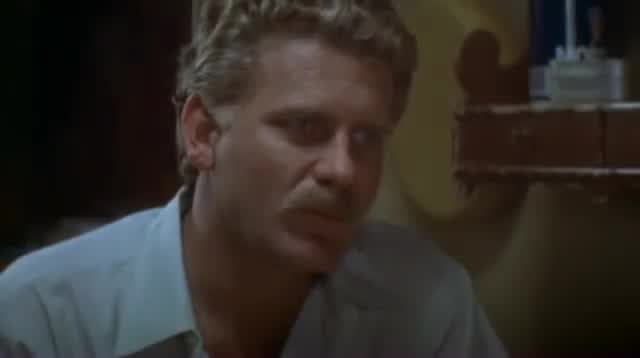
According to Eric Gerber’s interview in the Houston Post on March 22, 1980, Foxworth admitted that he considered himself “‘all wrong’ for his part in The Black Marble.”
He thought he was too thin, too young, and had given a terrible audition.
He got the part anyway.
Foxworth underwent his own physical transformation, gaining weight and graying his hair to play Valnikov. The goal was to create a detective who looked as though the job had taken something out of him.
This wasn’t the glamorous version of police work, in which the detective’s worst problem is a rumpled tie or an inconvenient telephone call. Valnikov is a man whose profession has become inseparable from his private misery. His drinking isn’t an amusing character quirk so much as a symptom of a life he no longer knows how to manage.
And yet Foxworth was being asked to make him funny.
“This is the first time I’ve been seen in a role that has a comic tone,” the actor told Gerber. “Maybe it’ll open some eyes.”
It’s an important distinction. Playing a troubled character in a drama is one thing. Finding the comedy in that character without turning him into a cartoon is another.
Foxworth’s Valnikov is frequently ridiculous, but there’s a sadness beneath the behavior. His weariness is real. So is the sense that he has become a stranger to himself.
Ebert responded to the performance, praising Foxworth’s ability to balance the character’s exhaustion and instability with warmth.
That balance is crucial. If Valnikov were simply a drunken mess, Natalie would have little reason to tolerate him. If he were merely a misunderstood good guy, the movie would lose much of its peculiar charm.
Foxworth finds a middle ground. Valnikov is a man who has made a considerable mess of his life, but he hasn’t entirely lost the capacity to care about other people.
He just has an unusual way of showing it.
The supporting cast helps considerably. Harry Dean Stanton brings his familiar mixture of vulnerability and eccentricity to Philo Skinner, the gambler at the center of the dog-napping business. Stanton had a gift for playing people who seemed to have wandered into a movie from some stranger, sadder, and more interesting world.
Gerber was particularly enthusiastic about his performance, writing that he couldn’t remember seeing Stanton in anything more enjoyable.
James Woods, who had appeared in The Onion Field, also makes an appearance, providing another connection between Wambaugh and Becker’s two films.
Together, the cast gives The Black Marble much of its appeal. These are not polished, aspirational movie characters. They’re oddballs, misfits, and damaged people attempting to negotiate an increasingly absurd existence.
In other words, they’re Wambaugh characters.
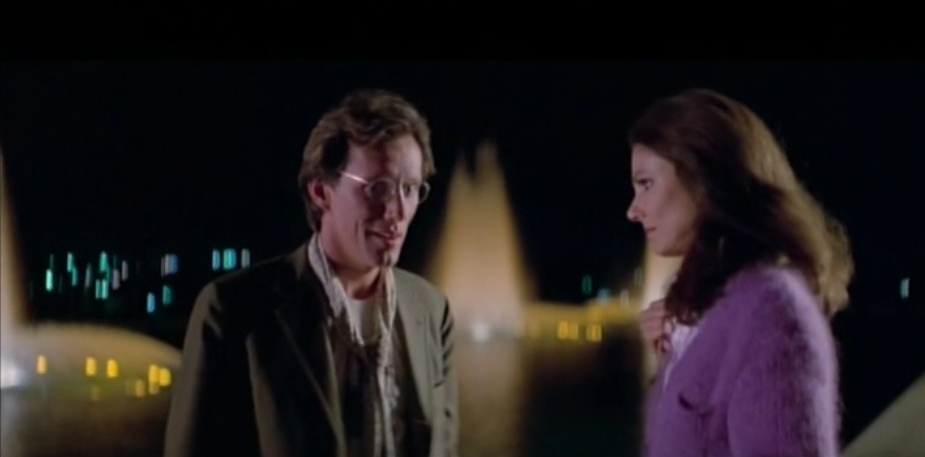
A Police Movie That Doesn’t Know Whether to Laugh or Cry
The central difficulty with The Black Marble is also part of its appeal.
What sort of movie is it?
The police investigation provides the framework. The romance between Natalie and Valnikov supplies the emotional throughline. Philo Skinner and the dog-napping plot introduce a different strain of comedy, one that occasionally veers toward the grotesque.
Meanwhile, Wambaugh remains interested in the psychological consequences of police work.
In an interview with Sibyl Farson published in the Worcester Telegram on April 6, 1980, he explained the underlying problem:
“The bottom line of a policeman’s life is stress.”
He went on to describe officers as “the consummate victims in a macho world,” adding that they often don’t even realize they’re victims.
That’s a more complicated view of police officers than the standard Hollywood image of the fearless hero who lives for the job. Wambaugh’s characters are often trapped by the very qualities that supposedly make them good at their work. They absorb violence, frustration, and misery until those things become part of their personalities.
The badge doesn’t protect them from human weakness. If anything, the job gives them new ways to disguise it.
In The Black Marble, that damage becomes the starting point for comedy and romance. Valnikov’s problems are not magically erased by meeting Natalie. The film isn’t interested in pretending that love will instantly cure alcoholism or that a change in circumstances can undo years of accumulated unhappiness.
Instead, it allows the possibility that two people who are not particularly good at managing their own lives might nevertheless find something worthwhile in one another.
It’s a sweet idea, even if the execution occasionally gets lost in the weeds.
Becker’s direction is restrained, often approaching the material with a low-key, almost documentary sensibility. That approach gives the film a grounded quality, but it also frustrated some critics who thought the performances and screenplay needed a more energetic hand.
Bill Warren, writing in the Simi Valley Star on April 2, 1980, complained that Becker’s understated style was at odds with the material’s intentions. He praised the acting and screenplay but felt the direction muted the film’s potential.
Others were more forgiving.
Constance Gorfinkle, writing in The Patriot Ledger on April 11, 1980, praised the film’s unusual mixture of the macabre, bizarre, sinister, sentimental, funny, and frightening. She saw an absurdist quality that lifted it out of the ordinary.
Both assessments get at something important. The Black Marble doesn’t always know how to move between its various moods, but the combination gives it a personality that a more conventional movie might lack.
Some scenes are funny. Others are uncomfortable. Occasionally, a joke arrives just when the film seems ready to take itself seriously.
It’s not always successful. But it’s rarely boring in the way a more predictable movie might be.
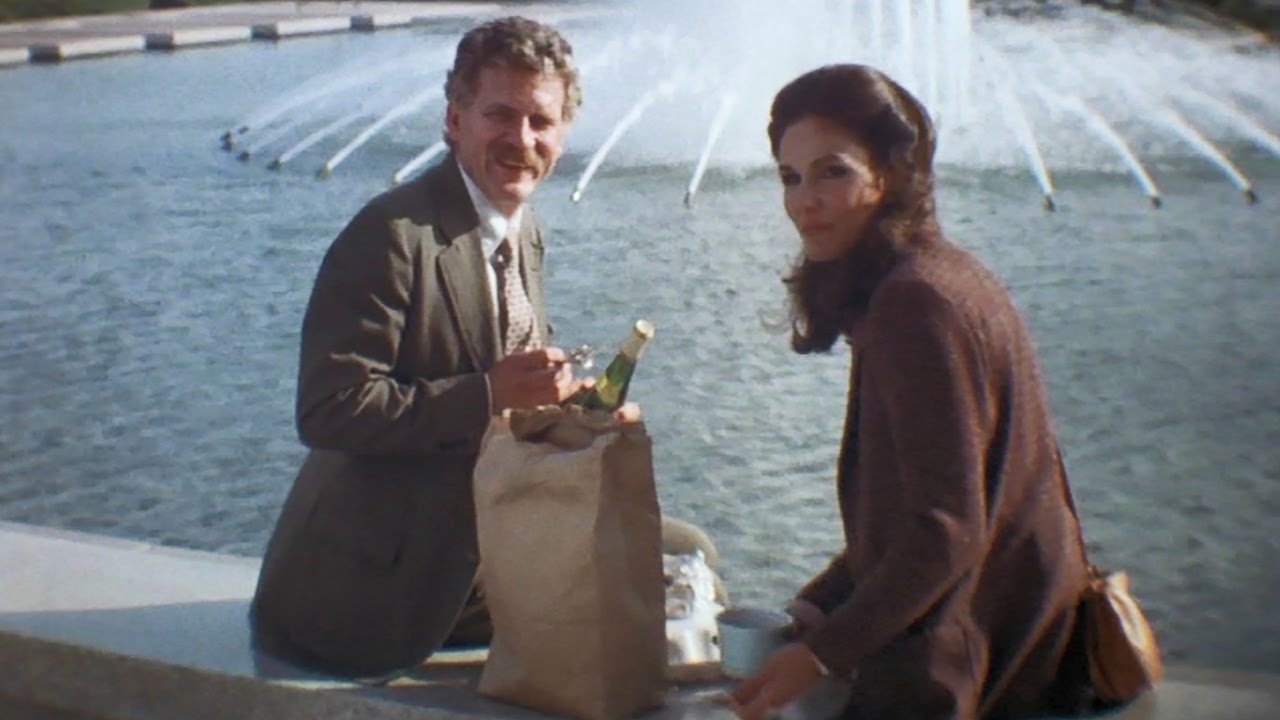
The Critics Found Something to Like
The contemporary reviews reveal a film that divided opinion without entirely alienating the people who watched it.
Roger Ebert was among its strongest supporters.
In his March 15, 1980, review, he described The Black Marble as a “delightfully twisted comedy,” praising its eccentric characters and unpredictable narrative. He acknowledged that the film wasn’t seamless, but found it infectious and charming.
Ebert’s enthusiasm rested partly on the movie’s willingness to wander. It begins in one direction and ends somewhere else, allowing the characters to determine the shape of the story rather than forcing everything into a perfectly engineered plot.
He also appreciated the chemistry between Foxworth and Prentiss. Their relationship works because neither character is particularly interested in making things easy for the other.
Valnikov is a difficult man to like. Natalie is a difficult woman to fool. Neither is inclined to surrender much ground.
That’s a better foundation for a romance than two attractive people discovering that they enjoy standing near one another.
Vincent Canby was similarly taken with the leads.
In his March 15, 1980, coverage, he described the detectives as two of the most unexpectedly appealing characters to appear in a contemporary film. He called the picture “a peculiarly endearing comedy that is hopelessly romantic and bluntly crude.”
That’s an excellent summary of the film’s contradictions.
Hopelessly romantic. Bluntly crude.
One moment, the movie wants us to believe that two lonely people might discover a connection that changes their lives. The next, it reminds us that people are messy, embarrassing creatures who rarely behave with the dignity they imagine they possess.
Canby thought the adaptation worked better as a film than as a novel, although he also noted the uncertain shifts in mood and passages of unnecessary exposition.
Other critics were less impressed.
John A. Douglas, writing in the Grand Rapids Press on April 10, 1980, found some of the humor rather raunchy and thought certain gags failed to land. He was more enthusiastic about Stanton’s performance and saw potential in Foxworth.
Gerber, meanwhile, praised Stanton and singled out the kennel chase as a sequence with the potential to become a classic of sorts.
That chase is worth considering in the context of the film as a whole. The dog-napping plot could easily have been reduced to a conventional comic diversion, a bit of business designed to keep the romantic leads occupied between meaningful conversations.
Instead, it becomes part of the movie’s larger absurdity. The characters are pursuing a dog, but they’re also pursuing money, companionship, redemption, or simply a way to get through another miserable day.
The film doesn’t always manage to make those elements cohere. But the critics who responded positively recognized that it was attempting something more interesting than a standard police comedy.
The problem wasn’t a complete lack of ideas.
It was figuring out what to do with all of them.
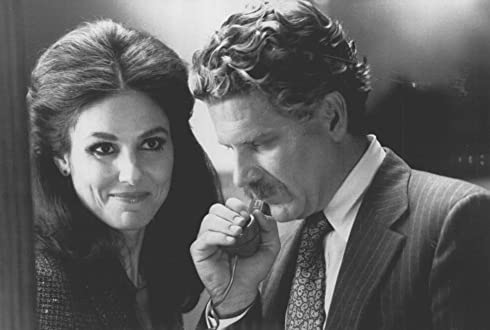
A Modest Box Office Return and a Short Memory
The Black Marble opened in New York on March 7, 1980, followed by its Los Angeles opening on March 21.
The reported production budget was approximately $3 million, while its domestic box-office gross came to roughly $2.5 million.
Those figures suggest a modest commercial disappointment, although domestic gross alone doesn’t tell us the full financial story. Theatrical rentals, distribution expenses, marketing costs, and other revenue streams all affect the final calculation.
Still, the film didn’t become the hit Wambaugh needed.
The promotional campaign emphasized the connection between Wambaugh and Becker, drawing on the goodwill generated by The Onion Field. Advertisements also leaned on critical praise, including a Newsweek endorsement reproduced in a Cincinnati newspaper advertisement in April 1980.
The message was straightforward: this was the latest work from a novelist and director who had already demonstrated an ability to make compelling films about the darker side of human nature.
But critical approval doesn’t always translate into ticket sales. A movie can receive favorable reviews, attract an interesting cast, and still fail to establish itself in the marketplace.
And The Black Marble had a marketing problem of its own. It was difficult to describe without making it sound like several different movies fighting over the same running time.
Was it a romantic comedy? A police drama? A black comedy about a dog-napping? A portrait of an alcoholic detective struggling to find some meaning in his life?
Yes.
That might be a selling point for movie lovers who enjoy unusual combinations. For a general audience trying to decide what to see on a Friday night, it could be a tougher proposition.
The film also arrived during a period when Hollywood was increasingly interested in packaging movies around immediately recognizable concepts. The Black Marble had characters and a distinctive sensibility, but it didn’t offer an easy elevator pitch.
It’s possible that a little more tonal discipline might have helped. It’s equally possible that a more conventional approach would have stripped away the qualities that make the film interesting now.
We can’t know.
What we can say is that the movie failed to establish the lasting reputation its more enthusiastic contemporary reviews might have suggested.
Wambaugh had managed to protect his vision. He hadn’t managed to guarantee an audience.
The Black Marble Wasn’t Quite the End of the Story
The film’s disappearance from general conversation is a little surprising, given the people involved and the quality of its strongest performances.
Wambaugh continued to occupy an important place in the literary and screen history of police fiction. Becker went on to direct other films, including Sea of Love (1989). Foxworth remained a familiar presence on screen, while Prentiss’s performance in The Black Marble offered a reminder of the distinctive qualities she brought to her best work.
And Harry Dean Stanton, as usual, was Harry Dean Stanton. There are worse things a movie can have going for it.
The Black Marble also received recognition from the Mystery Writers of America, winning an Edgar Allan Poe Award for Best Motion Picture. That distinction is worth remembering, even if the film never became a major title in the popular culture of the decade.
Later home-video releases, including Kino Lorber’s 2021 Blu-ray, gave audiences another opportunity to discover it.
For viewers accustomed to the slicker, more aggressively packaged studio comedies that would dominate parts of the decade, The Black Marble can feel like a curious holdover from another era. Its characters are allowed to be unpleasant. Its humor doesn’t always come with a reassuring laugh line. Its romance develops between people who seem less likely to find happiness than to accidentally set fire to the building in which they’re attempting to have a conversation.
And yet there’s something endearing about it.
The film is interested in the damaged people who occupy the margins of ordinary life. It finds comedy in their failures without entirely dismissing their pain. It suggests that even those who seem to have made a complete hash of things might still possess the capacity to surprise us.
That’s a distinctly Wambaugh sensibility, and it’s what keeps the movie from becoming merely an odd collection of scenes.
The film’s unevenness is real. Some jokes don’t work. The changes in tone can be jarring. The romance doesn’t always have the room it needs to develop, and Becker’s restraint sometimes leaves the material feeling a little too distant.
But there’s a difference between a flawed movie and a forgettable one.
The Black Marble is flawed. Its eccentricities, meanwhile, are precisely what make it worth revisiting.
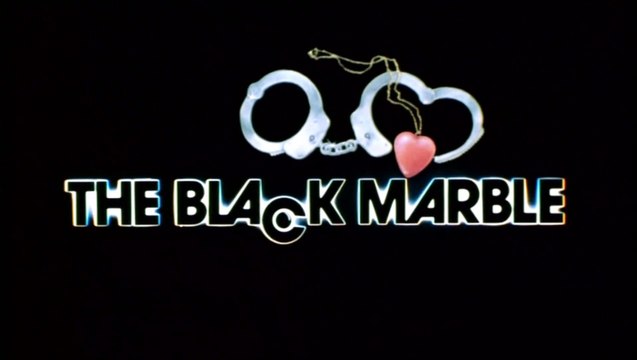
Sometimes the Black Marble Is Worth Keeping
There’s a particular pleasure in rediscovering a movie that never quite found its audience.
Not every forgotten film is a misunderstood masterpiece. Sometimes a movie disappears because it wasn’t very good. Sometimes it disappears because the people involved made a few bad decisions. And sometimes a film simply occupies an awkward space between genres, too strange to satisfy one audience and too familiar to completely win over another.
The Black Marble belongs somewhere in that last category.
It is not a perfectly realized romantic comedy, nor is it a straightforward police drama. Its characters stumble between comedy and melancholy, occasionally taking the movie with them when they fall. Its most memorable moments emerge from the collision between Wambaugh’s interest in damaged human beings and Becker’s restrained approach to telling their stories.
The result is an imperfect, occasionally frustrating, frequently charming film that seems to understand its characters better than it understands itself.
There’s something appropriate about that.
Valnikov and Natalie aren’t exactly the people you’d choose if you were assembling a team to solve your problems. Philo Skinner isn’t likely to be anyone’s model of sound judgment. Their lives are complicated, their instincts are questionable, and their chances of finding uncomplicated happiness are slim.
But they’re interesting people. And sometimes that’s enough.
The title promises bad luck. The film’s box-office performance suggests it got plenty of that.
Yet four decades later, The Black Marble still has something to offer. Its best performances, its oddball humor, and its sympathy for people who have been worn down by life give it a warmth that survives the rough patches.
Maybe it was never destined to become a classic. Maybe Wambaugh’s determination to control the picture couldn’t overcome its unevenness or its uncertain commercial appeal.
But sometimes the black marble turns out to be a little more interesting than the white one.
And sometimes a movie that almost got away is worth tracking down.

Revisit The Black Marble (1980), Joseph Wambaugh and Harold Becker’s eccentric cop romance starring Robert Foxworth, Paula Prentiss, and Harry Dean Stanton.
These are the principal sources for the production history, contemporary quotations, and critical reception:
* Colin Dangaard, Green Bay Press-Gazette, March 30, 1980. Joseph Wambaugh interview covering the financial risks of producing films and his belief that controlling the money gave him control over The Black Marble.
* Vernon Scott, United Press International, Grand Rapids Press, April 10, 1980. Paula Prentiss’s return to theatrical films, her weight gain for the role, and her assessment of Natalie Zimmerman.
* Eric Gerber, Houston Post, March 22, 1980. Robert Foxworth’s reservations about his casting, his physical transformation, and his thoughts about playing a comic character. Also useful for Gerber’s assessment of Harry Dean Stanton.
* Sibyl Farson, Worcester Telegram, April 6, 1980. Wambaugh on occupational stress and the psychological damage experienced by police officers.
* Roger Ebert, review dated March 15, 1980. One of the film’s strongest critical endorsements, particularly for its unusual characters and blend of comedy and romance.
* Vincent Canby, coverage dated March 15, 1980. An important assessment of the leads’ chemistry, the film’s romantic and crude elements, and the unevenness of its tone.
* Cincinnati Enquirer advertisement, April 19, 1980. Contemporary promotional material illustrating how the film was marketed and how distributors used critical endorsements.
* Contemporary newspaper advertisements and release listings. Useful for verifying the March 1980 release dates and documenting the campaign surrounding the film.
About the Creator
Movies of the 80s
We love the 1980s. Everything on this page is all about movies of the 1980s. Starting in 1980 and working our way the decade, we are preserving the stories and movies of the greatest decade, the 80s. https://www.youtube.com/@Moviesofthe80s
Enjoyed the story? Support the Creator.
Subscribe for free to receive all their stories in your feed.
Comments
There are no comments for this story
Be the first to respond and start the conversation.