
'The Ambassador' (1985) and the Time Cannon Films Tried to Heal the Israeli-Palestinian Conflict and Make a Buck
Robert Mitchum, Ellen Burstyn, and Rock Hudson collide in a strange political thriller that wanted to be important—and still couldn’t resist a little sleaze.


When Cannon Tried to Get Serious
There was a point in the 1980s when Cannon Films seemed determined to prove that it could make more than action movies, cheap horror films, and whatever else could be thrown onto a poster with enough explosions and cleavage.
Every now and then, Menahem Golan and Yoram Globus would reach for something a little more substantial.
The Ambassador was one of those attempts.
Released in the mid-1980s and directed by veteran filmmaker J. Lee Thompson, the film was an unusually earnest attempt to turn the Israeli-Palestinian conflict into the backdrop for a political thriller. It had a heavyweight cast, an international setting, and a story that wanted to say something about peace in one of the world’s most troubled regions.
It also had Cannon Films behind it.
That combination tells you almost everything you need to know.
Starring Robert Mitchum, Ellen Burstyn, and Rock Hudson in his final theatrical film appearance, The Ambassador occupies a peculiar place in 1980s cinema. It is simultaneously a political drama, a thriller, a piece of exploitation filmmaking, and a time capsule of an era when Hollywood frequently attempted to turn complicated geopolitical problems into entertainment.
The result is messy.
But it’s also fascinating.
A Very Loose Elmore Leonard Adaptation
The movie’s troubled history begins with its source material.
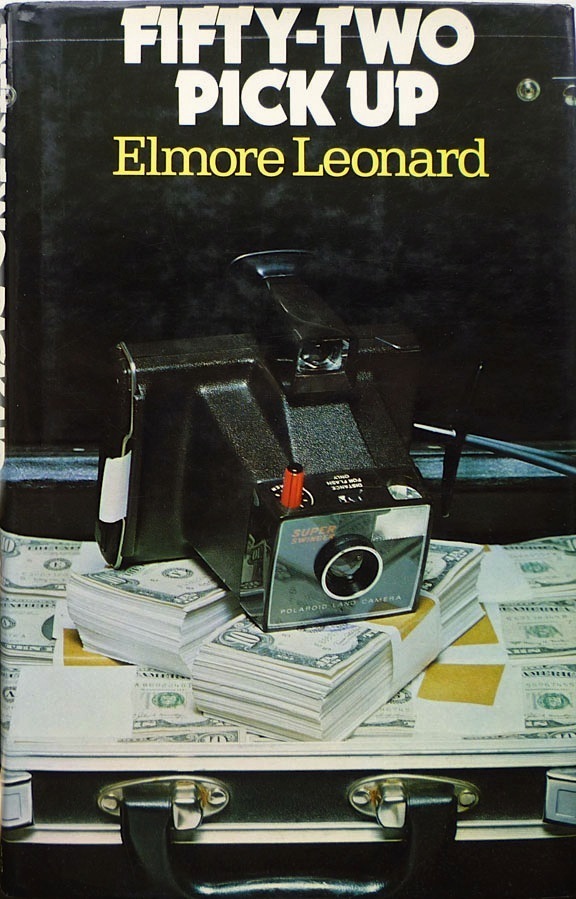
The Ambassador was loosely inspired by Elmore Leonard’s 1974 novel 52 Pickup, a very different story about blackmail involving a Detroit businessman. Leonard was initially brought into the project to adapt his own novel, but the film gradually moved further and further away from the book.
The decision was made to transplant the story from Detroit to Israel and build the narrative around the Israeli-Palestinian conflict.
That was quite a change.
Leonard reportedly became increasingly unhappy with the direction of the screenplay and ultimately disavowed the production. What emerged bore relatively little resemblance to the hard-edged crime story that Leonard had written.
The screenplay, credited primarily to Max Jack, instead centered on Peter Hacker, an American ambassador caught in the middle of political violence, terrorism, blackmail, and an increasingly complicated personal life.
It was the kind of material that could have produced a tense, sophisticated political thriller.
Cannon, naturally, had other ideas.
Mitchum, Burstyn, and Hudson
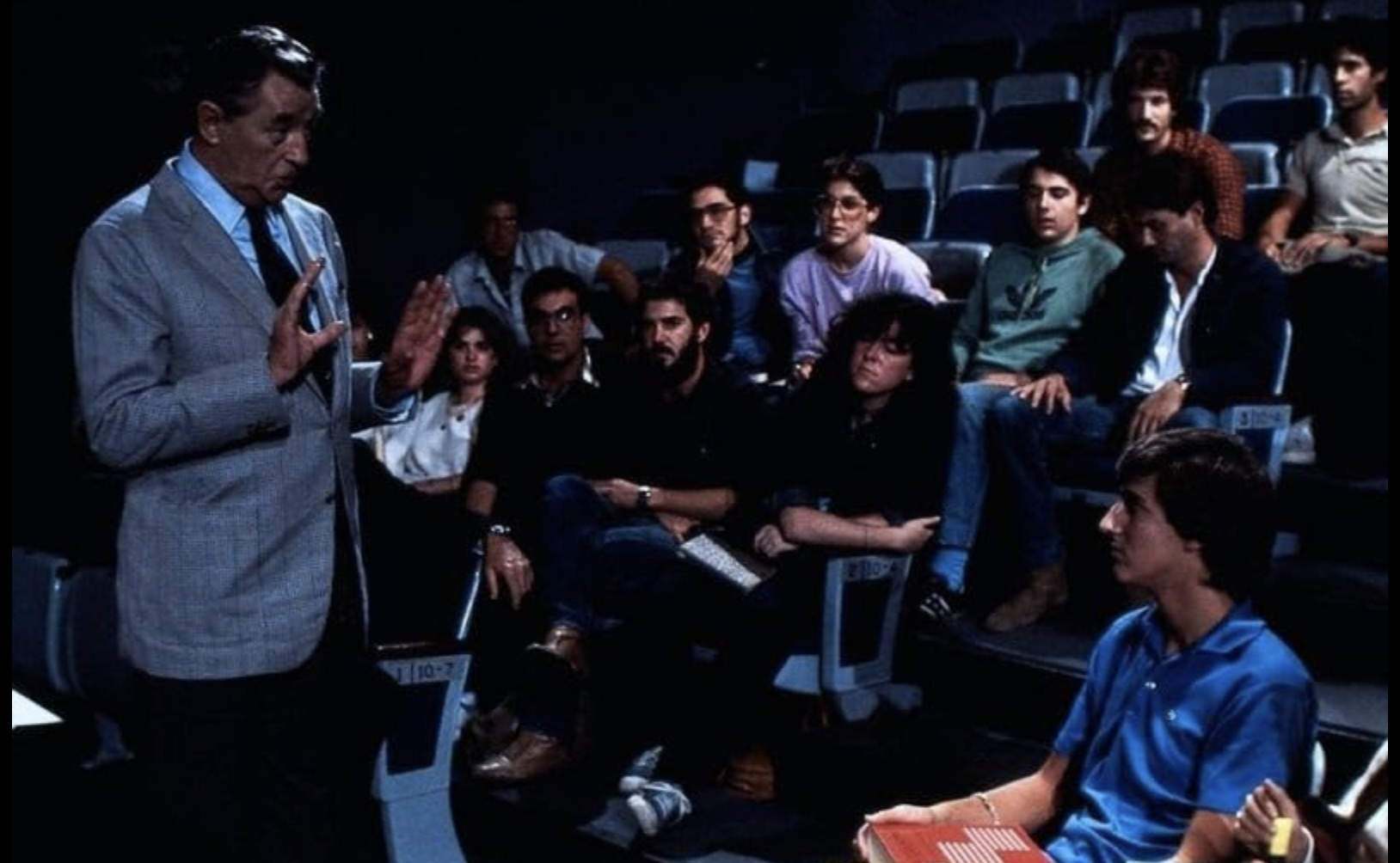
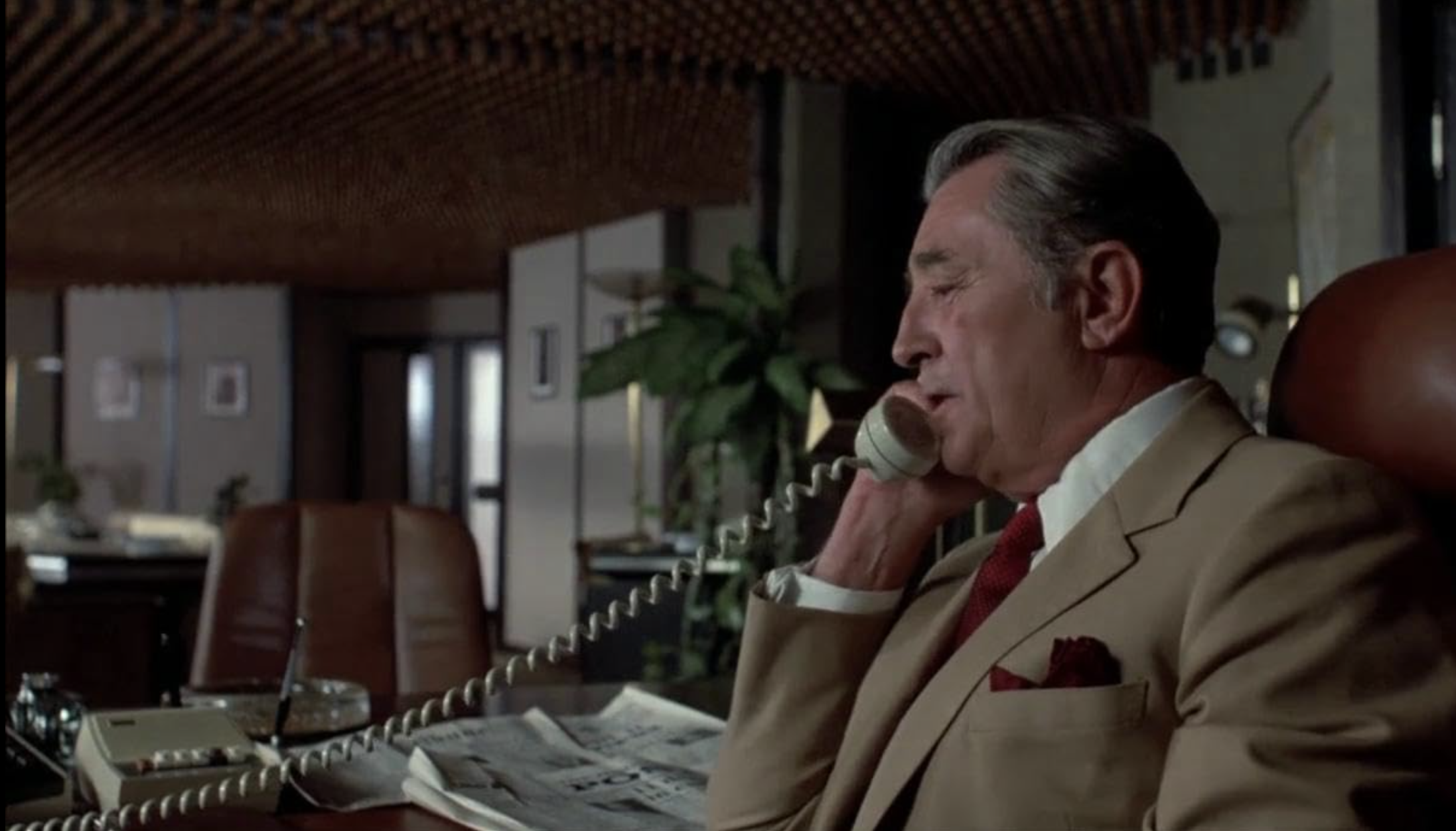
Robert Mitchum was perfectly suited to the role of an American diplomat who looks like he would rather be anywhere else.
By the 1980s, Mitchum had perfected the art of seeming simultaneously exhausted, dangerous, intelligent, and completely unimpressed by the world around him. Even when the material wasn’t worthy of him, Mitchum could make a character feel as though there was an entire novel taking place behind his eyes.
Ellen Burstyn brought something different.
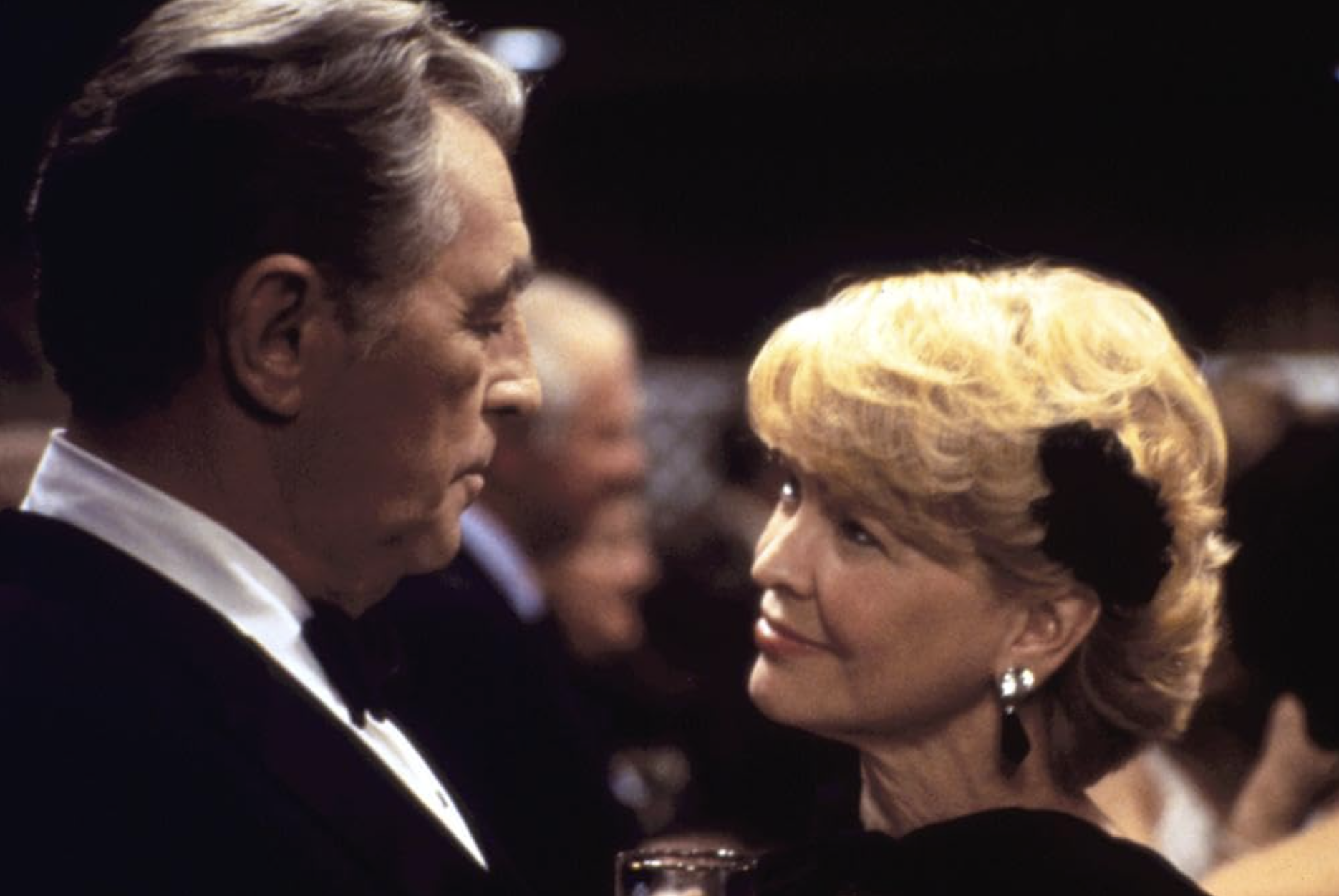
As Hacker’s neglected wife, Alex, Burstyn gives the film much of its emotional weight. The character becomes entangled in the movie’s blackmail plot after a stolen sex tape becomes a weapon, giving The Ambassador one of those wonderfully bizarre 1980s combinations of political intrigue and personal scandal.
And then there’s Rock Hudson.
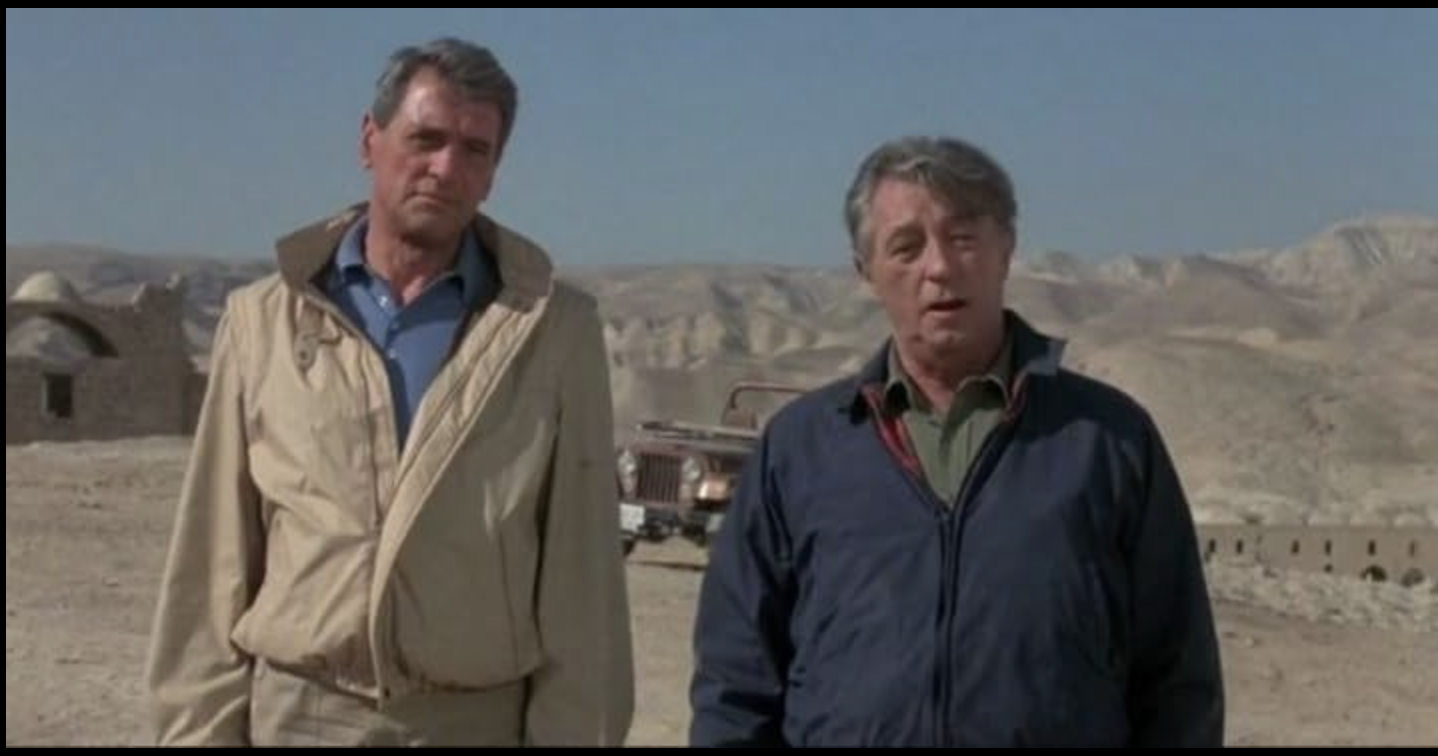
Hudson plays Frank Stevenson, a character who gives the film an additional layer of melancholy simply because of who was playing him.
This would be Hudson’s final theatrical film.
By the time production began, Hudson’s health was already deteriorating, although the public would not learn that he had AIDS until 1985. He died that October.
Knowing what was happening behind the scenes inevitably changes the way the film feels today. Hudson doesn’t get the kind of grand farewell performance that Hollywood might have given one of its biggest stars. Instead, his final movie appearance is buried inside an obscure Cannon political thriller.
That seems almost cruelly appropriate for the strange way Hollywood treated its stars.
A Cannon Film in the Judaean Desert
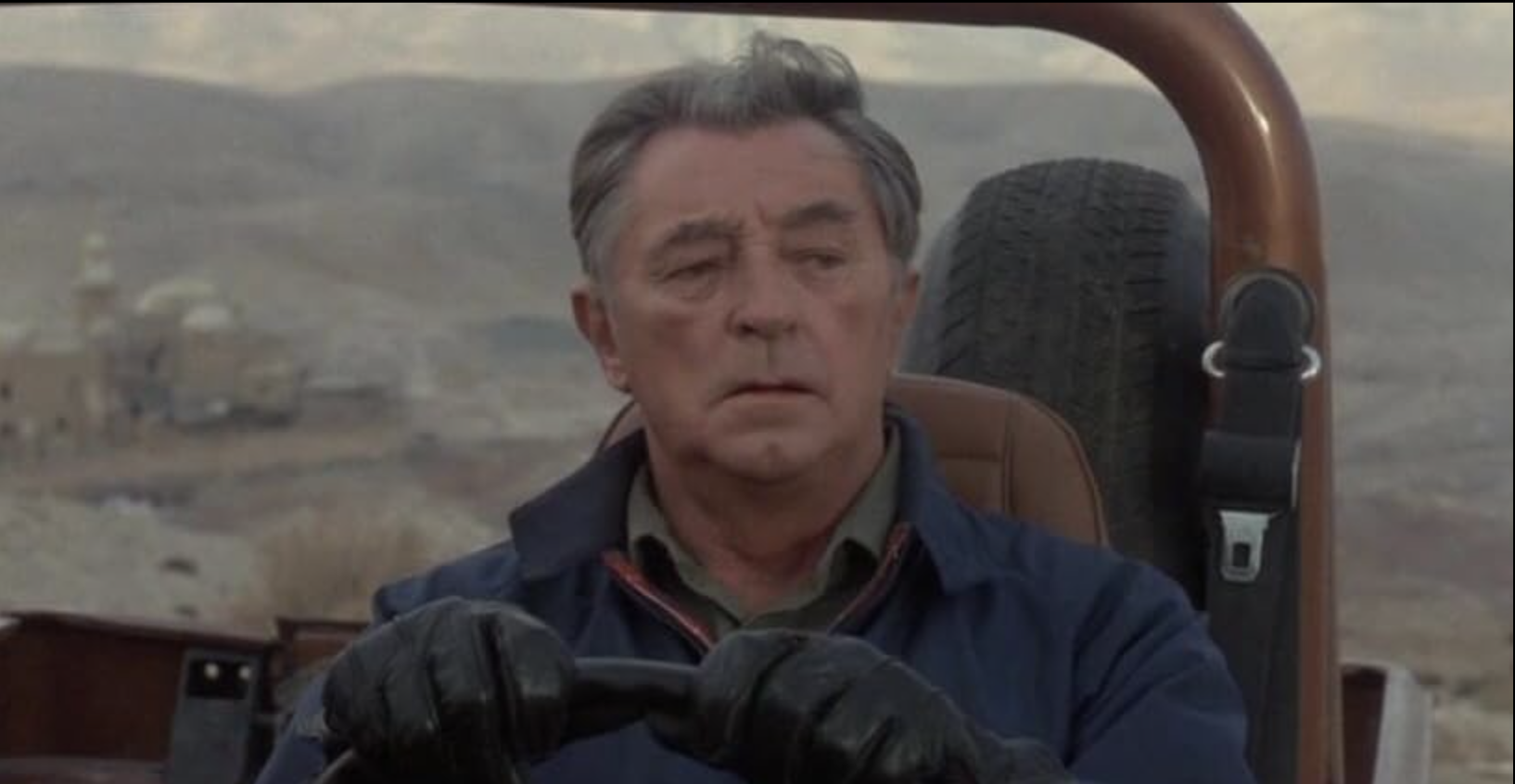
Production took place during the winter of 1983–84, with filming in Israel providing the movie with something money couldn’t manufacture on a soundstage: atmosphere.
The desert, Jerusalem, and Tel Aviv give The Ambassador an appropriately unsettled look. There is a sense that the characters are operating in a world where political violence isn’t something that happens in another scene. It is always just outside the frame.
J. Lee Thompson knew how to shoot this kind of material.
The director had already established himself with films such as The Guns of Navarone and a long career in action and suspense. He understood how to stage large-scale tension, and cinematographer Adam Greenberg gives the movie a suitably rugged visual identity.
Unfortunately, the screenplay keeps pulling the movie in different directions.
There is the political drama.
There is the assassination plot.
There is a KGB connection.
There are bombings and political violence.
And then there’s the stolen sex tape.
It sometimes feels as though several different movies were fighting for control of the same running time.
And that may be the most Cannon thing about The Ambassador.
When Politics Meets Exploitation
The fascinating thing about The Ambassador isn’t that it fails to become a great political thriller.
It’s that you can see exactly what it was trying to be.
The filmmakers clearly wanted to address the seemingly endless cycle of violence between Israelis and Palestinians. There is a genuine plea for diplomacy buried underneath the thriller mechanics. The film wants its audience to believe that communication and compromise are possible.
But it keeps getting distracted.
Cannon was a company that understood exploitation. It understood that audiences needed something sensational to put on the poster. Political arguments were fine, but political arguments accompanied by assassins, blackmail, explosions, and sex were better.
So The Ambassador becomes a strange hybrid.
One moment, it’s asking the audience to contemplate the possibility of peace.
The next, someone is being blackmailed with a sex tape.
It’s difficult to reconcile those two impulses, but that contradiction is precisely what makes the movie such an interesting artifact of the decade.
Lost in the Cannon Shuffle
For all the talent involved, The Ambassador never became the prestige political thriller it seemed to want to be.
Its release was relatively low-key, and it disappeared quickly into the crowded marketplace of 1980s movies. Cannon had no shortage of product competing for attention, and a serious political thriller starring aging Hollywood stars was a difficult sell next to the company’s more aggressively commercial fare.
The movie eventually found a more natural home on television and home video.
And that’s probably where it belonged.
Not because it is worthless, but because The Ambassador is the kind of movie that becomes more interesting once the expectations are lowered. Freed from the question of whether it works as a major political statement, it can be appreciated for what it actually is: an odd, ambitious, occasionally compelling piece of 1980s filmmaking that doesn’t quite know which movie it wants to be.
An Uneasy Time Capsule
Today, The Ambassador is largely remembered by people who collect obscure 1980s films, fans of Cannon’s stranger productions, and admirers of its extraordinary cast.
That’s a shame, because there is something genuinely fascinating about it.
This is Robert Mitchum in the twilight of his career. Ellen Burstyn giving the material considerably more weight than it deserves. J. Lee Thompson trying to bring some discipline to a screenplay that keeps wandering off in search of another subplot.
And, most poignantly, Rock Hudson making his final appearance on the big screen.
The film doesn’t deserve to be rediscovered simply because it’s obscure. Plenty of obscure movies deserve to stay that way.
But The Ambassador is different.
It captures something uniquely 1980s: Hollywood’s desire to make important movies while simultaneously chasing the sensationalism that kept the lights on. It wants to talk about peace in the Middle East, but it also wants a blackmail plot. It wants political credibility, but it comes wrapped in Cannon Films excess.
It’s a contradiction.
And maybe that’s why it’s worth remembering.
The Ambassador isn’t a lost masterpiece. It isn’t even a particularly successful political thriller.
It’s something more interesting than that.
It’s a movie that shows exactly what happened when serious intentions wandered into the Cannon Films machine—and came out the other side wearing an explosion, a sex tape, and a KGB subplot.
About the Creator
Movies of the 80s
We love the 1980s. Everything on this page is all about movies of the 1980s. Starting in 1980 and working our way the decade, we are preserving the stories and movies of the greatest decade, the 80s. https://www.youtube.com/@Moviesofthe80s
Enjoyed the story? Support the Creator.
Subscribe for free to receive all their stories in your feed.
Comments
There are no comments for this story
Be the first to respond and start the conversation.